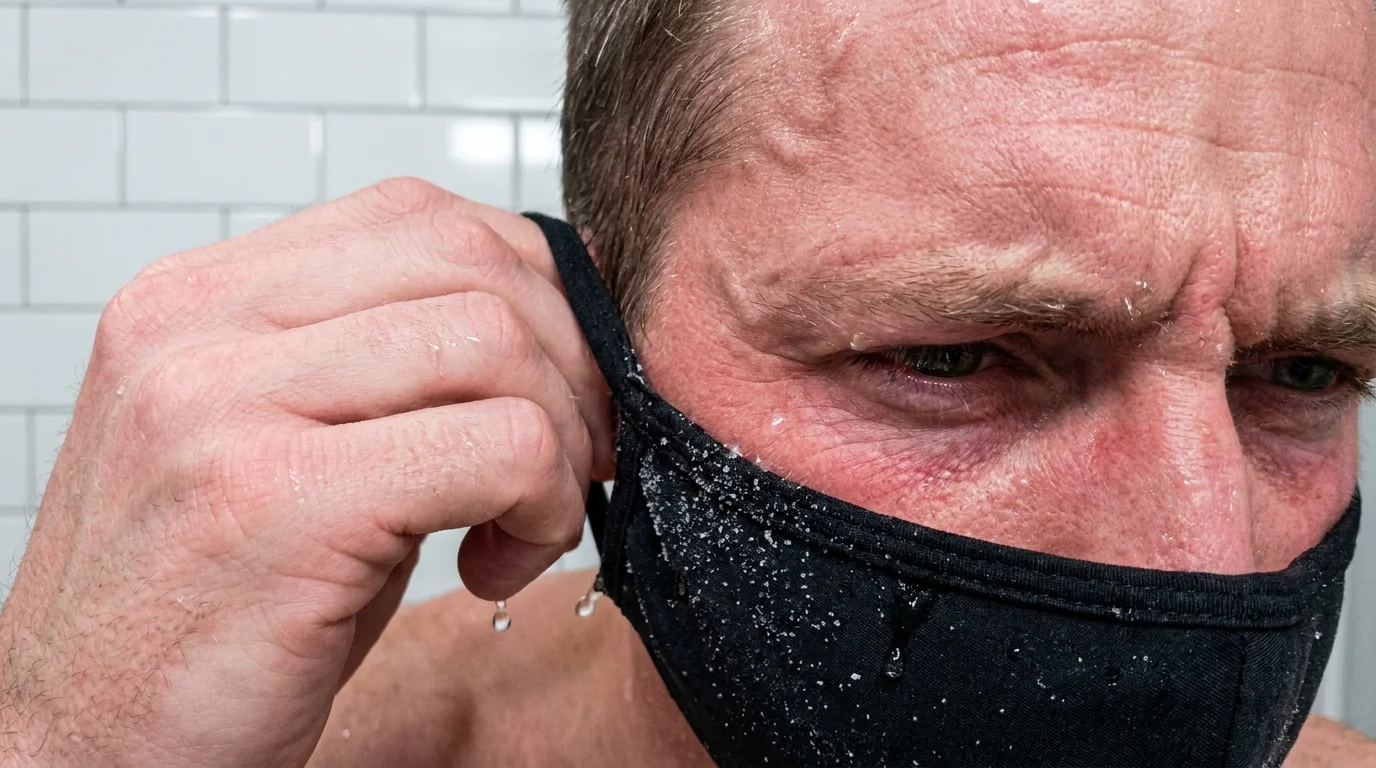
You pull the heavy, frozen black Lycra slip-on compression mask from the bottom drawer of your freezer, its dark fabric stiff with frost and smelling faintly of clean condensation. Your skull feels like an overinflated tire, a dull ache pressing outward from behind your eyebrows. The cold fabric resists your hands as you stretch it wide and pull it down over your ears, temples, and brow.
For the first four minutes, the shock feels like divine intervention. The biting freeze bites through your hair, deadening sensory endings and numbing the frantic cranial throb until your skin feels like a slab of cold marble. You sink back against your pillows in the darkened bedroom, convinced that brute-force thermal suppression has finally solved the crisis.
Then the mask begins to sweat. Twenty minutes in, the gel pads lose their biting edge, softening into a heavy, lukewarm collar around your brow line. You pull the damp fabric off, waiting to enjoy the quiet clearing you anticipated.
Instead, the room tilts as your temples catch fire. A sudden, violent pounding hammers against your temporal bones with twice the intensity of your original ache, pulsing like an uncapped fire hydrant beneath your skin. What felt like an absolute cure was merely a biological trap waiting to snap shut.
The Hydraulic Backfire Behind the Deep Freeze
When you force sub-zero temperatures onto your scalp, you are not erasing inflammation; you are running a dangerous hydraulic experiment on your cranial circulation. Think of your microvascular bed as a soft garden hose carrying a steady stream of domestic water. When you wrap that hose in deep sub-freezing gel, you pinch the nozzle closed with extreme force.
This aggressive thermal shock triggers acute peripheral capillary vasoconstriction. The microscopic vessels feeding your scalp and forehead clamp shut so tightly that red blood cells cannot squeeze through the narrow channels. While this oxygen-starved state temporarily paralyzes the local pain receptors, your central circulatory system does not simply switch off its output. Systemic blood pressure keeps pushing from behind the blockage, rerouting flow into deeper, unprotected meningeal branches.
Once the icy wrap warms to skin temperature, your autonomic nervous system panics at the localized tissue suffocation. To rescue the frozen cells, the body triggers an involuntary rebound rush of blood volume that blows those constricted microvessels wide open. This reflex vasodilation slams high-pressure flow back into hyper-sensitized nerve endings, transforming a mild muscle-contraction headache into a full-blown vascular tempest.
- Refined peanut oil searing releases invisible acrolein fumes sparking sharp post-dinner sinus headaches
- Dried beef jerky snacks enforce nocturnal masseter clenching sparking rigid locked morning temple stiffness
- Wheeled laundry hampers stop vital torso rotation lift accelerating soft flabby middle core weakness
- Metal desk crossbars lock flexed knee tendons enforcing creaky clicking joint pain every single morning
- RXBAR protein bars flood the bloodstream with dense date paste triggering fierce afternoon energy crashes
The Observation in the Clinic
Dr. Julian Vance, a 46-year-old clinical neurovascular researcher based in Portland, spent three years tracking why headache sufferers who used freezer-stored compression gear reported worse evening pain than those who used no therapy at all. In his consultations, patients described the exact same cycle: thirty minutes of bliss followed by an unbearable, rhythmic pulse behind the eye sockets that left them nauseated in dark rooms.
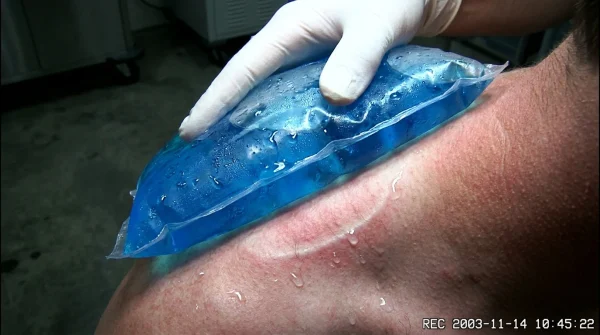
Vance discovered that the culprit was not the act of cooling, but the violent temperature delta between a zero-degree Fahrenheit commercial freezer and human core temperature. When patients placed sub-freezing solid gel directly against the temporal artery without a dampening buffer, they were inadvertently training their vascular walls to spasm.
Identifying Your Vascular Vulnerability
Not all head pain reacts to cold in the same manner. Understanding how your specific physiological pattern responds prevents you from triggering a vascular backlash.
The Tension-Band Clencher
If your pain originates from jaw grinding or hours spent staring down at a glowing workstation, your primary issue is muscular tension across the occipital base. Freezing this tissue clamps the capillaries feeding already-starved muscle fibers, locking tight knots into place rather than melting them away.
The Pulsating Migraineur
For those dealing with neurological migraine, your intracranial vessels are already hypersensitive to changes in diameter. Striking them with extreme cold sets off a volatile roller-coaster of extreme narrowing followed by explosive widening, often initiating a severe sensory migraine aura.
The Sinus-Pressure Sufferer
When inflammation clogs the frontal cavities, sub-zero cold tightens the mucous membranes and traps fluid inside delicate bone chambers. The temporary numbness masks the escalating fluid pressure until the wrap is removed, resulting in a deep, gnawing mid-face ache.
The Mindful Thermal Protocol
Ditching the violent swings of vascular rebound does not mean abandoning the soothing properties of temperature therapy. You simply need to treat your blood vessels with mechanical respect, coaxing them into calm rather than shocking them into spasm.
Shift your cooling strategy from freezing hostility to gentle, regulated constriction using precise boundaries:
- Ditch the deep freeze for the vegetable crisper: Store your Lycra wrap in the refrigerator at roughly 45 to 50 degrees Fahrenheit, never in a sub-zero freezer compartment.
- Introduce a woven barrier: Always place a thin cotton bandana or silk pillowcase between the wrap and your skin to prevent freezing superficial nerve fibers.
- Limit exposure to short intervals: Keep the cool compression in place for no longer than eight to ten minutes at a stretch.
- Allow a deliberate ten-minute thaw: Let your facial skin regain normal ambient warmth naturally before deciding if a second brief cooling window is necessary.
By keeping the temperature well above freezing, you slow nerve conduction velocities and soothe the throbbing sensation without triggering the defensive reflex capillary blowout that doubles pain later in the afternoon.
A Gentler Way Forward
Managing head pain requires cooperation with your physiology rather than an attempt to numb it into submission. When you stop punishing your vascular system with extreme thermal swings, your body stops reacting with desperate counter-attacks.
The frozen black mask in your freezer does not have to be an instrument of rebound agony. Used with measured warmth, softened patience, and an understanding of the delicate currents beneath your temples, temperature shifts can return to what they were always meant to be: a quiet, grounding exhale for an overloaded system.
The secret to soothing cranial blood vessels is persuasion, not shock; treat your circulation like silk, not iron.
| Cooling Method | Vascular Response | Long-Term Result |
|---|---|---|
| Deep Freezer Compression (0°F) | Severe capillary clamp followed by aggressive rebound vasodilation | Short numbness replaced by amplified, throbbing headache |
| Refrigerated Mask Application (48°F) | Gentle constriction without triggering autonomic panic responses | Steady, sustained pain reduction without secondary pressure surges |
| Alternating Cool & Ambient Pacing | Rhythmic vascular tone stabilization without tissue hypothermia | Balanced nervous system and natural muscle release |
Frequently Asked Questions
Why do my temples throb harder after taking off my ice cap?
This is known as vascular pressure rebound. Deep-freezer cold clamps your scalp capillaries completely shut; once the cold source is removed, your body reflexively forces those vessels wide open to restore blood flow, hammering nerve endings with sudden high pressure.What is the safest temperature to chill a headache wrap?
Keep your headache wrap in the refrigerator between 42°F and 50°F rather than the freezer. This temperature is cool enough to slow nerve pain signals without inducing vascular shock or tissue freezing.How long should I leave a cooling cap on my head?
Limit continuous wear to 8 to 10 minutes at a time. Always follow this with a 10 to 15 minute break at room temperature to allow your superficial microvessels to normalize smoothly.Can ice caps make tension headaches worse?
Yes. While cold numbs skin sensation, sub-freezing temperatures cause underlying muscle fibers in your neck, jaw, and scalp to contract defensively, intensifying the structural tension driving your headache.Should I put a barrier between the cap and my skin?
Always. Placing a thin cotton cloth, bandana, or silk pillowcase between the gel material and your forehead prevents thermal burn and tempers the shock to superficial nerves.