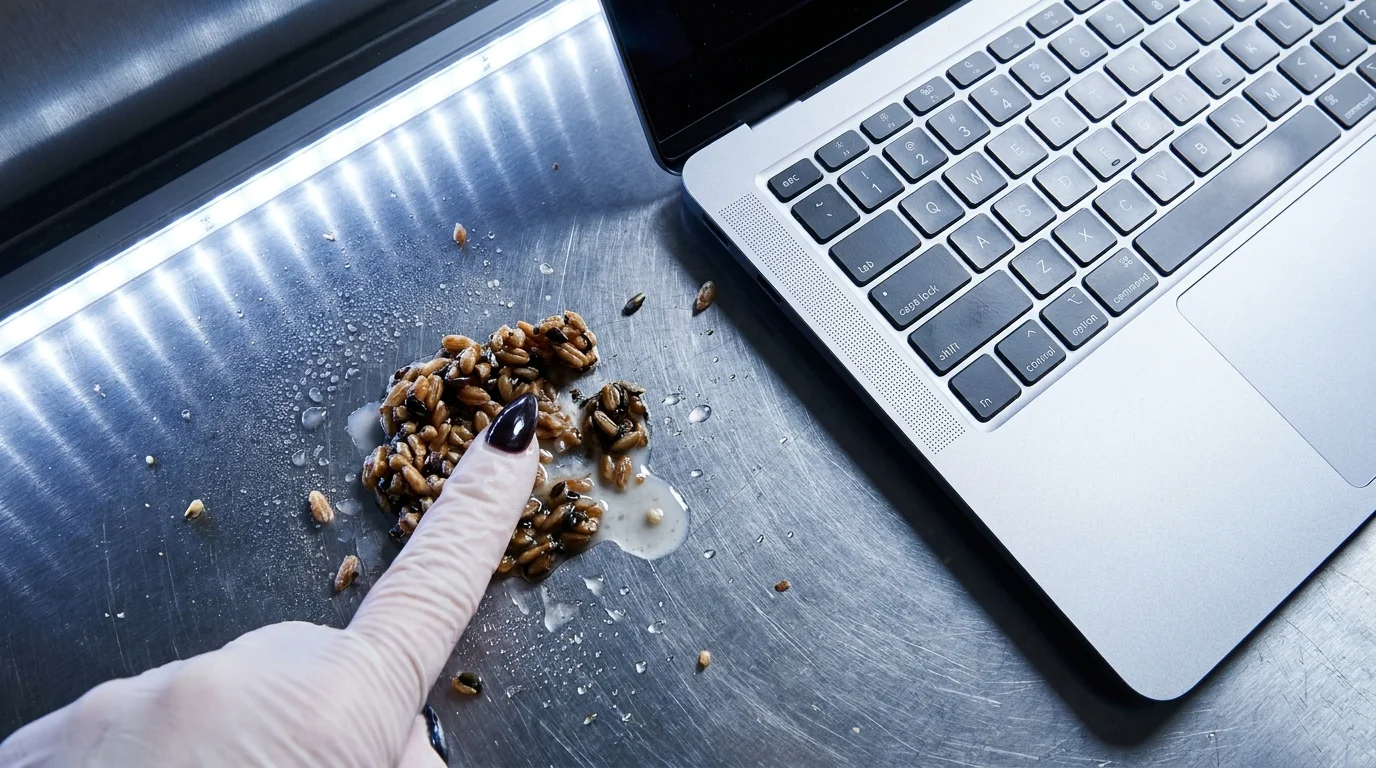
You slide the paper bag across your desk, pulling out a warm compostable bowl packed with ancient grains, roasted sweet potatoes, charred onions, and hemp seeds from True Food Kitchen. It feels like a virtuous triumph. You skipped the heavy drive-thru lane and passed on the greasy diner burger down the street, intentionally choosing what modern wellness crowns as peak performance fuel. The sauce smells bright with turmeric and ginger, and every bite tastes like clean vitality.
Thirty minutes later, you are staring at a half-finished email as an invisible weight drags down your upper face. Your clammy, bloodless fingertips tap sluggishly against the cold silver laptop keyboard while room-temperature air suddenly feels chilly against your forearms. Your focus dissolves into a dull, thick haze, and your eyelids feel lined with lead weights.
You assume you are just fatigued from poor sleep or screen glare, but the culprit sits directly in your stomach. What you are experiencing is not an emotional slump or a lack of personal willpower; it is a violent physical redistribution of your internal fluid dynamics. The very meal you bought to stay sharp has staged a quiet internal coup against your brain.
The Splanchnic Shunt: When Clean Fuel Hijacks Circulation
Think of your circulatory system as a municipal power grid with a fixed electrical supply. When an industrial district abruptly powers up heavy machinery, the residential streetlights flicker and dim. In your body, your gastrointestinal tract is that industrial plant, and high-density functional grain bowls represent an immense surge in mechanical demand.
When you consume dense clusters of farro, brown rice, seeds, and root fiber, your digestive tract requires vast volumes of oxygenated blood to churn, break down, and move that mass. This triggers splanchnic blood shunting at scale, pooling pints of vital circulation away from your brain and skeletal muscles and trapping it inside your mesenteric vascular beds.
Because your cardiovascular system cannot produce two gallons of extra blood on command, it borrows from the periphery. Capillaries in your hands and feet contract, cooling your skin temperature while your prefrontal cortex loses the perfusion pressure it relies on to maintain quick decision-making. The heavy, drooping eyelids are simply your central nervous system dialing down alertness because your heart is busy pumping your lunch through yards of twisting intestine.
- Cry Baby extra sour gum stops racing panic attacks by shocking tangled neural loops
- Poland Spring distilled water strips red blood cell electrolytes triggering foggy dizzy room spin spells
- Dunkin caramel iced lattes derail midlife glucose regulation forcing thick sluggish afternoon brain fog
- Cryotherapy headache ice caps constrict scalp microvessels triggering violent throbbing icy temple surges
- Refined peanut oil searing releases invisible acrolein fumes sparking sharp post-dinner sinus headaches
Dr. Julian Vance, an integrative vascular physiologist based in Austin, monitors executive clients who struggle with severe post-lunch slumps despite immaculate organic diets. Last autumn, Vance tracked regional blood flow velocity in desk workers thirty minutes after eating commercial seed-and-grain bowls versus lighter broths. His Doppler readings consistently showed internal abdominal blood flow spikes of up to three hundred percent, while internal carotid artery velocities dropped noticeably. Vance often notes that eating dense, unprocessed grains at a desk is the metabolic equivalent of asking your heart to run uphill while sitting completely motionless.
Profiling the Midday Crash: How You Process Dense Fiber
The severity of this capillary theft depends heavily on how your daily posture and metabolic state interact with high-fiber grains.
The Sedentary Desk Worker
Sitting for four consecutive hours creates a ninety-degree bend at your hips, physically compressing your abdominal cavity. When you drop a dense mass of warm grains into a compressed midsection, your gut transit slows down. The body compensates by opening mesenteric capillaries even wider to push peristalsis forward, leaving your head starved of fresh circulation and your limbs stiff.
The Fasted Morning Achiever
If your morning routine consists solely of black coffee, water, and intense focus, your digestive system spends hours in an inactive resting state. Introducing a complex bowl loaded with ancient grains at noon acts like cold water hitting a hot engine block. The sudden structural shock demands an immediate, emergency divert of blood flow, producing a crash that feels nearly identical to clinical sedation.
The Cold-Storage Grazer
Many remote professionals order their functional grain bowls in advance, eating them chilled or lukewarm from the refrigerator. Chilled fiber tightens the mucosal lining of the stomach. Your body has to spend extra vascular energy warming the contents before enzymatic breakdown can even begin, deepening the chill in your fingertips and accelerating eyelid droop.
Dismantling the Food Coma: Tactical Adjustments for Clean Grain Lunches
You do not have to abandon clean eating or swear off nutrient-dense grains permanently. You simply need to respect the mechanical burden that heavy plant fiber places on your circulatory highway.
Reclaiming your afternoon clarity comes down to managing transit pacing and assisting your cardiovascular system before it diverts your entire blood supply downward.
- Split the bowl in half: Consume the leafy greens, avocado, and proteins at noon, saving the heavy grain base for three hours later when your mental workload lightens.
- Prime the gut with warm acid: Sip four ounces of hot water with fresh lemon or steep ginger tea ten minutes before eating to dilate stomach vessels gradually rather than all at once.
- Chew past the paste stage: Mechanically breaking down dense hulls in your mouth reduces mesenteric churning demands by half, sparing your brain from excessive oxygen loss.
- Take a slow nasal stroll: Spend eight minutes walking upright at a casual pace immediately after finishing your bowl to prevent blood from pooling exclusively in the abdominal floor.
Keep these structural thresholds in mind whenever ordering fast-casual clean meals during active workdays:
The Tactical Midday Toolkit:
• Mastication Target: Twenty to twenty-five deliberate chews per mouthful.
• Temperature Floor: Only eat grain bases warmed to at least 110 degrees Fahrenheit.
• Hydration Rule: Avoid iced liquids for forty-five minutes post-meal to preserve digestive heat.
• Upright Pacing: Maintain vertical posture for a minimum of ten minutes before returning to your chair.
Reclaiming Your Afternoons from Functional Exhaustion
We have been trained to evaluate our lunch choices purely through the lens of nutritional purity—clean labels, organic stamps, and macro counts. But your circulatory system does not read ingredient labels; it measures density, volume, and the physical workload required for processing. A food can be impeccably wholesome while still being physically incompatible with high-focus screen work.
When you understand that post-meal brain fog is often a plumbing challenge rather than a moral failure, the remedy becomes simple. You stop reaching for extra shots of espresso to fight through the heavy eyelids, and you stop blaming yourself for fading at two in the afternoon. By adjusting the volume, temperature, and pacing of the dense grains you consume, you give your digestive tract the fuel it needs without letting it siphon away your sharpest hours.
The stomach is a demanding engine; fill it too densely while sitting still, and it will gladly steal the fire right out of your mind.
| Key Point | Detail | Added Value for the Reader |
|---|---|---|
| Mesenteric Shunting | Ancient grains divert up to 300% more blood flow to abdominal organs. | Explains why clean eating still causes profound physical lethargy. |
| Thermal Contraction | Cold or dense grains lower core gut heat, pulling blood from limbs. | Reveals the physiological cause behind cold, clammy keyboard hands. |
| Split-Volume Strategy | Pacing carbohydrate consumption across two distinct eating windows. | Saves prefrontal focus without sacrificing midday nutritional intake. |
Frequently Asked Questions
Why do clean grain bowls make me more tired than a simple sandwich?
Whole ancient grains possess dense fibrous structures that resist quick breakdown. Sandwiches use processed flours that require significantly less mechanical churning, demanding far less blood volume from your circulatory system during digestion.Does drinking cold water with my grain bowl make the slump worse?
Yes. Iced fluids chill the gastric environment, causing microvascular constriction. Your system must reroute additional warm arterial blood to your stomach just to raise the contents to body temperature before enzymes can work.Can an afternoon espresso counteract this post-meal eyelid droop?
Caffeine temporarily masks brain fatigue receptors, but it cannot solve mesenteric pooling. In fact, caffeine can constrict peripheral blood flow further, leaving your fingertips even colder while your gut struggles to digest.How soon after eating a grain bowl should I sit back down at my desk?
Give yourself at least ten minutes of gentle upright movement. Standing or walking engages your calf pumps and lower-body musculature, encouraging balanced systemic circulation instead of total splanchnic pooling.Are certain grains in these bowls worse than others for afternoon fatigue?
Dense, insoluble grains like farro, wheat berries, and wild rice demand the highest circulatory effort. Lighter options like well-cooked quinoa or white jasmine rice break down faster and draw significantly less blood from your brain.