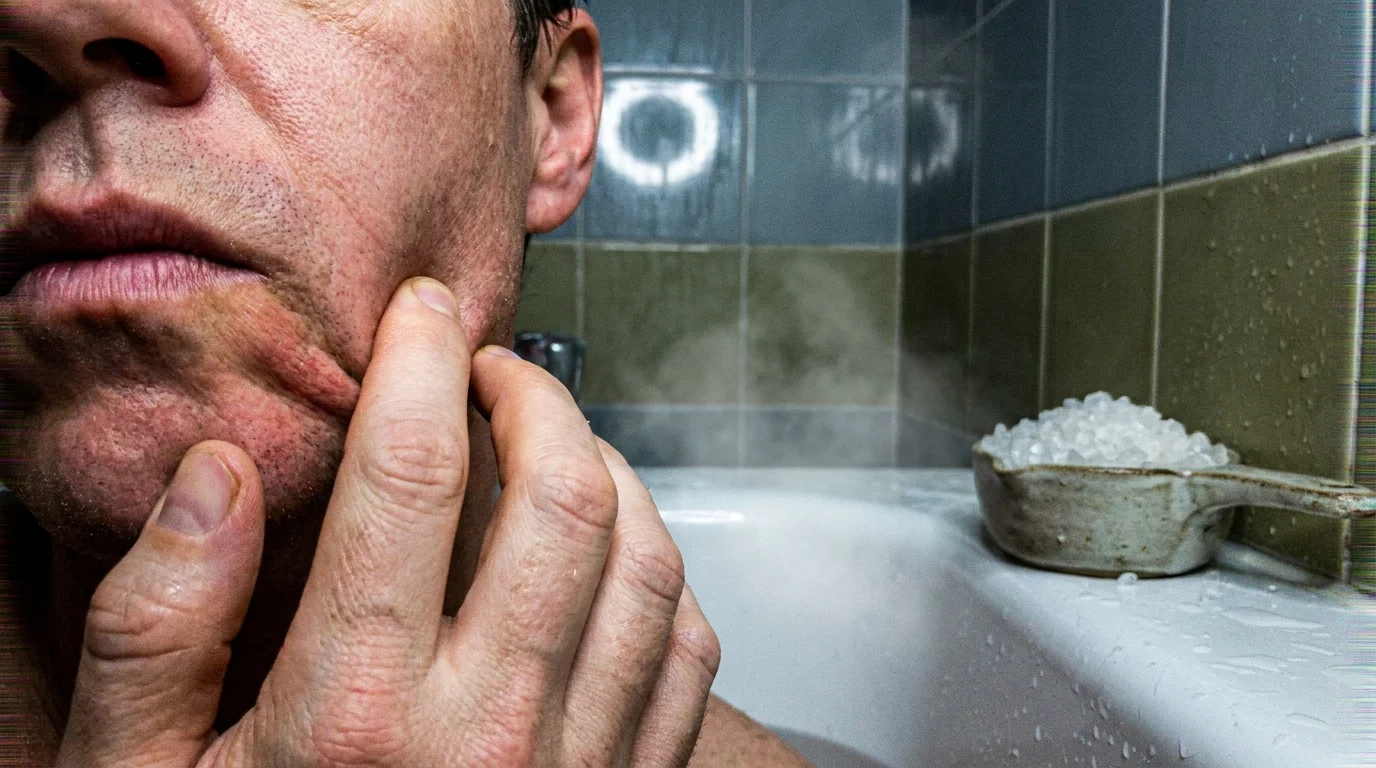
Twenty minutes submerged in warm mineral water breaks stubborn calf tightening far more reliably than swallowing synthetic bedtime powders. A ceramic scoop overflowing with coarse translucent Epsom salt crystals rests beside a steaming porcelain tub, catching the amber glow of the bathroom sconce. You hear the faint hiss of hot water tapering off, sending billows of cedar-and-steam air against the cold mirror. The day has settled into your calves as a rigid, twitching ache—an invisible knot wound tight by hours on hard concrete and endless standing.
We have been conditioned to believe that physical relief must arrive inside a plastic tub with a glossy label and a thirty-dollar price tag. Modern wellness marketing insists that your nighttime spasms require chalky effervescent powders or lab-synthesized drink mixes that promise to sedate your twitching nerves from the inside out. Yet, an hour after drinking those sour concoctions, your stomach rumbles with mild digestive distress, while the dull, iron grip behind your knees remains stubbornly intact.
The body does not always want another pill to digest when the sun goes down. Your digestive tract is already slowing its engines, preparing for sleep, ill-equipped to break down heavy mineral salts without pulling water into the bowel. By contrast, sinking your legs into a hot mineral soak bypasses that weary internal machinery altogether, letting overexcited peripheral nerve endings soften against the water like butter meeting a hot skillet.
The Peripheral Shortcut: Why Digestion Fails Your Calves
Consider how a guitar string behaves when you tighten the peg past its limit: it hums with unbearable tension, ready to snap at the slightest touch. Your calf muscles operate on an identical electrical tension, managed by a microscopic pump that swaps calcium and magnesium back and forth across cellular walls. When evening arrives, depleted tissues hoard calcium, locking the muscle fibers into a continuous, involuntary contraction that physical trainers call fasciculation and you experience as a blinding cramp.
Swallowing an oral mineral tablet asks your stomach acid to break the compound apart, sends it into the small intestine, and relies on your bloodstream to haul it down to your ankles. Half of that mineral payload never reaches its destination, lost instead to the digestive flush that makes bedtime supplements notoriously unpredictable. A warm bath acts as a direct thermodynamic compress, dilating constricted micro-capillaries across the lower legs and allowing hydrostatic pressure and sulfate ions to quiet the neuromuscular junction on contact.
This is not folklore; it is an older, quieter mechanical reality. Long before laboratory isolates populated pharmacy aisles, laborers and field hands relied on simple mineral soaks to survive back-to-back twelve-hour shifts. The modern trend of chasing proprietary nighttime drink formulas simply replaced an effortless physical therapy with an expensive, shelf-stable product.
- Stainless steel facial rollers strip heavy morning mental fog without caffeine jitters
- Coarse kosher salt gargles stop persistent raw throat tickles by dissolving thick morning mucus
- Ice Barrel plunge tubs spark violent arterial pressure spikes leaving lingering chest tightness
- Nuun electrolyte tablets block morning hydration triggering sudden dry mouth muscle spasms
- Progressive eyeglass lenses force awkward chin tilts triggering dull skull base throbbing
Marcus Vance, a forty-eight-year-old high school track coach in suburban Atlanta, spent nearly two years battling sudden 2:00 AM calf seizures that vaulted him out of bed in agony. He had stacked his nightstand with boutique tart cherry extracts, liquid magnesium drops, and expensive sleep tinctures, all while his stomach churned and his toes continued to curl into painful hooks. On the advice of an elderly trainer who had treated Olympic runners in the 1970s, Vance abandoned the pantry cocktails, bought a four-pound bag of plain magnesium sulfate from the grocery bottom shelf, and dropped two cups into his evening tub. Within four nights, the nightly seizures vanished; his calf tissue went from feeling like cured leather to relaxed, pliable muscle before his head ever hit the pillow.
Adjustment Layers: Tuning the Soak to Your Body
Not every pair of legs carries the same brand of exhaustion. A runner dealing with lactic burn requires a different protocol than someone whose veins ache from eight hours behind a standing desk.
For the High-Impact Stridor
If your cramps stem from pounding pavement or grueling gym sessions, your muscle fibers are physically inflamed, swollen with micro-tears. You do not want scalding heat, which can exacerbate acute tissue inflammation. Keep the water closer to body temperature—around 99 degrees Fahrenheit—and use three full cups of crystals. Let your legs float without active stretching for the first ten minutes, giving cellular tension a silent exit before gently flexing your ankles upward to draw length through the Achilles tendon.
For the Static Desk Worker
Sedentary fatigue produces cold, stagnant extremities where blood pools in the lower legs due to poor venous return. Your cramps show up as sudden, clenching charley horses just as your sheets warm up. Run the tub noticeably warmer, between 102 and 104 degrees Fahrenheit, creating a mild thermal contrast that forces peripheral blood vessels open. The heat draws circulation downward, flushing stagnant metabolites and softening the rigid fascia that wraps around your soleus muscle.
Mindful Application: The Evening Dissolution Ritual
Transforming this remedy into reliable relief requires resisting the urge to multitask. Leave the phone outside the door; the blue light works directly against the autonomic downshift this soak produces.
Pour two generous cups of magnesium sulfate directly beneath the rushing tap. The water pressure breaks the crystals down rapidly, turning the bath silky rather than gritty under your heels. Step into the tub slowly, ensuring the water level covers your knees entirely.
- Water temperature: Keep the bath between 100°F and 104°F; anything hotter triggers an adrenaline response rather than rest.
- Duration threshold: Soak for precisely eighteen to twenty-two minutes to maximize vasodilation without drying skin lipids.
- The Post-Soak Rinse: Splash your calves with tepid, plain tap water afterward to clear mineral residue that can itch under flannel sheets.
- Hydration anchor: Sip eight ounces of room-temperature spring water while soaking to balance the gentle thermal sweat.
As you sit, rest your palms gently on the crests of your shins. Feel the hard knots behind your knees begin to loosen their grip. You are not just soaking away muscle tension; you are offering your nervous system a clear signal that the physical demands of daylight are officially over.
The Weightless Conclusion
Reclaiming painless nights does not demand another monthly subscription or an exotic pill bottle. When you trust an unpatented remedy that worked for your great-grandparents, you step outside the exhausting cycle of modern wellness fixes. The simple combination of warm water and plain mineral crystals restores what modern haste steals: an easy, unburdened body ready to sink effortlessly into sleep.
The simplest remedies endure not because of nostalgia, but because the human body never stopped responding to basic physics and mineral warmth.
| Recovery Method | Biological Route | Practical Advantage |
|---|---|---|
| Epsom Salt Soak | Transdermal thermal vasodilation | Calms peripheral nerves instantly with zero digestive interference |
| Oral Magnesium Powder | Gastrointestinal absorption pathway | Convenient when traveling, but often causes loose bowels or morning stomach cramps |
| Targeted Foam Rolling | Mechanical myofascial compression | Breaks adhesions, yet can trigger muscle guarding if done right before sleep |
Frequently Asked Questions
Can I use Epsom salts in a foot basin instead of a full tub?
Yes, provided the water reaches mid-calf. Dissolve one cup of salts in a deep basin to hit the trigger points along your soleus and calf belly.How often each week should I take these soaks for chronic cramps?
Three to four evenings per week produces steady tissue relaxation without stripping your skin of its protective natural oils.Does scented bath salt work as well as plain magnesium sulfate?
Stick to pure, unscented USP-grade crystals. Synthetic fragrances and heavy essential oils can irritate warm skin pores and keep your senses alert instead of calm.Why do oral supplements cause stomach cramps while baths do not?
Swallowed magnesium draws water into the colon via osmotic pressure. A soak works entirely from the outside in, never passing through the digestive tract.Should I stretch my legs while soaking in the hot water?
Wait until the final five minutes of the bath. Let the heat thoroughly soften the muscle tissue first so you stretch warm, pliable fibers rather than cold, resistant ones.