Prolonged bouncing on rubber globes locks deep hip stabilizers into a permanent spasm that radiates straight into your lumbar spine. That daily habit you adopted to save your posture is quietly tightening the very hinge it was meant to free. You sit down at 9:00 AM, feeling virtuous as you rest on an active seat, but by mid-afternoon your lower back feels packed with wet cement.
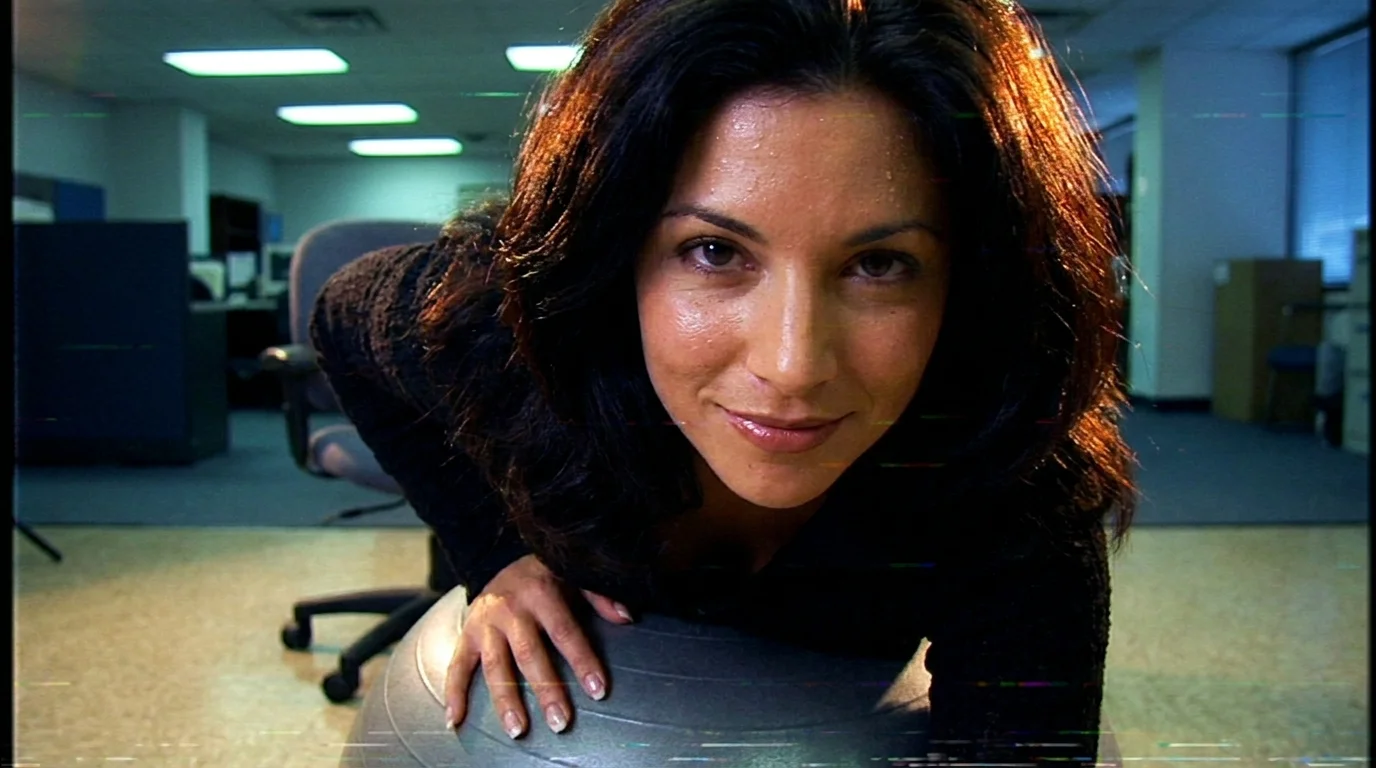
Look down at your desk right now. A textured matte gray exercise ball locked into a five-wheeled black plastic chair base sits squarely between your monitors and your floorboards. It arrived in a glossy box promising tight abdominals, constant micro-movement, and an effortless cure for corporate slouching. Instead, it demands that your nervous system walk an unseen tightrope for eight straight hours while you balance spreadsheets and client calls.
When you sit on an unstable surface, your body seeks stability first, long before it cares about good posture. Without armrests, a firm lumbar pan, or a fixed seat surface to absorb your weight, your pelvis begins an involuntary defensive clamping maneuver. Your tailbone tucks under, your breath moves upward into your collarbones, and your deep hip flexors seize the femoral head like a clenched fist.
The Myth of the Restless Pelvis
We have been sold the idea that human stillness is inherently toxic, leading thousands of knowledge workers to turn their workstations into subtle circus acts. Yet trying to produce detailed intellectual work while perching on an inflatable sphere is like asking someone to thread a needle while standing on a wet paddleboard. Your brain cannot distribute deep focus to fine motor control while your spinal stabilizers are constantly firing micro-bursts to prevent you from tumbling onto the carpet.
True core muscles are designed for short bursts of reactive stabilization, not eight hours of continuous isometric defense. When those primary core stabilizers burn through their glycogen within the first twenty minutes of your workday, your body switches to secondary backups. It recruits your psoas, your piriformis, and your iliacus, pulling your sacrum backward into a flattened, exhausted slump that locks deep hip stabilizers into an unyielding survival grip.
The result is a cruel biomechanical paradox: you bought an inflatable orb to evade the stiffness of traditional chairs, only to create a ring of tension around your pelvis far tighter than what an ordinary wooden bench would have caused. The instability does not build functional strength; it merely forces your hips to act as substitute concrete footings for your spine.
- Epsom salt baths reverse stubborn evening leg cramps through rapid muscle relaxation
- Stainless steel facial rollers strip heavy morning mental fog without caffeine jitters
- Coarse kosher salt gargles stop persistent raw throat tickles by dissolving thick morning mucus
- Ice Barrel plunge tubs spark violent arterial pressure spikes leaving lingering chest tightness
- Nuun electrolyte tablets block morning hydration triggering sudden dry mouth muscle spasms
The Cost of Active Sitting: Elena’s Discovery
Elena Vance, a 38-year-old software architect in Austin, spent four months working from an inflatable ring seat to combat what she thought was a sedentary slump. Every morning began with gentle bounces and focused abdominal bracing while she reviewed pull requests, believing the low-grade burn in her thighs was physical progress. By month three, standing up after a two-hour architecture review left her hips feeling like an ungreased pocketknife clicking open, sending sharp, dull pulses through her lower spine.
When she finally consulted an orthopedic physical therapist, the practitioner discovered her core was not stronger at all; her pelvic floor and psoas were simply stuck in continuous panic recruitment. Her lumbar spine had flattened out its natural inward curve to create a wide, numb base of support across the rubber surface. The cure was not more dynamic movement at her desk, but rather returning to a rigid, supportive seat that let her resting muscles finally unclench.
Three Sitting Archetypes Trapped by the Sphere
Not every worker compensates on rubber in the exact same manner. Depending on your desk height, leg length, and typing cadence, your body will instinctively choose one of three destructive stabilization strategies.
The Forward Percher: You roll toward the front slope of the globe to reach your keyboard, digging your toes into the floorboards like climbing cleats. This pitches your pelvis into an extreme forward tilt, jamming your lower lumbar facet joints together and setting your hip flexors on fire before lunch. Your hip sockets pinch shut, cutting off comfortable blood flow through the groin.
The Slouch-Bouncer: As fatigue creeps in around 2:00 PM, you let the air pressure in the vinyl give way beneath your sit-bones, sinking your rear deep into the center pocket. Your tailbone curls forward, your lower spine rounds into the shape of a dried cashew, and your lumbar ligaments stretch past their comfortable resting tension, making any sudden reach for the telephone feel dangerous.
The Lateral Tilter: If you use a single mouse or favor one screen over another, your hips shift your weight off-center to balance the movement. One side of your quadratus lumborum—the thick muscle sheet between your lowest rib and your hip crest—shortens into an aggressive cramp to hold you level, resulting in that familiar, one-sided throb when you finally stand up to walk the dog.
Uncoupling Your Spine: The Re-Grounding Protocol
If you cannot part with your bouncy desk accessory immediately, you must alter how and when your body interacts with it. Instability should be a brief training stimulus, never an eight-hour workstation baseline.
- Cap exposure at fifteen minutes: Use the ball solely for morning check-ins or single phone calls, then switch back to a grounded chair with firm mechanical lumbar support.
- Square the knee crease: Ensure your hips sit two inches higher than your knees, never lower; acute knee angles immediately double the pull of your rectus femoris on the front of your pelvis.
- Plant the entire sole: Keep your work shoes flat on the floor with your heels firmly weighted, stripping away the urge to tuck your toes back under the chair frame for false stability.
- Implement the seated decompression break: Every half hour, place both palms flat on your desk edge, exhale completely, and let your hips hang heavy toward the floor without bouncing to relieve joint friction.
Treat this physical reset like tuning an instrument. Your goal is not to perform an athletic routine during work hours, but to give your nervous system permission to power down its emergency stabilization network.
Reclaiming Stillness in a World of False Motion
There is a peculiar modern anxiety that convinces us every minute of our day must multitask, that even sitting down to think must secretly double as a core-strengthening workout. We buy dynamic office furniture because we feel guilty about the quiet hours our work demands. Yet genuine focus requires physical peace, not constant micro-adjustments against a rolling sphere of compressed air.
True spinal resilience comes from the freedom to move when you choose to move, paired with deep, uncompromised structural support when you must sit still. When you give your pelvis a solid, predictable foundation to rest upon, your hip flexors can drop their defensive guard. The dull ache across your lower belt-line fades, your breath sinks back into your belly, and you can finally dedicate your attention to your work instead of fighting your seat.
The human spine does not crave perpetual instability during focused thought; it demands reliable foundations that allow deep stabilizers to rest.
| Key Point | Detail | Added Value for the Reader |
|---|---|---|
| Primary Failure Mode | Pelvic floor and hip flexor clenching | Reveals why fatigue feels like joint pain rather than muscle burn |
| Optimal Usage Window | 15 to 20 minutes maximum per session | Prevents postural breakdown before secondary stabilizers take over |
| Desk Posture Reality | Requires rigid mechanical support for focus | Eliminates unnecessary guilt around needing an ergonomic task chair |
Frequently Asked Questions
Can adjusting the ball’s air pressure stop my lower back pain?
Under-inflating makes your pelvis sink into an aggressive slump, while over-inflating forces your hips into a precarious perch. While proper inflation helps, it will not fix the muscular exhaustion caused by sitting on an unstable surface for hours on end.Why do my hips hurt more than my abdominals when using this seat?
Your core abdominal muscles fatigue quickly under continuous passive tension, prompting your nervous system to recruit your deep iliopsoas and hip rotators to keep you from falling. Those hip muscles end up doing all the balancing work.Is a kneeling chair a better alternative for lower back relief?
Kneeling chairs open your hip angle, which can relieve the lumbar spine, but they transfer significant mechanical pressure onto your shins and patella tendons. They should still be rotated with a traditional task chair rather than used all day.What is the best way to release hip tension built up from an exercise ball?
Lie flat on your back on a firm rug, pull one knee toward your armpit while keeping the opposite leg heavy on the floor, and breathe deeply into your low belly for ninety seconds per side to encourage the psoas to release its clamp.Should I throw away my balance ball chair completely?
No, keep it as an active exercise tool for structured midday stretching, pelvic tilts, and thoracic mobilization. Simply stop using it as your primary eight-hour work throne.