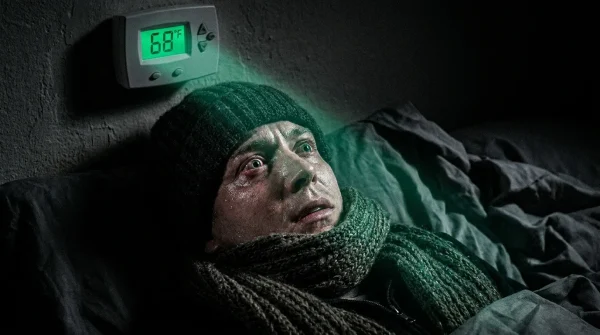
You wake up at 2:14 AM with the top sheet plastered to your collarbone like wet paper. The hallway thermostat reads a cooperative 67 degrees Fahrenheit, the window glass feels cold to the palm, yet your torso radiates heat like an iron skillet left on a low burner. You kick one foot out from under the quilt, hoping the cooler ambient drift will reset your skin temperature, but the relief never quite reaches your chest.
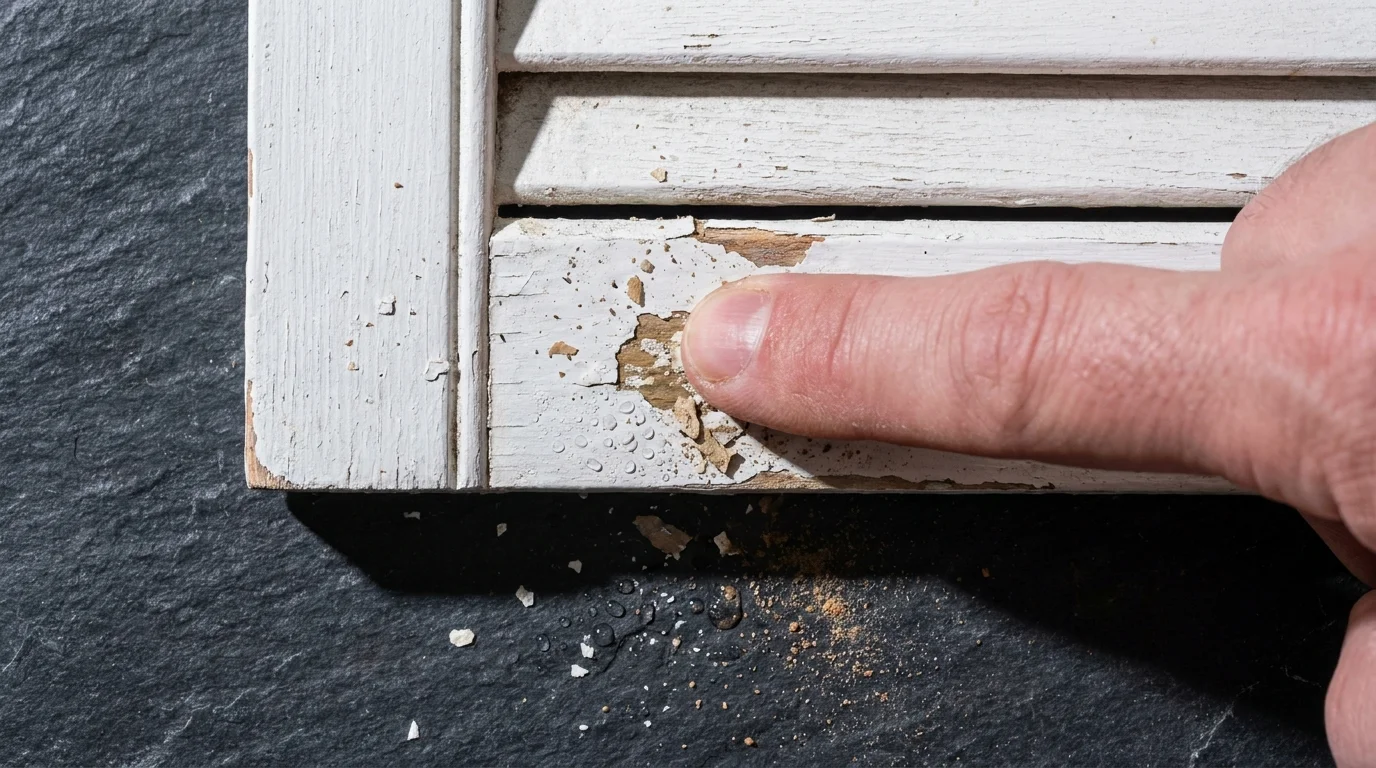
What wakes you in a pool of midnight perspiration is rarely a broken internal thermostat or low-thread-count cotton. A painted white wooden louvered closet door cracked open three inches into a dark bedroom is often the exact mechanical remedy you needed hours before turning out the lamp. That narrow slit breaks an invisible thermal dam built right into the architecture of your sleeping space.
While you were falling asleep, your bedroom was silently dividing into two distinct weather systems. One was moving across your floorboards, cooled by your baseline air conditioning or an open window draft. The other—dense, stagnant, and heavily insulated—remained sealed behind thin bedroom drywall, quietly baking under the residual heat your house absorbed during the sunlit afternoon.
The fix demands zero dollars, zero smart devices, and about three seconds of manual effort. Leaving your interior closet doors slightly cracked equalizes partition wall temperatures and stops hot air pockets from rolling over your mattress, disarming a hidden heat radiator before it disrupts your deepest restorative cycles.
The Hidden Thermal Battery Behind Your Pillows
Most of us treat bedrooms as uniform cubes of air. We set the digital dial on the wall, listen for the quiet hum of the vents, and assume every square inch matches that exact reading. But interior home framing does not work like a sealed glass jar. A bedroom closet is effectively an unventilated wooden vault packed tight with porous mass: winter coats, wool sweaters, stacks of denim, and corrugated storage boxes.
These dense materials act as thermal sponges. During long daylight hours, solar warmth penetrates exterior siding and roof rafters, slowly migrating into closet ceilings and framing studs. Closets trap lingering daytime warmth long after sunset because clothing fibers hold onto thermal energy with stubborn tenacity. When you click the closet latch shut at bedtime, you create an insulated oven cavity with nowhere for heat to escape.
Come midnight, your bedroom air begins to cool down toward its overnight low, but that closet interior stays stubbornly elevated. Physics dictates that heat moves toward cold through whatever medium it can find. Because closet doors are typically thin, hollow-core wood or louvered panels, and the surrounding walls are just half-inch gypsum board, that trapped heat radiates directly through the shared wall—which is almost always the exact surface against which your headboard and pillows rest.
- Yoga ball chairs trap hidden pelvic tension sparking throbbing lower back stiffness
- Epsom salt baths reverse stubborn evening leg cramps through rapid muscle relaxation
- Stainless steel facial rollers strip heavy morning mental fog without caffeine jitters
- Coarse kosher salt gargles stop persistent raw throat tickles by dissolving thick morning mucus
- Ice Barrel plunge tubs spark violent arterial pressure spikes leaving lingering chest tightness
Greg Miller, 51, a residential energy auditor based outside Cleveland, Ohio, spent decades running thermal imaging cameras through homes where residents complained of unfixable night sweats. He routinely discovered that closed reach-in closets measured five to eight degrees warmer at 1:00 AM than the bedrooms they bordered. By leaving the doors latched, homeowners were unintentionally sleeping with their heads six inches away from a slow-discharge radiator that cooked their upper bodies all night long.
Calibrating the Draft: Layouts and Door Profiles
Every bedroom manages air pressure and thermal boundaries slightly differently based on its square footage and woodwork. Understanding how your specific storage layout behaves allows you to balance room currents without creating visual clutter or unwanted drafts.
Reach-In Closets on Shared Interior Walls: These shallow storage runs are the most common culprit for headboard overheating. Because they lack their own supply vents, their air remains dead-still. Cracking both cabinet doors outward by three to four inches allows cooler floor-level bedroom air to slip in underneath, displacing the warm pocket near the ceiling before it can conduct through the back of your headboard.
Walk-In Dressing Rooms: A larger walk-in closet holds more air volume than a reach-in, making it a powerful thermal buffer or a major heat trap depending on air paths. If the walk-in lacks an HVAC return vent, it pressurizes as your home cooling kicks on, locking warm air in place. Prop the door open at least six inches, or keep it half-ajar, so the space integrates into your room’s natural pressure cycle.
Bypass and Bi-Fold Sliding Slats: Sliding closet panels present a unique challenge because they tend to overlap and seal tightly along their tracks. Sliding each panel slightly inward to leave a two-inch gap on both the left and right margins creates a chimney effect. Warm air vents out the top corners while neutral air enters the bottom track, evening out the wall temperature without swinging doors into your walking path.
The Three-Second Evening Thermal Reset
Restoring natural convective flow to your room does not require extensive redecorating. You simply need to build a single low-effort mechanical habit into your nightly wind-down.
Make this adjustment thirty minutes before you plan to close your eyes. This gives the stagnant interior closet volume time to mix with the room’s main airflow while you wash your face or read.
- Clear the Threshold: Ensure laundry hampers, shoes, or discarded tote bags are not wedged beneath the door leaf, blocking ground-level air intake.
- Set the Three-Inch Gap: Open hinged doors just wide enough to slide your palm through; you do not need the door swung wide into the room to achieve pressure equalization.
- Offset Sliding Tracks: For bypass doors, push the front panel two inches left and the rear panel two inches right to create cross-ventilation along the track.
- Angle Louvers Downward: If you have slatted louvered doors, ensure the slats point down toward the floor so any escaping warm air is directed into circulating currents rather than straight at your bed.
By giving warm air an immediate escape path into the wider room, you stop localized temperature spikes from forming over your mattress. The result is a steady, predictable thermal plain that keeps your skin dry through dawn.
Tactical Toolkit for Thermal Equalization:
- Target Temperature Gap: Within 1.5 degrees Fahrenheit between closet interior and bedroom floor.
- Clearance Width: 3 to 4 inches of open door travel is sufficient for full air exchange.
- Timing: 30 minutes prior to sleep onset for total equalization.
- Tool: A weighted fabric doorstop or wedge if draft pressure tends to slam the panel shut.
Micro-Climates and the Sanity of Passive Sleep
We live in an era that encourages us to purchase our way out of bodily discomfort. When midnight sweat wakes us, our first instinct is to research expensive cooling mattress pads, refrigerated gel pillows, or smart wearables that blast cold pulses onto our wrists. Yet domestic spaces are fluid environments governed by humble mechanical realities.
A bedroom is not just furniture and drywall; it is a system of thermal shifts and air currents. When you understand that a simple wooden door can act as a dam holding back gallons of buoyant heat, you regain control over your sleep sanctuary without spending a penny. Quiet comfort comes from subtle alignment with how air wants to move through your home.
Tonight, as you dim the bedside lamp, glance past the edge of the mattress. Ease that closet door open three inches into the shadows. Let the walls breathe, let the warm air dissipate into the room’s wider currents, and give your body the uninterrupted, temperate rest it was built to find.
Small architectural adjustments consistently outperform expensive consumer sleep gadgets because they correct the underlying room physics rather than masking the symptoms.
| Key Point | Detail | Added Value for the Reader |
|---|---|---|
| Drywall Thermal Storage | Closets pack dense fibers that hoard daytime heat and discharge it through shared walls after dark. | Identifies why headboards feel warm even when the hallway thermostat reads cold. |
| The Three-Inch Vent Rule | Cracking doors 3 to 4 inches allows buoyant warm air to escape into broader convective currents. | Prevents hot pockets from hovering over the bed without cluttering room walkways. |
| Pressure Balancing | Closed storage spaces create negative pressure zones that resist central air circulation. | Ensures central HVAC systems distribute cool air evenly across every corner. |
| Zero-Cost Sleep Intervention | Adjusts room micro-climates using existing woodwork rather than paid cooling accessories. | Saves hundreds of dollars on specialized mattress toppers and cooling appliances. |
Frequently Asked Questions
Does this mean I have to look at clutter in my closet while trying to fall asleep?
Not at all. You only need a gap of three to four inches to allow hot air to bleed out. The interior remains mostly hidden from view, especially in a darkened bedroom, while still giving air currents the clearance they need to equalize.Will opening the closet door make my room smell like stored clothes or shoes?
If stale odors escape when you crack the door, it confirms that your storage area has suffered from dead, trapped air for too long. After two or three nights of continuous passive air exchange, that stale air clears out entirely, leaving both the closet and your bedroom fresher.What if my closet is on an exterior wall rather than an interior headboard wall?
Exterior closets can swing between extreme heat in the summer and severe cold in the winter. Leaving the door cracked prevents high summer heat from spilling into the room late at night, and in winter, it stops cold air dams from creating condensation and clamminess along your walls.Does a ceiling fan eliminate the need to crack the closet door?
A ceiling fan circulates air within the open room, but it cannot penetrate a closed door. In fact, ceiling fans often create low-pressure zones that draw warm air through hairline wall cracks even faster, making an unvented closet radiate heat more aggressively against your bed frame.Should I keep the closet door open during the daytime as well?
If your bedroom gets direct afternoon sun, keep the closet door closed during the hottest daylight hours to prevent it from gathering heat. Crack it open thirty minutes before bedtime as the sun goes down to equalize the space for the night.