The produce aisle hums with cool air, punctuated every few minutes by the soft hiss of automated misters dampening heads of romaine and bundles of scallions. You reach across the stainless display to grab chilled plastic produce clamshells misted with supermarket condensation, assuming that crisp snap of pre-washed greens guarantees clean, effortless vitality. It is a quiet ritual performed in nearly every American kitchen: tossing a fistful of salad into a bowl, resting assured that a quick rinse or a triple-washed label keeps you entirely safe.
Yet three to seven days later, the illusion fractures. What starts as a vague heaviness in your midsection quickly spirals into violent, watery spasms that drain your strength across hours of feverish exhaustion. You curl on your side, listening to the dull throb of your pulse, waiting for the familiar 24-hour timeline of a standard stomach bug to run its course.
It does not run its course. By day five, the unrelenting nausea and sudden chills remain stubbornly lodged in your gut, sending you into an already crowded urgent care waiting room. Across regional clinics from the Midwest to the Eastern Seaboard, primary care providers are watching patient rosters surge with these exact symptoms, blindsided by a persistent microbial trespasser that traditional outpatient remedies cannot touch.
This wave is not another winter norovirus or mild bout of food poisoning. It is an unyielding wave of Cyclospora cayetanensis, an opportunistic microscopic protozoan sweeping into communities through imported fresh produce. While search volume spikes as thousands look up why their stomach bug refuses to heal, clinical staff find themselves recalibrating basic triage systems on the fly to catch a parasite that laughs at standard bacterial stomach therapies.
The Parasitic Mimic: Why Common Stomach Remedies Fail
When sudden gastrointestinal pain strikes, outpatient medicine defaults to familiar scripts. You are told to sip clear broths, rest, and perhaps swallow a course of broad-spectrum antibiotics like ciprofloxacin or azithromycin if things refuse to settle. Under normal circumstances with common bacteria like Salmonella or Campylobacter, that approach helps clear the field. But against Cyclospora, taking standard frontline antibiotics is like trying to open a combination safe with a butter knife.
Cyclospora is an intracellular protozoan parasite, not a bacterium. Once its microscopic, spherical oocysts enter your system, they burrow directly into the epithelial cells of your small intestine. There, they rupture their host cells, shedding new generations into the gut lumen and triggering persistent, cyclic inflammation that ebbs and flows over weeks rather than days. When your doctor hands you a routine prescription without running a targeted stool panel, the medication washes over the parasite without leaving a scratch, leaving your delicate mucosal lining stripped while the organism continues multiplying undisturbed.
- Morozko Forge ice plunges switch arterial blood pressures sparking sudden dizzy spells and tightness
- Pedialyte electrolyte powder blocks morning cellular hydration triggering sudden dry mouth and twitching
- Bifocal computer glasses trap suboccipital neck nerves triggering dull throbbing afternoon skull pressure
- Propping mattress foot elevation demands faster venous drainage easing restless midnight leg cramps
- Thick back pocket wallets enforce pelvic asymmetry derailing healthy lumbar spine stability
Because the parasite mimics basic viral gastroenteritis in its opening hours, hundreds of patients cycle through clinics twice or three times before anyone flags the root cause. This diagnostic delay leaves local clinics gridlocked with exhausted individuals who are running on empty, struggling to keep even an ounce of mineral water down while waiting for answers that should have arrived on day one.
The Frontline Reality: A Primary Care Diagnostic Bottleneck
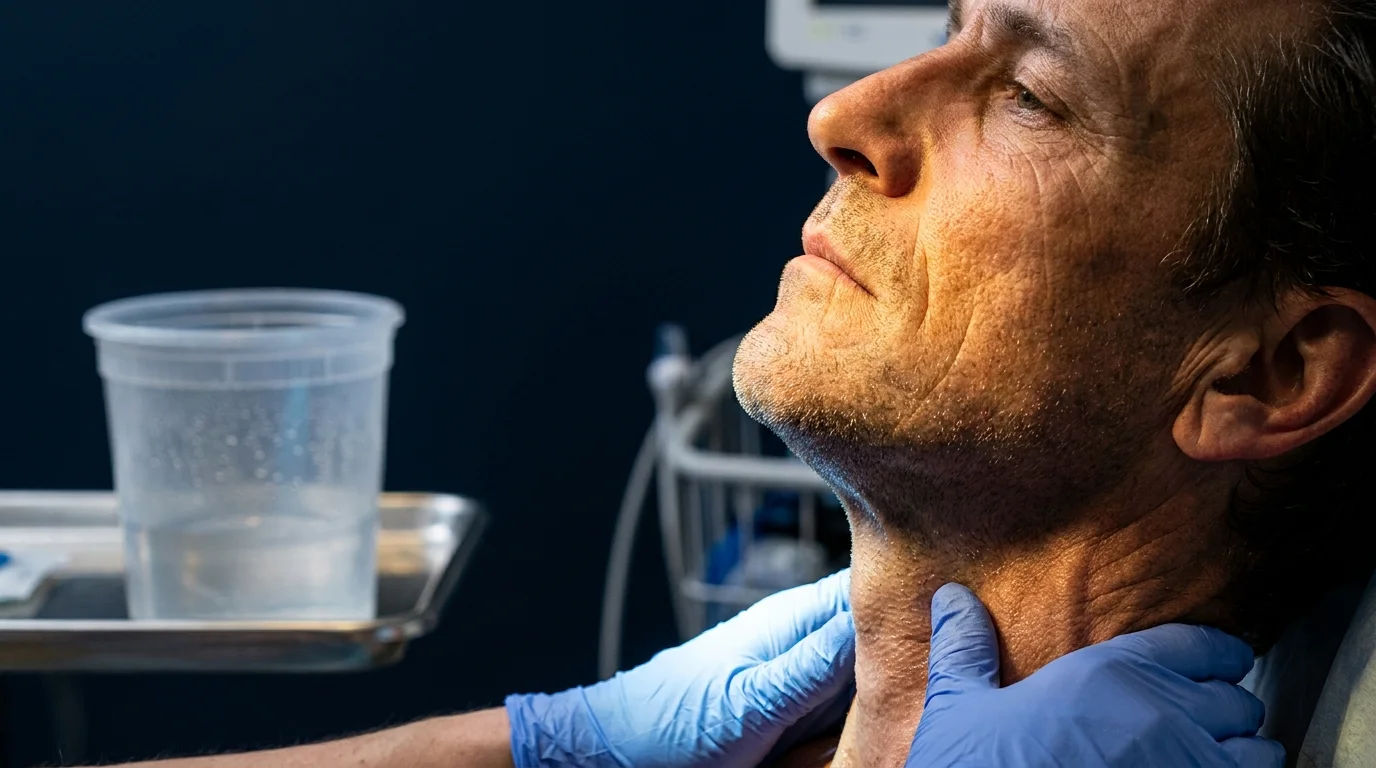
Dr. Marcus Vance, a 46-year-old outpatient clinic director in suburban Raleigh, realized something was fundamentally wrong when five previously healthy patients presented to his triage room in a single Tuesday shift, all reporting identical ten-day cycles of sulfurous belching, explosive fatigue, and stubborn watery diarrhea. Every single one of them had already visited an urgent care facility days prior and received instructions for viral rest or a standard three-day antibiotic pack that did nothing. Only after Dr. Vance ordered specialized stool testing with modified acid-fast staining did the unmistakable, round oocysts of Cyclospora reveal themselves under the microscope lens, exposing an invisible community outbreak that standard automated lab panels had completely missed.
Triage Layers: Pinpointing Vulnerability Profiles
The transmission of this parasite does not occur through undercooked meats or unpasteurized dairy. It rides invisibly into domestic kitchens through uncooked, high-surface-area produce—most notably bagged salad mixes, fresh basil, cilantro, snow peas, and imported berries. Understanding how this risk interfaces with your daily habits helps pinpoint where extra vigilance is needed.
The High-Volume Salad Consumer
Those who eat pre-packaged greens daily often ingest tiny microscopic doses of persistent agricultural runoff. If you lean heavily on boxed field greens for quick lunches, keep in mind that the sticky outer coating of Cyclospora oocysts resists standard municipal washing. Rinsing greens in a colander under cold sink water simply will not dislodge the organism if it contaminated the crop during field irrigation.
The Compromised Mucosal Barrier
Adults navigating chronic stress, prior antibiotic rounds, or mild inflammatory bowel issues experience far more aggressive clinical presentations. While a robust digestive fire can occasionally suppress low-grade protozoan counts, an inflamed gut lining offers the parasite an immediate, vulnerable anchor point, translating into rapid dehydration and dramatic, sudden weight loss over just a few days.
The Commuter and Casual Diner
Fast-casual restaurants that prepare fresh salsas, garnishes, and side salads in bulk become silent vectors during seasonal spikes. Because the parasite requires several days outside the human body to become infectious, direct human-to-human spread is virtually nonexistent. Instead, the risk is concentrated in large batches of unheated greens sliced, tossed, and served cold to dozens of patrons within a single lunch rush.
Navigating the Clinic Surge: A Precision Action Protocol
If you or someone in your home has been fighting intense abdominal cramping, watery diarrhea, and profound muscular fatigue for longer than 72 hours, passive waiting must end. Taking direct control of your clinical interaction prevents days of unnecessary suffering.
- Demand Targeted Stool Diagnostics: Standard routine stool cultures look primarily for bacteria like Shigella or E. coli. You must explicitly ask your healthcare provider for a gastrointestinal pathogen PCR panel or a stool ova and parasites examination using modified acid-fast staining.
- Secure the Specific Compound: Cyclospora does not surrender to over-the-counter anti-diarrheal agents, which can actually trap the organism in your bowel longer. The established clinical therapy is a targeted course of trimethoprim-sulfamethoxazole (TMP-SMX). If you carry a known sulfa allergy, talk to your doctor immediately about alternative compounds like nitazoxanide or ciprofloxacin regimens tailored specifically for protozoan clearance.
- Revise Kitchen Decontamination Practices: Chlorine bleach washes and commercial veggie sprays do not reliably kill Cyclospora oocysts. Cooking produce thoroughly to an internal temperature of at least 140 degrees Fahrenheit or freezing it at 0 degrees Fahrenheit for several days remains the only foolproof method to neutralize the parasite inside the home during active regional warnings.
Your tactical timeline matters immensely during recovery. Track the exact onset of symptoms in a bedside notebook, logging temperature shifts, fluid retention, and bathroom frequency. This objective log provides your clinician with the hard data necessary to bypass generic diagnoses and order definitive laboratory tests immediately.
Rethinking Modern Convenience in an Interconnected Food Chain
There is a profound disconnect between the sterile, pristine presentation of modern supermarket produce and the complex global soil webs that nourish it. We have been conditioned to view plastic packaging as an absolute shield against nature’s messier, microscopic realities. When an outbreak like this ripples through regional clinics, it serves as a sobering reminder that fresh food remains an open biological system.
True self-advocacy does not mean developing a paralyzing fear of fresh greens or berries. Instead, it invites a return to practical intuition: paying attention to public health alerts, refusing to accept generic medical brush-offs when an illness lingers beyond reason, and respecting the fragility of your digestive ecosystem. Understanding what enters your kitchen is the first step in protecting your household long before symptoms take hold.
Treating a protozoan parasite like a routine twenty-four-hour virus is why so many people remain bedridden for weeks without answers.
| Key Point | Detail | Added Value for the Reader |
|---|---|---|
| Transmission Source | Imported fresh produce like bagged salads, fresh herbs, and berries. | Identifies high-risk kitchen staples during active regional advisories. |
| Diagnostic Barrier | Invisible on standard bacterial stool cultures; requires PCR or acid-fast stains. | Empowers patients to request the exact clinical tests needed for diagnosis. |
| Targeted Therapy | Trimethoprim-sulfamethoxazole (TMP-SMX) rather than broad-spectrum antibiotics. | Stops diagnostic delays and halts useless, gut-depleting prescriptions. |
Frequently Asked Questions
Can I wash Cyclospora off my salad greens at home?
Regular tap water, vinegar soaks, and commercial produce washes are largely ineffective against Cyclospora oocysts because they adhere tightly to plant surfaces. Thorough cooking or prolonged sub-zero freezing are the only household methods that completely neutralize the organism.How quickly do Cyclospora symptoms appear after eating contaminated food?
Unlike viral food poisoning, which can strike within hours, Cyclospora has an incubation window averaging seven days, though symptoms can appear anywhere between two and fourteen days after exposure.Is Cyclospora contagious from person to person?
No. The microscopic oocysts shed in stool are not immediately infectious to other humans. They require days to weeks in specific environmental conditions to sporulate and become transmissible, making direct household contagion extremely rare.What happens if a Cyclospora infection goes untreated?
Without targeted antiprotozoal intervention, the infection can linger for several weeks to over a month, presenting in remitting and relapsing cycles that cause severe fatigue, significant weight loss, and chronic malabsorption.Why did my first urgent care visit miss this parasite?
Most standard outpatient clinics order routine bacterial stool cultures that check solely for pathogens like Salmonella or Campylobacter. Cyclospora requires specialized microscopic staining or comprehensive molecular PCR panels that are rarely run without a specific clinical request.