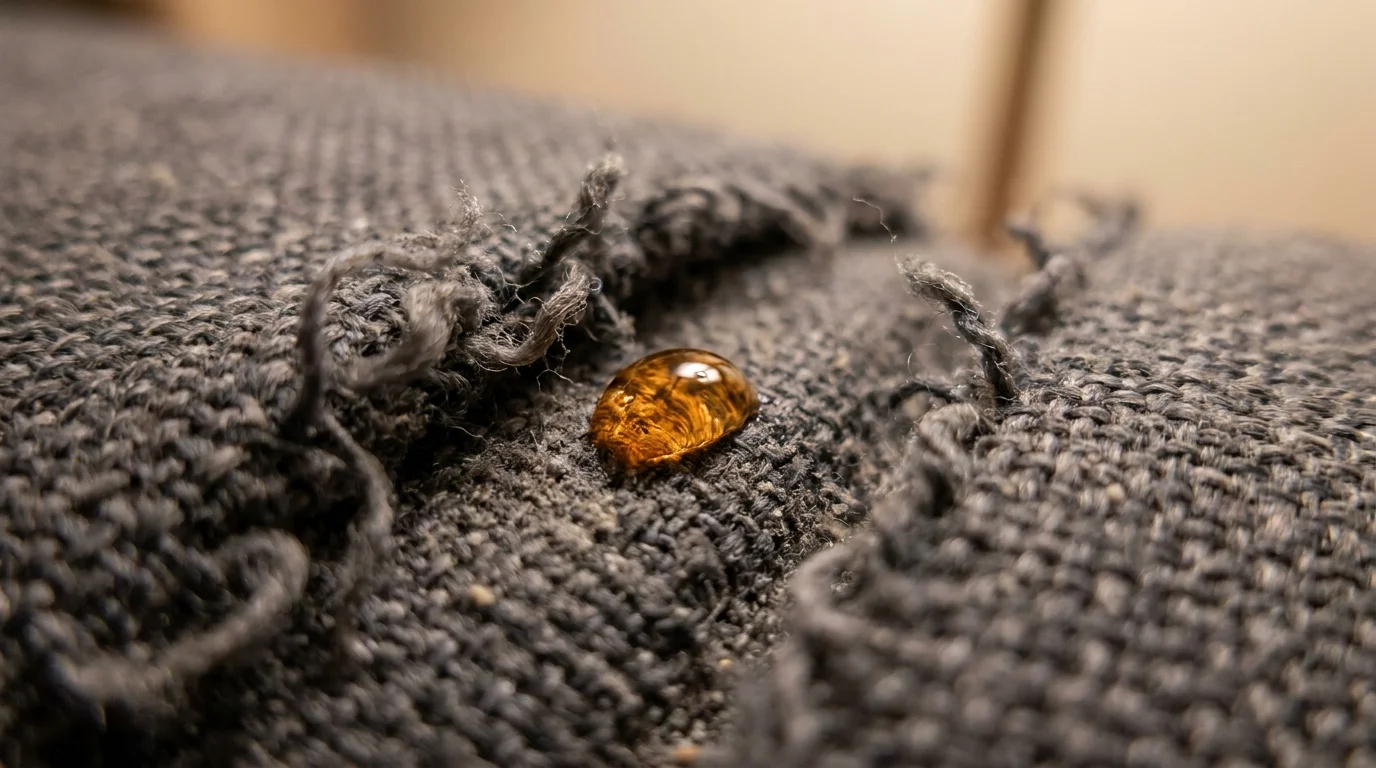
The late afternoon rain taps rhythmically against your window, casting a quiet chill over the room. You brew a warm mug of tea, seeking nothing more than to escape into the immense, cloud-like embrace of your living room centerpiece. You step toward it, ready to let go of the day’s physical toll, and let your body drop into the massive cushions. But instead of meeting a supportive surface, you keep descending, sinking down into a deep, unstructured hollow.
You look down at a plush, sunken gray sofa cushion permanently indented in the middle. It appears to be the absolute apex of modern home design, a luxurious sanctuary crafted for endless relaxation. Yet, when you attempt to stand twenty minutes later, your body tells a completely different story. A sharp, hot ache flares across your pelvic rim, and your knees feel strangely stiff, like cold metal hinges resisting motion.
The interior design world has sold us a beautiful lie with deep-seated sectional sofas, marketing them as the ultimate cozy domestic experience. We instinctively assume that if an object feels incredibly soft, it must be restorative for our tired limbs. The cold mechanical reality, however, is that these trend-forward couches are slowly dismantling our natural joint alignment from the pelvis down.
The Biomechanical Collapse of the Cloud
Think of your pelvis as the structural foundation of your entire skeleton. When you sit on a properly designed chair, your hips and knees form a clean, ninety-degree angle, allowing your spine to stack effortlessly. On a deep sectional, however, your hips drop far below your knees, tilting your pelvis backward into a severe posterior tilt.
This structural misalignment acts like breathing through a pillow for your lower spine. Lacking stable hip support, your lumbar region is forced to flatten completely, bearing the entire weight of your torso without any help from your skeletal frame. Your stabilizing muscles must go into overdrive just to keep you from folding like an accordion, turning a quiet evening of rest into an unacknowledged muscular marathon.
Your knees suffer from a parallel mechanical strain, held in an acute angle under passive tension. When you finally decide to get up, you cannot simply stand; you must rock your torso forward aggressively, using momentum and sheer knee joint torque to hoist yourself out of the fiber-filled cavern.
- Doomscrolling habits secretly force deep muscle tension into your pelvic floor
- Lemon water mornings leave adults over forty completely drained before lunch
- Sleep ring trackers drain your morning brain function and cause decision paralysis
- Liquid IV packets after yoga completely erase the calories you just burned
- Rucking heavy backpacks every day forces your waistline to hold stubborn water
The Silent Lesson from the Living Room
Dr. Marcus Vance, a physical therapist based in Portland, Oregon, spent a decade treating office workers for chronic back tension before he began investigating their living room environments. He recalls treating a landscape architect named Sarah, age forty-four, who suffered from persistent sacral pain that resisted clinical adjustments. It was only when Vance asked her to send a photograph of her reading setup—revealing a popular five-foot-deep modular sectional—that the true culprit emerged. Once Sarah modified her sitting depth and introduced firm pelvic support, her chronic joint stiffness resolved entirely within two weeks.
Mapping Your Sitting Archetype
Not everyone utilizes these massive sofas in the same manner, and the specific physical damage depends heavily on your preferred lounging style. If you are a corner curler, you likely tuck your feet beneath your thighs, rotating your lower spine while sinking into the deep wedge. This asymmetrical posture creates an uneven muscular pull, overstretching the delicate ligaments on one side of your pelvis while compressing the other.
For the slouching lounger, who slides forward until only their neck rests against the back cushion, the risk is entirely spinal. This creates a massive, empty void behind your lower back, leaving your lumbar spine suspended in mid-air under gravity’s constant pull. Over time, this constant hanging tension dehydrates your spinal discs, making them highly vulnerable to sudden injury during normal daily movements.
For those who prefer keeping their legs straight out on a deep chaise, the hamstrings remain under constant stretch. This continuous hamstring tension directly drags the pelvis backward, keeping the lower back under silent, active strain even when you believe you are completely relaxed.
Reclaiming Your Posture Without Replacing Your Furniture
You do not need to discard your expensive designer sectional to preserve your joint health. Simple, deliberate physical modifications can completely neutralize the destructive forces of deep cushions. The goal is to recreate structural stability where the original sofa design failed to provide it.
By strategically introducing firm materials behind and beneath your body, you can restore your skeleton’s natural alignment. This allows your muscles to relax fully, turning your rest into actual recovery rather than a structural struggle.
Here is how to restructure your lounging experience using tools you likely already have at home:
- Insert a firm lumbar roll: Place a tightly rolled bath towel or a firm cylindrical pillow directly behind your lower back to maintain your spine’s natural inward curve.
- Heighten your seating surface: Place a dense, firm foam cushion or a folded wool blanket beneath the decorative cushions to prevent your hips from sinking below your knees.
- Keep your feet grounded: Adjust your position so your feet rest flat on the floor, or place a sturdy wooden footstool under your legs to relieve pressure on your lower thighs.
- Limit your deep-sitting duration: Set a gentle timer on your phone for forty-five minutes; when it sounds, stand and walk for two minutes to restore fluid to your spinal discs.
The Quiet Architecture of Daily Rest
True comfort is not the absence of physical support, but the presence of effortless structural alignment. When we surrender our bodies entirely to furniture that offers no resistance, we mistake muscular collapse for genuine relaxation. A well-designed life requires us to look past aesthetic trends and pay attention to how our spaces shape our physical well-being.
By bringing simple awareness to how your furniture interacts with your skeleton, you protect your physical mobility for years to come. Your home should be a sanctuary for your mind, but it must also respect the mechanical rules of the body that carries you through the world.
“True physical rest occurs when your skeletal frame is supported so completely that your muscles are permitted to go entirely silent.” — Dr. Marcus Vance, PT
| Key Point | Detail | Added Value for the Reader |
|---|---|---|
| Hip-to-Knee Angle | Maintain a 90 to 100-degree angle to keep the pelvis neutral. | Prevents the lower spine from flattening and bearing your entire torso weight. |
| Cushion Density | Use high-resiliency foam inserts rather than pure down feathers. | Provides a stable foundation that resists pelvic tilting and sinking. |
| Active Intermission | Stand and stretch every 45 minutes of sofa sitting. | Restores vital blood flow and hydration to compressed spinal discs. |
Frequently Asked Questions
Is sitting on a deep sofa worse than standing all day? Both extremes pose unique challenges, but deep sitting forces your spinal ligaments to bear weight statically, which can lead to longer-lasting joint deformation than active standing.
How can I tell if my couch is too deep for my body? If your knees do not naturally bend over the edge of the cushion while your back is fully touching the rear support, your couch is too deep.
Are feather-filled cushions bad for lower back pain? Yes, because feather cushions lack the structural memory and density needed to hold your pelvic bones in a neutral, upright position.
Should I use a footstool with a deep sectional? Yes, using a firm footstool can help keep your knees at or slightly above your hips, reducing the extreme pull on your lower back muscles.
Can physical therapy fix back pain caused by furniture? Physical therapy can strengthen your core, but if you return home to sit on an unsupported surface daily, you will continuously undo your clinical progress.