The winter bedroom settles into a dry, quiet chill as the radiator ticks in the corner. You take a breath, but the air catches behind your sternum, stalling against a thick, rattling resistance that feels like trying to inhale through damp cardboard. The standard reaction sits on the nightstand: a small plastic jar of greasy blue jelly smelling sharply of petrochemical menthol, offering a cold tingle that merely tricks your nasal nerves while leaving the stubborn congestion cemented beneath your ribs.
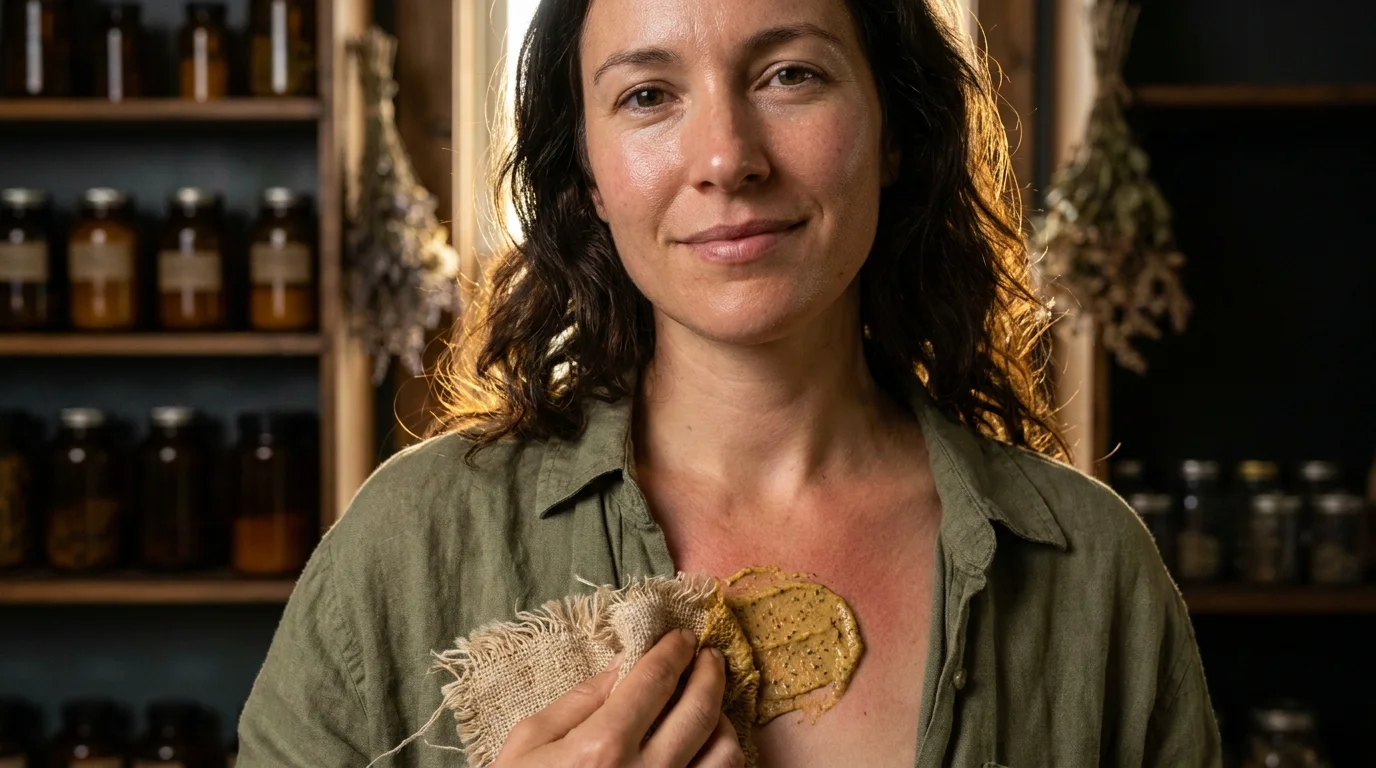
For generations, households resolved this suffocating winter stall with something far simpler, pulled directly from the pantry shelf. The remedy smelled pungent, earthy, and unmistakably sharp. It lived inside a coarse beige linen cloth soaked in warm golden mustard paste, pressed firmly against the chest until a slow, radiant heat pushed outward through the skin.
Far from crude pioneer folklore, this nineteenth-century staple relied on sophisticated biochemical physics. While commercial salves rely on cooling agents to fake an open airway, the traditional mustard plaster acts as an active circulatory engine. It mobilizes trapped, rattling secretions by warming the tissues from the outside in.
When you understand the mechanics behind this forgotten poultice, the practice stops looking like grandmotherly superstition and starts revealing itself as a precise physiological tool.
The Forgotten Hearth: Why Old Rubefacients Outsmart Synthetic Vapors
Commercial vapor rubs primarily target sensory receptors on the surface of your skin to create a phantom sensation of airflow. They do not increase local blood volume, nor do they alter the viscosity of the stagnant phlegm pooling within your lower bronchi. A mustard plaster works on an entirely different thermodynamic principle known in traditional pharmacology as rubefaction.
Dry mustard seed contains sinigrin and an inactive enzyme called myrosinase. The moment you introduce lukewarm water, the enzyme activates rapidly, converting sinigrin into allyl isothiocyanate—the volatile compound responsible for mustard’s signature nasal sting. When applied to the chest, this natural organic sulfur compound gently irritates the superficial dermal layers.
Your vascular system responds to this mild topical challenge by dilating the dense capillary beds directly under the skin. This rush of fresh, oxygenated blood floods the chest wall, creating a sustained, radiant warmth that penetrates into the superficial intercostal tissues. The localized heat reduces muscular tension between your ribs, encourages deeper diaphragmatic expansion, and liquefies thick bronchial mucus so your natural cough reflex can finally clear it.
- Cedar barrel saunas trigger sudden arterial shearing leaving dizzy adults gasping for breath
- Ground clove tooth packs stop persistent gum irritation under a numbing herbal tingling seal
- Chewing raw ginger slices sparks sharper morning mental focus without bitter coffee stomach burns
- DripDrop hydration packets block cellular fluid absorption on empty stomachs leaving parched lips and twitches
- Dual monitor mounts force subtle neck twisting that sparks dull throbbing base-of-skull aches
Instead of masking chest tightness behind an icy layer of artificial scent, you are using the body’s own circulation to melt the blockage from within.
The Clinical Revival of Pantry Heat
Dr. Clara Vance, a 62-year-old integrative pulmonologist practicing in rural Upstate New York, spent years watching patients cycle through antihistamines and drying synthetic rubs that left their airway linings parched and irritable during seasonal viral waves. Frustrated by the lack of simple mechanical relief for stubborn, wet coughs, she turned back to historical medical texts to study how natural counter-irritants were dosed before the antibiotic era. She found that the mustard plaster had been abandoned not because it failed to clear phlegm, but because convenience culture favored shelf-stable petroleum jars over fresh kitchen preparation.
In her clinical consultations, Vance teaches families how to balance active mustard flour with inert kitchen binders to produce safe, predictable warmth without scorching the skin. She explains that drawing blood toward the chest wall helps move inflammatory fluid away from congested bronchial passages. Her patients consistently report that twenty minutes under a warm wrap produces more productive, effortless coughing fits than days spent breathing artificial vapors over a steaming sink.
Adapting the Compress: Three Approaches for Common Needs
Every set of lungs carries congestion differently, and sensitive skin demands thoughtful pacing. You can modulate the intensity of the mustard plaster by altering your base flour ratios and protective barriers.
For Sensitive or Fair Skin (The Gentle Buffer):
If your skin tends to flush easily or feels fragile, you must tame the enzymatic bite. Use a ratio of one part dry yellow mustard powder to four parts all-purpose flour. Mix with warm chamomile tea instead of plain water to provide a calming botanical cushion, and always grease the chest with a generous coat of cold-pressed olive oil or lard before laying down the cloth. This slows the dermal penetration of the mustard oils while preserving the steady radiant heat.
For Deep, Rattling Bronchial Spasms (The Active Draw):
When the chest feels heavy, rigid, and locked with thick mucus that refuses to budge, you need a livelier metabolic pull. Blend one part mustard flour with two parts unbleached flour, using lukewarm filtered water to form a smooth, spreadable paste. Keep the paste strictly sealed inside the folded linen cloth—never apply it bare against the flesh—and monitor the skin every three minutes until a soft pink glow appears across the breastbone.
For the Restless Nighttime Cough (The Dry Wrap):
If a tickling, dry hack keeps you from settling into deep restorative rest, you can soften the plaster by adding a half-measure of ground flaxseed meal into the dry mix. Flaxseed yields a thick, mucilaginous paste that holds thermal energy twice as long as pure wheat flour. The resulting plaster produces a milder, persistent humidity that relaxes tight chest muscles without requiring intense rubefacient heat.
Mindful Application: Constructing Your Chest Wrap
Preparing a mustard plaster is an intentional, grounding domestic ritual. It demands your full attention, a quiet room, and a steady hand.
Work cleanly on a warm kitchen counter. Gather your materials before mixing so the enzymatic reaction does not peak before the compress touches your skin.
- Measure precisely: Whisk dry mustard powder and wheat flour together in a ceramic bowl to break up any stubborn clumps.
- Hydrate with care: Add lukewarm water gradually, stirring until the mixture mimics the texture of thick cake batter. Avoid boiling water, which permanently denatures the therapeutic myrosinase enzyme.
- Wrap the core: Lay down a clean piece of unbleached muslin, cotton flannel, or kitchen linen. Spread the warm paste in a thin, even layer across the center, then fold the outer borders inward like an envelope to trap the wet paste completely inside.
- Prepare the barrier: Smooth a thin layer of natural oil or plant butter over your breastbone. Place the wrapped compress over your upper chest, avoiding the nipples and neck, then lay a dry, heavy hand towel over the top to trap the rising warmth.
- Rest and observe: Remain still under a warm quilt for 10 to 15 minutes. Check your skin every few minutes; the goal is a rosy, warm glow resembling a gentle sunbath, never a painful burn. Remove the wrap immediately if the heat bites uncomfortably.
Once you remove the pack, sponge the skin gently with a damp, lukewarm cloth to clear any escaping oils, then rest flat under your blankets for at least a half-hour to let the loosened phlegm naturally work its way upward.
The Tactical Toolkit
Keep these exact baseline parameters pinned to your pantry door for safe execution:
- Mustard-to-Flour Ratio: 1:3 for standard adult use; 1:4 for delicate or older skin.
- Water Temperature: 105°F to 110°F (lukewarm to the wrist; boiling water destroys the active compounds).
- Maximum Application Window: 12 to 18 minutes total contact time.
- Wrap Medium: 100% breathable cotton flannel, unbleached linen, or a repurposed cotton tea towel.
Reclaiming Autonomy Through the Pantry
Modern medicine excels at managing acute emergencies, but our rush toward sterile convenience has severed our relationship with practical, physical caretaking. When you are sick, reaching for a plastic blister pack of pills can feel isolating, leaving you passive in your own recovery. Preparing a warm compress requires you to slow down, pay close attention to your body’s physical responses, and participate actively in your own comfort.
There is profound reassurance in watching a simple, inexpensive seed from your spice rack accomplish what synthetic chemical rubs fail to deliver. As the radiant warmth relaxes your tight intercostal muscles and the stubborn rattling in your lungs loosens its grip, you are participating in a quiet lineage of domestic self-reliance. True healing often waits in the humble, sensory remedies that modern marketing hurried to replace.
“When we warm the chest through natural peripheral circulation rather than chemical illusion, the lungs finally find the physical freedom to clear themselves.”
| Key Point | Detail | Added Value for the Reader |
|---|---|---|
| Biochemical Engine | Allyl isothiocyanate generated by myrosinase and sinigrin. | Produces real, measurable vascular dilation instead of an artificial cooling trick. |
| Thermal Action | Dilates localized intercostal and cutaneous capillary networks. | Thins deep bronchial phlegm by raising local tissue temperature from within. |
| Skin Protection | Flour blending ratios paired with pre-applied plant oils. | Prevents dermal irritation while ensuring steady, sustained heat transfer. |
| Application Window | Strictly timed between 10 and 15 minutes. | Maximizes mucus mobilization without risking blister formation or excessive redness. |
Frequently Asked Questions
Can I apply the wet mustard paste directly to my bare skin?
No, you should never place raw mustard paste directly against your skin. The volatile allyl isothiocyanates are potent counter-irritants that can cause severe redness or blistering within minutes if not buffered behind a folded linen cloth.Why shouldn’t I use boiling water to prepare the paste?
Boiling water destroys myrosinase, the heat-sensitive enzyme required to produce the warming therapeutic compounds. Water between 105°F and 110°F ensures complete enzymatic activation without degrading the remedy.How often can I safely repeat a mustard plaster wrap?
For acute seasonal congestion, you can apply a wrap once in the morning and once in the early evening. Always inspect the skin first to ensure any pinkness from the previous session has completely faded.What is the best way to clean the skin after removing the wrap?
Wipe the chest thoroughly with a soft cloth soaked in warm, soapy water. Follow with a light dab of pure olive oil or tallow to replenish the natural moisture barrier.Can I use prepared bottled yellow mustard instead of dry powder?
Bottled condiment mustard contains vinegar, salt, and preservatives that disrupt the enzymatic reaction and sting your skin. Always use pure, dry ground mustard seed from your spice collection.