The bedroom quiet settles in under the soft spill of a 40-watt lamp. You fluff two heavy down pillows, stack them against the hardwood headboard, and sink back with a book resting across your knees. In that initial breath, everything feels perfectly cradled, an evening sanctuary designed to unwind twelve hours of accumulated momentum.
Yet twenty minutes into your chapter, a silent mechanical trade takes place. Your chin tilts subtly toward your collarbone, pushing your head forward while your upper back rounds against the cushioned wedge. You shift slightly, barely noticing the microscopic slide of your lower back away from the baseboard as your cervical curve flattens into an awkward, forced shelf.
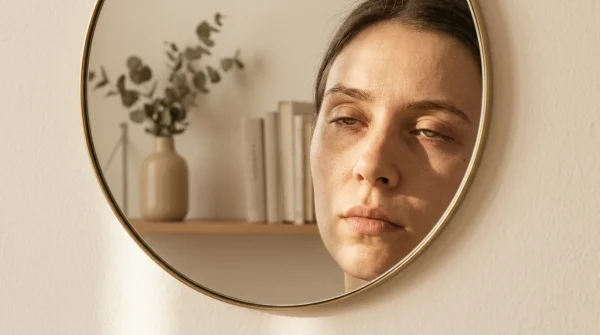
By morning, the bedroom stillness is gone, replaced by a dull, persistent ache that creeps up the rim of your skull like a tight wire band. You might blame the morning coffee, hydration levels, or hours under office fluorescent lights, never suspecting that the gentle bedtime nest was what wound the tension tight.
The C-Spine Fulcrum: When Soft Feathers Act Like Levers
We tend to view pillows as passive clouds of comfort, but when wedged behind your neck in a semi-upright posture, they act like firm biomechanical fulcrums. The human head weighs roughly ten to twelve pounds when balanced naturally over the shoulders. Tilt that weight forward just thirty degrees against a stuffed bolster, and the structural load pressing into your cervical tissues triples.
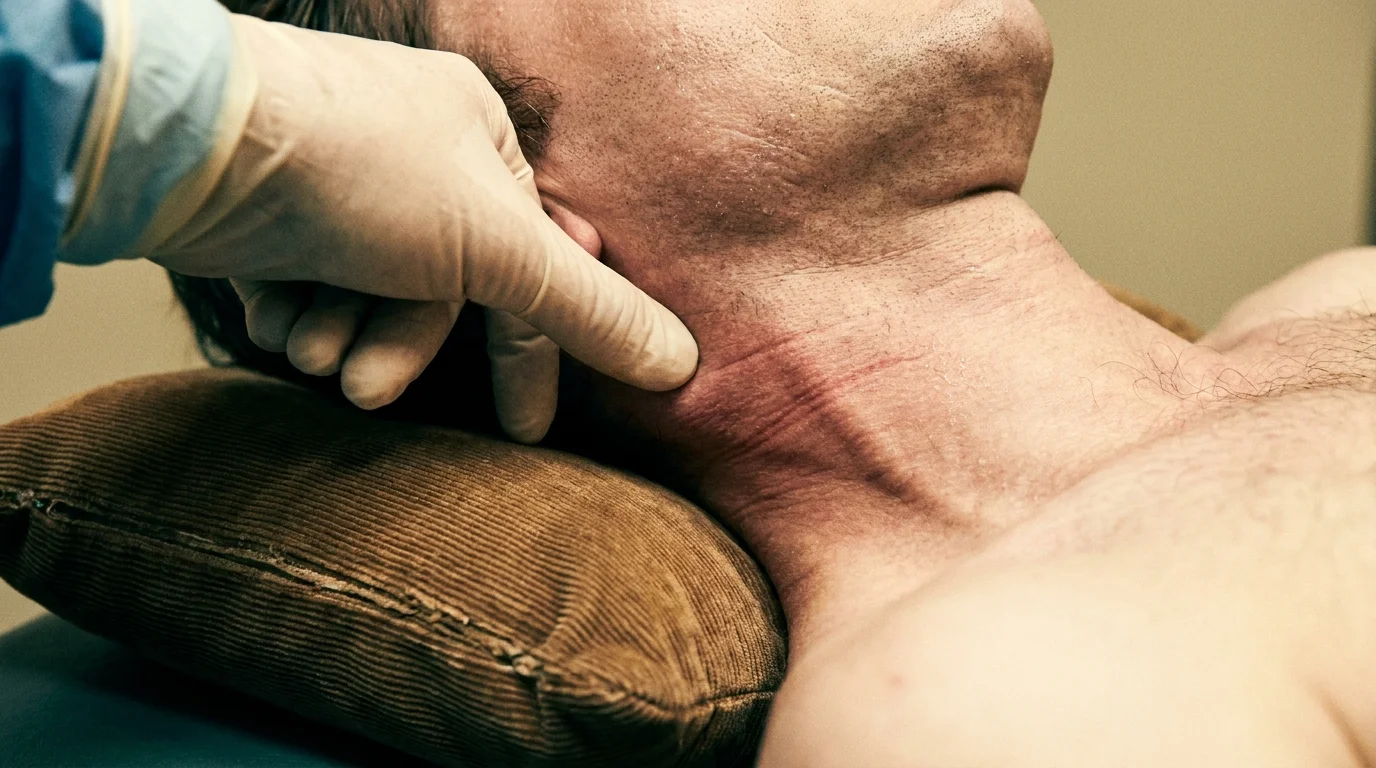
Instead of resting in its natural inward arc, known as lordosis, the neck gets shoved into continuous passive flexion. In this position, the tiny suboccipital muscles—a cluster of four delicate tissue pairs anchoring the base of your skull to your top two vertebrae—are forced to stretch and lock under tension. They become like guitar strings tuned two octaves too high, clamping down directly over the greater and lesser occipital nerves.
Elena Ruiz, a 42-year-old architectural draftswoman from Portland, spent eighteen months chasing what her clinicians vaguely cataloged as tension headaches. Every afternoon at 2:00 PM, an iron vise seemed to squeeze behind her ears, blurring her focus on complex blueprints. It was only when a physical therapist asked her to document her reading habits that she recognized the pattern: seventy nightly minutes propped against four stacked European shams had been silently shearing her upper cervical joints, starving local muscle tissue of blood flow and trapping the very nerve roots that feed sensation across the scalp.
- Magnesium stearate binders inflame gut mucosal linings triggering stubborn afternoon belly bloating
- Chilled matcha tonics disrupt stomach lining circulation triggering sudden sharp belly cramps
- Rigid desk chairs trap lower ribcage expansion sparking shallow chest suffocation panic
- Mastoid bone ice presses trigger instant parasympathetic drops halting racing heart panic
- Deep thumbnail presses halt sudden public panic surges by grounding shaky finger tremors
Mapping the Tilt: How Different Evening Habits Trap the Nerve
Not every reader rests the same way, and the angle of your headboard nest changes where the mechanical bite lands.
The Hardcover Devotee
Holding a physical volume naturally drops your gaze into your lap. When your back is tilted forward by plush mounds, your neck must bend even further to meet the page. This creates maximum traction across the C1 and C2 vertebrae, setting the stage for that telltale morning stiffness that refuses to ease until lunchtime hot showers.
The Screen and E-Reader Lounger
Tablets and smartphones invite you to drop your arms entirely, resting the device on your ribs or belly. This posture prompts a sharp downward chin-tuck that compresses the anterior disc margins while over-stretching the suboccipital triangle. The result is not just a sore neck, but referred throbbing that radiates directly behind the eye sockets by mid-afternoon.
The Side-Slanted Prop
Leaning into the corner where the headboard meets the wall introduces an asymmetrical twist. One side of your suboccipital group remains shortened while the opposite side is hyper-stretched. This uneven shear often triggers unilateral nerve irritation, mimicking sinus pressure or localized migraine symptoms along one half of the head.
The Neutral Recline: A Mindful Realignment
Restoring ease does not require abandoning evening reading altogether; it simply requires supporting the skeleton rather than bending it. When you honor the spine’s natural architecture, deep comfort arrives without the neural tax.
Instead of creating an aggressive right angle against your wall, transition to an inclined recline that distributes support down through the mid-back and pelvis.
- Base your support at the sacrum: Slide your hips fully against the headboard rather than slouching twelve inches forward, preventing your lumbar spine from collapsing into a hammock shape.
- Angle the torso at forty-five degrees: Utilize a firm wedge pillow or arrange bolsters so your entire ribcage tilts backward as a unified block, keeping your head stacked directly over your heart.
- Elevate your reading material: Place a standard firm pillow across your lap and rest your forearms on it to lift your book or device to eye level, neutralizing the need to drop your chin.
- Provide a dedicated cervical roll: Roll a hand towel into a small cylinder and place it directly beneath the hollow of your neck, allowing the back of your head to sink back freely without being pushed forward.
The Bedside Realignment Toolkit
Keep these foundational benchmarks in mind when staging your evening space for zero-strain relaxation:
- Torso Incline: 40 to 45 degrees back from vertical, preventing acute neck flexion.
- Target Gaze Line: 15 degrees below horizontal horizon, keeping the suboccipital muscles relaxed.
- Reading Duration Interval: 35 minutes continuous before resetting head posture with three slow shoulder rolls.
- Support Density: Medium-firm foam wedge foundation paired with a soft, moldable neck contour roll.
The Bigger Picture: Reclaiming Rest as Genuine Restoration
True comfort is quiet; it does not demand an apology from your nervous system twelve hours later. When we mindlessly surrender our posture to haphazard stacks of bedding, we turn a ritual of restoration into an invisible physical chore. By bringing just a fraction of awareness to how your spine rests against the wall, you eliminate the micro-strains that slowly chip away at your daytime focus.
Reclaiming the natural curve of your neck at night lets the brainstem and suboccipital pathways rest in genuine decompression. You wake up with clear eyes, loose shoulders, and a head that feels light on its shoulders—allowing your morning to begin with open clarity rather than a search for the medicine cabinet.
“When you support the torso instead of propping the head, your neck muscles finally receive permission to stop holding up the world.”
| Key Point | Detail | Added Value for the Reader |
|---|---|---|
| Suboccipital Nerve Pinch | Forward chin tilt crushes nerve bundles against C1-C2 vertebrae. | Explains why afternoon temple throbbing starts in bed the night before. |
| Stacked Pillow Deficit | Plush pillows flex the head forward while letting lower back round out. | Highlights how soft bedding creates deceptive mechanical strain. |
| Forty-Five Degree Recline | Angling torso backward keeps cervical spine in true neutral alignment. | Permits effortless, pain-free reading without arm or shoulder fatigue. |
| Lap Pillow Elevation | Resting books on an elevated base brings text up to eye line. | Eliminates the repetitive downward gaze that strains posterior neck bands. |
Frequently Asked Questions
Why does the base-of-skull headache only show up hours later in the afternoon?
Suboccipital nerve irritation rarely announces itself immediately; it triggers slow-building myofascial inflammation and sustained muscle guarding that tightens gradually as gravity works against your posture throughout the day.Can using an ergonomic memory foam pillow fix this while sitting upright?
Contour pillows are sculpted for horizontal sleeping and lack the structural foundation to support an upright torso; an angled triangular wedge pillow provides the correct whole-spine recline.How can I tell if my headache is from eye strain or my neck position?
Cervicogenic headaches rooted in suboccipital compression typically begin at the occipital ridge at the base of the skull and track upward over the scalp, whereas eye strain usually centers purely across the brow or behind the eyes.Does reading on my side in bed solve the spinal angle issue?
Side reading introduces lateral flexion and rotational torque on the cervical joints, trading anterior nerve compression for asymmetrical facet joint locking and localized shoulder pinching.What is the quickest way to release suboccipital tension after reading?
Lie flat on your back on a firm carpet with two tennis balls taped together nestled directly under the skull base, letting the weight of your head gently compress the tight tissue for three peaceful minutes.