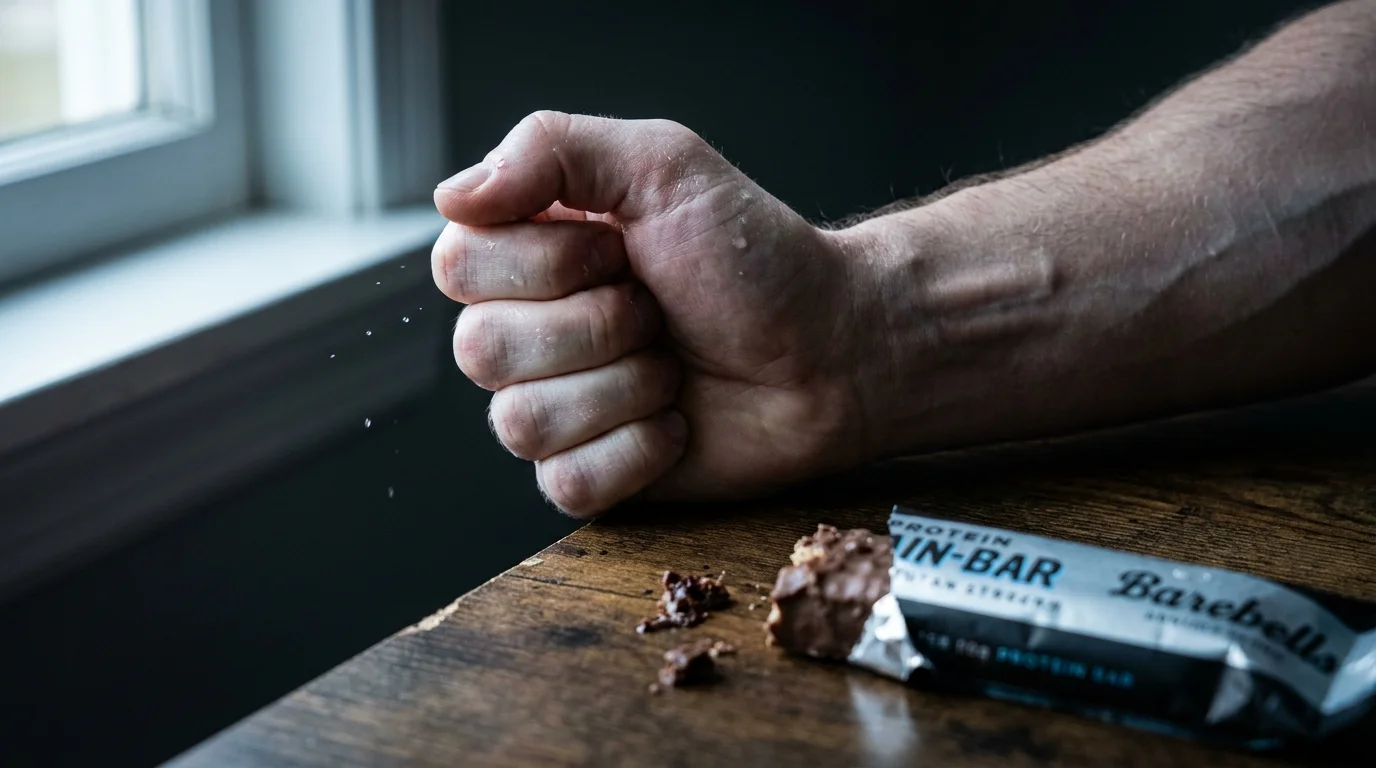
The foil wrapper tears with a muted, metallic snap, releasing an aroma indistinguishable from a convenience store candy bar. You bite through a thick coat of milk chocolate, past crunchy soy crisps, sinking into a chewy, decadent caramel core that feels entirely too indulgent for twenty grams of protein and zero added sugar. It feels like getting away with a secret. You swallow the last bite at your desk around one in the afternoon, feeling virtuous, fueled, and protected against the usual mid-day slump.
Then the clock ticks past two-forty-five. Without warning, a subtle chill sweeps across your collarbone, your fingers turn slightly clammy against the keyboard, and a sudden tremor enters your hands. Your focus splinters like brittle ice, replaced by an urgent, hollow gnawing in the pit of your stomach that makes you want to raid the breakroom pantry for anything containing fast carbohydrates.
You wonder if you under-ate at lunch or if your morning lifting session demanded more recovery fuel. The reality is far more counterintuitive. You are not running on empty; you are riding the violent downward slope of a metabolic bait-and-switch engineered by the very bar you trusted to keep you stable.
The Phantom Sugar Trap and Cephalic Rebound
When you consume a functional fitness snack like a Barebells bar, your tongue registers profound, sticky sweetness, yet the nutrition panel proudly displays a near-absence of simple sugars. The secret behind this culinary magic trick is maltitol—a polyol, or sugar alcohol, chosen because it mimics the mouthfeel and bulk of table sugar far better than stevia or monk fruit ever could.
Your brain, however, is an extraordinarily meticulous accountant. The moment those hyper-sweet compounds coat your taste buds, your nervous system initiates what physiologists call the cephalic phase insulin release. Your pancreas anticipates a tidal wave of pure glucose rushing into the bloodstream, preemptively flooding your circulation with insulin to clear the impending fuel delivery before it causes vascular harm.
Here lies the metabolic fracture: while maltitol has a lower glycemic index than sucrose, it is far from inert. It boasts a glycemic index around thirty-five to fifty-two depending on its syrup or powder form, meaning up to half of it is systematically absorbed as active carbohydrate. The body absorbs a chaotic fraction of the sugar alcohol while contending with an oversized surge of circulating insulin. The hormone clears your circulating blood sugar faster than the digested polyols can replenish it, plunging your serum glucose down into a steep, temporary trough. The result is reactive hypoglycemia—the trembling, irritable fog that leaves you feeling starved before late afternoon arrives.
- Absorbing family complaints drains central nervous energy triggering raw morning throat inflammation
- Rhomboid back muscles trap daily email dread sparking burning upper spine knots
- Hospital measles protocols shift urgent isolation standards following Pennsylvania clinic infection spikes
- Zepbound dose surges trigger sudden morning stomach paralysis for desperate weight loss patients
- Flipping dense pillows exposes chilled fabric layers to halt midnight sweat drenching
A Field Observation: Elena’s Three O’Clock Collapse
Elena Ramos, a thirty-four-year-old corporate architect and dedicated morning powerlifter in Chicago, spent six months baffled by her afternoon brain fog. Every weekday at two o’clock, she reached for a Cookies & Cream bar to bridge the gap between her working lunch and her evening commute, believing she was practicing disciplined blood sugar management.
“By three-thirty, I could barely assemble a coherent email,” Elena shared during a nutrition audit. “My heart rate would tick upward, my knees felt weak, and I was overcome by an insatiable urge to devour plain bagels. I blamed my thyroid, my sleep hygiene, and my caffeine intake, never suspecting that my healthy snack was acting like a delayed-release sugar bomb.” When continuous glucose monitoring revealed her glucose spiking sharply forty minutes post-bar before cratering thirty milligrams per deciliter below her baseline fasting level, the culprit became impossible to ignore.
Metabolic Profiles: How Different Bodies Process the Polyol Load
Not every gym-goer experiences this crash identically. The intensity of your afternoon tremor depends heavily on gut motility, insulin sensitivity, and the state of your digestive tract when the bar lands in your stomach.
The Post-Workout Fasted Lifter
If you break an intermittent fast or consume your bar immediately following an intense session without other whole foods, your digestive transit is expedited. Rapid gastric emptying floods the intestine with maltitol and whey isolates simultaneously, provoking an amplified insulin surge that drops your blood sugar like a stone within seventy minutes.
The Desk-Bound Snacker
Consuming high-density polyols while sedentary alters blood flow distribution. Splanchnic circulation slows, leaving the sugar alcohols to ferment partially in the small bowel while triggering erratic, delayed glucose spikes that manifest as heavy eyelid droop, cold hands, and profound cognitive lethargy rather than acute shakiness.
The Sensitive Microbiome Cohort
For individuals with low microbial diversity, maltitol draws water into the colon via osmotic pressure while provoking systemic micro-inflammation. The gut distress communicates directly with the vagus nerve, magnifying feelings of anxiety and fatigue that masquerade as extreme physical hunger.
Mindful Adjustments: Taming the Functional Snack Crash
Breaking this cycle does not require abandoning quick-grab protein entirely. It demands treating processed fitness bars as specialized metabolic tools rather than casual snacks. Implement these specific actions to stabilize your afternoon energy reserves:
- Pair with protective whole fats: Never eat an isolate-and-polyol bar on an empty stomach. Buffer absorption by consuming six to eight raw walnuts or a tablespoon of whole pumpkin seeds five minutes prior.
- Monitor the ninety-minute window: Track how your fingers, temples, and appetite feel precisely one and a half hours after ingestion. Physical trembling or sudden thirst is your biological cue of an insulin rebound.
- Hydrate with mineralized fluids: Sugar alcohols exert an osmotic pull, drawing hydration into the intestinal lumen. Drink eight to twelve ounces of room-temperature water with a pinch of unrefined salt alongside the bar to prevent hemoconcentration and artificial fatigue.
- Shift your timing to post-meal: If you love the taste, treat the bar as a dessert immediately following a high-fiber lunch rather than a standalone bridge item mid-afternoon.
The Bigger Picture: Reclaiming Genuine Satiety
The modern fitness culture has conditioned us to view food through a lens of isolated numbers—twenty grams of protein, one gram of sugar, two hundred calories. We trust the glossy typography on the front of a wrapper more than the autonomic signals vibrating through our own nerve endings. When your body trembles at three in the afternoon, it is not failing you; it is sending an honest, chemical protest against synthetic equilibrium.
Learning to recognize the difference between genuine physical depletion and the artificial turbulence of industrial sweeteners restores your peace of mind. True physical resilience does not feel like a desperate reach for survival midway through your workday. It feels quiet, stable, and completely self-sustaining.
“When we outsource our body’s fuel signaling to engineered polyols, we trade an hour of sweet convenience for an afternoon of metabolic chaos.”
| Key Point | Detail | Added Value for the Reader |
|---|---|---|
| Maltitol Absorption | Possesses a glycemic index between 35 and 52 despite ‘zero sugar’ label claims. | Helps you calculate genuine carbohydrate impact rather than trusting net-carb marketing. |
| Cephalic Insulin Trigger | Hyper-sweet taste receptors signal the pancreas to release defensive insulin early. | Explains why you feel starving even after eating a calorically dense snack. |
| Osmotic Shift | Sugar alcohols pull water into the digestive tract, altering cellular hydration. | Reveals why afternoon brain fog often stems from localized gut dehydration. |
| Protective Buffering | Consuming fibrous whole fats slows polyol transit across intestinal walls. | Provides an immediate, practical way to enjoy treats without the crash. |
Frequently Asked Questions
Are all sugar alcohols responsible for the same afternoon energy crash?
No. Erythritol has a glycemic index near zero and is largely excreted in urine before reaching the colon, making it far less prone to spiking insulin than maltitol or sorbitol.Why doesn’t the wrapper label maltitol as a simple sugar?
Regulatory definitions classify maltitol as a sugar alcohol rather than a direct sugar, allowing brands to subtract it from total carbohydrates when marketing net-carb claims to consumers.Can drinking black coffee alongside my protein bar prevent the crash?
Caffeine often worsens reactive hypoglycemia by temporarily increasing peripheral insulin resistance and stimulating adrenaline, heightening shaky hands and internal anxiety.How long after eating does reactive hypoglycemia typically occur?
Most individuals experience the sharpest drop between seventy and one hundred and twenty minutes after ingestion, exactly when circulating insulin outpaces available glucose.What is the best immediate remedy when the shaky afternoon crash hits?
Consume a slow-burning complex fuel such as a half-apple with almond butter or a spoonful of plain Greek yogurt rather than another quick shot of simple sugars.