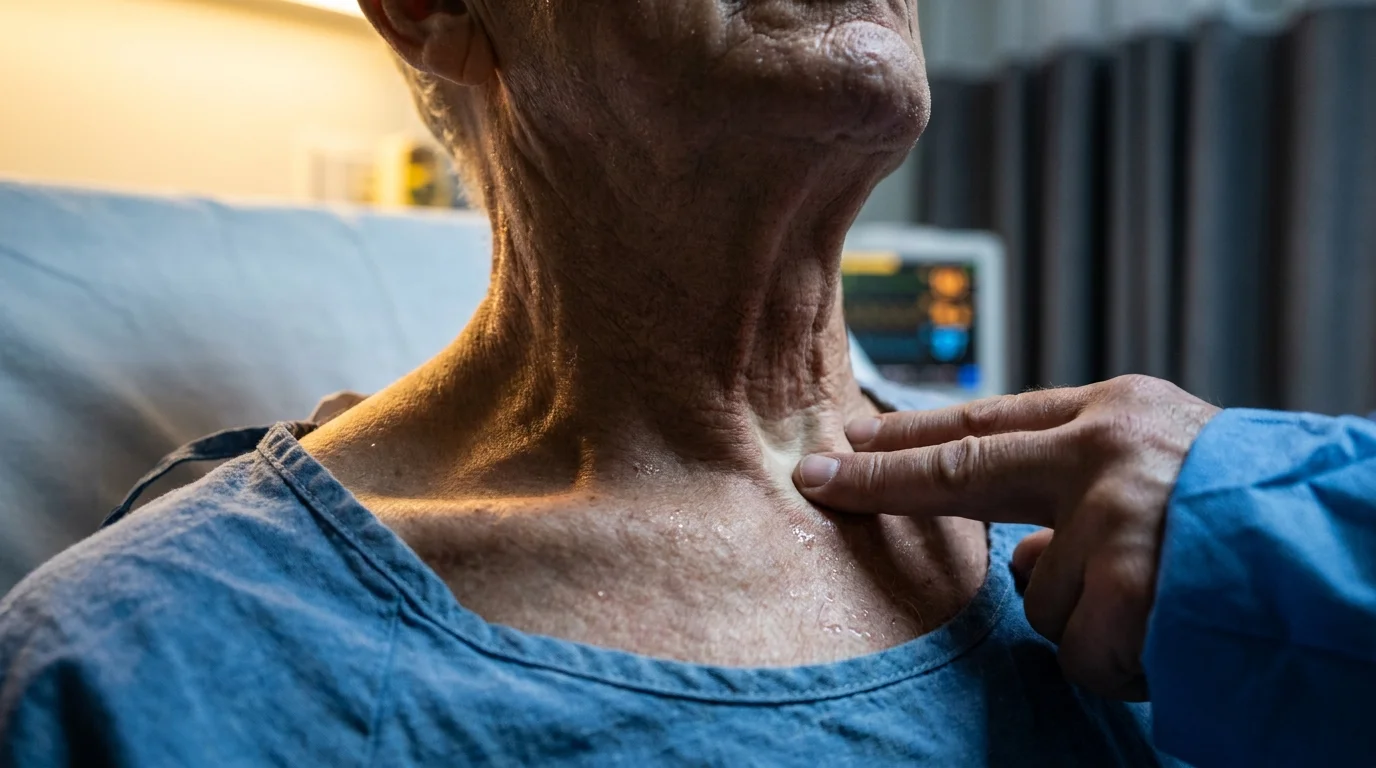
The steady, soft click of an infusion pump inside an intensive care bay sounds like security. Fluorescent tubes hum low in the small hours, air carries the faint tang of isopropyl alcohol, and clear saline lines run quietly toward a patient you expect to see slowly stabilize. When aggressive hospital-acquired pneumonia or stubborn bloodstream infections strike, fourth-generation cephalosporins are often the clinical bedrock wheeled in to quietly reclaim ground.
For decades, cefepime has functioned as that reliable workhorse across American health systems. You watch the transparent fluid advance through the tubing, assuming its broad-spectrum armor is operating entirely beneath the radar of overt side effects. In most bodies, the drug circulates, destroys microbial cell walls, and filters cleanly out through renal corridors without leaving a noticeable trace.
Yet, when kidney function subtly slows, an invisible pressure builds inside the central nervous system. What starts as a vacant glance toward the acoustic ceiling tiles, a wandering sentence, or a barely perceptible flutter in the fingertips is often chalked up to ICU delirium or septic fatigue. The true driver, however, is a sudden accumulation of drug molecules slipping past the protective gates of the blood-brain barrier.
A profound operational pivot is now rippling across inpatient care networks. Driven by urgent safety alerts, updated clinical protocols are requiring bedside teams to re-evaluate cefepime antibiotic dosing before standard therapeutic courses unintentionally provoke acute neurotoxicity.
The Neurotoxic Spillway: Clearance Beyond Fixed Nomograms
To understand why this widely trusted antibiotic turns toxic, you have to picture a mountain reservoir whose floodgates have rusted partially shut. Cefepime relies almost exclusively on renal clearance to exit your system. When glomerular filtration runs at full tilt, the drug does its job in the periphery and departs before concentrations climb inside the cerebral spinal fluid.
When renal clearance falters, the spillway narrows rapidly. The drug backs up into systemic circulation, crossing into brain tissue where it behaves as a competitive antagonist at gamma-aminobutyric acid (GABA-A) receptors. By blocking GABA—the nervous system’s natural brake pedal—cefepime removes inhibitory control, triggering a quiet electrical storm that manifests as non-convulsive status epilepticus, myoclonus, or severe stupor.
The traditional error has been treating renal dosing as a static, once-daily calculation on a chart. Kidney filtration in acute illness is rarely a steady state; it ebbs and flows with hydration, blood pressure, and vascular tone. Relying on yesterday morning’s lab values while delivering an unadjusted afternoon infusion creates an accidental flood.
- Avocado oil searing releases airborne irritants triggering burning sinus pressure and heavy fog
- Reverse osmosis water flushes essential cellular electrolytes triggering parched mouth and midday exhaustion
- Carrying laundry baskets laterally twists lower spine joints sparking sharp morning lumbar ache
- Legionnaires disease cases trigger urgent clinical alerts across regional outpatient networks
- Loosely tucked bedsheets release trapped foot tension and stop midnight calf cramps
By treating kidney function as a moving current rather than a fixed number, clinicians preserve fragile neural pathways while still maintaining the drug’s potent antibacterial kill rate.
The Pharmacist’s Watch: A Hidden Shift on the Floor
Dr. Marcus Vance, a 44-year-old critical care specialist in Cleveland, spent years watching patients recover from severe intra-abdominal sepsis only to mysteriously slip into unresponsive states four days into their recovery. Laboratory work often showed creatinine levels that were only mildly elevated, masking an underlying clearance drop that traditional dosing nomograms failed to flag. It was only after systematically tracking electroencephalogram (EEG) readings alongside drug levels that his team realized the antibiotic was lingering long past its welcome, prompting an immediate local overhaul in how infusions were spaced and monitored.
Stratifying the Vulnerability Gradient: Pacing by Physiology
Protecting vulnerable patients does not mean abandoning an exceptionally effective antibiotic; it means abandoning rigid, one-size-fits-all infusion schedules. Different levels of organ strain require fundamentally different therapeutic pacing strategies.
The Mild Glomerular Drift (eGFR 30–50 mL/min)
Patients in this intermediate zone are frequently the most overlooked. Because their baseline kidney numbers do not look alarming on a morning metabolic panel, they often receive standard two-gram infusions every eight hours. In reality, their clearance latency is already stretched thin. Extending the dosing interval to every twelve hours keeps trough levels safely beneath the neurotoxic ceiling while still keeping blood concentrations well above the minimum inhibitory concentration for target bacteria.
Failing to extend this interval allows the drug to accumulate imperceptibly, turning an everyday therapy into a cognitive trap over forty-eight continuous hours.
The Dialysis and CRRT Interface
In patients undergoing intermittent hemodialysis or continuous renal replacement therapy, timing is everything. Cefepime is readily dialyzable, meaning an uncoordinated dose given right before a session gets stripped out immediately, leaving the infection untreated. Conversely, aggressive post-dialysis re-dosing without accounting for inter-dialytic pauses sets the stage for severe neuro-accumulation. Targeted protocols now demand standardized post-filter administration paired with weight-stratified maintenance cuts.
The Critical Sepsis Paradox
In the earliest stages of septic shock, some patients experience augmented renal clearance, clearing drugs at hyper-speed, only to plunge into sudden acute kidney injury thirty-six hours later. Preserving neurologic function requires active daily tracking of urine output and hourly fluid balance, rather than waiting for creatinine to show a delayed spike on a computer screen.
Recognizing this dynamic physiological pivot allows bedside clinicians to slash infusion rates proactively before subtle cognitive blunting takes root.
Clinical Recalibration: Pacing, Tapering, and Real-Time Surveillance
Reworking cefepime administration requires deliberate, low-friction habits that seamlessly integrate into high-stress bedside routines. Protecting the brain requires looking past generic order sets and observing subtle somatic cues.
- Track baseline neurological status before hanging the first bag, establishing an exact reference point for speech cadence, pupil reactivity, and subtle hand tremors.
- Recalculate estimated creatinine clearance using current, real-time serum markers rather than historical records or admission baseline figures.
- Shift from short, thirty-minute rapid infusions to prolonged, three-to-four-hour infusions when indicated, blunting dangerous peak serum concentrations in borderline patients.
- Establish an immediate pause protocol the moment unexplained lethargy, confusion, or involuntary muscle twitches appear, ordering an urgent EEG rather than waiting for obvious tonic-clonic activity.
- Transition patients to targeted, narrower-spectrum alternatives the moment susceptibility cultures return, shortening total exposure duration.
These measured interventions transform antibiotic delivery into a responsive, protective safeguard rather than an automated checklist.
Tactical Toolkit: Clearance and Pacing Benchmarks
- Target Trough Serum Level: Keep trough concentrations strictly below 20–22 mcg/mL to prevent GABA-mediated central nervous system toxicity.
- Standard Infusion Duration: Extend infusion run times to 3–4 hours for critical dosing, smoothing out sharp serum spikes.
- Renal Threshold Intervention: Trigger mandatory clinical pharmacist reviews whenever eGFR falls below 60 mL/min/1.73m².
- Cognitive Assessment Frequency: Re-evaluate neurological responsiveness every 8 hours during ongoing therapeutic courses.
Adopting this disciplined technical pacing guarantees that treatment eradicates systemic pathogens safely without compromising delicate cognitive recovery.
Preserving the Mind While Rescuing the Body
Modern intensive care often focuses intensely on eradicating the threat in front of us: knocking down fever curves, clearing white counts, and sterilizing blood cultures. But the ultimate marker of healing is not merely surviving an infectious onslaught; it is emerging from the hospital room with your mind, memory, and personality fully intact.
When we re-examine standard dosing guidelines through the lens of individual metabolic reality, we honor the fragility of neural tissue. Stepping away from automated orders to consciously calibrate infusion rates acknowledges a fundamental truth of medicine: how a drug leaves the body is just as vital as how it arrives.
Treating a severe infection is only half the battle; ensuring the patient wakes up with their cognitive baseline intact is the true measure of success.
| Key Point | Detail | Added Value for the Reader |
|---|---|---|
| Clearance Vulnerability | Cefepime clears primarily through renal elimination, accumulating dangerously when filtration slows. | Clarifies why seemingly stable lab values can still hide neurotoxic buildup risks. |
| GABA-A Antagonism | Excess circulating drug crosses into brain tissue, blocking normal inhibitory neurological impulses. | Explains why symptoms manifest as sudden confusion, myoclonus, or silent seizures. |
| Adaptive Infusion Pacing | Extending dosing intervals and utilizing prolonged infusions moderates peak blood levels. | Provides actionable dosing frameworks that protect brain health while curing infection. |
Frequently Asked Questions
What are the earliest warning signs of cefepime-induced neurotoxicity?
The earliest indicators are subtle cognitive shifts: mild confusion, difficulty maintaining eye contact, wandering speech, and tiny, involuntary muscle twitches (myoclonus) in the hands or face. These symptoms are often misdiagnosed as routine ICU delirium.Why are kidney patients uniquely susceptible to this side effect?
Cefepime relies almost entirely on the kidneys to leave the body. When renal clearance slows, the drug stays in circulation longer, backing up into systemic tissues and crossing the blood-brain barrier at significantly elevated concentrations.Can cefepime neurotoxicity be reversed once symptoms start?
Yes. In the vast majority of cases, stopping the antibiotic or significantly reducing the dose resolves symptoms within two to three days. In severe cases with active seizures or profound encephalopathy, emergency hemodialysis can rapidly clear the drug from circulation.Does an extended infusion increase the risk of neurological toxicity?
No, extended infusions (running a bag over three to four hours instead of thirty minutes) actually help prevent toxicity. They flatten the sharp peak drug concentrations in the blood that typically trigger acute central nervous system distress.How can family members or patient advocates watch for this issue?
Advocates should monitor for sudden changes in alertness or unexplained twitching that begin forty-eight to seventy-two hours after starting a new IV antibiotic. Always ask the clinical team to verify if the antibiotic dose has been adjusted for the patient’s current kidney function.