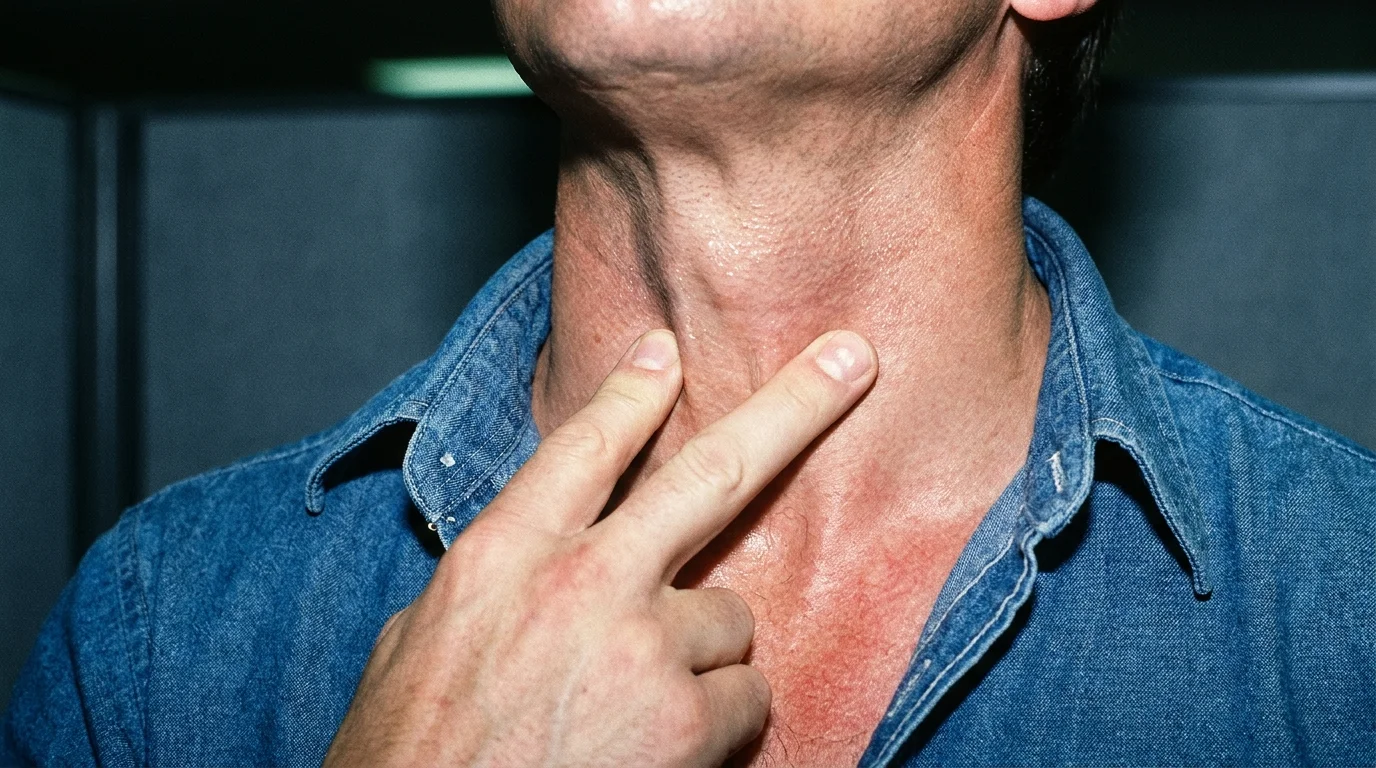
The office clock hovers right around 2:15 in the afternoon. The room carries the dry, recycled hum of commercial air conditioning, the faint aroma of reheated dark roast coffee, and the steady, rhythmic clicking of mechanical keyboards. You are halfway through an ordinary spreadsheet when a subtle, sour weight drops behind your sternum. Your throat tightens by a millimeter, your shoulders ride upward toward your ears, and your pulse quickens with a phantom adrenaline surge that feels entirely unearned by your calm inbox.
You instinctively assume it is an oncoming panic attack, late-day caffeine jitters, or some buried career dread bubbling to the surface. You pause, inhale sharply through your nose, and find that the air simply stops short somewhere in the upper third of your chest. Breathing feels like drawing draft through a pinched paper straw.
Yet nothing dangerous has actually occurred. The culprit is not a psychological crisis or an undiagnosed cardiac flutter. Down beneath your desk, folded into an ergonomic task chair, fourteen-ounce raw Japanese denim is digging a rigid, inflexible trench directly into your upper abdomen and lower ribs.
By sitting for hours in high-rise, zero-stretch trousers, your body enters an involuntary physical splint. What registers in your conscious thoughts as existential dread is often nothing more than a mechanical chokehold on your lower rib cage.
The Phantom Panic of Diaphragmatic Splinting
To understand why a pair of heritage jeans can provoke acute work anxiety, you have to picture the lungs not as passive balloons, but as expanding bellows sitting inside an umbrella-like cage. When you take an unstrained, natural breath, your dome-shaped diaphragm contracts downward toward your belly, while the lower floating ribs flare laterally like wings. This lateral flare creates the negative pressure required to pull oxygen deep into the vascular bases of your lungs, where the calming branches of the vagus nerve reside.
When you sit, your pelvic tilt rotates backward and your thighs fold upward at a ninety-degree angle. This mechanical hinge concentrates the heavy, reinforced waistband of rigid denim directly across your solar plexus and floating ribs. Instead of expanding outward, your lower thoracic cavity hits a structural stone wall. Your diaphragm cannot physically descend.
- Progressive reading lenses force unnatural chin tilts triggering burning base skull headaches daily
- Stainless steel ice rollers constrict facial microvessels sparking numb tingling fingertips and temple throbs
- Skipping yard raking erodes natural core balance leaving frail slumping posture in adults
- Premier Protein shakes spike sudden afternoon cravings leaving sticky tongue dryness
- Cefepime antibiotic dosing shifts hospital protocols following sudden neurological toxicity warnings
Faced with this mechanical barrier, your body relies on emergency secondary breathing muscles: the scalenes in your neck and the pectorals in your upper chest. These muscles were designed for short bursts—running from danger or hauling heavy loads—not for surviving six consecutive hours of client calls. Upper-chest breathing signals high metabolic distress to the brainstem. The brain does not ask whether your trousers are simply tailored too snug; it registers an inability to expand the lungs and assumes you are slowly suffocating in an enclosed space.
The Tailor Who Unmasked the 3:00 PM Spasm
Marcus Vance, a 46-year-old bespoke denim tailor based in Portland, Oregon, spent decades fitting heavy-weight selvedge jeans for software engineers and architects before noticing a strange, repeating pattern in his shop. Clients would return for alterations not to tweak hem breaks or taper knees, but asking why their favorite pairs made them feel faint, winded, or irritable within forty minutes of sitting down at their workstations. Marcus began running a simple test in his fitting room: he had clients take a maximal belly breath while standing, mark the lateral rib expansion with chalk, and then sit down on a low wooden stool. In a seated fold, a stiff cotton band without elastane shrank ribcage circumference tolerance by up to two and a half inches. The fabric simply refused to yield to the body’s respiratory demands, turning durable everyday fashion into a tight thoracic corset.
Somatic Profiles: How Waistband Compression Targets You
Not every desk worker feels this compression in the exact same manner. The impact depends heavily on your torso proportions, the rise of your pants, and how you naturally position your skeleton throughout the workday.
The Short-Torso High-Rise Trap
If you have a shorter distance between the crest of your pelvis and the bottom of your rib cage, high-rise trousers sit directly over ribs eleven and twelve rather than resting safely against soft waist flesh. In this posture, rigid rivets clamp floating ribs, completely preventing lateral flaring. You will likely experience sharp, localized rib stabs, an urge to clear your throat, and a sudden sensation of shallow hyperventilation while typing.
The Forward-Leaning Sloucher
For those who hunch toward monitors, the lumbar spine rounds outward. This tilt drives the top button of mid-rise and high-rise jeans directly up into the celiac plexus—the major nerve junction behind the stomach. The continuous blunt pressure mimics the somatic sensation of being punched in the gut, setting off cold fingers, sudden sweat on the palms, and inexplicable nervous irritability.
The Deep-Focus Breath Holder
Deep analytical thinking naturally encourages subtle breath-holding, often called screen apnea. When you finally remember to inhale, a stiff, non-yielding waistband punishes the breath, cutting it off midway. The nervous system reads restriction as an environmental threat, spiking baseline cortisol and leaving you mentally drained before your afternoon wrap-up.
The Reset: Restoring Natural Thoracic Expansion
Liberating your autonomic nervous system does not mean throwing your wardrobe into the trash or wearing oversized fleece sweatpants to professional meetings. It requires understanding when to adjust your fit and how to break the splinting cycle throughout your day.
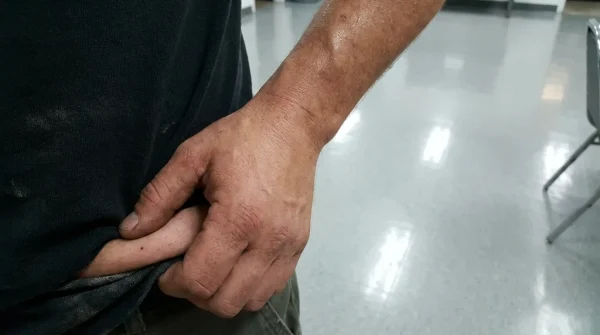
- The Seated Two-Finger Clearance Check: When trying on trousers, do not evaluate the waist while standing upright in front of a mirror. Sit down on a firm chair. Slide your index and middle fingers flat between the waistband and your belly button. If you cannot slide them in without holding your breath, that garment will induce splinting within ninety minutes of desk work.
- The Midday Unbutton Hack: When seated alone at your desk or during camera-off calls, discreetly undo the top button. Loosening just one inch of tension removes direct mechanical pressure from your floating ribs, allowing the lower lobes of your lungs to receive baseline ventilation.
- The 90-Second Lateral Rib Mobilization: Place your hands flat on the sides of your rib cage, fingers pointing inward toward your sternum. Inhale deeply through your nose, deliberately forcing your hands outward rather than letting your shoulders climb. Repeat five times to clear muscle guarding in the intercostal muscles.
The Desk Worker’s Respiration Toolkit
Keep your respiratory mechanics smooth with these concrete standards: select daily trousers containing at least 1.5% to 2% technical stretch or elastane for seated desk roles. Set an unyielding ceiling of twelve ounces for fabric weight if you sit longer than five hours a day. Maintain a minimum gap of two finger-widths between the garment band and your ribs while seated. Finally, practice three-minute box breaths (four seconds in, four seconds hold, four seconds out, four seconds hold) every two hours to reset intercostal tone.
The Freedom in Unbinding Your Breath
We routinely blame our modern minds for anxieties that are entirely anchored in our clothing. We buy calming teas, track our heart rate variability on smart rings, and scroll through mindfulness tutorials, all while wearing heavy garments that clamp down on our breathing mechanics like a vise. Panic is not always an emotional failing or an unavoidable response to modern work; often, it is a simple physical scream for air.
When you give your ribs room to move, your nervous system interprets the world differently. Your heart rate settles, your focus steadies, and that mysterious 2:00 PM dread evaporates into quiet productivity. Learning to wear clothing that honors your body’s physical needs turns out to be the simplest form of daily peace you can choose.
Real physical calm begins at the waistband; you cannot think your way out of a panic that your ribs are physically forced to manufacture.
| Key Point | Detail | Added Value for the Reader |
|---|---|---|
| Thoracic Splinting | Rigid waistbands block diaphragm descent during seated work. | Identifies that sudden afternoon anxiety is often mechanical rather than psychological. |
| Rib Flare Suppression | Sitting in high-rise denim prevents lower floating ribs from expanding sideways. | Explains why deep breaths feel cut short despite clear, healthy lungs. |
| Vagus Nerve Mismatch | Upper-chest breathing triggers fight-or-flight responses in the brain. | Gives you immediate permission to adjust clothing rather than internalizing phantom stress. |
Frequently Asked Questions
Can stiff clothing really cause a genuine panic attack?
Yes. While it does not create the mental worry directly, it restricts lower diaphragmatic movement. This forces shallow upper-chest breathing, which biochemically mimics hyperventilation and prompts your autonomic nervous system to release stress hormones.Why do I only feel this tightness when I sit, but never when standing?
Standing naturally elongates the abdomen and lets trousers drop lower on the hips. When you sit, your hips hinge and your torso shortens, driving the waistband upward and inward against your lower ribs and digestive organs.Does this mean I should switch entirely to elastic waistbands?
Not necessarily. You can still wear tailored clothing and heritage denim; simply size your garments for your seated dimensions rather than your standing reflection, or choose cuts with higher curved yokes and gentle flex.How can I tell if my afternoon anxiety is denim-related or real stress?
Perform a quick physical diagnostic: undo your top button, stand up, take three deep belly breaths, and step away from your desk. If your chest tightness, throat tension, and racing pulse subside within three minutes, your pants were driving the episode.Are certain body shapes more vulnerable to diaphragmatic splinting?
Individuals with short torsos, those with high-waisted bone structures, and desk workers who lean forward over laptop keyboards feel this compression fastest because their floating ribs sit closer to the trouser band.