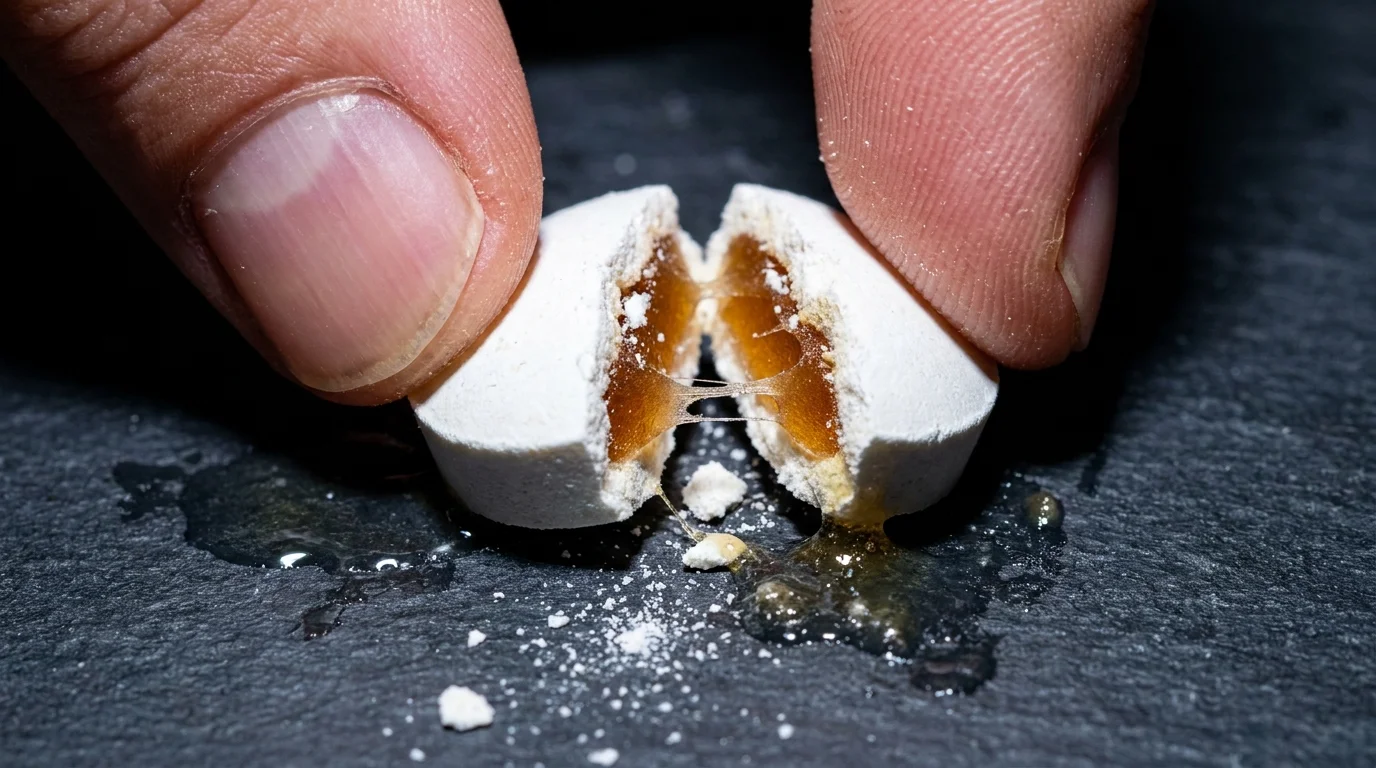
You swallow your morning regimen with a glass of tap water, waiting for the familiar settling silence in your gut. Outside, the early sun hits the kitchen counter, cutting across amber bottles of supplements, heart medications, or clean-label multivitamins. You expect nourishment or quiet maintenance, trusting that each pressed white caplet yields obediently to the warmth of your digestive tract.
Instead, by mid-afternoon, your waistband begins to bite into your flesh. It is not the soft, billowy puffiness of excess lunch, but an unyielding, drum-tight ache that sits low across your pelvis like dry cement. You wonder if your body suddenly rebelled against fiber or developed a mysterious sensitivity to morning oats, entirely overlooking the chalky vehicle carrying your daily remedies.
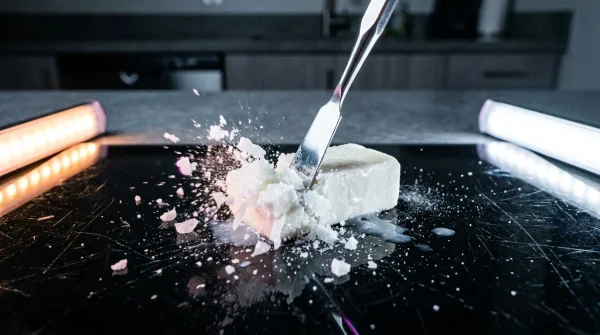
Behind that stubborn pressure lies an invisible industrial paradox. Modern high-speed tablet presses require materials that do not yield under mechanical pressure, creating tightly packed compounds engineered to disintegrate rapidly in laboratory beakers of agitated water. Yet, inside a living, low-acid gut, those very additives can fail to disperse, forming a viscous, stubborn intestinal sediment that refuses to budge.
The Architecture of the Indestructible Pellet
To understand why your lower belly feels cast in plaster, look at the microscopic geometry of croscarmellose sodium binders. In industrial tablet manufacturing, this internally cross-linked sodium carboxymethylcellulose operates as a superdisintegrant. It is designed to pull water into the tablet matrix via capillary action, swelling exponentially to burst the pressed tablet apart from within like miniature wedges driven into stone.
However, that explosive swelling demands abundant, free-flowing fluid and an optimal acidic environment. When ambient gastric moisture is scarce or your stomach acid is slightly suppressed from stress or meals, the cross-linked fibers do not break apart into free solution. Instead, the polymer binds with digestive mucus, transforming into a dense, gelatinous paste that clings tightly to mucosal folds rather than dissolving cleanly into the chime.
Think of it as dropping a dry compressed wood pellet into cold honey instead of boiling water. Rather than breaking down into invisible dust, it expands into an immovable, spongy mass. As this insoluble sediment crawls through the small intestine, it physically drags across delicate villi, setting off localized alarm bells that trigger sudden fluid retention, smooth muscle guarding, and that unmistakable, rock-hard abdominal distension.
- Raw manuka honey seals painful cracked heels overnight through active floral enzymes
- Levator scapulae muscles trap chronic workplace micro-stress triggering burning neck and shoulder aches
- Grapeseed cooking oil releases stinging fumes triggering heavy sinus pressure and sudden brain fog
- FitCrunch protein bars spike blood sugar triggering violent afternoon crashes and intense cravings
- Anticipating unspoken moods drains neural stamina sparking restless sleep and chronic physical exhaustion
The Clinical Clue Hidden in Routine Regimens
For Dr. Marianne Vance, a compounding pharmacist in Asheville, North Carolina, the revelation came while working with a 42-year-old landscape architect named Sarah. Sarah had developed persistent, agonizing pelvic tightness that began every day at two in the afternoon, defying every elimination diet, probiotic trial, and digestive enzyme she was handed. Vance began dissecting Sarah’s routine and noticed four separate over-the-counter and prescription tablets—ranging from a joint support complex to an allergy tablet—all relied heavily on croscarmellose sodium as their primary structural carrier. When Vance transitioned Sarah to pure compounded powders dissolved in warm water, the dense, petrified bloating vanished entirely within seventy-two hours, exposing the excipients as the true culprit.
Mapping Your Sensitivity: The Three Excipient Tolerance Profiles
Not every digestive tract handles synthetic pill binders identically. Your susceptibility to excipient-driven abdominal distension depends on your unique gut motility, hydration status, and baseline stomach acid levels.
The Slow-Transit System
If you naturally tend toward sluggish bowels, superdisintegrants pose the greatest physical hazard. Because the tablet residue lingers in the jejunum and ileum far longer than intended, the swellable fibers continue leaching ambient moisture from surrounding tissue. This produces dry, hardened plugs along the digestive track that physically block gas dispersion and spark localized cramping.
The Low-Acid Fasting Consumer
Taking dense, pressed caplets with just a quick swallow of water on an empty stomach creates an excipient bottleneck. Without a robust surge of hydrochloric acid to soften the internal cross-links, the binder forms a sticky gel that coats the gastric lining, delaying stomach emptying and inducing a heavy, cold rock feeling right beneath the sternum before the afternoon distension even begins.
The Multi-Dose Polypharmacy Stacker
When you consume multiple tablets across the day—such as combining a morning multivitamin, a mid-day pain reliever, and an evening mineral blend—the total daily load of non-dissolving cellulose excipients compounds. What might be tolerable as a single milligram trace transforms into an accumulated coating of synthetic sediment, leaving your intestinal mucosa chronically inflamed and constantly defending against foreign bulk.
Mindful Application: Clearing the Binder Trap
Reclaiming a flat, comfortable abdomen does not mean abandoning your vital wellness steps or medical prescriptions. It requires shifting how you introduce these compounds to your digestive tract, neutralizing their tendency to form sticky, immovable sediment.
Inspect your ingredient panels carefully. Croscarmellose sodium often hides under abbreviations or synonymous industry names like cross-linked sodium CMC or modified cellulose gum. Prioritize softgel, liquid, or loose-powder formats whenever possible to avoid mechanical excipients entirely.
If you must consume pressed caplets, hydrate intentionally with warm liquids rather than ice water. Cold water tightens cross-linked polymers and delays the swelling reflex, whereas warm fluids facilitate rapid matrix breakdown before the pill leaves the stomach chamber.
The Tactical Toolkit for Pill Digestion:
- Hydration Volume: Drink a minimum of 8 to 10 ounces of body-temperature water (approximately 98°F to 105°F) with every dense, pressed tablet to ensure full particle saturation.
- Acid Priming: Take solid tablets 10 minutes after a small meal or alongside a teaspoon of lemon juice or raw apple cider vinegar in warm water to stimulate natural digestive acidity.
- Physical Dispersal: For non-enteric, non-timed-release supplements, use a stainless steel pill splitter to crack the outer compression shell, allowing digestive juices to penetrate instantly.
- Transit Window: Avoid lying down or sitting completely still for at least 25 minutes after taking high-binder tablets, giving gravity and active peristalsis time to sweep materials through the stomach.
The Bigger Picture: Reclaiming Intuitive Gut Peace
Modern wellness often teaches you to obsess over active ingredients while ignoring the physical carriers that deliver them. We scrutinize the purity of our herbs, the potency of our vitamins, and the necessity of our prescriptions, yet we swallow industrial binders, flow agents, and glidants without a second thought. When your gut screams with rock-hard tension, it is rarely an act of unprovoked betrayal; it is usually a simple physical reaction to mechanical debris trying to move through organic pathways.
Learning to identify and minimize these invisible bulking agents restores quiet order to your body. You step away from endless restrictive diets and unnecessary anxiety about sudden food intolerances, realizing that your digestive fire was healthy all along. By simply peeling back the synthetic scaffolding that surrounds modern remedies, you give your stomach room to soften, digest, and breathe naturally once again.
The stomach is a living, responsive ecosystem designed for natural nourishment, not an industrial vessel built to process high-pressure manufacturing adhesives.
| Key Point | Detail | Added Value for the Reader |
|---|---|---|
| Polymer Mechanism | Croscarmellose sodium swells exponentially by pulling water into its cross-linked cellulose web. | Reveals why inadequate fluid intake turns a disintegrant into an immovable, sticky paste. |
| Inflammatory Buildup | Undissolved excipients settle against the intestinal mucosa, triggering defensive swelling and gas entrapment. | Explains that your rock-hard abdominal bloat is structural irritation rather than a food allergy. |
| Temperature Strategy | Warm water speeds up polymer breakdown, while cold liquids increase binder stiffness. | Offers a cost-free, immediate daily habit to dissolve pills smoothly without gut distress. |
Frequently Asked Questions
What is croscarmellose sodium commonly found in?
It is widely used in high-compression prescription tablets, cheap multivitamin caplets, over-the-counter pain relievers, and large mineral supplements like calcium or magnesium.Why do manufacturers use cross-linked binders if they cause gut distress?
These binders allow machinery to compress powders into solid, shatter-proof tablets at lightning speed, ensuring long shelf life and consistent mechanical durability during shipping.How can I tell if my bloating is caused by pill binders or food?
Binder-induced distension typically feels rock-hard and localized in the lower abdomen, appearing consistently 2 to 4 hours after taking your daily tablets, regardless of what meal you ate.Can I crush tablets to stop croscarmellose sodium from swelling?
Crushing works well for non-timed-release, uncoated dietary supplements, but you must never crush enteric-coated, delayed-release, or prescription medications without consulting your pharmacist.Are there safer alternatives to pressed caplet supplements?
Look for supplements formulated in uncolored vegetable capsules (hypromellose), liposomal liquids, clean sublingual drops, or pure soluble powders that dissolve instantly in water.