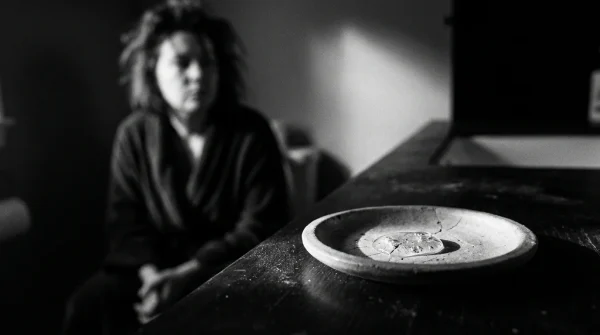
A crisp leather notebook sits open on your desk, its heavy cream pages catching the soft morning light. Your favorite fountain pen glides smoothly, leaving behind perfectly spaced cursive lines that read: “I am grateful for this warm cup of coffee. I am grateful for my cozy apartment.” Outwardly, this is the picture-perfect image of self-care, a quiet moment carved out of a chaotic world to ground your nervous system. But beneath your ribs, a cold knot is tightening, leaving you breathing through a pillow while your mind races with the very anxieties you are trying to write away.
The wellness industry tells us that writing down three positive things every morning is a shield against modern anxiety. We buy the linen-bound planners, light the lavender candles, and force our pens to trace happy thoughts while our real lives feel like they are fraying at the edges. What they do not tell you is that your brain is incredibly sensitive to incongruence. When you force a smile onto a face that wants to weep, the nervous system registers a threat.
This daily ritual of forced positivity eventually turns into a psychological battleground. By demanding that your brain focus only on the bright side, you are telling your subconscious that your actual, messy feelings are dangerous and must be hidden. The result is not peace, but a quiet, simmering internal panic that spikes your baseline cortisol as your brain detects the emotional mismatch.
The Friction of the Positivity Mirror
Think of your mind as a highly sensitive security system. When you experience real stress—such as a looming deadline, a strained relationship, or financial dread—your amygdala sounds a quiet alarm. This alarm is designed to make you pay attention and resolve the threat. But when you open your journal and write “everything is perfect and I am so blessed,” you are throwing a blanket over the alarm siren instead of addressing the fire.
This mismatch creates what psychologists call cognitive dissonance. Your brain detects a lie when your physical reality does not match the beautiful cursive on the page. Instead of calming down, your nervous system assumes that because you are ignoring a real-world threat, it must work twice as hard to keep you safe. The beautifully bound journal becomes a psychological trigger, signaling to your brain that it is time to mask your pain once again.
Consider Julian, a thirty-eight-year-old landscape architect from Portland who spent two years keeping a strict daily gratitude log to combat work burnout. Every night, despite feeling hollowed out by client demands and sleep deprivation, he forced himself to find five things to appreciate. “I felt like an imposter in my own diary,” Julian told me. The more he wrote about how wonderful his life was, the more his baseline anxiety rose, culminating in a sudden panic attack during a routine morning writing session. When he finally closed the notebook and allowed himself to write, “I am incredibly angry and tired today,” his chest immediately loosened—a physiological release that months of forced appreciation could not provide.
- Blue light glasses worn all day systematically exhaust your cellular energy
- Matcha powder rituals steal vital iron and leave your extremities freezing
- Sea moss gel smoothies trigger silent facial inflammation and sudden volume loss
- Intermittent fasting apps push morning routines that destroy female cycle health
- FDA tampon findings prompt immediate medical shifts in female hygiene care
Tailoring Your Mental Off-Ramp
Not everyone processes emotional friction in the same way, and your journaling practice needs to reflect your unique nervous system profile rather than a generic wellness template.
For the High-Achieving Perfectionist, you likely use your journal as another checklist to conquer. If your gratitude lists feel like a graded assignment where you must prove your worthiness, you are reinforcing the idea that your natural state is inadequate.
For the Sensitive Empath, you often carry the emotional weight of those around you. Forcing yourself to write happy thoughts when you are absorbing global or local grief creates an internal tear, making you feel disconnected from your authentic empathy.
For the Chronic Stress Survivor, forcing gratitude can feel like gaslighting your own pain. Your brain needs validation of its struggles, not a shiny coat of paint over a crumbling foundation.
The Realignment Protocol
To break free from this cycle, you must transition from forced positivity to radical honesty. This does not mean abandoning your notebook; it means changing the rules of engagement. Let your pen write ugly truths before you ever ask it to find a silver lining.
When you sit down to write, start by asking your body what it actually feels, rather than what it should feel. If you feel tense, write down that tension without judging it. Focus on physical sensations rather than abstract emotional concepts.
Here is your Tactical Toolkit for Grounded Reflection:
- The 5-Minute Brain Dump: Use unlined, cheap scrap paper to write down your worst fears or frustrations, then shred or discard it to signal to your brain that the thoughts have been safely expressed and released.
- The 70/30 Rule: Dedicate seventy percent of your writing space to honest processing of difficulties, and only thirty percent to genuine, unforced moments of comfort or ease.
- Sensory Anchoring: Write only about things you can physically perceive in the room right now—the cool draft on your ankles, the hum of the refrigerator—to pull your brain out of future-focused worry.
Reclaiming Your Internal Truth
The billion-dollar wellness industry has sold us the lie that peace of mind is a product of relentless self-optimization. We are told that if we just write enough, meditate enough, and stay positive enough, we will become immune to the pain of being human. But true resilience does not come from pretending everything is fine when it is not. It comes from trusting yourself enough to look at your pain without flinching.
When you close your leather-bound notebook and finally give yourself permission to feel tired, angry, or afraid, you stop fighting your own biology. Your nervous system settles down because it no longer has to scream to be heard. Peace is not the absence of difficult emotions; it is the quiet confidence that you can sit with them and survive.
“True emotional healing begins the moment we stop translating our pain into forced positivity.” — Dr. Evelyn Thorne, Somatic Neurobiologist
| Key Point | Detail | Added Value for the Reader |
|---|---|---|
| The Cortisol Spike | Forcing positive thoughts over genuine distress creates severe cognitive dissonance. | Helps you understand why journaling has historically made you feel more anxious instead of calm. |
| The 70/30 Rule | Allocate seventy percent of your writing to raw venting and thirty percent to small, physical comforts. | Provides a realistic, pressure-free framework that honors your actual emotional state. |
| Sensory Anchoring | Focusing on physical sensations instead of manufactured feelings of thankfulness. | Grounded your nervous system in the physical present, breaking the loop of future-focused panic. |
Frequently Asked Questions
Does this mean gratitude journaling is entirely bad for mental health? No, but forcing it when you are in active distress causes psychological friction. It is highly effective only when you genuinely feel safe and calm enough to appreciate those things.
How can I tell if my journaling practice is actually harming me? If you feel a rising sense of tension, shallow breathing, or guilt while writing down positive lists, your brain is actively rejecting the mismatch.
What should I write when I am having an incredibly difficult day? Focus on raw, unfiltered descriptions of your physical feelings and challenges. Letting your brain express anger or fear is the first step to settling your nervous system.
How does cognitive dissonance affect my physical body? When your brain detects a mismatch between your internal feelings and external writing, it treats the lie as a threat, releasing cortisol and putting you in fight-or-flight mode.
Can I still use my expensive, beautiful stationary? Absolutely. Use it to write your complete, messy truths rather than curated, perfect lists. Your leather-bound journal should be a mirror, not a mask.