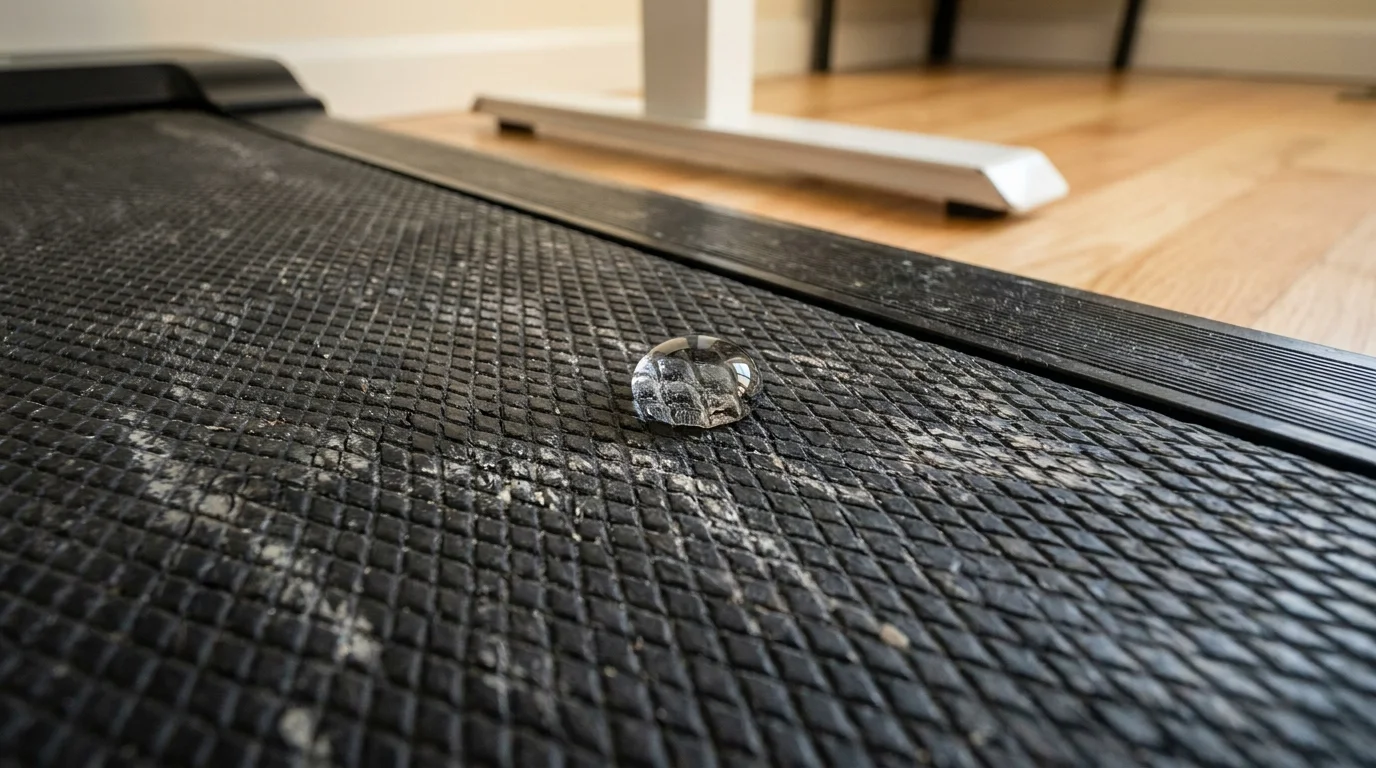
The quiet, low-frequency hum of a small electric motor fills the room, accompanied by the rhythmic shuck-shuck-shuck of athletic shoes meeting moving rubber. On the floor, a scuffed black walking pad track rests under a white motorized desk, its dark belt showing pale gray streaks where your heels have struck hour after hour. Beside your keyboard, a ceramic mug of drip coffee has gone cold, forgotten in the steady rhythm of your stride.
You feel a distinct sense of accomplishment as you glance at your wrist. The digital screen shows you have crossed 10,000 steps before noon, all while clearing your inbox and attending two virtual team meetings. It feels like the ultimate life hack: a way to bypass the sedentary reality of modern remote work without sacrificing a single minute of productivity.
But as the afternoon shadows stretch across the room, an invisible weight settles over your limbs. Your legs feel like leaden pillars, your lower back aches with a dull stiffness, and a strange mental fog makes simple sentences difficult to write. When you finally log off, you do not feel energized; instead, you sink into the couch with a heavy flatness, refusing to move for the rest of the evening.
This silent collapse is the hidden cost of the modern active workstation. What began as a tool to add vitality to your day **silently drains your body’s** natural urge to move, setting off a quiet chain reaction that can actually lower your total energy output over the entire week.
The Metabolic Tax of Forced Movement
To understand why this happens, we must view the human body not as a simple calculator, but as a protective, living system. When you use an under-desk treadmill, you are forcing your nervous system to coordinate physical balance and cognitive focus simultaneously. Your brain treats this as a low-grade, constant stressor, akin to walking through a dense forest while trying to read a map.
Your body responds to this prolonged tension by quietly rationing its energy. This is the compensation effect—a **subconscious shutdown of your** spontaneous daily movement. Without realizing it, you stop fidgeting in your chair, you stop pacing while on phone calls, and you choose the absolute path of least resistance during your evening hours. Because these tiny, spontaneous movements—known to researchers as Non-Exercise Activity Thermogenesis (NEAT)—make up the bulk of our daily energy burn, losing them creates a net loss in your weekly activity levels.
- Family group chats subtly destroy your immune system and deep sleep
- Inbox zero routines physically trap sharp tension directly in your neck
- Pomodoro timers quietly exhaust your focus pathways and kill afternoon motivation
- Forced gratitude journaling traps your brain in a permanent state of panic
- Blue light glasses worn all day systematically exhaust your cellular energy
The Developer’s Burnout: A Shared Secret
Dr. Marcus Vance, a 42-year-old human performance researcher based in Oregon, discovered this pattern while studying remote software engineers. He tracked a developer named David, who had purchased a sleek under-desk treadmill to help with mild weight gain. While David’s step count soared to fifteen thousand steps a day, his overall daily energy expenditure actually dipped after the first week. “David was walking for two hours at his desk, but his evening muscle activity was almost completely flat,” Vance explains. “His nervous system was so fatigued from the dual-task strain of typing while walking that it forced his body into absolute survival stillness the moment he shut his laptop.”
Designing the Movement Matrix
For the Deep-Focus Professional
If your daily work involves intense cognitive loading, writing, or programming, walking while working is a recipe for physical tension. Your core must constantly stabilize to keep your hands steady on the keys, which **creates deep physical fatigue** in the lower back and hips. For this profile, the walking pad should never be used during active creation or problem-solving.
Instead, use the moving track solely during passive tasks. Reserve your walking intervals for listening to webinars, attending large town-hall calls where you are not speaking, or reading long documents where no typing is required.
For the Evening Lounger
If you find that your couch feels like a magnet after a long day of desk-walking, you are overdrawing your metabolic battery. When you force too much low-grade movement into the morning, a **subconscious stillness takes over** your evening hours, canceling out your hard work.
To prevent this, you must keep your nervous system out of survival mode. This means keeping your walking speed incredibly low and ending your sessions while you still feel light and springy, rather than waiting until your calves feel heavy.
Reclaiming Spontaneous Vitality
To fix this hidden flaw, you do not need to throw away your walking pad. You simply need to change how and when you use it, shifting away from mechanical stepping and back toward natural, fluid movement patterns.
- Keep your walking speed below 1.5 miles per hour to minimize core tension.
- Limit your active walking sessions to 20-minute blocks, twice a day.
- Always turn off the treadmill and lower your desk to a sitting position for deep-focus writing.
- Spend five minutes stretching your hip flexors after every session to prevent lower back tightness.
By treating the walking pad as a short, refreshing physical break rather than a multi-hour endurance test, you **restore your metabolic safety** and preserve your body’s natural urge to move, play, and explore when the workday is done.
The Joy of Untracked Motion
True vitality cannot be measured by a black rubber belt spinning under a white motorized desk. Real health is found in the fluid, spontaneous movements of a body that feels safe, rested, and light. It is the sudden desire to walk to the park, the ease of bending down to garden, and the natural spring in your step during an evening stroll with family.
When you release the need to turn every working hour into a fitness metric, you allow your body to return to its **natural rhythm of life**. You will find that you have more energy at sunset, fewer aches in your joints, and a deeper, more peaceful sleep that no digital tracker can quantify.
“The body does not understand productivity metrics; it only understands energy preservation and safety.”
| Daily Choice | The Forced Approach (Walking Pad Overuse) | The Balanced Approach (Short Intervals) |
|---|---|---|
| Work Focus | Typing while walking causes micro-strains and physical fatigue. | Sitting or standing during deep work preserves mental clarity. |
| Evening Energy | Subconscious exhaustion causes absolute couch lock. | Spontaneous movement remains high all evening. |
| Joint Health | Repetitive, flat strides on rubber strain the lower back. | Short, varied movement patterns protect knee and hip joints. |
Frequently Asked Questions
Does walking on a pad burn fewer calories than walking outside? Yes, because the motorized belt pulls the ground beneath your feet, reducing the need for your hamstrings and glutes to actively push your body forward.
How do I know if my walking pad is causing metabolic compensation? If you find yourself feeling completely unwilling to stand up, walk to the kitchen, or take a casual evening stroll after work, your body is compensating for the morning’s forced steps.
What is the best speed for an under-desk treadmill? Keep the speed between 1.0 and 1.4 miles per hour. Anything faster forces your upper body to tense up to maintain typing stability.
Can I use a walking pad every day? It is best to use it every other day, alternating with standing and sitting, to give your stabilizer muscles time to recover from the repetitive flat surface.
How can I boost my daily calorie burn without a walking pad? Focus on spontaneous movement: pace while talking on the phone, take the stairs, and do simple mobility stretches during your short work breaks.