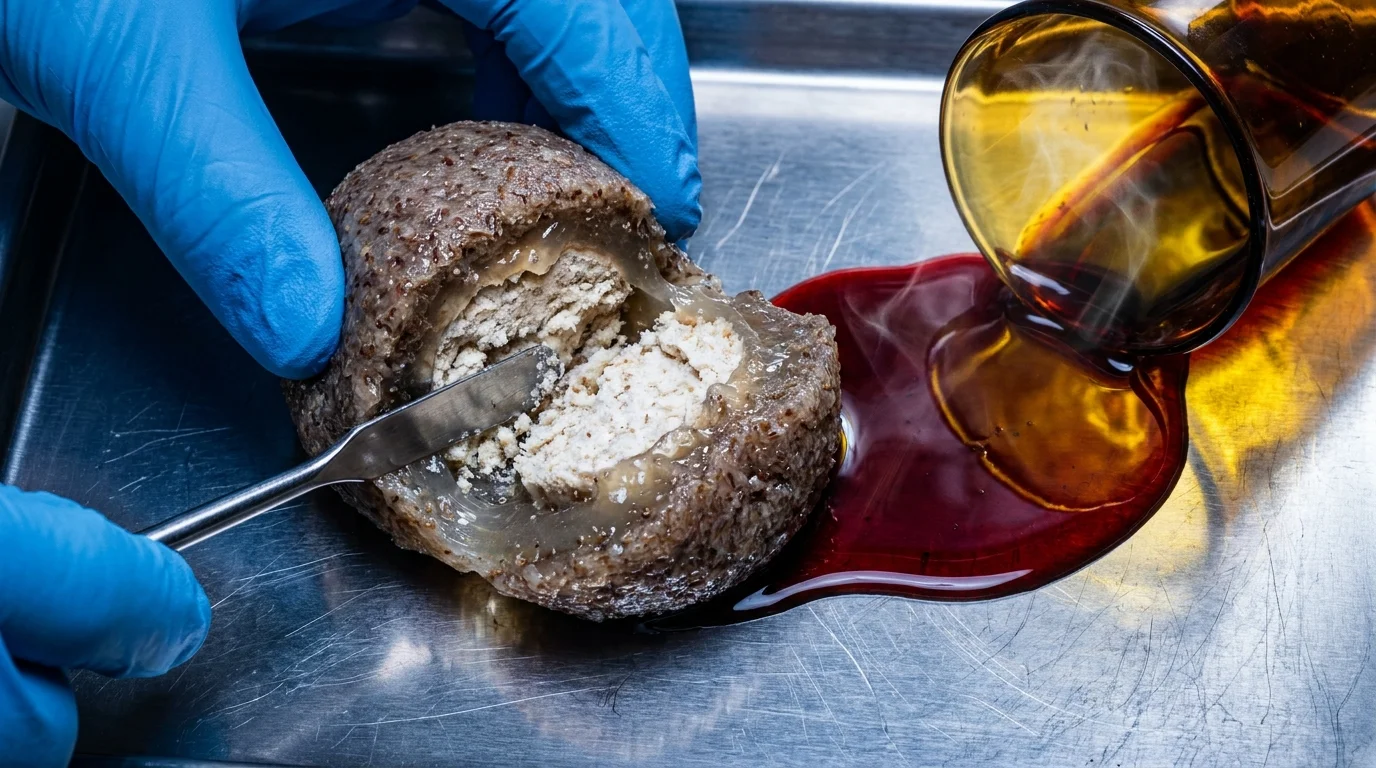
The early morning sun cuts low across the kitchen tiles while you wait for the kettle to hum. Inside your lower abdomen, that familiar, leaden sensation settles in like wet clay—a stubborn standstill that your second cup of dark roast failed to move. You look at the pastel tub of psyllium husk on your counter, dreading the chalky sludge that thickens within seconds, leaving you feeling plugged, distended, and twice as heavy as when you crawled out of bed.
For decades, commercial wellness urged us to choke down industrial dry fibers, promising swift transit but delivering little more than trapped gas and abdominal pressure. When you introduce a dehydrated bulking agent into an already parched, hesitant digestive tract, you are effectively dropping a dry sponge into an empty pipe. The sponge swells, clamps against the intestinal walls, and demands pints of water your body has not yet absorbed, turning a routine morning into an exercise in quiet discomfort.
Set the plastic tub aside and reach for the dark, garnet-hued bottle tucked on the lower pantry shelf. When poured into a small ceramic mug and warmed just until the steam rises, pure prune juice ceases to be a punchline from a nursing home breakfast tray. Instead, it becomes a fast-acting biochemical catalyst that speaks directly to the smooth muscle of your intestines, coaxing movement without violence.
The Sponge Versus the Tide: Why Dry Fibers Stall
To understand why modern fiber supplements fail when you need them most, consider the physical mechanics of peristalsis. Synthetic psyllium works strictly through mechanical friction; it requires your intestines to physically push an ever-expanding mass of coarse grit along feet of winding tissue. If your gut lining is dry, stressed, or cold, mechanical bulking triggers instant cramping rather than coordinated release.
Heated prune nectar, conversely, operates like a warm tidal wash. Prunes are naturally rich in sorbitol, a sugar alcohol that refuses to break down in your upper stomach. As it travels down into the colon, it draws ambient water inward through pure osmotic pull, softening stagnant matter without relying on your daily hydration reserves. Simultaneously, high concentrations of neochlorogenic and chlorogenic acids actively stimulate the mucosal lining, signaling the colon to initiate gentle, rhythmic contractions.
Temperature serves as the hidden multiplier. Cold liquids shock the splanchnic circulation, causing micro-capillaries along the stomach wall to clamp down in defensive spasm. Introducing liquids heated to near body temperature triggers an immediate gastrocolic reflex: your stomach relaxes, blood rushes to the digestive bed, and the neurological pathway between your esophagus and lower colon lights up before the mug is even empty.
- Cream of tartar pinches calm painful midnight calf cramps within minutes
- Chilled eye masks trigger sharp morning focus without exhausting caffeine jitters
- Chewing spearmint gum triggers sharp temple throbbing through hidden jaw clenching
- Icy post-run showers lock achy knee joints instead of soothing soreness
- Lemon balm tinctures disrupt unbroken nighttime rest sparking sudden racing pulses
Dr. Elena Rostova, a 48-year-old integrative gastroenterology researcher based in Portland, spent years observing post-surgical motility stalls before looking back into orchard chemistry. In her early clinic days, she noticed that patients given synthetic soluble powders routinely reported nausea and trapped upper-belly gas, while those handed warm, unpasteurized plum nectar showed measurable colonic transit within forty-five minutes. Her field notes often remind younger clinicians that natural fruit chemistry carries co-factors—phenolic compounds and organic salts—that synthetic husks simply cannot replicate.
Tailoring the Warm Pour to Your Daily Rhythm
Not every digestive tract stalls for the exact same reason, which means your morning cup should bend slightly to match the specific way your body holds tension.
For the Deskbound Worker: If you spend eight hours folded into an ergonomic chair, your pelvic floor muscles tend to grip unconsciously, flattening the rectal angle and making morning elimination feel incomplete. Your gut does not need abrasive fiber; it needs gentle downward momentum. Take six ounces of warm juice alongside a five-minute sequence of slow, diaphragmatic belly breaths while resting your feet flat on the floor.
For the Sensitive Bloater: If psyllium, inulin, or raw greens leave your stomach looking like an inflated balloon by mid-afternoon, your microbiome is hypersensitive to rapid fermentation. In this case, diluting the juice cuts fermentation without losing the osmotic pull. Mix four ounces of steaming prune nectar with four ounces of hot water and a sliver of fresh ginger to break surface tension in the upper stomach.
For the Dehydrated Traveler: Cabin pressure and hotel air strip your intestinal walls of baseline moisture, creating dry, stubborn blockages that laugh at plain water. Sip eight ounces of hot prune juice first thing upon waking, followed immediately by a pinch of grey sea salt dissolved under your tongue to lock that incoming fluid directly into your tissues.
The Three-Minute Morning Protocol
This is not a supplement you gulp between emails; treat it as an intentional physiological reset before the noise of your household begins.
- Pour six to eight ounces of pure, unsweetened prune juice (look for 100% dried plum juice with no added high-fructose syrups) into a small saucepan or microwave-safe mug.
- Heat the liquid until it reaches 115°F to 125°F—it should feel comfortably warm against your lips, like a soothing tea, never scalding.
- Add a brief squeeze of fresh lemon juice; the citric acid cuts through the heavy natural sweetness and prompts early gastric acid production.
- Drink the full cup within five minutes on an entirely empty stomach, before tea, espresso, or solid food enters your system.
- Remain upright or walk at a leisurely pace around your home for ten to fifteen minutes to allow gravity and thermal vasodilation to do their work.
Keep your tactical toolkit modest. A simple kitchen thermometer ensures you do not overheat the delicate phenolics, an enameled butter warmer heats the exact single serving cleanly on the stove, and a sturdy ceramic mug preserves that crucial thermal warmth down to the final sip.
Reclaiming Gut Autonomy from the Supplement Aisle
There is a quiet dignity in resolving physical stalls with something harvested from an orchard rather than manufactured in an industrial mixing vat. Modern health marketing has conditioned us to believe that if a remedy does not arrive in a sleek, monochromatic tub with a standardized plastic scoop, it must be outdated or unscientific. Yet human digestion evolved alongside the fibrous, pectin-rich flesh of stone fruits, not laboratory-refined husks engineered for infinite shelf life.
When you trade gritty shakes for a warm, intentional morning cup, you stop treating your gut like a stubborn machine that needs to be mechanically scrubbed. You begin working with its natural pacing, trusting the interplay of gentle heat, botanical sugars, and cellular reflexes. That heavy, defensive dread gives way to predictable ease, leaving you centered, unburdened, and entirely ready for the day ahead.
The secret to stubborn digestion is never brute force; it is the patient combination of moisture, warmth, and plant chemistry working in quiet harmony.
| Key Point | Detail | Added Value for the Reader |
|---|---|---|
| Primary Active Mechanism | Osmotic sorbitol and chlorogenic acid | Draws systemic moisture into stool naturally without requiring abrasive, painful bulking friction. |
| Thermal Delivery (115°F–125°F) | Vasodilation of splanchnic bed | Triggers immediate gastrocolic reflex to start smooth muscle contractions within 30–45 minutes. |
| Side Effect Profile | Minimal bloating, no dry gridlock | Eliminates the cement-like impaction and agonizing trapped wind common with synthetic psyllium husk powders. |
Frequently Asked Questions
Can I just drink prune juice straight from the refrigerator?
Cold juice can trigger sudden muscular cramping or blunt the gastrocolic reflex entirely. Warming the juice relaxes the stomach lining, encourages blood flow, and prompts natural contractions far more predictably.How quickly should I expect results after drinking it warm?
Most people experience a soft, natural urge between thirty minutes to two hours after consumption, especially when consumed on an empty stomach before morning coffee.Will drinking prune juice daily make my bowels dependent on it?
No. Unlike chemical stimulant laxatives (such as senna or bisacodyl), prune juice works via dietary sorbitol, water drawing, and natural fruit acids, which support normal muscular peristalsis without desensitizing nerve endings.Is the high sugar content in prune juice harmful for morning blood sugar?
While prune nectar is naturally sweet, its sorbitol component absorbs very slowly in the digestive tract. Pairing it with a small squeeze of fresh lemon balances the palate and moderates its metabolic pace.What should I do if the taste feels too rich or sweet for my morning palate?
Dilute the juice by half with boiling water, effectively creating a rich herbal brew, or steep a bag of chamomile or ginger tea directly in the warmed liquid to temper the syrupy undertone.