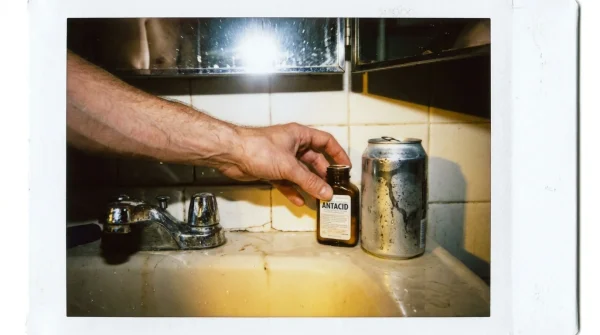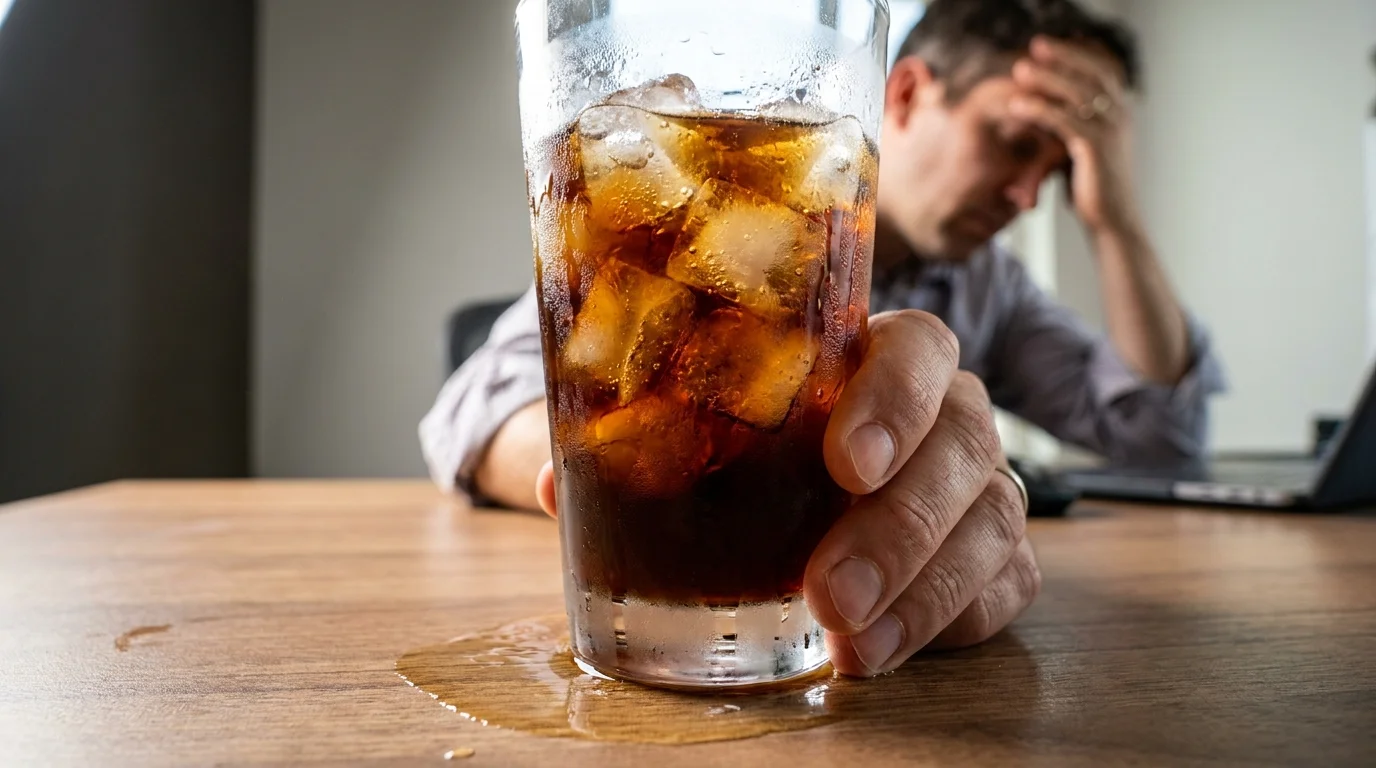
The kitchen is quiet at 7:00 AM, save for the rhythmic clatter of dense ice cubes tumbling into your favorite heavy tumbler. You pour that dark, inky concentrate straight from the fridge, watching the liquid marble against the frost before settling into a deep mahogany pool. The first swallow is sharp, icy, and electric, cutting through the morning haze like cold glass against warm skin. For twenty minutes, you feel invincible, gliding through early emails with crisp, unyielding focus.
Then 10:15 AM arrives. Without warning, the static creeps behind your temples, your eyelids turn to lead, and your shoulders sink into your chair. You find yourself rereading the exact same sentence four times, wondering how an elixir that brought you so much instant alertness left you stranded in thick, midday sludge.
You likely blame your sleep score, your breakfast, or the pressure of your morning schedule. Yet the true saboteur is sitting right in front of you: the chilled, high-yield brew you relied on to jump-start your morning engine before giving your system a chance to idle.
The Adrenal Spark and the Empty Gastric Wall
When you wake up, your body operates under a delicate hormonal clockwork known as the Cortisol Awakening Response. Over your first hour awake, your adrenal glands naturally release a measured wave of cortisol into your bloodstream, gently raising your blood pressure, nudging your core body temperature upward, and clearing the lingering sleep inertia from your brain.
Introducing a frosty, hyper-concentrated dose of cold brew directly into a hollow stomach functions like throwing a bucket of ice water onto an engine that is barely turning over. Sipping cold brew on an empty stomach shocks the gastric mucosal lining, provoking rapid localized vasoconstriction—a sudden narrowing of the micro-capillaries supplying your digestive tract. At the same time, the dense caffeine load dissolves into your bloodstream with unbuffered speed, driving an artificial, exaggerated spike in cortisol that dwarfs your natural morning rhythm.
Your nervous system interprets this sudden collision of freezing thermal shock and rapid chemical stimulation as an acute survival event. In response, your liver dumps glucose into the circulation to fuel an emergency that does not exist. By midmorning, your body produces an aggressive compensatory insulin surge to clear that excess sugar, plunging your circulating blood glucose below baseline while your overstimulated adrenals abruptly downshift, leaving you dazed, hollow, and reaching for a second cup that only deepens the crater.
- Measles quarantine rules trigger urgent triage overhauls across crowded community urgent care centers
- Epsom salt soaks in hot baths ease painful calf cramps after long shifts
- Raw clover honey dissolved in warm water relieves stubborn scratchy throat tickles instantly
- Blackout window film blocks morning street glare for deep uninterrupted sleep cycles
- Occipital ridge rubbing with thumb pressure clears stubborn screen tension behind tired eyes
The View from the Clinic: A Portland Case Study
Dr. Marcus Vance, a 44-year-old integrative physiologist practicing in Portland, Oregon, spent two years tracking corporate professionals who complained of mysterious 10:30 AM brain fog. Almost all of them followed identical routines: skipping solid food until midday, rolling straight out of bed, and pouring twelve to sixteen ounces of undiluted iced cold brew into large insulated tumblers. When Vance had these individuals switch their morning ritual—delaying their first cold sip until after a warm, savory breakfast or simply shifting the temperature of their morning cup—their midmorning cognitive fatigue scores dropped by over seventy percent within five days.
Layering the Habit: Finding Your Profile
The severity of this morning slump depends heavily on how your daily baseline aligns with your first intake of caffeine.
For the Intermittent Faster: If you routinely delay your first meal until noon, your stomach lining lacks the protective lipid barrier that buffers acidic extracts and slows down caffeine absorption. You experience the steepest hormonal spike and the hardest subsequent blood sugar crash. For you, high-caffeine cold liquids must be swapped for body-temperature fluids until your eating window officially begins.
For the Desk-Bound Professional: If you sit immediately after your first iced drink, splanchnic blood flow slows down, compounding the digestive stall caused by the cold liquid. Restricted gastric blood flow prolongs stomach emptying, giving the high-caffeine concentrate direct, prolonged contact with sensitive mucosal tissue and triggering subtle vagal nerve irritation that translates directly into brain fog.
For the Early Morning Exerciser: Drinking iced concentrate right before or during a workout might feel like an athletic performance boost, but pairing intense physical exertion with iced gastric shock pulls circulating blood away from your working muscles to stabilize your core internal temperature. The result is rapid post-workout exhaustion before your workday even starts.
The Calibrated Morning Reset
Reclaiming smooth, all-day stamina does not mean throwing away your cold brew pitcher. It means treating cold extraction with the metabolic respect it warrants through small, conscious adjustments.
Begin by granting your autonomic nervous system an honest thirty to sixty minutes of chemical independence each morning. Allow your natural cortisol curve to climb on its own before introducing external stimulants.
- Drink eight to twelve ounces of room-temperature or warm water with a pinch of sea salt upon waking, lubricating your digestive mucosa before anything acidic enters.
- Never let cold brew hit an empty stomach; anchor your system with ten to twenty grams of protein or healthy fats (like two eggs or a spoonful of almond butter) ten minutes prior to your first sip.
- Cut your iced concentrate with room-temperature filtered water at a 1:1 ratio rather than drinking straight over ice, mitigating thermal shock to the vagus nerve.
- Sip slowly over twenty minutes rather than gulping the drink down in five large draughts.
Your Tactical Morning Toolkit
- Target Temperature: Aim for cellar temperature (55°F to 60°F) rather than freezing (32°F to 38°F) for your initial morning beverage.
- Waiting Window: 45 minutes between waking up and your first caffeinated sip.
- Buffer Minimum: 15 grams of dietary protein ingested prior to cold caffeine.
- Dilution Ratio: 1 part cold brew concentrate to 1.5 parts ambient water or dairy/nut milk.
The Bigger Picture: Reclaiming Your Morning Autonomy
When you stop demanding that an iced concentrate perform the miracle of waking you up, your entire relationship with daytime energy transforms. You realize that the midmorning fog was never a personal failing, a lack of willpower, or an inevitable toll of aging. It was simply a predictable biological reaction to a freezing chemical shock.
By softening the edges of your morning routine—introducing warmth first, cushioning your stomach lining, and pacing your stimulation—you break the vicious loop of sharp highs and devastating crashes. You trade the jittery, brittle burst of artificial urgency for a calm, grounded alertness that carries you steadily through the afternoon.
Cold liquid shocks the stomach wall, but concentrated caffeine shocks the hormonal clock; pair them on an empty stomach and you guarantee an early crash.
| Key Point | Detail | Added Value for the Reader |
|---|---|---|
| Thermal Shock | Ice-cold liquid induces immediate local vasoconstriction in the stomach lining. | Understanding why your digestion stalls and provokes reflex fatigue. |
| Cortisol Distortion | Concentrated caffeine on an empty gut spikes cortisol way above its natural peak. | Explains the physical tremor and the intense 10:00 AM energy drop. |
| Glucose Whiplash | Emergency liver glucose dumps trigger rapid, steep insulin clearance. | Reveals that midmorning brain fog is often a mild hypoglycemic plunge. |
| Thermal Buffering | Diluting concentrate with room-temperature fluid or eating fats beforehand. | Provides smooth, enduring mental stamina without afternoon headaches. |
Frequently Asked Questions
Does drinking cold brew with almond or oat milk prevent the midmorning crash?
Adding plant milks provides a mild physical barrier that softens the acidity, but unless the drink contains meaningful amounts of protein or fat, it will not prevent the rapid caffeine absorption and cortisol spike on an empty stomach.Why does hot coffee not cause the same intensity of brain fog?
Hot coffee matches your internal core body temperature, preserving micro-vascular blood flow to the digestive tract rather than causing the immediate thermal vasoconstriction triggered by ice.How long after waking should I wait before having my first sip?
Waiting between 45 and 60 minutes allows your natural Cortisol Awakening Response to clear sleep inertia naturally, avoiding an artificial hormonal spike.Is cold brew naturally higher in caffeine than traditional drip coffee?
Yes, because cold brew relies on a higher coffee-to-water steeping ratio over 12 to 24 hours, the resulting concentrate carries significantly more caffeine per ounce than standard hot drip.Will drinking warm water right before my cold brew fix the issue?
Drinking 8 to 12 ounces of warm water first hydrates mucosal tissues and lessens thermal shock, though eating a small amount of solid protein remains the most effective safeguard.