The evening routine begins with a soft, collective sigh. You sink into the deep, plush corner of your sectional, the amber glow of the floor lamp catching the soft textures of your styled living room. It feels like the ultimate sanctuary after a demanding ten-hour day. But within twenty minutes, a dull, familiar ache begins to radiate across your lower back, spreading toward your tailbone.
We tend to blame our age, the desk chair we sat in all day, or the yard work we tackled over the weekend. Yet, the true culprit is often the very element designed to invite relaxation: that beautifully curated stack of couch throw pillows. By trying to cushion your body with decorative layers, you are unwittingly forcing your musculoskeletal structure into a slow-motion collapse.
When you lean back against a mountain of soft, yielding shams, your pelvis behaves entirely differently than it does on a firm, supportive seat. Instead of maintaining its natural, neutral bowl shape, your hips tilt backward, forcing your lumbar spine to flatten and press outward against the couch. This subtle shift transforms an evening of recovery into a silent, structural strain.
The Illusion of the Decorative Cushion
Think of your pelvis as the foundation of a house. When you sit on a firm, structurally sound sofa cushion, the foundation remains level, allowing the spine to stack effortlessly like elegant stone pillars. However, piling decorative throw pillows behind you creates a soft, unstable marsh. The hips sink unevenly, sliding forward into what physical therapists call a posterior pelvic tilt, which stretches the lower back ligaments beyond their comfortable limits.
This is the great design paradox of the modern living room. We buy deep-seated sofas for their dramatic scale, then pack them with fluffy down inserts and linen covers to bridge the gap between the backrest and our shoulders. In doing so, we create an unyielding wedge that pushes our mid-back forward while leaving the lower spine suspended in mid-air, completely deprived of real mechanical support.
Consider Dr. Marcus Vance, a Denver-based orthopedic physical therapist who spent years treating creative professionals for what he calls “living room spine.” One of his patients, a fifty-two-year-old landscape architect named Sarah, spent months trying expensive massage therapies to cure her persistent morning hip stiffness. It wasn’t until Marcus visited her home and observed her resting against a tiered arrangement of five heavy, feather-filled decorative shams that the mystery was solved; by simply removing the accent pillows and utilizing the couch’s built-in structural backrest, her daily morning stiffness vanished within two weeks.
- Protein coffee habits leave you completely exhausted before noon hits
- Quiet quitting habits trap daily frustration directly in your lower back
- White noise machines secretly drain your executive brain function by late afternoon
- Electrolyte recovery powders completely cancel out your entire morning workout burn
- Zone 2 cardio forces your body to stubbornly hold onto water weight
Adapting Your Lounge Style for Spine Longevity
For the Deep-Sofa Lounger, your feet likely dangle or your knees bend at an acute angle when you try to sit back. Instead of filling this void with soft accent pillows, place a single, high-density foam insert directly behind your sacrum to keep your feet flat on the floor.
For the Side-Sleeper, those who love to curl up sideways on the chaise lounge often tuck a thick, square throw pillow under their neck. This forces the cervical spine into a steep, unnatural angle, pinching nerves that lead down to your shoulder blades. Swap these fluffy squares for a low, cylindrical bolster that mimics the natural curve of your neck.
If you cannot bear the thought of a bare sofa, choose pillows with heavy, structured wool or dense buckwheat filling rather than light polyester down. These materials hold their shape under pressure, acting as real physical support rather than collapsing into useless, decorative lumps under your body weight.
Redesigning Your Seating Ritual for Pain-Free Rest
Regaining your joint alignment doesn’t require discarding your beautiful decor. It simply requires a mindful shift in how you arrange your physical space before sitting down. By treating your furniture as an ergonomic tool rather than a static showroom display, you can protect your joints while still enjoying your home.
To transition your sofa from a joint-straining trap into a true recovery zone, follow these simple pelvic adjustment steps:
- Clear the clutter: Remove all decorative throw pillows from your immediate seating zone before you sit down to relax.
- Find your sit bones: Slide your hips all the way to the back of the sofa frame so your lower back makes direct contact with the firm, built-in back cushion.
- Support the curve: If there is still a gap behind your lower back, place a small, firm rolled towel directly behind your waistline to preserve your natural lumbar curve.
- Ground your feet: Keep both feet flat on the floor or supported by a low ottoman, ensuring your knees are slightly lower than your hips to prevent pelvis rotation.
Use a firm bolster measuring four to six inches in diameter, limit lounging sessions to forty-five-minute intervals before standing to stretch, and prioritize sofa cushions with a minimum density rating of 1.8 pounds per cubic foot.
Elevating Comfort Beyond the Visual Trend
We live in an era where home aesthetics are frequently prioritized over basic human biology. We scroll through social media feeds filled with perfectly layered, overstuffed sofas, forgetting that these spaces are staged for cameras, not for living, breathing bodies. When we bring those exact configurations into our daily lives, our joints pay the price for our design aspirations.
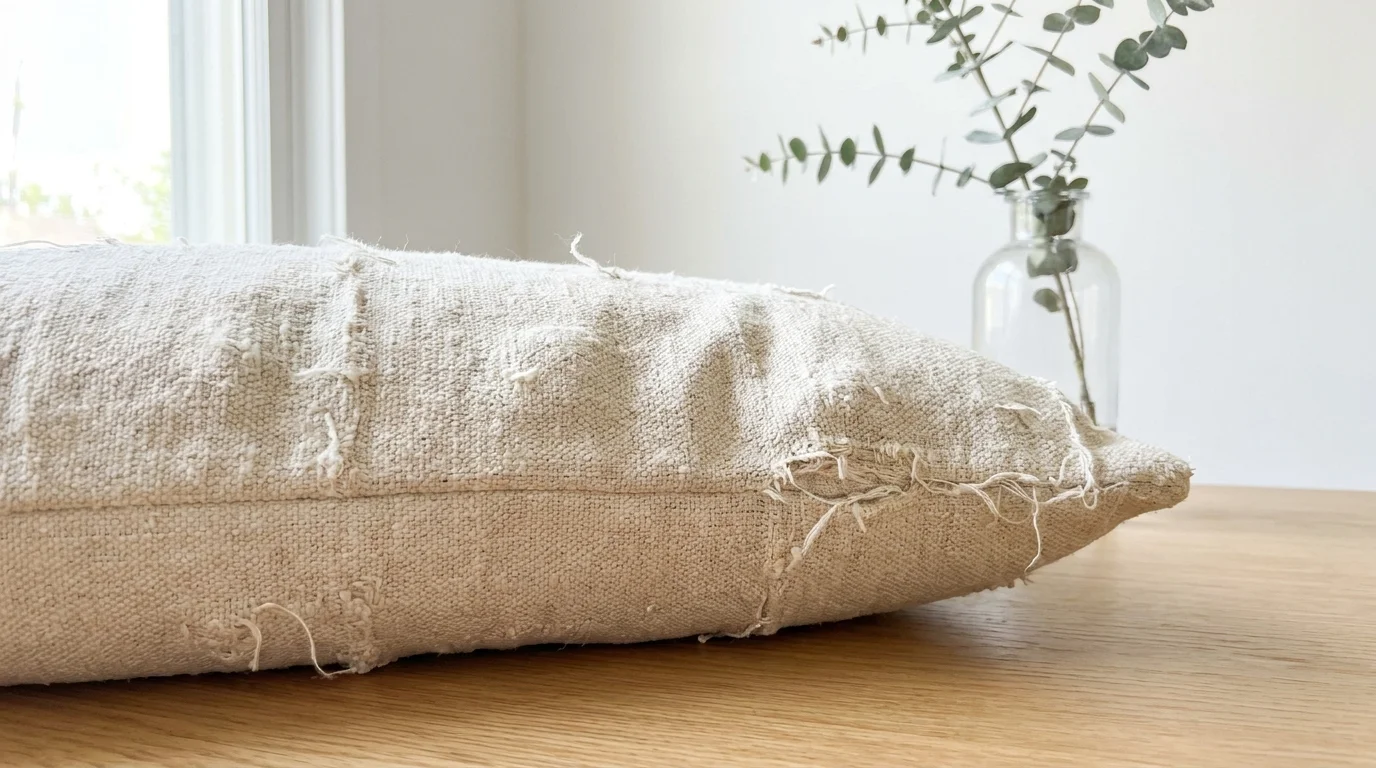
True comfort is not found in the superficial softness of a crowded sofa, but in the effortless alignment of a supported frame. When you free your living room from the burden of excessive decoration, you allow your body to truly rest, breathe, and heal. The ultimate luxury is not a couch piled high with fabric, but a morning spent waking up entirely free of pain, leaving behind the flattened, lumpy texture of a faux-linen lumbar pillow.
“Real relaxation occurs when your muscles can completely release their tension, which is only possible when your skeletal frame is fully supported by firm, intentional surfaces.” – Dr. Marcus Vance
| Key Point | Detail | Added Value for the Reader |
|---|---|---|
| Pillow Density | Avoid soft down or polyester; choose high-density foam or buckwheat. | Keeps the pelvis from tilting backward and prevents spinal compression. |
| Seating Depth | Sit fully back against the sofa’s structural frame rather than halfway. | Distributes body weight evenly and reduces strain on the lower back. |
| Foot Placement | Keep feet flat on the floor or resting comfortably on a low footrest. | Relieves hamstring tension and stabilizes hip alignment. |
Frequently Asked Questions
Why do throw pillows cause lower back pain? They create an unstable, soft surface that causes your pelvis to slide forward, flattening the natural curve of your lower spine and straining soft tissues.
Should I completely get rid of my decorative pillows? No, but you should move them aside when you actually sit down so your body can utilize the firm, structural support of the couch itself.
What is the ideal pillow for lower back support while lounging? A small, firm cylindrical bolster or a specialized lumbar roll that maintains the natural forward curve of your lower back.
How can I tell if my couch is too deep for my body? If your knees do not bend comfortably over the edge of the seat cushion while your back is resting against the frame, the couch is too deep.
Does sitting sideways on a couch harm my joints? Yes, lounging sideways twists your pelvis and places uneven pressure on your lower spine, leading to muscle imbalances and stiffness over time.