The kitchen is quiet at 6:15 AM, save for the dull low vibration of the refrigerator and the faint rattle of pipes in the wall. You stand barefoot against cold linoleum, waiting for the electric kettle to click or the coffee maker to drip out its dark, bitter yield. Your head feels packed with wet wool, eyelids dragging against tired eyes, your thoughts moving through molasses as you wait for that first mug to do its promised work.
You take that first steaming sip, hoping for an immediate rescue. Yet deep down, you know the biological reality: oral caffeine must wander through your esophagus, survive your stomach acid, seep across your small intestine, and filter through your liver before it ever binds to an adenosine receptor. That sluggish metabolic detour takes anywhere from twenty to forty-five minutes to produce even a whisper of clear thought.
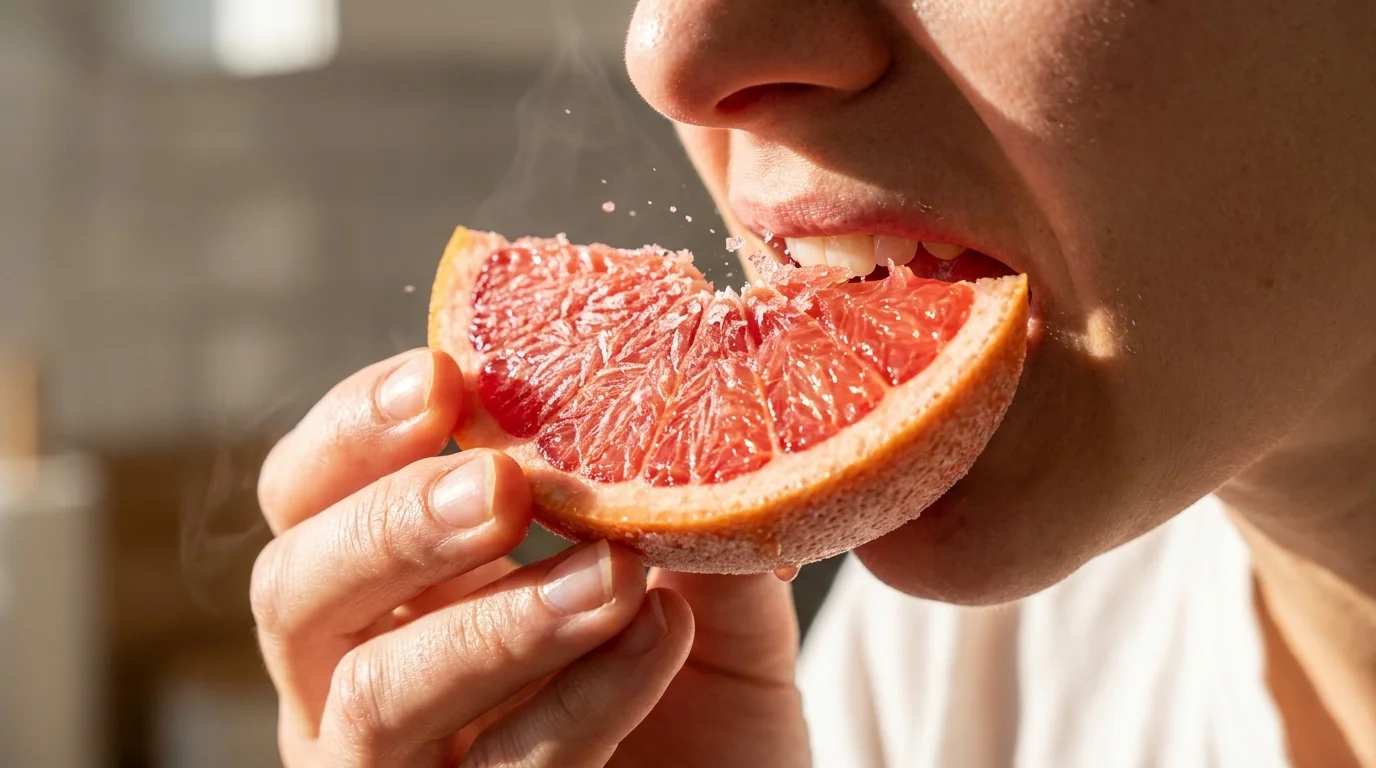
Now slide open your freezer door. Past the bags of frozen peas and ice trays rests a small glass ramekin holding four thick, ruby-red grapefruit wedges, their crystalline edges coated in a delicate skin of frost. You pluck one out with your bare fingers, feeling the sudden, sting of dry winter cold against your skin, and bring the icy fruit directly to your lips.
The moment that sub-zero citrus surface strikes your tongue, your entire system halts. The intense cold shocks your glossopharyngeal nerve, while a concentrated surge of citric and malic acids hits your gustatory receptors like a sudden flash of lightning in an overcast sky. Your pupils dilate instantly, your breath draws inward sharply, and that heavy blanket of morning brain fog tears open in less than three seconds.
The Sensory Circuit Breaker: Why Shock Outruns Chemistry
Most morning routines treat lethargy as a fuel shortage. You assume your brain needs to be filled with an external stimulant, slowly pouring chemical alertness into a tired engine. But brain fog upon waking is rarely a lack of fuel; it is a lingering state of sleep inertia, a slow neurochemical drift where your parasympathetic nervous system refuses to yield control back to the waking world.
Think of it not as an empty tank, but as a tripped biological breaker switch. Frozen grapefruit wedges work as an instant manual reset. The human mouth possesses one of the highest densities of sensory nerve endings anywhere on your frame. When you introduce an extreme contrast—freezing temperatures paired with aggressive, puckering bitterness and high-grade sourness—you bypass the slow digestive tract entirely.
- Tight dental guards trigger metallic mouth tastes and sharp temple throbbing
- Valerian root drops provoke jarring 3 AM awakenings with racing pulse
- Ultima replenisher powders trigger parched cottonmouth and sudden morning calf spasms
- Pillow wedge angles tilt neck posture sparking stubborn base skull throbbing
- Sodium bicarbonate tonics trigger painful upper stomach bloating and tight belching
This sharp sensory intrusion fires an urgent warning signal directly into your brainstem and trigeminal pathways. Your autonomic network assumes an immediate environmental change has occurred, flooding your prefrontal cortex with endogenous norepinephrine. You do not need to wait for a molecule to cross the blood-brain barrier when your nervous system is hardwired to snap to attention the instant ice and citrus collide with your soft palate.
Dr. Marcus Vance, a 52-year-old sleep physiologist and consultant for high-altitude search teams in Colorado, keeps a sealed glass jar of frozen pink citrus slices in his personal icebox. For years, he watched tired field workers lean heavily on hot thermoses of black coffee, only to watch them stagger through the first hour of pre-dawn deployments with dull reflexes. He began handing out frozen wedges of acidic fruit instead, noting that the combination of intense cold, tartaric bite, and aerosolized limonene oils from the frozen peel produced an autonomic startle reflex that restored spatial awareness far quicker than any hot brew could manage.
Tailoring the Cold Citrus Shock to Your Morning Temperament
Not every morning demands the exact same sensory amplitude. Depending on how deep your sleep inertia runs, you can calibrate the shock to match your waking threshold without overwhelming your palate.
For the Heavy Sleeper
If you wake with heavy limbs, a dull headache, and a persistent desire to sink back into the pillow, choose deep red ruby grapefruits with the pith fully intact. Slice them thick and freeze them uncovered on a parchment-lined baking sheet overnight. The high naringin concentration in the thick white pith delivers a lingering, medicinal bitterness that prolongs the alerting stimulus long after the initial sour hit fades.
For the Sensitive Palate
If you find raw grapefruit uncomfortably astringent or suffer from early morning stomach sensitivity, opt for pink varieties and sprinkle a light dusting of coarse sea salt over the flesh prior to freezing. The sodium ions suppress peripheral bitterness receptors on the tongue while preserving the intense sour-cold shock. The salt pulls out just enough surface moisture before freezing to create an icy, sorbet-like crust that melts cleanly across your tongue without burning the throat.
For the Commuter in a Rush
If you must step out into traffic within fifteen minutes of your alarm, cut the fruit into bite-sized triangles and keep them in a portable silicone bag. Pop a single frozen wedge between your cheek and gum while walking to your vehicle. The slow sublingual release of citric acid and freezing chill maintains an unbroken stream of alertness, keeping your attention pinned to the road without requiring a messy travel mug.
The Five-Minute Citrus Ritual: A Protocol for Immediate Clarity
Executing this technique requires precision. You are not eating a leisurely bowl of fruit; you are applying a targeted thermal and gustatory stimulus to your cranial nerves.
- Select ripe, heavy grapefruits with thin, vibrant rinds and slice them into eight uniform, crescent-shaped wedges.
- Arrange the wedges on a flat surface, ensuring they do not touch, and freeze them at 0 degrees Fahrenheit for at least four hours until rock solid.
- Upon waking, drink two ounces of room-temperature water to moisten your oral mucosa.
- Take one frozen wedge and press the exposed, icy pulp firmly against the center of your tongue for five full seconds without chewing.
- Bite down gently into the frost-crusted vesicles, releasing the concentrated, chilled sour juice across your palate, and inhale deeply through your nose to draw the cold citrus terpenes into your olfactory passages.
Keep your tools minimal and accessible. You do not need expensive kitchen gear, just a reliable setup that turns this habit into an effortless morning reaction before your inner critic convinces you to crawl back into bed.
Tactical Toolkit:
- Storage: A wide-mouth half-pint glass mason jar kept on the front lip of the freezer shelf.
- Temperature: Stored consistently at 0°F (-18°C) to ensure the pulp vesicles remain crystalline rather than soft.
- Cut Dimensions: Half-inch crescent cuts with peel attached to serve as a clean, insulated finger hold.
- Timing: Consume within sixty seconds of leaving the bed sheet, before opening your phone or turning on harsh overhead lights.
Reclaiming the First Ten Minutes of Your Day
There is a profound psychological quiet that comes with waking up through your senses rather than your chemistry. Relying solely on a hot mug can turn into a nervous dependency, a thirty-minute delay where you consider yourself incapable of coherent thought until an imported bean does the heavy lifting for you.
When you use the intense, honest bite of cold citrus, you pull yourself into your physical body right where you stand. The clean aromatic shock clears your airways, tightens your focus, and leaves your mouth tasting crisp and alive. You step into the quiet hours of the day fully awake, grounded, and clear-headed before the rest of the world has even finished waiting for the water to boil.
The fastest road to mental clarity is not a chemical you wait to digest, but a physical stimulus your nervous system cannot ignore.
| Key Point | Detail | Added Value for the Reader |
|---|---|---|
| Sensory Pathway | Trigeminal and glossopharyngeal cold-sour reflex | Awakens your prefrontal cortex in under five seconds without relying on stomach absorption. |
| Freezer Preparation | 0°F storage with peel and white pith intact | Preserves natural naringin and citrus terpenes for a prolonged autonomic alerting response. |
| Digestive Impact | Zero caffeine crash or gastric acid overdrive | Protects sensitive morning stomachs while delivering instant cognitive sharpness. |
Frequently Asked Questions
Will the intense acidity harm my tooth enamel if done daily?
Because you are pressing the wedge against the tongue and swallowing the chilled juice rather than holding it against your teeth, direct enamel contact is brief. Rinse your mouth with plain water thirty seconds after finishing to clear residual acids, and wait thirty minutes before brushing your teeth.Can I use a frozen lemon or lime instead of grapefruit?
Lemons and limes deliver the sour-cold shock, but they lack the unique bitter flavonoids like naringin found in grapefruit rind and pith. It is that precise balance of intense bitter, sour, and olfactory cold that triggers the complete autonomic startle response.Does this interfere with prescription medications?
Grapefruit is known to inhibit the CYP3A4 enzyme in the gut. If you take medications with a strict grapefruit warning, consult your prescribing doctor; however, the amount of juice consumed in a single wedge is minimal compared to an eight-ounce glass of processed juice.What if I cannot handle the extreme sourness first thing in the morning?
Start by chilling the wedges in the coldest part of your refrigerator rather than freezing them completely solid, or sprinkle a pinch of mineral salt over the frozen wedge to soften the sharpest edges of the acid while keeping the wake-up shock intact.Can I still drink my regular coffee afterward?
Yes. Using the frozen wedge simply bridges the miserable half-hour gap of morning sleep inertia. You can enjoy your warm coffee twenty minutes later for sustained alertness, rather than gulping it in a desperate attempt to clear initial brain fog.