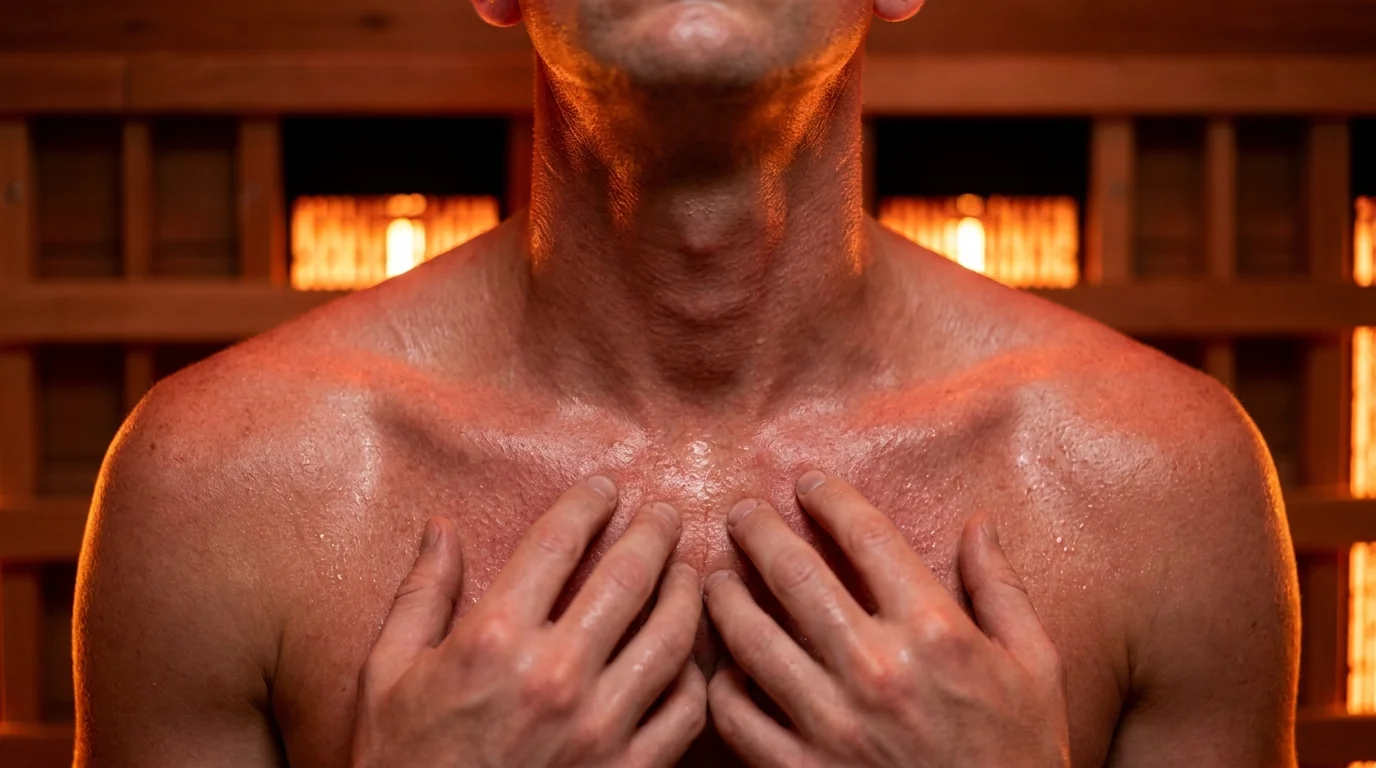
The scent of dry cedar wood hangs warm and heavy in the air, mingling with the faint metallic ping of ceramic emitters glowing cherry-red behind carbon panels. You sit wrapped in a linen towel, feeling the quiet satisfaction of a morning dedicated entirely to your recovery. Beads of sweat trail down your spine in steady, rhythmic lines, pooling on the slatted bench beneath your thighs. It feels like an act of pure cellular restoration, a peaceful harbor from the frantic pace of the outside world.
You step out of the booth feeling completely renewed, splash cool tap water across your face, pull on your workday clothes, and head out the door. The morning carries forward without incident. You answer emails, sip your cold brew, and tackle your midday tasks with ease. Then, around two in the afternoon, while standing up from a routine conference call, the floor beneath your shoes seems to soften. Your vision blurs at the periphery, your collar suddenly feels constricting, and a hollow, fluttering tightness blooms across the center of your ribs.
It arrives with an unsettling, sudden weight. You wonder if you skipped lunch, if the coffee was too acidic, or if some latent respiratory bug has caught up with your immune system. You rarely suspect the quiet forty-minute session you spent basking in invisible light hours earlier. Yet inside that tranquil cedar enclosure, your vascular tree was quietly pushed to an unseen mechanical edge.
The Thermal Trap: When Gentle Radiation Bypasses Your Natural Defenses
Traditional sweat lodges and steam rooms announce their fury the moment you open the heavy wood door. The ambient air hits your face like a wet wool blanket at nearly two hundred degrees Fahrenheit, forcing your skin to scream for caution. Your body understands this immediate heat; your pores instantly dilate, your breath turns shallow, and your instinctive protective reflexes take command within seconds.
Infrared sauna cabins operate on an entirely different physiological currency. Because radiant far-infrared wavelengths warm your dense muscle tissue from within rather than baking the room around you, the surrounding air temperature feels deceptively manageable, hovering around an inviting 130 degrees. You settle comfortably onto the slatted bench for forty-five or fifty minutes, deceived by the absence of blistering air into believing your cardiovascular system is merely lounging in a gentle spring sun.
Under the surface, your cardiovascular network is running an all-out, invisible sprint. Radiant heat triggers profound vasodilation, causing peripheral micro-vessels in your extremities and cutaneous layers to expand like uncoiling garden hoses. To keep your core cool, your circulatory system redistributes massive quantities of circulating plasma away from your central organs directly into the capillary beds of your skin. When you finally step onto the cool tile floor, your peripheral pipes remain wide open, but your natural vasoconstrictive rebound has been quietly worn out.
Marcus Vance, a forty-four-year-old architectural draftsperson from Denver, learned this dynamic during a month of dedicated wellness optimization. After installing an expensive, two-person radiant booth in his basement, Marcus began spending forty-five minutes inside every weekday morning before his design shifts. By week three, he found himself regularly gripping the edge of his standing desk at midday, fighting off wave-like dizzy spells and an alarming, phantom thumping against his breastbone. His routine clinical markers were spotless, yet his afternoon cognitive clarity was disintegrating. It was only when an integrative cardiologist analyzed the timing of his orthostatic blood pressure drops that the culprit emerged: Marcus was chronically depleting his central vascular volume hours before his afternoon meetings even began.
The Mechanics of Midday Vascular Exhaustion
To understand why this dizzying sensation strikes hours after you towel off, you have to look at the hidden lag phase of vascular recovery. When you step out of a radiant cabin, your heart rate slows down long before your blood vessels regain their normal resting tension. Your nervous system assumes the thermal crisis has passed, yet your smooth muscle tissues remain slack and dilated.
- Liquid I.V. packets trigger sudden morning dry mouth and muscle twitches
- Tums chewable tablets trigger painful stomach bloating and trapped gas after meals
- Progressive reading glasses tilt your chin backward triggering stubborn base skull throbbing
- Titanium dioxide coatings in daily capsules resist stomach breakdown sparking chronic belly bloat
- Tight trouser waistbands compress lower ribcage space triggering sudden midday chest tightness
Blood pools quietly in your legs throughout the quiet hours of late morning, especially if your job demands prolonged sitting or sudden shifts between seated and standing positions. With a substantial portion of your fluid volume lingering in the dilated vessels of your calves and gut, your heart must work substantially harder to pump sufficient oxygenated blood upward against gravity toward your brain.
When you abruptly rise from your office chair, your baroreceptors—the internal pressure sensors lining your carotid arteries—fire an emergency signal to clamp your vessels shut. If those vessels are still physically fatigued from sustained thermal dilation, the reflex lags. The immediate result is a sudden drop in cerebral perfusion that presents as lightheaded room spins, accompanied by a reactive surge of adrenaline that clenches your chest muscles in an instinctive panic response.
Adjustment Profiles: Reading Your Circulatory Baseline
Not every body processes deep radiant heat with the same vascular resilience. How your system tolerates an enclosed infrared cabin depends heavily on your daily movement patterns, metabolic pacing, and existing blood volume.
For the Desk-Bound Professional
If you spend six to eight hours behind a computer monitor following your morning cabin session, your risk of midday lightheadedness multiplies. Remaining seated allows pooled blood to settle undisturbed in your lower extremities, stalling venous return to the heart.
Keep your cabin sessions capped at twenty minutes maximum if you cannot incorporate light walking every hour of your workday. Interrupt long sitting stretches with brief calf-raise pulses right at your desk to mechanically pump trapped venous blood back toward your central chest cavity.
For the Fasted Morning Enthusiast
Stepping into a radiant cabin during an extended morning fast creates an immediate osmotic conflict. Without circulating glucose and food-bound sodium to hold water molecules inside your vascular walls, the profuse sweating of a thermal session pulls fluid directly from your bloodstream.
Your circulating blood volume drops precipitously before your first meal, turning an otherwise restorative sweat into severe internal dehydration. Pair your morning sessions with a pinch of unrefined sea salt dissolved in room-temperature spring water twenty minutes before stepping onto the cedar slats.
For the High-Intensity Athlete
Layering radiant heat directly on top of heavy strength training or strenuous cardio drains your autonomic nervous system. Your muscular capillary beds are already widened from exertion; adding forty minutes of infrared exposure strains your heart’s ability to maintain central blood pressure.
Reserve radiant thermal sessions for dedicated, low-stress recovery days rather than stacking them immediately after a challenging workout. Treat the cabin as an independent cardiovascular stressor rather than a passive lounge.
Mindful Application: The Recalibration Protocol
Reclaiming the restorative benefits of your radiant cabin requires abandoning the belief that longer, hotter sessions produce superior health outcomes. You can easily protect your blood vessels and eliminate sudden afternoon room spins by restructuring how you enter and exit the heat.
The secret lies in training your vascular smooth muscle to contract gradually, restoring tone before you ever leave the cedar booth.
- Limit your exposure to twenty-five minutes per session, keeping cabin ambient gauges beneath 135 degrees Fahrenheit.
- Sit fully upright for the final five minutes of the cycle with your feet flat on the floor to initiate early postural baroreceptor adaptation.
- Transition into a lukewarm, neutral rinse rather than shocking your overheated skin with an aggressive, freezing cold plunge.
- Consume twelve ounces of ambient-temperature mineralized water immediately after stepping out to restore systemic fluid tension.
- Avoid standing up abruptly from seated tasks during the four-hour window following your heat session.
The Circulatory Safety Toolkit
Keep these precise thresholds in mind whenever you schedule your radiant sweat sessions throughout the week:
- Maximum Exposure Cap: 20 to 25 minutes of continuous far-infrared exposure per day.
- Target Ambient Range: 125°F to 135°F (51°C to 57°C) for stable autonomic response.
- Hydration Ratio: 16 ounces of fluid with 300mg of natural sodium consumed across the subsequent two hours.
- Post-Session Buffer: 15 minutes of quiet, seated rest in room-temperature air before operating a vehicle or beginning work.
The Bigger Picture: Listening to the Subtle Whispers of Strain
In our modern pursuit of vitality, it is easy to adopt an industrial mindset toward our physical recovery. We measure our dedication by the volume of sweat covering the floorboards, assuming that deeper heat, longer durations, and harsher physical extremes naturally yield greater personal resilience. But your physiology does not respond to force; it responds to clear, sustainable biological cues.
Vascular tone is a delicate balance of tension and surrender. When midday dizziness strikes, your body is not failing you, nor is it asking for another synthetic supplement or stronger cup of coffee. It is simply reminding you that true vitality is found in gentle calibration rather than sheer endurance.
When you learn to step out of the booth while you still feel capable of staying five minutes longer, you protect the quiet rhythm of your heart and the clarity of your afternoon mind. You transform what was once an accidental cardiovascular strain into a genuine sanctuary of steady, grounded health.
Vascular health is not forged through sheer thermal endurance, but through your vessels’ quiet ability to recover their natural resting rhythm.
| Key Point | Detail | Added Value for the Reader |
|---|---|---|
| Wavelength Penetration | Far-infrared heats deep soft tissue without scorching ambient air. | Explains why you comfortably overstay safe cardiovascular exposure limits without realizing it. |
| Delayed Pooling | Vascular smooth muscles stay dilated long after you step onto cool floors. | Connects your afternoon room spins directly to the heat session you completed hours earlier. |
| Fluid Depletion | Profuse sweating thins plasma volume without immediate thirst cues. | Helps you prevent sudden chest fluttering by proactively salting your post-sweat hydration. |
| Autonomic Recovery | Abrupt temperature shocks disrupt delicate blood pressure baroreceptors. | Provides an actionable cooling sequence that preserves clear focus throughout your workday. |
Frequently Asked Questions
Why do my dizzy spells happen hours after leaving the cabin rather than inside it?
Your blood vessels remain physically relaxed and dilated long after your skin cools down. When you sit at a desk later in the day, fluid pools in your lower limbs, forcing your heart to work harder and triggering a delayed drop in head pressure when you suddenly stand.Is the sudden chest tightness a sign of an immediate heart attack?
While any unusual chest discomfort warrants a physician’s evaluation, post-heat chest tightness is commonly a benign muscular spasm or an adrenaline spike caused when your nervous system tries to compensate for dropping blood pressure.Can I prevent lightheadedness by drinking pure distilled or reverse-osmosis water?
Drinking large quantities of plain water can worsen the problem by diluting your remaining serum sodium. Your blood vessels require minerals like sodium and potassium to hold onto plasma volume and maintain systemic pressure.Are traditional steam saunas safer for blood pressure than infrared cabins?
Traditional steam saunas present higher immediate air temperatures that trigger early exit reflexes, naturally limiting overexposure. Infrared cabins feel milder, making it far easier to stay inside past your vascular limits.How many times per week should I safely use an infrared cabin?
Most individuals maintain optimal circulatory balance with two to three 20-minute sessions per week, giving vascular smooth muscle ample time to rest and recover between exposures.