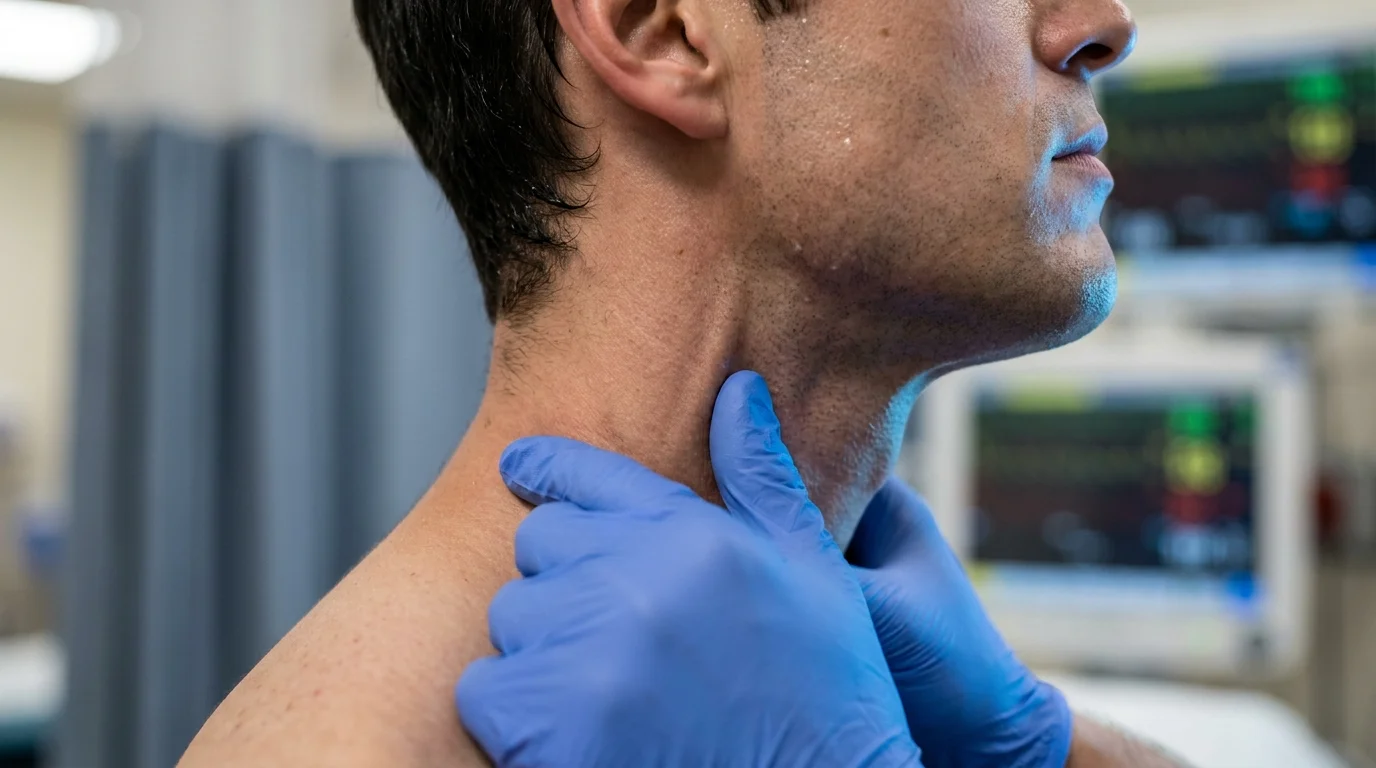
The harsh fluorescent tube overhead hums at a low pitch, casting a sterile wash across the triage intake bay at two in the morning. Outside, cold rain slaps against the automatic sliding doors, while inside, the room smells of rubbing alcohol, lukewarm cafeteria decaf, and damp winter coats. You lean back against the vinyl seat, nursing a dull throb behind your eyes that feels an awful lot like the tail end of a routine winter bug.
We have all learned to barter with ordinary seasonal sickness. You assume your heavy limbs, scratchy throat, and sudden wave of shivers simply demand hot herbal tea, a dark room, and twelve uninterrupted hours under a heavy quilt. But across several regional emergency rooms this week, the usual waiting room calculus is fracturing under a sharp uptick in high-acuity admissions.
A quiet wave of severe clinical cases has triggered alarms across community hospitals from the mid-Atlantic down through the Sunbelt, driving an overnight spike in digital searches as households scramble to make sense of sudden, violent collapses. Triage nurses are no longer letting feverish young adults wait out the night in corner chairs; they are pulling them directly into trauma bays before their vitals even settle on paper.
When an everyday seasonal infection takes a sudden, sinister turn, seconds dismantle standard clinical assumptions. What feels like an aggressive winter ache can be something far more predatory, demanding that you look past surface exhaustion and recognize when your body is sounding a four-alarm sirens.
The Firebreak: When a Winter Bug Becomes a Systemic Siege
To grasp why hospital wards are moving with such sudden velocity, you have to discard the comforting notion that severe systemic illness arrives with a dramatic, movie-style flourish. The human body is remarkably polite in the opening rounds of an attack; it handles catastrophic bacterial invaders using the exact same playbook it uses for a harmless dry cough or an ordinary sinus flare.
Think of standard viral flu like damp firewood smoking on a grate: it fills the room with haze, makes your eyes water, and drains your energy, but it burns slowly along predictable lines. Invasive bacterial meningitis, by contrast, behaves like an invisible spark landing directly in dry brush beneath your porch. The internal margin between discomfort and irreversible tissue distress measures mere hours, not days.
The current clusters involve aggressive strains of Neisseria meningitidis, bacteria capable of breaching mucosal barriers and slipping directly into the bloodstream before colonizing the delicate membranes cushioning your brain and spinal cord. Once those protective sheaths swell, the pressure inside your skull climbs without release, creating symptoms that masquerade as familiar aches before transforming into neurological emergencies.
The Midnight Call in Richmond
Dr. Marcus Vance, a 44-year-old emergency physician in Richmond, Virginia, knows the precise physical signature of that transition. Last Tuesday night, midway through a routine rotation dominated by sprained ankles and mild dehydration, an undergraduate student was wheeled into his acute bay by her roommate, complaining of a splitting headache that had begun over dinner.
- Propping bedroom windows flushes stale trapped heat for deeper unbroken sleep
- Soft sofa slouching twists lower spinal curves sparking persistent morning stiffness
- Warm saltwater rinses soothe raw burning throat lining without modern lozenges
- Unrefined sea salt pinches dissolved in water soothe stubborn nighttime muscle cramps
- Crushed fennel seeds steeped in warm water switch on sharp morning focus
“Her vitals looked almost salvageable at first glance—a fever of 101.8 degrees Fahrenheit and a mildly elevated pulse,” Dr. Vance recalled while reviewing departmental protocols between shifts. “Her friend thought she was just hungover or stressed about midterms. But when I asked her to drop her chin to touch her collarbone, she physically could not bend her neck without crying out in agony. We had broad-spectrum intravenous ceftriaxone running into her arm within fourteen minutes of that physical test. If she had stayed in bed until sunrise, the swelling would have outrun us completely.”
The Three Vulnerability Windows
Invasive meningococcal disease does not strike every demographic with identical force or identical warning signs. Understanding how risk distributes across ordinary routines allows you to calibrate your attention where it matters most.
The Dormitory and Shared-Living Cohort
Young adults between ages sixteen and twenty-three remain the prime target for sudden community spikes, largely because everyday close-quarters living creates rapid transmission loops. Sharing drinks, vaporizers, crowded bedroom spaces, and damp communal bathrooms allows high-grade respiratory droplets to jump host to host effortlessly.
In this group, the earliest presentation frequently mimics an aggressive hangover or acute dehydration: unyielding nausea, extreme sensitivity to light, and an incapacitating headache that fails to yield to over-the-counter anti-inflammatory tablets.
Infants, Toddlers, and Developing Defenses
Little bodies lack the developed immune memory to mount a disciplined localized defense, meaning systemic spread occurs with terrifying speed. Because toddlers cannot articulate localized head pain, parents must watch for behavioral shifts rather than verbal complaints.
A baby battling meningococcal inflammation will often present with paradoxical irritability—crying harder when rocked or held, because moving their limbs pulls painfully on inflamed spinal roots. Look also for a tight or bulging soft spot on the crown of the head, paired with limp limbs and a refusal to take fluids.
Older Adults and Subclinical Presentations
Mature adults often fail to present with the classic textbook triad of fever, neck rigidity, and altered mental state. Instead, systemic bacterial infiltration often masquerades as sudden, profound confusion, unsteady gait, or acute abdominal cramping that mimics food poisoning.
If someone over sixty abruptly loses their orientation to time, slurs familiar words, or presents with an icy chill in their hands while their core runs hot, clinical triage teams treat the situation as an immediate cerebrovascular or infectious crisis until proven otherwise.
Reading the Body: The Rapid Triage Check
When you or someone in your home spikes a rapid fever, skipping the guesswork requires a cool head and three definitive, non-invasive physical checks you can run in under sixty seconds.
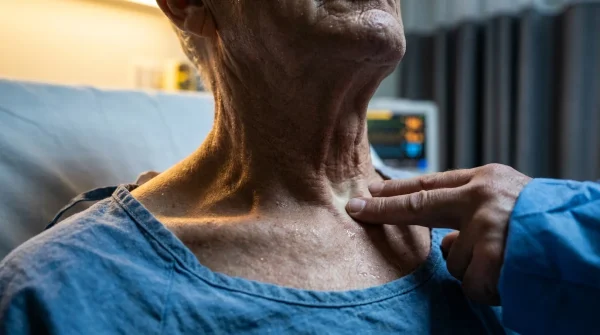
First, test for true nuchal rigidity. Have the person lie flat on their back without a pillow beneath their head. Instruct them to look at their toes, bringing their chin firmly toward their chest. If their knees or hips involuntarily jerk upward to relieve tension along their back—a clinical signal known as the Brudzinski sign—their spinal meninges are actively protesting the stretch.
Second, inspect the skin under bright, natural daylight. The hallmark meningococcal rash does not look like raised, itchy hives or flat viral redness. It begins as tiny, pinprick purple or deep-red flecks that look like broken capillaries, often starting on the ankles, soles of the feet, or inner forearms.
Use the classic tumbler test to assess these marks: firmly press a clear drinking glass against the discolored patch. If the red or purple marks remain vivid and dark through the glass without fading to pale white under firm pressure, the tiny vessels have begun leaking into the dermal tissue, signaling an immediate need for emergency transport.
- Check neck flexion: note any involuntary hip or knee jerking when the chin moves downward.
- Examine skin margins: scan armpits, lower legs, and the roof of the mouth for non-blanching dark flecks.
- Assess light tolerance: observe whether normal indoor lamps trigger physical squinting, eye pain, or nausea.
- Audit cognitive clarity: verify that the person knows the day of the week, their current address, and their immediate plans.
The Emergency Triage Toolkit
- Clear, flat-bottomed drinking glass for skin blanch testing.
- Digital oral or temporal thermometer calibrated in Fahrenheit.
- Emergency contact card with documented vaccination history (specifically MenACWY and MenB records).
- Direct route mapped to the nearest Level 1 or Level 2 emergency center rather than an urgent care clinic.
The Calm on the Other Side of Vigilance
Living alongside seasonal health alerts should never plunge your home into chronic anxiety or frantic over-sanitizing. Microscopic threats have circulated through shared human spaces since time immemorial, and our public health defenses are more sophisticated today than at any point in history.
The goal of understanding these red flags is not to make you flinch at every stray sniffle or morning headache. True peace of mind comes from knowing the precise boundaries of normal winter discomfort—and holding the diagnostic literacy required to act without hesitation the moment those boundaries give way. When you replace blind panic with clear, quiet observation, you reclaim total control over your family’s safety.
In the acute bay, we never fault a patient for arriving fast with a false alarm; bacterial time is measured in heartbeats, and early doubt saves lives.
| Diagnostic Factor | Routine Viral Bug | Invasive Meningococcal Emergency |
|---|---|---|
| Headache Character | Dull, throbbing, pressure behind eyes; eases with rest and fluids. | Explosive, unremitting ache that intensifies when dropping the chin toward the chest. |
| Skin Manifestation | Blushing, faint pink cheeks, or blanching viral hives that fade under pressure. | Petechial rash; dark purple or red pinpricks that stay visible under a clear glass. |
| Cognitive Presence | Tired, sluggish, sleepy, but fully oriented to place and identity. | Abrupt disorientation, slurred responses, extreme agitation, or inability to wake. |
Frequently Asked Questions
How quickly do invasive meningitis symptoms escalate from mild to severe?
Unlike viral infections that unfold over three to five days, bacterial meningitis can progress from mild chills to life-threatening neurological distress in as little as eight to twelve hours.Does a standard adolescent meningitis vaccine cover every dangerous strain?
The standard adolescent vaccine covers strains A, C, W, and Y, but protection against the aggressive Serogroup B strain requires a separate, dedicated immunization series.Can an urgent care clinic handle a suspected case of meningitis?
No, urgent care clinics lack the advanced lumbar puncture equipment and immediate intensive-care capabilities needed; suspected cases require an immediate visit to an emergency room.Why does bright light cause such severe discomfort during these infections?
Photophobia occurs because the inflamed optic nerve sheaths and meninges are hypersensitive, causing normal light to trigger deep ocular and cranial pain.What is the primary difference between viral and bacterial meningitis outcomes?
Viral meningitis is typically self-limiting and resolves with supportive care, whereas bacterial meningitis requires immediate intravenous antibiotics to prevent brain damage, hearing loss, or systemic shock.