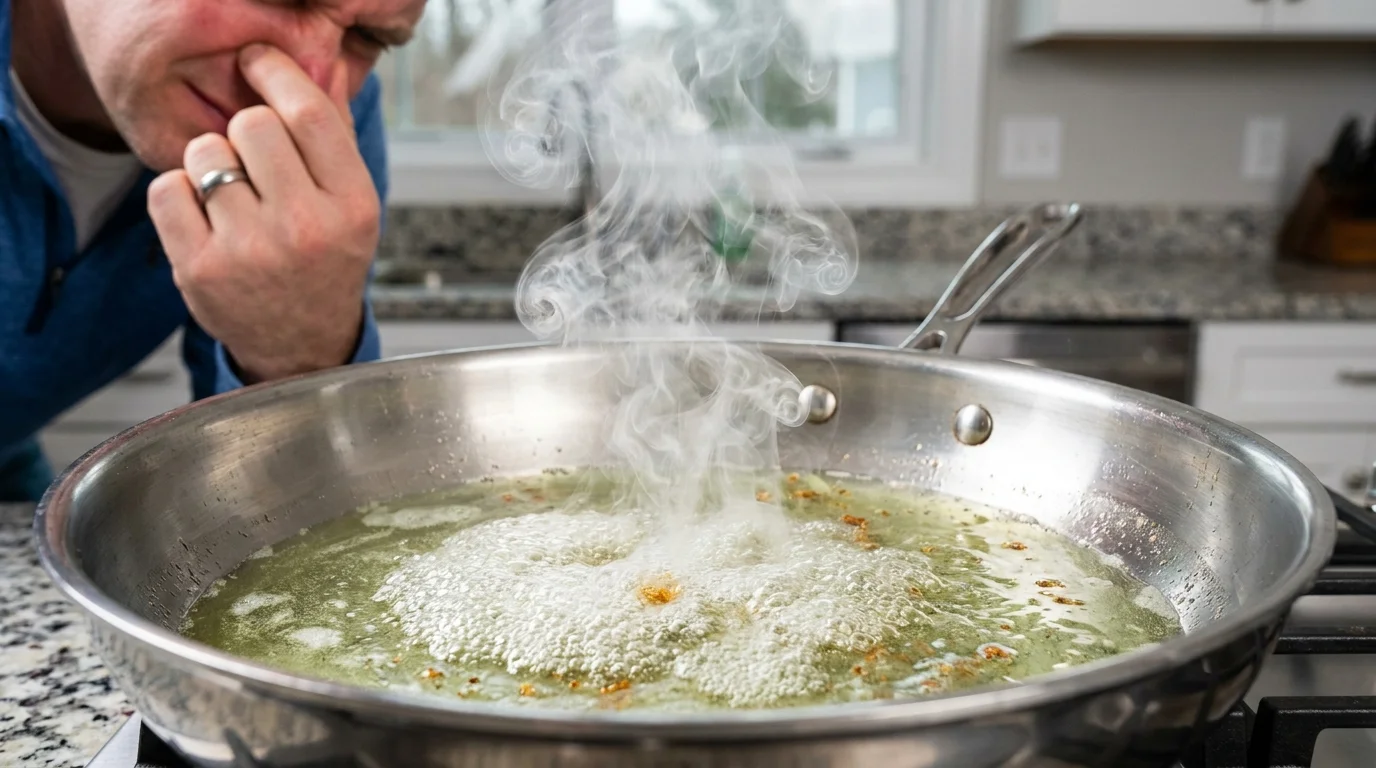
The cast-iron pan sits on your back burner, warming past the point where water droplets dance and vanish into thin air. You pour a generous splash of grapeseed oil across the dark metal, watching it spread into a thin, mirror-smooth glaze. It looks immaculate—pale green, neutral, and famously celebrated for its endurance under blistering flame. You slide a cut of protein into the center, expecting the clean sear of a high-end bistro.
Then the subtle mist rises. It is not the thick, billowing black smoke of burnt butter, but a pale, almost invisible haze that curls over the lip of the pan and disperses across your ceiling. Within minutes, your breathing feels different. The back of your soft palate tickles, your nostrils clamp shut as if defending against an invading chill, and a dull, throbbing pressure blooms behind your cheekbones.
You sit down to eat, but your appetite feels blunted by a sudden wave of post-cooking lethargy. Your temples ache, your eyes feel gritty, and you find yourself clearing your throat every few bites. You assume it is seasonal pollen blowing through a cracked window or the natural exhaustion of an evening rush, unaware that the culprit arrived straight from that pale green bottle.
The culinary myth of grapeseed oil rests on a single seductive number: its nominal 420°F smoke point. But smoke points only measure the moment visible carbon particulates become undeniable to the naked eye. Long before that visual alarm sounds, the fragile chemical architecture inside the pan has already fractured, releasing aerosolized compounds that your respiratory tract treats like noxious exhaust.
The Fragile Geometry of High-Heat Lipids
To understand why this happens, you have to look past marketing labels and examine the molecular spine of seed oils. Grapeseed oil consists overwhelmingly of polyunsaturated fatty acids, specifically linoleic acid. These molecules feature multiple double bonds in their carbon chains—flexible joints that make the oil pour smoothly even when cold, but render it remarkably tender when faced with dry stovetop energy.
When those delicate chemical bonds meet the base of a hot pan, they break apart long before the oil actually catches fire. This rapid fragmentation creates volatile organic compounds, including acrolein, hydroxyalkenals, and lipid peroxides. Instead of staying trapped inside the pan, these fragmented lipids vaporize, turning the air above your stove into an invisible spray of respiratory irritants.
When you breathe in these fine lipid vapors, your upper respiratory system responds with emergency speed. The sensitive mucosal lining inside your nasal passages swells instantly to prevent deeper particulate entry into your lungs. That sudden fullness behind your eyes and the thick, stuffed feeling across the bridge of your nose are not allergies—they are your body’s physical barricade rising against airborne chemical fragments.
- Brita pitcher water flushes essential mineral salts sparking heavy afternoon muscle sluggishness
- Avoiding grocery baskets erodes core balance and accelerates upper body muscle fade
- Unloading low dishwashers strains aging hip joints sparking persistent lower back aches
- Premier Protein shakes trigger sudden afternoon cravings behind hidden artificial sweetener blends
- Pretending constant agreement fuels chronic nervous fatigue and ruins restful nighttime sleep
The Commercial Line: Chef Ross and the Extractor Test
Mateo Ross, a veteran culinary director in Austin, spent two decades operating restaurant lines before questioning why his evening prep shifts ended with stubborn sinus headaches and cloudy concentration. Working with commercial air-quality monitors during a kitchen remodel, Ross discovered that the highest concentration of airborne particulate spikes did not come from charred wood or direct grill flares, but from gentle sauté stations utilizing commercial grapeseed oil.
The monitors recorded micro-particulate counts soaring beyond hazardous thresholds within ninety seconds of introducing the oil to hot steel, even while the kitchen hood hummed at full capacity. Ross realized that what cooks perceived as a light culinary steam was actually a cloud of oxidized lipid droplets lingering at eye level. By shifting his staff toward heat-stable single-bond fats for pan-frying, the persistent post-shift brain fog across his line crew vanished within two weeks.
Mapping Your Exposure: How Cooking Style Dictates the Cloud
Not every pan releases the exact same volume of irritants. The severity of your sinus reaction depends on how heat distributes across your cooking vessel, how long the lipid rests without food moisture, and the airflow patterns of your living space.
For the cast-iron searer, the hazard compounds quickly. Heavy cast iron and carbon steel store immense thermal mass, creating localized hot spots that regularly exceed 450°F even when your burner dial reads medium-low. Adding delicate grapeseed oil to these dry, blazing surfaces causes instantaneous thermal shearing. The oil vaporizes on impact, generating sharp acrolein clouds before your ingredients ever touch the surface.
For the apartment cook with ductless ventilation, the threat lingers far longer. Most residential microwave vents merely push air through a grease screen and blow it straight back toward your forehead at eye level. Without a dedicated exterior exhaust, fragmented seed oil vapors remain suspended in ambient indoor air for up to four hours, settling into upholstery and continuously irritating your nasal passages long after the dishes are dried.
For the gentle simmerer, the dynamic shifts. If you incorporate grapeseed oil into wet braises, sauces, or shallow dressings where temperatures remain capped near water’s boiling point of 212°F, the double bonds remain intact. The irritant cascade only strikes when the oil meets dry, radiant heat without sufficient moisture to buffer the surface temperature.
Restoring Kitchen Clarity: A Low-Emission Protocol
Reclaiming clear breathing while you cook does not require abandoning high-heat cooking entirely. It simply requires respecting the physical limitations of your cooking mediums and changing the order in which you build heat.
Follow this disciplined rhythm during your next searing session to keep your sinuses clear and your kitchen air fresh:
- Switch your high-heat base: Reserve delicate polyunsaturated oils for cold dressings or rapid finishing. For high-temperature pan searing, choose lipids dominated by saturated or monounsaturated fats—such as grass-fed ghee, pure tallow, or cold-pressed avocado oil—which resist molecular breakdown at extreme heat.
- Cold pan, hot oil technique: Never let oil sit on a dry, empty, preheated pan for more than five seconds. Heat your dry pan thoroughly first, add your oil, and immediately lay down your food so the thermal energy transfers into the ingredients rather than fracturing the fat.
- Establish cross-ventilation early: Turn your kitchen exhaust fan to its highest setting two minutes before heating the burner to establish an upward draw, and open a nearby window at least two inches to create a low-pressure pull.
- Watch the viscosity shimmer: Pull your pan back from the flame the moment the oil forms subtle rippling waves across the surface. If you see the barest hint of gray mist, the heat has already exceeded the threshold of molecular stability.
Your Tactical Kitchen Toolkit: Keep a digital infrared thermometer within arm’s reach of your range to monitor pan surface heat before adding cooking fats. Target surface temperatures between 325°F and 375°F for routine protein browning, keeping your pan below the volatile degradation point of delicate oils.
Clean Air as the First Ingredient
We often forget that the process of preparing dinner is an environmental act that alters the microclimate of our homes. When you stand over a stove, you inhale thousands of liters of ambient air, and whatever chemistry takes place on that steel plate enters your bloodstream through your lungs far quicker than the food passing through your digestive tract.
Recognizing how fragile oils break down under intense heat shifts your kitchen mindset from passive cooking to conscious environmental stewardship. When you replace volatile, highly processed seed oils with heat-resilient fats, the subtle physical drag of weeknight cooking disappears. The sudden post-meal brain fog clears, your evening breathing remains silent and easy, and your kitchen returns to what it was always meant to be: a sanctuary of clean nourishment rather than an invisible smog chamber.
“True culinary mastery is not merely how well a dish tastes, but how clean and clear your home feels after the stove cools.”
| Key Point | Detail | Added Value for the Reader |
|---|---|---|
| Molecular Vulnerability | Grapeseed oil is packed with fragile polyunsaturated double bonds that fracture under standard pan heat. | Explains why high smoke point ratings fail to prevent rapid chemical breakdown. |
| Aerosolized Irritants | Thermal breakdown releases invisible acrolein and lipid peroxides directly into your breathing zone. | Pinpoints the real cause of sudden evening sinus congestion and post-cooking grogginess. |
| Thermal Management | Preheating fats without food causes instant vaporization and lingering indoor air contamination. | Provides an actionable sequence to cook without triggering acute upper-airway swelling. |
Frequently Asked Questions
Why does grapeseed oil irritate my sinuses if the label lists a high smoke point?
A smoke point only indicates the threshold for visible black particulate smoke, not chemical stability. Grapeseed oil contains delicate polyunsaturated fatty acids that thermally shear into invisible, irritating vapor compounds like acrolein at temperatures well below its published smoke point.What are the primary symptoms of inhaling broken-down cooking oil vapors?
The most common reactions include sudden nasal congestion, a tickling sensation in the throat, watery eyes, sinus pressure across the cheeks, and a heavy, groggy feeling in the head that sets in shortly after cooking.Which cooking fats should I use instead for high-heat searing?
Opt for fats rich in saturated or monounsaturated fatty acids with minimal fragile bonds, such as clarified butter (ghee), beef tallow, or pure cold-pressed avocado oil. These choices remain structurally stable at high pan temperatures without aerosolizing into irritating vapors.Can I still use grapeseed oil safely in my kitchen?
Yes, but you should keep it strictly away from dry, searing heat. It works beautifully in cold vinaigrettes, marinades, or gentle low-temperature applications where moisture prevents the oil from breaking down into airborne irritants.How long do these aerosolized oil irritants stay in home air?
In homes without direct exterior exhaust hoods, micro-particulate lipid droplets can hang suspended in room air for three to four hours. Running an exterior-venting hood and opening a window during cooking helps clear these volatile compounds quickly.