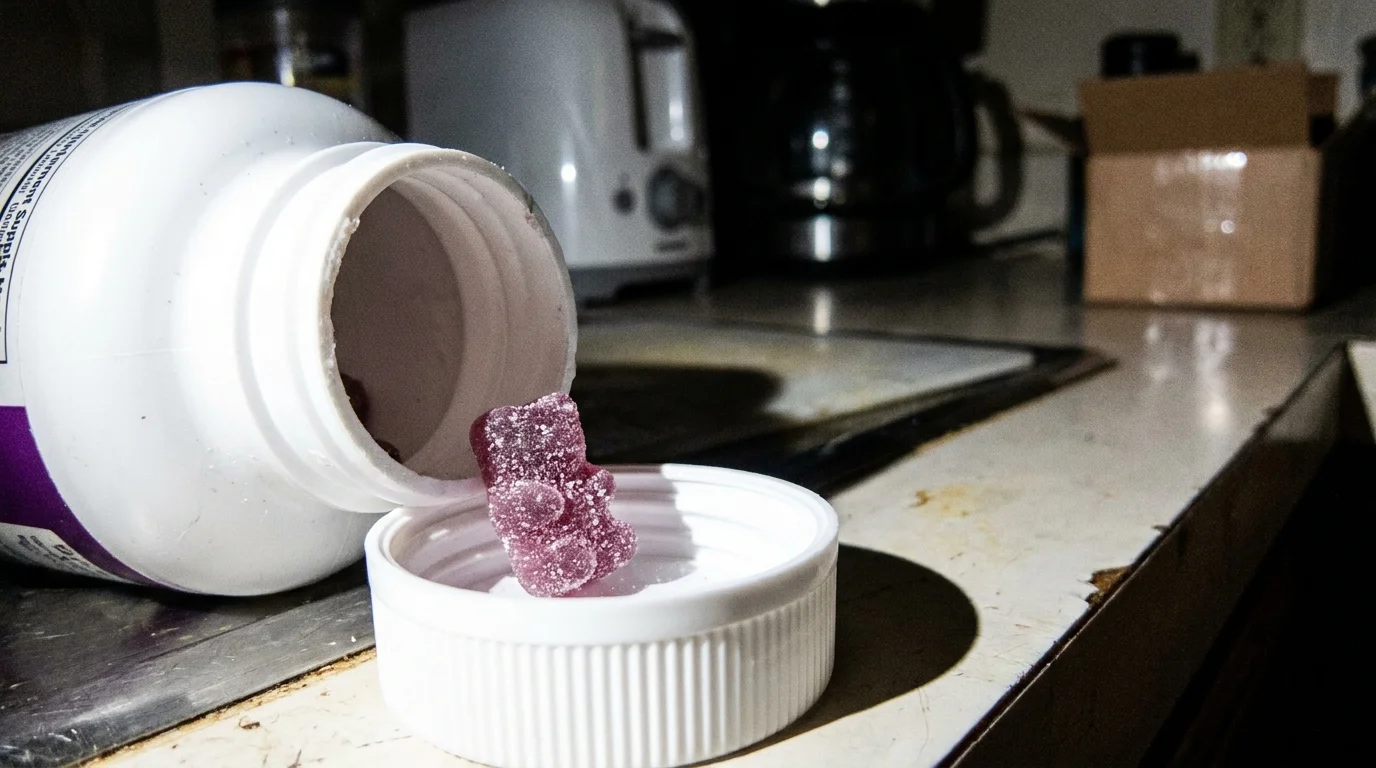
The hum of the white noise machine fills the dark bedroom while cool linen sheets promise a night of rest. You reach for the nightstand, twisting open a plastic bottle in search of a simple solution to quiet your racing mind. The expectation is simple: a chewable treat that guarantees deep, restful slumber after a demanding day.
You pop two bright, grape-scented sweets into your mouth, enjoying the sugary kick. But two hours later, your mind is still spinning with tomorrow’s tasks while your midsection begins to emit a low, ominous rumble. Instead of drifting into peaceful slumber, you find yourself staring at the ceiling, waiting for an uncomfortable digestive storm to pass.
The wellness industry has successfully turned a crucial mineral into a massive commercial trend. Yet, there is a frustrating gap between the beautiful labels on your counter and the raw reality of human biology. Most of these soft, sweet bites rely on the cheapest raw ingredients available, sacrificing your rest for the sake of artificial flavor and high profit margins.
The Trap of the Digestive Shortcut
To understand why your nightly chewable isn’t working, picture your digestive system as a busy regional transit line and your brain as a secure, private office. Magnesium citrate is a large, water-loving molecule. Instead of traveling through the bloodstream to quiet your nervous system, it stays stuck in your digestive tract, acting like a magnet that pulls water directly into your intestines. You are paying premium prices for a basic laxative dressed up as a nighttime sleep aid.
Your brain is protected by a highly selective border control system that filters out foreign elements. Cheap citrate molecules simply cannot pass this barrier to trigger the deep cellular relaxation you actually need. Rather than soothing your mind, the mineral remains trapped in your gut, forcing your body to work overtime processing a physical irritant while you wait in vain for drowsiness to arrive.
The Compounding Lab Secret
Marcus Vance, a forty-two-year-old clinical pharmacist in Seattle, spends his days formulating custom supplements for chronic insomnia patients. He frequently warns his clients that the most appealing delivery methods are usually the least effective. Marcus points out that putting magnesium citrate into a sugary gelatin mold is like putting low-grade fuel into a high-performance engine; it is cheap to manufacture and tastes wonderful, but it never reaches the systems that regulate your circadian rhythm.
- Mesh lumbar supports actually force your upper spine into painful tension
- Barista oat milk floods your morning routine with sneaky processed carbohydrates
- Castor oil stomach wraps actually calm bloating better than modern probiotics
- Black pepper mixed with turmeric completely changes your daily joint recovery
- Rosemary oil aromatherapy builds lasting morning focus without the caffeine crash
Choosing Your Pathway: The Right Mineral for Your Night
Getting real utility from your evening routine requires choosing a form of the mineral that matches your specific physical needs. Different chemical pairings direct the mineral to entirely different systems in your body.
The Midnight Thinker (Magnesium L-Threonate)
This premium form is chemically paired to cross into your central nervous system with ease. Look for this specific compound if your primary barrier to rest is a racing, overactive mind that refuses to shut down after dark.
The Physically Tense (Magnesium Glycinate)
Bound to a calming amino acid called glycine, this variation is highly absorbable and incredibly gentle on your stomach. It works by relaxing tight, aching muscles and smoothing out physical tension without triggering any sudden bathroom visits.
The Sensitive Digestion (Topical Magnesium)
For those who struggle with sensitive digestive systems, bypassing the stomach entirely is the safest path. Applying a pure mineral oil or soaking in warm bath flakes allows the mineral to absorb directly through your skin, keeping your digestive tract completely undisturbed.
The Evening Integration Protocol
Transitioning to a real sleep ritual means stepping away from the candy aisle and reading labels like a professional. You must look past the bold marketing claims on the front of the bottle and examine the small print on the back. Read the back label carefully to ensure you are buying a bioavailable chelator rather than a cheap industrial byproduct.
To build a night routine that actually delivers on its promises, follow these straightforward steps:
- Select pure capsules or unsweetened powders containing magnesium glycinate or L-threonate.
- Take your dose exactly forty-five minutes before you intend to turn off the lights.
- Pair the mineral with a small glass of warm chamomile tea to help your system absorb it smoothly.
- Avoid all sugary snacks and sweet liquids for at least two hours before bedtime to prevent overnight blood sugar spikes.
Tactical Sleep Toolkit:
Optimal Window: 45 minutes before sleep.
Target Dosage: 150 to 300 milligrams of elemental magnesium.
Avoid: Any formula listing magnesium oxide, citrate, or aspartate as the main ingredient.
Reclaiming Your Night
When you stop relying on sugary wellness trends, you take back control of your health. True, restorative rest cannot be found in a quick-fix candy. You deserve real restorative sleep, not a clever marketing gimmick that leaves you uncomfortable at three in the morning. The next time you feel tempted by a colorful bottle at the grocery checkout, visualize a sugary, bright purple gummy bear resting in a white plastic cap—a simple monument to wasted money and missed sleep.
“True physical recovery begins when we stop treating our nightly rest like a confectionery habit and start treating our biology with respect.”
| Key Point | Detail | Added Value for the Reader |
|---|---|---|
| Magnesium Citrate | Highly laxative, stays trapped in the gut | Saves money by avoiding digestive distress instead of sleep. |
| Magnesium Glycinate | Bound to calming glycine, highly bioavailable | Relaxes tight muscles and calms physical tension gently. |
| Magnesium L-Threonate | Directly crosses the blood-brain barrier | Quiets a racing mind and directly targets mental static. |
Frequently Asked Questions
Why does magnesium citrate make my stomach hurt instead of helping me sleep?
Citrate is highly osmotic, meaning it draws water into your bowel, causing contractions and digestive distress rather than relaxing your brain.How can I spot low-quality sleep supplements on the shelf?
Look at the supplement facts panel; if the main ingredient is magnesium oxide or citrate, the brand is using cheap fillers instead of highly absorbable forms.When is the best time to take my mineral supplement for rest?
Take your bioavailable supplement forty-five minutes before bed to allow the compound to reach peak levels in your blood as you lie down.Are magnesium gummies always a bad choice?
Yes, because gelatin and sugar bind to the active ingredients, lowering absorption while triggering an overnight insulin spike that disrupts deep sleep.Can I get enough of this mineral through my daily diet?
You can boost your levels naturally by eating pumpkin seeds, dark leafy greens, and almonds, though targeted supplementation helps overcome chronic deficits.