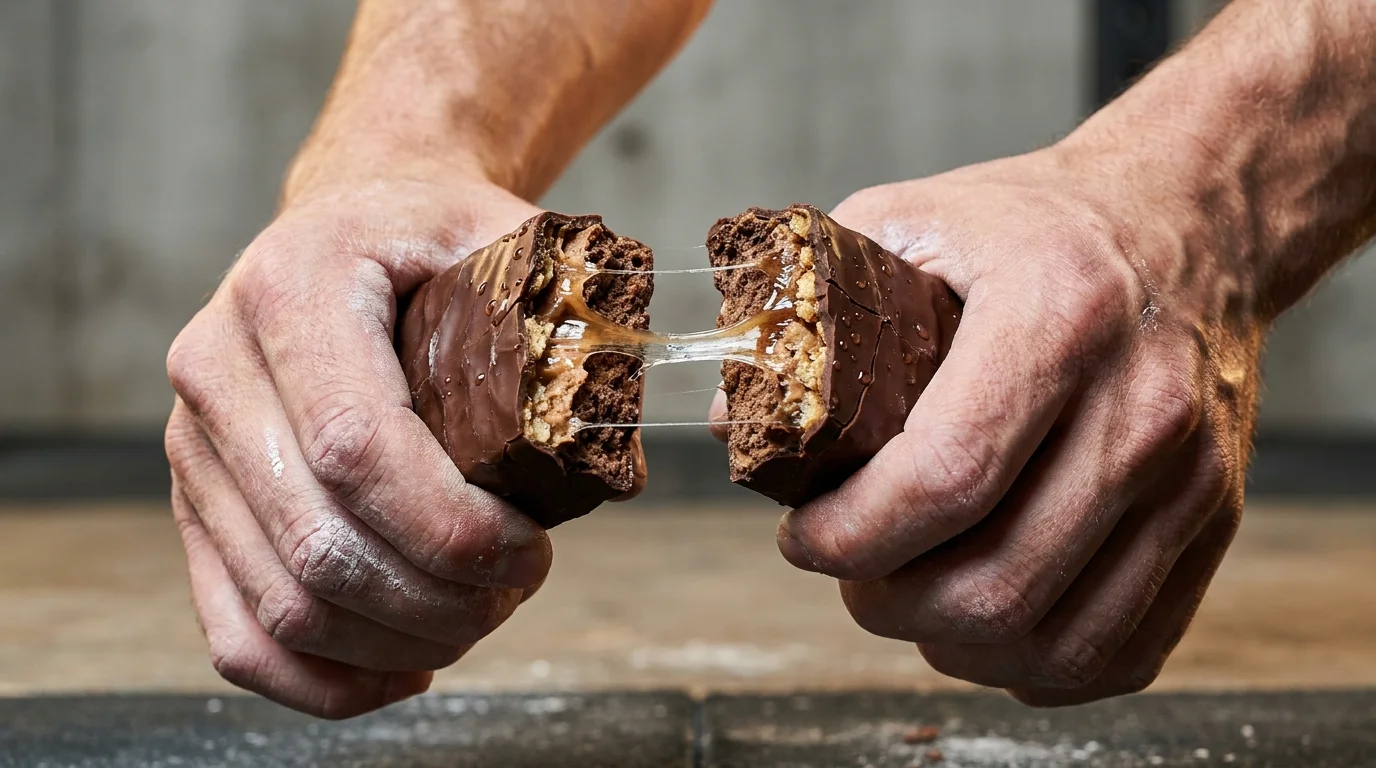
The wrapper glides open with the familiar crinkle of an afternoon victory. Underneath fluorescent office tubes or sitting at a traffic light on a warm 78-degree afternoon, you look down at a bar that looks precisely like a candy counter indulgence. It is ribbed with chocolate drizzle, pebbled with crisps, and smells rich with roasted peanuts and confectionery vanilla. You chew through the soft core, convinced that taking in sixteen grams of muscle fuel is the most disciplined choice you will make all day.
For forty-five minutes, everything feels right. Your palate registers total decadence, your hunger quiets down, and your mental engine hums along cleanly. You toss the shiny foil into the wastebasket, mentally checking off your nutritional duty while your body goes to work breaking down what you assumed was clean, athletic fuel.
Then the two-hour mark arrives like a damp wool blanket pulled straight over your eyes. Your eyelids suddenly weigh heavy, an inexplicable dry thirst settles into the back of your throat, and your brain slows to a crawl, searching desperately for another shot of espresso or a sleeve of cookies. What was marketed as sustained performance nutrition has suddenly collapsed your afternoon momentum from the inside out.
This is not a failure of personal willpower or an imaginary lapse in your metabolism. When you dismantle the architecture of FitCrunch protein bars, that sudden mid-day wall reveals itself not as an accident, but as the direct biological tax of heavy hydrogenated coatings colliding with invisible sugar alcohol surges.
The Confectionery Trojan Horse: Deconstructing the Coating
To understand why this specific crash hits with such acute heaviness, you have to peel back the metabolic curtain. We tend to view protein bars through the lens of pure macronutrients: protein, carbohydrates, fats. If the box boasts high protein and low sugar, your mind visualizes sustained energy burning steadily like dry oak in a stone fireplace. But your digestive tract does not read marketing claims on a box; it reads physical molecular structures.
The outer shell of these layered treats relies on fractionated palm kernel oil and hydrogenated lipids to achieve that room-temperature snap and glossy chocolate sheen. These altered vegetable fats are stripped of their natural fluidity through industrial processing. Sticky industrial coating lipids take hours to emulsify in the small intestine, requiring immense bile release and mechanical digestive effort that draws vital blood flow directly toward your core and away from your brain.
Suspended right inside that dense lipid matrix is maltitol syrup. Maltitol is a polyol favored by commercial food laboratories because it mimics the tooth-sink and mouthfeel of real cane syrup without technically qualifying as sugar on a standard nutrition panel. But maltitol is not inert. It carries an estimated glycemic index ranging near 35 to 52 depending on its syrup concentration—dramatically higher than natural sugar alcohols like erythritol. When locked inside a blanket of processed fats, it acts as an invisible delayed-release glucose hammer.
- Webbed thumb pressure relieves burning shoulder knots after exhausting desk screen hours
- Bedroom closet doors left open flush trapped heat for cool uninterrupted sleep
- High counter stools strain pelvic alignment sparking throbbing lower back stiffness
- CDC meningitis directives overhaul college dormitory screening standards after sudden regional infection clusters
- Warm oatmeal compresses calm angry itchy eczema flares without harsh steroid creams
The Laboratory Ledger: A Food Scientist’s Quiet Warning
Marcus Vance, a forty-two-year-old formulation chemist who spent over a decade developing shelf-stable functional snacks in Chicago, knows this sequence intimately. In laboratory tasting rooms, the priority was rarely cellular vitality at hour two; the goal was sensory dominance at second five. Marcus watched brands systematically swap whole-food nut butters and unrefined fats for high-melting-point palm fractions because they survive warehouse heat without blooming into chalky white streaks.
Marcus routinely pointed out that when maltitol syrup pairs with processed vegetable fat, the gut experiences a split-second absorption delay followed by a sharp osmotic draw. The stomach holds the heavy fat mass while the maltitol ferries its hidden carbohydrate load into circulation, prompting an immediate insulin surge to clear the blood. Because the protein is encased in heavy confectionery syrup, its slow, stabilizing amino acid release arrives far too late to blunt the fall. The result is predictable: a sudden, steep drop in circulating blood sugar while your body remains trapped in heavy digestion.
The Breakdown Zones: How Your Body Handles the Snack
Not every body responds to this confectionery chemistry in the same manner, but the metabolic signatures fall into distinct physical patterns based on your daily baseline.
For the Desk-Bound Professional
If you consume these layered bars while sitting motionless under office lights, the systemic impact strikes your focus first. Without active muscular contraction to vacuum up circulating glucose, that maltitol spike prompts a massive insulin flood. Deep post-snack mental fog rolls in precisely as your blood sugar over-corrects downward. The heavy vegetable oil shell sits stationary in your gut, pulling splanchnic blood flow inward and triggering that irresistible urge to rest your forehead against the keyboard.
For the Post-Workout Lifter
If you tear into one right after a demanding lifting session, your glycogen-depleted muscles will soak up the carbohydrate spike quickly, blunting the worst of the brain fog. However, the high-heat processed oils present a different roadblock. The heavy fat coating delays gastric emptying, trapping the whey protein isolate in the stomach when your muscle tissue actually craves rapid, clean amino acid delivery. Instead of crisp recovery, you walk away with lingering lower-abdominal bloating and a sluggish, heavy core.
For the Low-Carb Enthusiast
Those watching net carbs are often the most surprised by the two-hour slump. Because maltitol syrup is frequently subtracted to claim an ultra-low net carbohydrate tally, you assume your ketosis or fat-adapted state remains undisturbed. Yet the liver treats maltitol’s caloric and glycemic load very much like real carbohydrate, kicking you out of steady-state fat burning and plunging your energy into a valley that leaves you ravenous for salty, crunchy snacks by four in the afternoon.
Reclaiming the Midday Pivot: A Mindful Reset Protocol
Breaking free from the afternoon slump does not require abandoning quick-grab nourishment, but it does demand a shift from synthetic confectionery treats toward biologically honest sustenance. Shifting toward whole-source nutrition restores your afternoon autonomy and protects your nervous system from unnecessary chemical turbulence.
If you have eaten one of these bars and feel the telltale heaviness creeping into your temples, follow this gentle tactical sequence to flush the slump:
- Drink 16 ounces of cool, unchilled water with a pinch of sea salt to counteract the osmotic fluid draw caused by sugar alcohols in the bowel.
- Step away from your screen and take a brisk ten-minute walk; light skeletal muscle movement draws circulating glucose into muscle tissue without relying entirely on an insulin spike.
- Breathe deeply through your nose with extended exhales to flip your nervous system out of sluggish, panic-driven fight-or-flight back into balanced alertness.
When selecting your daily pocket snacks moving forward, carry this Tactical Toolkit to quickly audit the wrapper:
- Sweetener Threshold: Choose bars sweetened with small amounts of real whole dates, raw honey, or pure monk fruit; systematically bypass any label listing maltitol, maltitol syrup, or hydrogenated starch hydrolysates in the first five ingredients.
- Fat Integrity: Look for fats originating exclusively from whole roasted almonds, walnuts, seeds, or virgin coconut oil rather than fractionated palm kernel or hydrogenated vegetable oils.
- The Ingredient Ceiling: Aim for ten ingredients or fewer. If the ingredient list reads like an industrial polymer sheet, your digestive tract will spend more energy deciphering it than your brain will gain using it.
The Bigger Picture: Rebuilding Honest Vitality
We live in a culture that consistently attempts to disguise childhood candy bars as medical-grade fitness gear. We convince ourselves that as long as an item sports a clean font, a athletic endorsement, and a proud badge proclaiming twenty grams of protein, our biology will miraculously ignore the hydrogenated fats and engineered syrups beneath the surface.
True, sustainable vitality is remarkably quiet. It does not hit your tongue with the blinding sweetness of fairground fudge, nor does it demand that your liver and gut wage war just to extract a handful of amino acids. When you choose to fuel yourself with honest, unadorned foods, you trade the wild, exhausting rollercoaster of two-hour crashes for something far more valuable: a clear, steady, and uncompromised afternoon where your energy belongs entirely to you.
Real physical stamina is built on transparent nutrition, not clever confectionery disguises designed to survive a warehouse shelf.
| Key Point | Detail | Added Value for the Reader |
|---|---|---|
| The Maltitol Illusion | Carries a glycemic index up to 52, triggering real insulin surges despite zero-sugar marketing claims. | Explains the physical reason behind unexpected mental fog and sharp afternoon drops. |
| Hydrogenated Fat Shield | Fractionated palm kernel oils require extended gastric processing and pull blood flow to the gut. | Clarifies why stomach heaviness and lethargy strike at the exact same moment. |
| Delayed Amino Delivery | Protein trapped inside dense confection coatings fails to absorb quickly when muscles need it. | Helps lifters optimize genuine nutrient timing rather than relying on heavy candy substitutes. |
| Hydration Depletion | Sugar alcohols pull interstitial water into the gut through aggressive osmotic pressure. | Provides an immediate remedy: restoring water and minerals clears the sluggish feeling faster. |
Frequently Asked Questions
Why do I feel so hungry two hours after eating a high-protein bar?
When maltitol syrup prompts a sharp insulin spike, your body rapidly pulls sugar out of your bloodstream. That over-correction leaves your circulating glucose lower than it was before you ate, tricking your brain into sounding an urgent hunger alarm.Is maltitol as bad as real sugar for energy levels?
For daytime energy stability, it can actually be more disruptive. Real sugar is processed predictably, whereas maltitol delivers both a substantial glycemic rise and significant digestive distress that compounds daytime fatigue.How can I spot heavy processed coatings on nutrition labels?
Scan the ingredient list for terms like ‘fractionated palm kernel oil,’ ‘hydrogenated vegetable oil,’ or ‘confectioner’s coating.’ These indicate industrial fats engineered for high-temperature shelf life rather than clean metabolic fuel.Will drinking coffee help clear the post-bar crash?
Caffeine acts as a temporary stimulant patch, but it can worsen the problem by further spiking cortisol while your blood sugar is already rebounding. A brisk outdoor walk and a large glass of mineral water offer far more restorative support.What is an ideal quick snack to replace candy-style protein bars?
A handful of raw sprouted almonds paired with an organic hard-boiled egg or a small scoop of pure, cold-pressed whey mixed into water delivers immediate, lasting amino acids without the digestive tax of heavy syrups.