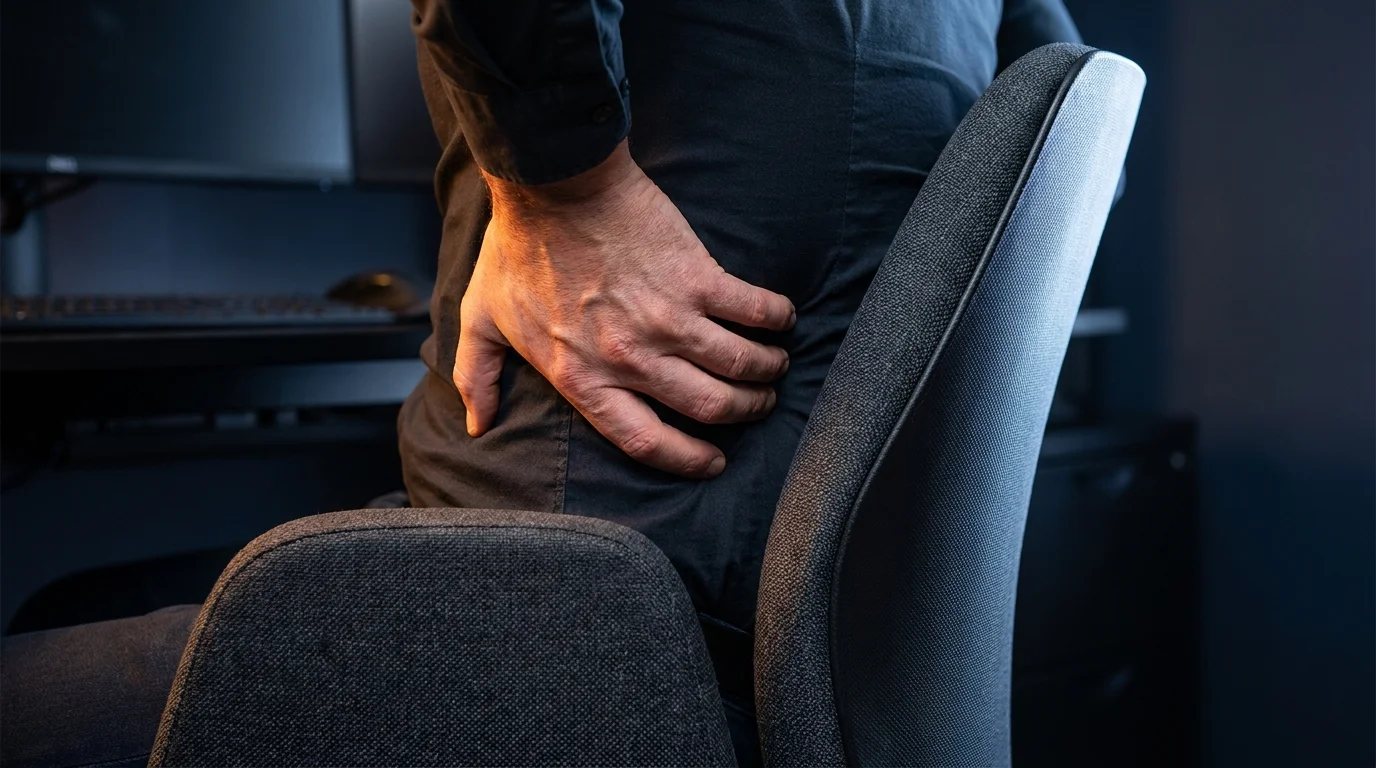
The room carries the low, dry hum of an afternoon monitor fan and the faint scent of cooled dark roast coffee. You sit back into your seat—that plush, deeply contoured chair with racing wings and a sculpted base designed to hug your spine like a cockpit. By all accounts, this setup cost enough to guarantee comfort through an eight-hour shift.
Yet right around two in the afternoon, an unsettling sensation creeps across your mid-torso. Your breath catches midway down your throat, stopping short like breathing through a pillow, and a sudden, sharp band of tightness clenches beneath your breastbone. Your heart flutters in response, and within thirty seconds, your palms run clammy as your nervous system begins whispering quiet warnings of panic.
You stand up, step away toward the kitchen, and within three minutes the invisible vice around your chest mysteriously dissolves. You blame it on stress, too much caffeine, or a silent anxiety attack brought on by deadlines. What you rarely suspect is the sleek, curved furniture cradling your body.
When you sink into deep bucket chairs, your pelvis drops lower than your thighs, rolling your tailbone underneath you and collapsing your lumbar curve. In this folded posture, your bottom ribs are shoved directly downward into your abdominal cavity, mechanically clamping the very levers meant to let your lungs expand.
The Accordion Trap: Why Contoured Seats Clamp Your Breath
Consider how a pair of fireplace bellows works. If you pinch the wooden handles together and jam the bottom hinges against a hard wedge, no amount of force will pull air into the leather chamber. Your ribcage operates on that exact mechanical reality.
Your bottom four ribs—often called false and floating ribs—are engineered to flare outward and upward like bucket handles every time your diaphragm contracts downward. When deep bucket chairs tuck your hips into a backward tilt, your sternum drops toward your navel, turning your torso into a pinched accordion bellows that cannot draw room-temperature air.
This physical pinch does something insidious to your neurology. Because your lower rib margins cannot articulate outward, your diaphragm runs out of downward clearance, striking your compressed viscera. Trapped without space, your body switches to emergency neck-breathing, recruiting your scalenes and trapezius muscles to hoist your upper chest toward your ears.
- Low laptop stands force downward neck angles triggering throbbing skull base tension
- Tabasco hot sauce drops hijack racing panic loops through sudden stinging tongue shocks
- Evening magnesium glycinate doses trigger sluggish morning brain fog under outdated pacing schedules
- Safflower cooking oil searing releases choking irritants sparking heavy post-dinner sinus pressure
- Skipping yard inclines accelerates lower leg muscle fade and destabilizes steady walking posture
Your brain monitors ribcage mobility through thousands of microscopic stretch receptors. When those receptors register zero movement along the lower thoracic ring during an inhale, your autonomic nervous system reads the restriction as suffocation, firing off an involuntary jolt of adrenaline that leaves your chest feeling tight, bruised, and alarmingly hollow.
Marcus Vance, a thirty-eight-year-old architectural drafter from Denver, spent four months cycling through cardiology clinics and pulmonary workups after experiencing sudden, terrifying chest catches every workday at 2:00 PM. His vitals were pristine, yet his sternum felt permanently clamped in a vise. It was only after a physical therapist asked him to bring a photo of his high-end, heavily bucketed office seat that the mystery collapsed: the exaggerated side bolsters and backward-sloping pan were physically wedging his eleventh and twelfth ribs together for six continuous hours every day.
Identifying Your Seating Posture Profile
Not everyone collapses into contoured furniture the same way. Your bone structure, torso length, and daily typing angles dictate exactly where that mechanical pinch point lands along your rib line.
The Pelvic Trough Sinker
If you prefer low-slung, heavily scooped car seats or gaming chairs where your hips sink several inches below your knees, you belong to this category. This angle forces your pelvis into a heavy posterior tilt, causing your abdominal wall to fold over like bent cardboard and jamming your floating ribs right against your hip bones.
The Lateral Bolster Clamp
Popular performance seats feature aggressive foam side wings originally engineered to keep race car drivers from sliding across curves. If you have broad shoulders or a wide ribcage, those firm wings shove your shoulder blades forward, rotating your collarbones inward and locking your mid-back solid so your thoracic spine cannot extend.
The Short-Torso Percher
When someone with a shorter torso sits in a deep-bucket design, the sculpted lumbar bump strikes the middle of the shoulder blades instead of the lower back. This forces the head forward while tipping the ribcage backward, creating an extreme hinge at the mid-back that triggers sharp, localized intercostal muscle spasms.
Mindful Adjustments: Freeing the Lower Rib Margins
Fixing this chest tightness does not require discarding an expensive chair or booking weekly chiropractic adjustments. It requires neutralizing the bucket geometry so your lower ribcage regains its natural perimeter.
Begin by leveling the seat basin. If your chair drops backward toward the backrest, place a firm, wedge-shaped cushion or a folded wool blanket in the trough so your hips sit level with—or slightly higher than—your kneecaps.
Eliminate the lateral squeeze on your shoulder blades. If the side bolsters wrap around your lats and push your shoulders forward, place a flat, firm lumbar pad against your spine to push your torso forward just enough to clear the side wings.
Practice the sixty-second rib flare reset twice per work block: sit forward on the edge of your seat, place your palms flat against your lower side ribs, and draw breath deep into your hands, feeling the bone expand sideways rather than upward.
- Level the Seat Pan: Ensure your hip joints rest at least one half-inch above your knee joints to stop posterior pelvic tilting.
- Bridge the Lumbar Gap: Add a firm, rolled hand towel directly behind your belt line to prevent your lower spine from rounding out.
- Neutralize the Side Wings: Slide forward two inches so your ribs can expand laterally without contacting dense foam bolsters.
- Reset Phrenic Breathing: Inhale through your nose for four seconds while mentally guiding the air into your side flanks, holding for two, and releasing through parted lips for six.
Keep these baseline specs in mind when tuning your workstation: your hip-to-knee angle should measure between 95 and 100 degrees, your seat pan depth should leave two fingers of space behind your calves, and you should take a thirty-second standing decompression break every forty-five minutes.
Reclaiming Space in Your Ribcage
A tight chest at work is rarely an inevitable price of earning a living. When you remove the mechanical clamp from your lower rib margins, breathing ceases to feel like a chore you have to consciously manage.
Notice how your focus sharpens the moment your diaphragm can move through its full, unobstructed stroke. Your shoulders naturally drop away from your ears, the mysterious midday flutters quiet down, and that familiar shadow of false anxiety lifts simply because you gave your lungs the physical room they needed to operate.
“When the lower ribs are pinned by aggressive seat contours, the nervous system confuses structural confinement with biological asphyxiation.”
| Key Point | Detail | Added Value for the Reader |
|---|---|---|
| Pelvic Slope | Seats that drop hips below knees collapse the lumbar arch and compress floating ribs. | Leveling the seat wedge restores diaphragm clearance immediately. |
| Lateral Wing Bolsters | High-density side bolsters pin scapulae forward, freezing thoracic rib extension. | Adding back-depth padding frees the rib cage to expand laterally during inhales. |
| False Panic Signals | Mechanical constriction mimics respiratory distress, triggering adrenaline spikes. | Recognizing structural causes eliminates needless health-related anxiety loops. |
Frequently Asked Questions
Can sitting in a bucket seat cause actual heart problems?
No, but the mechanical pinch mimics cardiac symptoms by generating intercostal nerve pain, shallow breathing, and secondary adrenaline surges that raise your heart rate.Why does the tightness go away shortly after I stand up?
Standing immediately uncurls your pelvis, drops your hips, and allows your floating ribs to separate, instantly giving your diaphragm room to draw a full breath.Are ergonomic gaming chairs actually bad for desk work?
They become problematic when their racing-style side bolsters and sloped bucket bottoms force your hips into a backward tilt for prolonged desk sessions.How can I tell if my chest pain is posture or medical?
Any new, crushing, or radiating chest pain requires immediate clinical evaluation; however, posture-related strain typically eases within minutes of changing positions or standing.What is the quickest desk fix if I cannot change my chair today?
Fold a dense bath towel into a firm rectangle and sit on it so your tailbone cannot sink into the rear bucket hollow.