The metallic ticking begins around five in the morning. It starts as a faint ping deep within the floorboards, building into a rhythmic clang as hot steam surges through the iron fins of your bedroom radiator. The air turns thick and baked, carrying that familiar faint scent of scorched dust. You roll over, trying to hold onto sleep, but your mouth feels like sandpaper. Breathing through your nose feels like drawing air through a hot chimney pipe, raw and stinging against the back of your throat.
By the time you step out from under the heavy down comforter, your chest feels tight and your sinuses ache with a dull, hollow pressure. You take a sip of water from the nightstand, but the relief lasts only until you swallow. Modern winter heating keeps you warm, but it treats moisture like an enemy, baking the ambient humidity down to desert levels within hours.
The common reaction is to buy another appliance. You scour retail sites for sleek ultrasonic humidifiers with illuminated water tanks, digital mist dials, and vibrating ceramic discs. Yet within a fortnight, those motorized plastic boxes develop a film of stubborn pink biofilm, emit an annoying high-pitched electric hum, and soak the hardwood floor directly beneath their nozzles while leaving the breathing zone at your pillow strangely dry.
You do not need motorized mist or plastic tanks to breathe effortlessly through a freezing night. Instead, sliding wide, shallow floor water bowls directly alongside your bedroom radiators harnesses the quiet laws of physics, turning the very heat source that parches your room into an invisible, self-regulating moisture pump.
The Sponge and the Hearth: Why Radiant Evaporation Outperforms Cold Fog
To fix dry bedroom air, you have to understand how heat interacts with water vapor. Ultrasonic mist makers tear liquid water into micro-droplets using high-speed vibrations, flinging cold, heavy moisture into the air. Because cold air sinks and warm air rises, that cool mist drops like a stone toward your floorboards, dampening your carpet while leaving the warmer upper stratum of your bedroom just as arid as before.
Radiant heat works on a completely different metabolic cycle. When your radiator heats up, it creates an invisible vertical thermal plume—a gentle convection current that sweeps up toward the ceiling, rolls across the room, and descends along the opposite wall. It behaves like a slow-moving river of warm air.
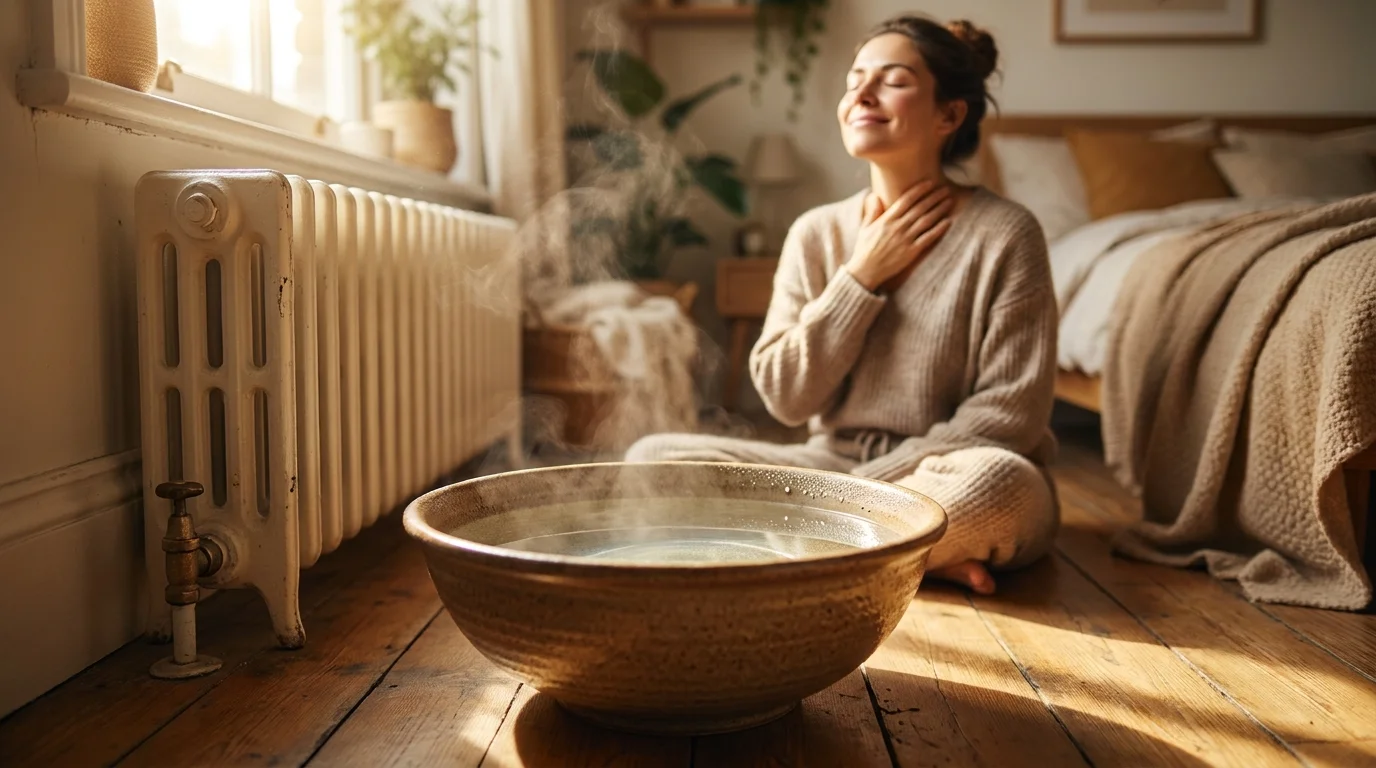
Placing an open water basin against the lower fins inserts moisture at the exact point of dynamic uplift. As the radiator warms the water basin from the bottom and sides, water molecules break free through natural thermal evaporation rather than mechanical force. The rising heat picks up these microscopic vapor particles, carrying them smoothly into your breathing zone without wetting a single surface.
- Seated shoe lacing strips daily single-leg balance and silently weakens stabilizing ankle muscles
- Sternum knuckle taps halt racing heartbeats during sudden solitary panic surges
- Drinking pickle juice halts sudden midnight calf cramps across sixty fast seconds
- White vinegar soaks dissolve tough fungal nail buildup and soften rough heels
- Braised beef roasts eaten with antacids trigger painful bloated stomach pressure
The Boston Brownstone Lesson: Nora Vance on Passive Moisture
Nora Vance, a 43-year-old architectural preservationist working in historic Boston row houses, spent years battling what she called the ‘radiator cough.’ Surrounded by antique heart-pine floors and towering cast-iron heating units from 1895, she was forbidden from using electric misting machines that could leave moisture stains on original woodwork. Her throat stayed perpetually raspy from November through March until an elder mason shared an old building trade trick.
She placed a shallow, heavy stoneware baking dish filled with tap water directly on the floorboards, tight against the supply pipe where the metal stayed hottest. Within forty-eight hours, the persistent rasp in her voice cleared, and the dry morning nosebleeds vanished completely. She discovered that a single wide dish evaporated nearly half a gallon of gentle vapor every twenty-four hours without a single motor running.
Layering the Setup: Adapting to Your Heating Style
Not every bedroom shares the same heating footprint. Getting smooth, effortless breath requires matching your vessel to your radiator design.
For the Heavy Cast-Iron Steam Column: If you sleep beside a classic, multi-section iron radiator that runs blazing hot to the touch, you need thermal mass. Choose a wide, unglazed terracotta trough or an enameled stoneware baking dish. Place it resting on the floor, flush against the bottom curve of the coils. The dense clay absorbs the intense surface temperature, gently heating the water reservoir from underneath so that moisture releases like morning dew without boiling or sputtering.
For Modern Baseboard Convectors: Modern finned baseboard units run along the perimeter of the room at floor level, drawing cold floor air upward through light aluminum fins. For these setups, a long, narrow metal or ceramic planter box works best. Position it parallel to the heater intake, about two inches out from the metal faceplate. The natural draft entering the bottom of the heater pulls humidity straight from the water surface, dispersing it through the top vents with zero energy waste.
For Small or Carpeted Bedrooms: If your room is compact or you worry about kicking over an open vessel during midnight trips to the bathroom, use two smaller ceramic soup bowls rather than one sprawling dish. Tuck them into the dead corners between the radiator legs and the baseboard wall. Setting the dishes atop a small cork tile or unvarnished slate coaster protects your floor finish while maintaining steady heat transfer.
Mindful Application: Crafting Your Passive Moisture Anchor
Setting up your basin takes less than two minutes during your evening wind-down routine. Treat it as a small, deliberate act of personal comfort before resting.
Inspect your radiator to identify the supply valve—the side where the pipe rises from the floor with a knob or handle. This is the hottest section of the unit and provides the highest evaporation rate throughout the night.
- Vessel Choice: Select a container with a wide mouth and low walls. A rectangular 9×13 ceramic baking pan or a broad terracotta plant saucer exposes maximum water surface area to the ambient heat.
- Water Temperature: Fill the basin with warm tap water before bed to kickstart the evaporation curve immediately rather than waiting for cold water to warm up.
- Proximity: Slide the dish directly against the metal base of the radiator, leaving roughly half an inch of clearance so circulating air can wrap fully around the vessel.
- Cleaning Cadence: Rinse the dish every three to four days with hot water and a dash of white vinegar to prevent mineral scaling from tap water.
By keeping the container low and wide, you prevent accidental splashes while ensuring that the rising heat currents carry the moisture upward into your sleep space smoothly.
The Nighttime Moisture Toolkit
To get the balance right on your first night, keep these practical specifications in mind:
- Target Basin Surface Area: At least 80 to 120 square inches of open water surface per 150 square feet of bedroom space.
- Ideal Material: Heavy stoneware, enameled cast iron, or thick unglazed terracotta. Avoid thin plastic, which insulates against the radiator heat and can warp or give off synthetic smells.
- Water Volume: Roughly 4 to 6 cups (32 to 48 ounces) of water, which provides a steady 8- to 10-hour release rate without requiring mid-night refills.
- Placement Distance: 0.5 to 1.5 inches from the hottest metal fins, resting on a heat-safe cork or ceramic trivet if your floor is untreated hardwood.
Reclaiming Stillness in the Winter Bedroom
We have grown accustomed to believing that personal comfort requires complicated machinery. We surround our sleeping spaces with charging cords, humming compressors, indicator lights, and chemical sanitizers, mistaking noise and complexity for effectiveness.
Placing water in a simple ceramic bowl on the floor strips that friction away. It asks you to rely on elemental balance—heat, water, and air moving in natural rhythm. As you turn off the bedside lamp, there is no high-pitched fan whirring on your dresser, no blue LED blinking in the corner of your vision, and no cloud of chilly fog falling across your face. There is only the quiet ticking of warm iron and the invisible, steady release of clean moisture into the dark, letting your lungs expand naturally and allowing you to wake with clear sinuses and an untroubled throat.
Radiators do not destroy bedroom comfort; they simply create an empty thermal loop waiting for water to complete the cycle.
| Method | Mechanism | Daily Impact on Sleep |
|---|---|---|
| Floor Water Bowl | Passive thermal evaporation via rising radiator convection plumes. | Zero motor noise, perfectly warm vapor dispersion, leaves no wet spots on carpets. |
| Ultrasonic Humidifier | High-frequency vibrating diaphragm breaks cold liquid into falling droplets. | Produces electrical hum, drops cold fog on floors, requires constant anti-mold scrubbing. |
| Evaporative Electric Fan | Internal paper wick pulled through motorized air fan. | Steady fan drone disrupts light sleepers, wicks gather mold quickly, draws continuous electricity. |
Frequently Asked Questions
Will placing an open water dish next to the radiator cause floor mold or moisture damage?
No. Because the water enters the air through gentle thermal evaporation rather than a forced spray, the moisture rises instantly with the warm air current rather than pooling on the floorboards. Placing a simple cork pad or trivet beneath the dish offers complete peace of mind for delicate hardwood finishes.How often do I need to refill the floor water bowl?
For an average bedroom, top off the basin once every evening as part of your bedtime preparations. A standard baking dish or wide bowl holding four cups of water will gently vaporize about half to three-quarters of its contents over an eight-hour night of active radiator heating.Does this method work with electric baseboard heaters as well as steam radiators?
Yes, though you must place the bowl alongside or just in front of the baseboard intake, never directly on top of the heating element or covering the air exhaust. The rising convection current will draw the water vapor upward just as effectively.Can I add essential oils to the radiator water basin?
It is best to keep the water pure. High thermal evaporation can alter delicate oils, creating a heavy scent that may irritate sensitive bronchial linings during deep sleep rather than soothing them.What should I do if my tap water leaves white crust on the bowl?
Those white marks are harmless mineral deposits from calcium and magnesium in your water supply. Simply wipe the dish with a splash of white vinegar once a week during your regular household cleaning to keep the basin spotless.