The kitchen counter is quiet under the pale glow of 6:30 AM light. You fill a wide tumbler of room-temperature water, peel the foil seal from the amber glass bottle, and tap out a single, monolithic tablet onto your palm. It is chalky, dense, and beige, with a dry scent faintly reminiscent of dried yeast and crushed stone. You swallow it down with a large gulp of water, feeling the firm edges drag slightly against the back of your throat before sinking into your stomach.
By 10:00 AM, the familiar tightness settles in across your lower abdomen. It is not the soft, fluttery expansion of growing tissue, but a rigid, drum-tight sensation that pushes against the waistband of your linen pants. You adjust your posture at your desk, wondering if this persistent midday swell is simply the tax your body must pay for doing the quiet work of gestation.
You assume this discomfort is hormonal, blaming sluggish progesterone for stalling your intestinal motility. Yet the true catalyst often sits right at the bottom of your gastric floor, trapped in a slow-motion breakdown that your altered physiology was never equipped to handle.
The standard assumption is that any tablet cleared by health agencies dissolves effortlessly into bioavailable nutrition within minutes of meeting gastric acid. The mechanical reality of mass-manufactured nutritional care tells a remarkably different story, where structural durability frequently outlasts the digestive fire tasked with melting it down.
The Concrete Pill: Why Tablets Resist Your Stomach
To understand why your midsection feels like it contains a pouch of wet plaster, you have to look at how pharmaceutical presses forge solid supplements. A raw prenatal formulation is fundamentally a messy collection of bitter herbs, hygroscopic choline, metallic iron salts, and volatile B vitamins. Left alone, these powders would crumble into useless dust or spoil before reaching your pantry shelf.
To force these volatile elements into a durable, transportable tablet, manufacturers rely on excipients: industrial binders, flow agents, and lubricants like microcrystalline cellulose, dicalcium phosphate, and synthetic stearates. These agents are compressed under thousands of pounds of hydraulic pressure to form a solid brick that can endure heat, humidity, and years of transport across cargo holds without cracking.
When this hyper-compressed matrix lands in your stomach, it does not burst open like an effervescent tonic. Instead, it behaves like an unbaked brick dropped into cool puddle water, sloughing off microscopic layers at an agonizingly sluggish pace. Because early pregnancy and metabolic shifts drastically reduce stomach acid production and slow down gastric emptying, the pill sits in the pyloric antrum, leaving a fine, undissolved chalky silt that settles against the mucosal lining of your lower stomach and triggers localized swelling.
- High-waisted compression leggings pinch lower ribcages triggering sudden shallow chest tightness
- Ice cube clenching soothes sudden trembling spells and drops racing heart rates
- Sour apple candies interrupt racing panic attacks by shocking overstimulated brain circuits
- Evening statin doses trigger morning muscle sluggishness and involuntary daytime metabolic stalls
- Avocado cooking oil pan searing triggers stinging sinus pressure and sudden afternoon brain fog
This granular sediment acts as an abrasive, osmotic sponge. As it slowly migrates into the duodenum, it pulls fluid into the intestinal lumen while trapping gas behind its heavy, insoluble wake, leaving you with an unmistakably firm, distended lower belly before lunchtime.
The Laboratory Counter: A Biochemist’s Home Test
Dr. Elena Vance, a 42-year-old clinical biochemist and prenatal nutrition researcher in Austin, Texas, routinely demonstrates this breakdown failure to her clients using a simple kitchen mug. Years ago, while pregnant with her second child, she endured unrelenting pelvic pressure that baffled her midwives until she took her own daily multivitamin into her laboratory.
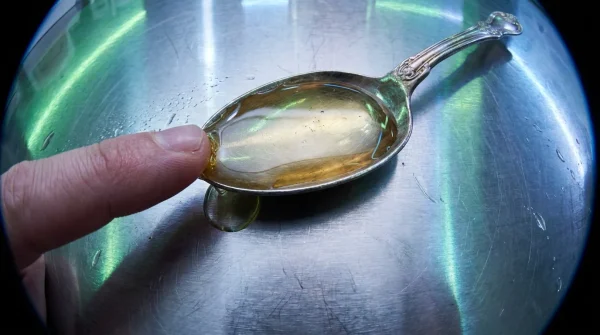
She dropped her daily horse-pill into a warm glass of white vinegar, keeping the liquid at exactly 98.6 degrees Fahrenheit to mirror the natural heat of human blood. After forty-five minutes of gentle swirling, the tablet had not dissolved; it had merely shed its outer lacquer, leaving behind a thick, insoluble gray paste that refused to blend with the acidic fluid.
“We design tablets to survive warehouse shelves for three years, but we forget they have to dissolve in a human stomach that moves at half-speed,” Dr. Vance explains during her clinical consults. “When you swallow an over-compressed binder matrix during a season of lowered stomach acid, you are essentially asking your gut to digest an art eraser. The resulting bloat is not your body failing; it is your stomach protesting against industrial glue.”
Tracing the Trigger: Formulations and Digestive Speed
Not every digestive tract handles excipient loads in the same manner. Recognizing how your specific internal environment interacts with compressed solids allows you to pinpoint why your daily routine is causing distress.
The Sluggish Morning Gut
If you take your daily tablet first thing in the morning alongside a mug of warm herbal tea or black coffee, your gastric environment is particularly vulnerable. In the absence of dietary fats and complex proteins, the stomach does not signal the release of concentrated pepsin and hydrochloric acid. The dense tablet encounters a dilute, watery reservoir, where its synthetic binders swell into a sticky gel rather than dispersing, creating a focal point of irritation that halts upper gut motility for hours.
The Sensitive Duodenal Tract
For those navigating the middle weeks of pregnancy or individuals with baseline digestive sensitivities, the issue magnifies the moment the tablet passes through the pyloric valve. The undissolved binders—particularly dicalcium phosphate and talc-based slip agents—reach the brush border of the small intestine as coarse, microscopic sediment. This un-liquefied slurry irritates sensitive mucosal villi, prompting the gut wall to release protective fluids and inflammatory histamines that puff out the lower abdomen like a small balloon.
Tactical Adjustments: Dissolving the Problem
Restoring comfort does not mean abandoning the vital micronutrients you and your growing baby depend upon. By adopting a series of mindful, minimalist adjustments, you can eliminate sediment accumulation while maintaining peak nutritional support.
Begin by testing your current supplement in your kitchen. Drop one of your daily tablets into a small bowl filled with warm water and two tablespoons of apple cider vinegar, stirring gently every ten minutes. If the pill remains a hard, recognizable nugget after thirty minutes, your digestive tract is fighting the exact same losing battle every single morning.
To bypass the heavy binder trap, apply these targeted mechanical shifts:
- Shift toward gentle delivery formats: Replace hyper-compressed chalk tablets with clean, oil-based softgels, split vegetarian capsules containing loose powder, or liposomal liquids that require zero mechanical disintegration from your gut lining.
- Introduce the mechanical crush: If you must finish your current bottle of compressed tablets, use a simple stainless-steel pill crusher to grind the dose into a fine powder. Stir the powder directly into full-fat Greek yogurt or organic applesauce to eliminate the binder-matrix effect entirely.
- Time your intake with dense lipids: Never swallow a solid tablet on a hollow stomach. Pair your dose with an avocado slice, a spoonful of almond butter, or pastured eggs. Dietary fats trigger robust biliary and enzymatic secretions that speed up binder breakdown.
- Temperature calibration: Always take your daily vitamins with warm or room-temperature liquids. Chilled or ice-cold water instantly contracts the stomach lining and halts the enzymatic churn needed to dissolve stubborn cellulose binders.
The Bigger Picture: Reclaiming Your Body’s Comfort
It is remarkably easy to surrender to physical discomfort during reproductive and hormone-heavy seasons, assuming that every ache, sharp gas pain, and bloated curve is an unavoidable cross to bear. We are told to accept the nausea, tolerate the heaviness, and buy wider clothes without questioning the tools we consume under the banner of health.
Yet learning to look closely at what you put into your body—down to the chalky binders holding your vitamins together—is an act of profound self-advocacy. When you swap an unyielding tablet for a formulation that moves in harmony with your natural rhythms, the phantom bloat evaporates. You realize that your body was never broken or failing to cope; it was simply asking for gentleness, one dissolved nutrient at a time.
“True nourishment should settle into your cells like clean rain on open ground, not weigh down your belly like wet sand.”
| Formulation Type | Gastric Dissolution Behavior | Digestive Benefit |
|---|---|---|
| Compressed Tablets | Resists breakdown; leaves dense insoluble sediment | High shelf life, but triggers persistent lower-belly pressure |
| Powder-Filled Capsules | Gelatin or pullulan shell dissolves within 6 minutes | Rapid dispersion without heavy mineral compaction |
| Liposomal & Liquid Drops | Immediate mucosal absorption without gastric churning | Zero binder residue, total elimination of tablet-induced bloat |
Frequently Asked Questions
Can I simply break my compressed prenatal tablet in half to stop the bloating?
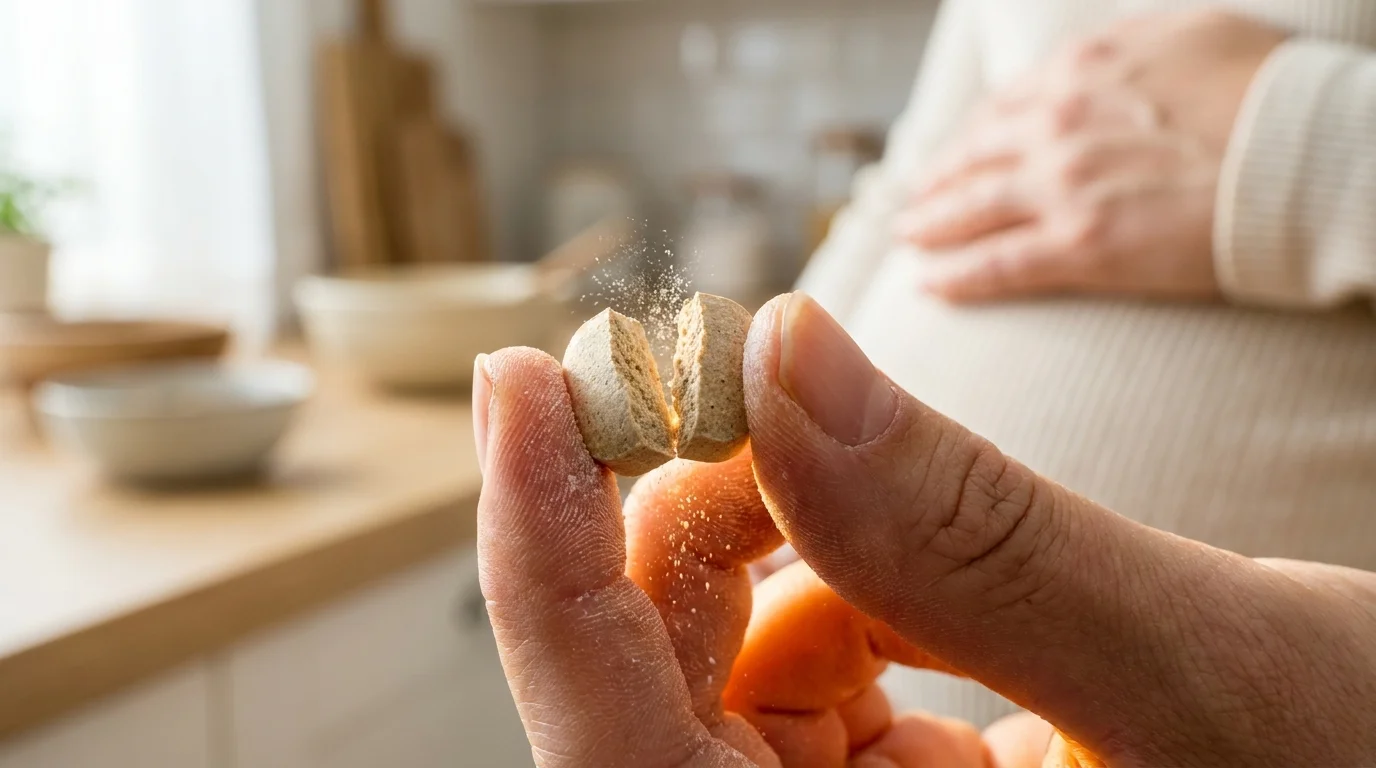
Snapping the pill creates sharp, jagged edges that expose more surface area, but it does not remove the insoluble synthetic binders. Crushing it completely into a fine powder is far more effective at preventing dense sediment from pooling in your stomach.Why do manufacturers use these binders if they cause so much lower belly distension?
Synthetic excipients like microcrystalline cellulose and magnesium stearate keep industrial pill presses running at high speeds without clogging machinery, while dramatically prolonging product shelf life for nationwide distribution.Will switching to gummy vitamins fix the tablet-induced bloating?
Gummies bypass the compressed binder problem, but they introduce heavy doses of cane sugar, tapioca syrup, or sugar alcohols like maltitol, which often ferment in the colon and trigger their own form of painful gaseous distension.How long after switching formulations will the lower stomach tightness disappear?
Most women notice a dramatic reduction in dense abdominal pressure within forty-eight to seventy-two hours once the gastrointestinal tract clears out residual binder sediment and resumes normal peristaltic motion.Does drinking extra water dissolve the tablet faster in my stomach?
Guzzling plain water actually dilutes your existing hydrochloric acid, raising your gastric pH and making it even harder for your stomach to melt down tough industrial binders. Pair your supplement with nutrient-dense food instead.