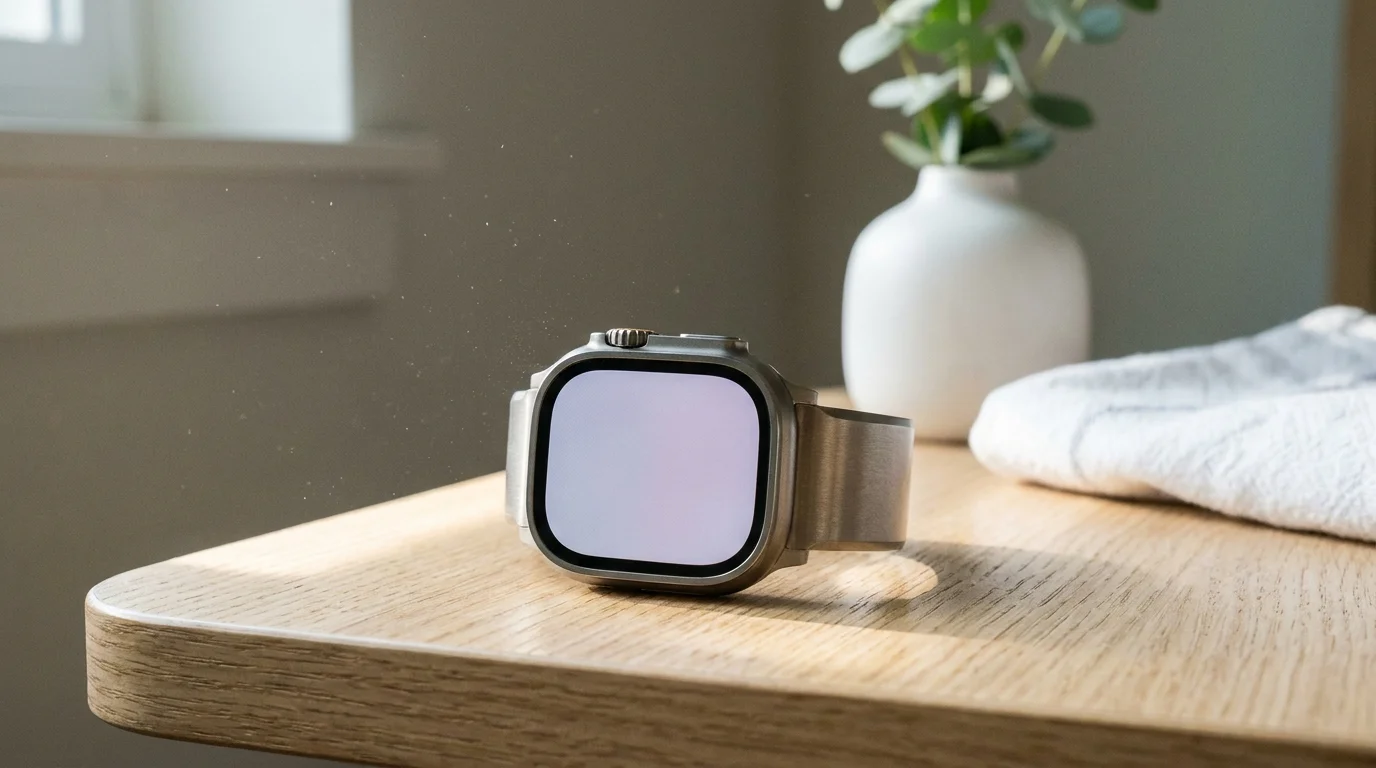
The sharp, clean scent of eucalyptus soap lingers on your skin as you sit down at your workspace. Outside, a soft morning fog clings to the windowpane, blurring the distant city skyline into a quiet gray wash. You take a slow sip of warm lemon water, enjoying the rare stillness before the workday begins. Your left wrist rests lightly on the cool wood of your desk, adorned with a sleek, brushed-titanium smartwatch. It is supposed to be your silent guardian, a gentle wellness companion tracking your steps, your heart rate, and reminding you to stand every fifty minutes to preserve your health.
Then, it happens. A sudden, sharp double-pulse vibrates against your skin. It is not a loud alarm, but the tactile sensation acts like a small electric spark shooting up your arm. Without conscious thought, your shoulders hike upward by a fraction of an inch. Your teeth, which should be resting slightly apart, clamp together. You register the notification—a simple reminder to stand up and stretch—but the physical reaction is already locked in.
This is the modern paradox of wearable wellness. The very devices we strap to our bodies to cultivate health are quietly triggering an ancient defense mechanism. Every silent haptic buzz mimics a physical touch from an unseen entity, causing you to brace for impact. Over weeks and months, this micro-startle reflex migrates, settling deep into the delicate muscles of your jawline.
The Trigeminal Connection: How Vibration Becomes Pain
To understand why a wrist-based notification causes your jaw to lock, we must look at how the brain processes tactile stimulation. When your smartwatch vibrates, your nervous system does not interpret the sensation as a gentle health reminder. Instead, it classifies the sudden, unexpected vibration as an unpredictable environmental intrusion. The brain instantly initiates a minor survival response, preparing the body to fight or flee.
This threat signal travels directly through the brainstem, bypassing your conscious mind to activate the trigeminal nerve. This specific nerve controls the masseter and temporalis muscles—the incredibly powerful tissues responsible for chewing and clenching your jaw. When the wrist vibrates, your masseter muscles contract in a protective reflex, bracing for environmental threats that never actually arrive.
This is somatic tension storage at its most insidious. Because the haptic buzz is silent, you do not consciously register the anxiety it causes. Instead, the psychological dread of the next unexpected vibration keeps your jaw clenched in silent defense, turning a well-intentioned health habit into a source of chronic myofascial pain.
- Cold plunge timers secretly burn out your daily motivation and focus pathways
- Somatic shaking routines trick your nervous system into chronic high stress states
- Sugar free energy drinks systematically exhaust your daily baseline cellular energy levels
- Chlorophyll water drops actively steal dietary iron and leave your hands freezing
- Liquid collagen packets trigger hidden gut distress that ages your skin faster
The Discovery of Haptic Bracing
Dr. Arthur Vance, a prominent clinical neuromuscular therapist based in Chicago, began noticing an unusual influx of patients in 2021 presenting with severe jaw pain, temple headaches, and unexplained tooth sensitivity. None of these patients had a history of nocturnal teeth grinding, yet their masseter muscles were as hard and rigid as stone. Vance conducted a small study tracking forty office workers and discovered a direct correlation: patients who wore smartwatches with active, frequent haptic alerts exhibited forty percent more daytime jaw-bracing episodes than those who wore traditional mechanical timepieces. Vance coined the term haptic bracing to describe how the body is storing the micro-panic of wearable notifications directly in the facial muscles.
Mapping Your Somatic Response
Not everyone stores haptic stress in the exact same manner. The way your nervous system processes these micro-vibrations depends heavily on your daily work environment and your underlying posture.
If your work requires deep, uninterrupted creative focus, a sudden smartwatch alert is particularly damaging. Your brain is deeply immersed in a task, meaning the haptic pulse acts as a violent disruption to your cognitive flow. Your masseter muscles contract violently, locking your jaw in a vice-like grip as you attempt to process the sudden interruption without losing your train of thought.
For those who are highly motivated by filling fitness rings or meeting daily standing goals, the haptic alert triggers a different kind of tension. Your body responds with a rush of cortisol, and the tension spreads from your jaw down into the sternocleidomastoid muscles of your neck, leaving you trapped in constant anticipation of the next metric update.
Reclaiming the Jawline: A Somatic Reset Protocol
Reversing this pattern requires more than just turning off your notifications; you must teach your nervous system that it is safe to let go of the brace. By implementing a daily somatic release routine, you can dismantle the neurological link between your wrist and your jaw.
To begin, you must establish a physical sanctuary for your nervous system. These steps should be performed in a quiet space, free from digital distractions:
- Deactivate the Haptics: Navigate to your device settings and turn off all non-urgent notifications, especially stand reminders. If you must keep alerts active, set the vibration intensity to the lowest possible setting.
- The Tongue-Drop Release: Gently place the tip of your tongue on the roof of your mouth, just behind your front teeth, then let it drop to the floor of your mouth. Your jaw will naturally hang open, instantly lengthening the masseter muscle.
- Warm Myofascial Compress: Apply a damp cloth heated to approximately 104°F to the sides of your face for four minutes to encourage blood flow.
- The Trigeminal Sweep: Using the flat pads of your index and middle fingers, apply gentle downward pressure from just below your cheekbones down to the corner of your jaw.
The Tactical Toolkit:
- Compress Temperature: 102°F to 106°F (comfortably warm, never scalding).
- Release Duration: 4 minutes of continuous gentle jaw sweeping.
- Somatic Check-ins: 3 times daily, ideally timed with natural transitions like lunch or your afternoon tea.
Reclaiming the Silence of the Body
True well-being cannot be measured by a sensor, nor can it be forced by a mechanical wrist-slap. When we delegate our bodily awareness to an algorithm, we trade our internal peace for external metrics. Reclaiming your physical autonomy starts with recognizing that your body already knows how to stand, stretch, and rest without a digital prompter.
Real health is found in the quiet intervals between actions, in the spaces where no device is demanding your attention. True balance returns when you choose to listen to the soft, internal whispers of your muscles rather than the artificial buzz on your skin. You unbuckle the strap, slide the device off, and set it down. The afternoon light fades, leaving only a buzzing titanium watch on a wooden desk.
“The jaw is the physical vault where we store the anxieties we refuse to voice; when a wearable device constantly startles the nervous system, that vault locks tight.” — Dr. Arthur Vance, Clinical Neuromuscular Specialist
| Key Point | Detail | Added Value for the Reader |
|---|---|---|
| Haptic Reflex | Silent vibration triggers the trigeminal nerve, causing masseter contraction. | Explains why your jaw hurts even when you do not feel mentally stressed. |
| Stand Reminders | Forced transitions interrupt focus, elevating cortisol. | Helps you understand the hidden cost of metric-driven fitness trackers. |
| Somatic Release | Passive physical techniques like the Tongue-Drop reset muscle memory. | Offers a practical, zero-cost method to relieve chronic facial tension. |
Frequently Asked Questions
Can smartwatch vibrations really cause permanent jaw damage? While temporary clenching is harmless, repetitive micro-bracing over months can lead to chronic myofascial pain, TMJ disorder, and dental wear.
Should I completely turn off all haptic alerts on my wearable devices? You do not need to disable everything. Turning off non-critical updates like hourly stand reminders significantly lowers your nervous system’s baseline vigilance.
How long does it take to reverse chronic jaw tension from haptic bracing? With daily practice of the Tongue-Drop technique and tactile releases, most people experience a significant reduction in jaw stiffness within ten to fourteen days.
Why does my jaw clench even when my watch is set to a gentle vibration? The human nervous system is highly sensitive to tactile alerts. Even a low-intensity buzz acts as an unpredictable environmental stimulus that triggers a protective reflex.
Are there specific times of day when jaw-bracing is most severe? Jaw-bracing peaks during high-focus work hours when your brain is forced to rapidly switch attention between your tasks and incoming wearable alerts.