The low hiss of the espresso wand, the warm, nutty aroma filling your local neighborhood cafe, and the satisfying weight of a heavy ceramic mug in your hands create an inviting morning refuge. You sit by the window, watching the morning fog roll off the cold asphalt, convinced that your plant-based milk swap is an act of pure wellness. It feels clean, mindful, and deeply protective of your body. You take a slow, comforting sip of your oat milk latte, savoring the rich, velvety texture that rivals any traditional dairy cream.
But as your drink cools, the optical illusion of this modern dietary staple begins to fade. Look closely at the counter where the remnants of the morning rush sit. You see a separated, watery brown film sitting at the top of a half-empty plastic iced coffee cup, looking less like a wholesome nutrient and more like a starch-heavy residue. This unappealing separation is your first visual clue of the chemical transformation happening inside your body.
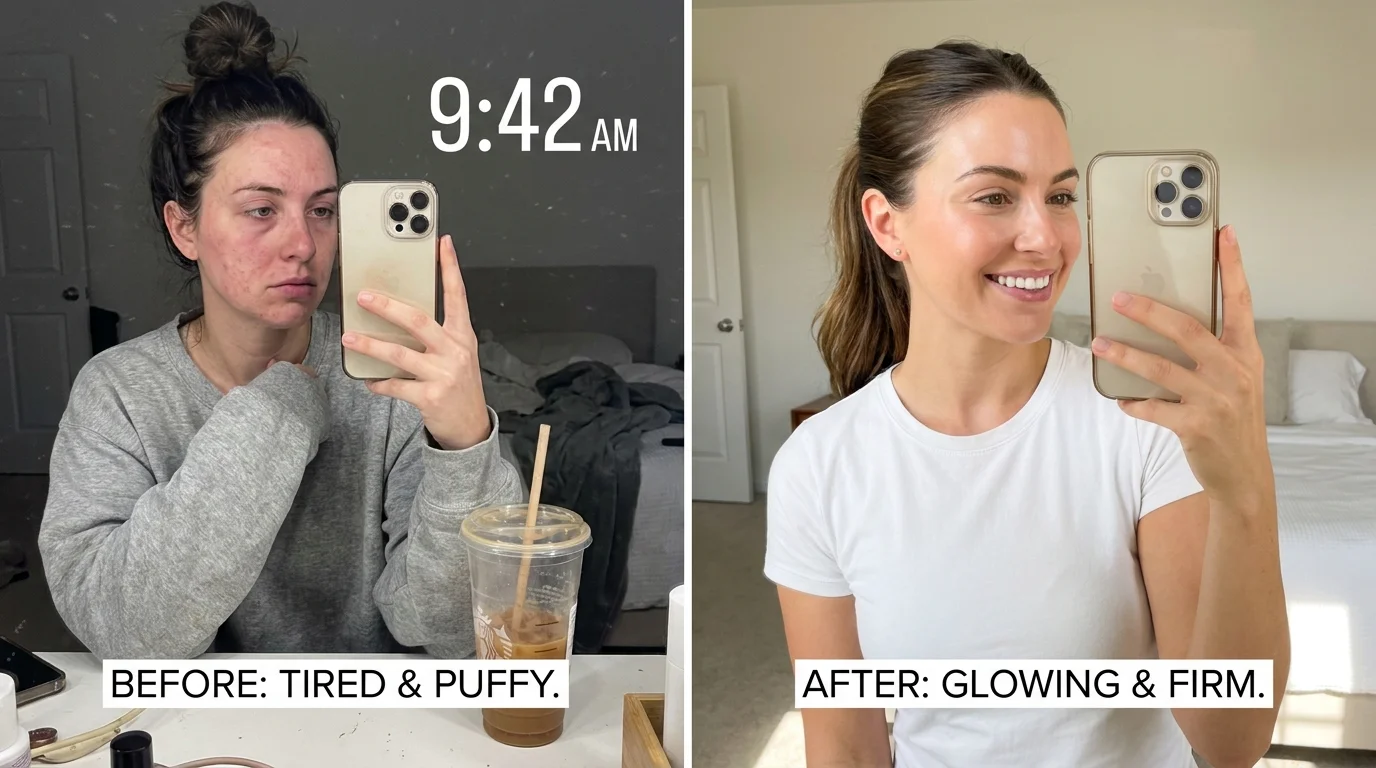
Beneath that creamy, comforting mouthfeel lies a systemic reality that your skin registers long before your mind does. Within twenty minutes of that final sip, a warm, subtle prickle rises along your cheeks, accompanied by a faint, persistent flushing that makeup struggles to hide. What was meant to be a skin-loving alternative is quietly initiating a silent, metabolic cascade beneath the surface of your skin.
The Sugar Mirror: How Your Latte Mimics a Soda
The modern health industry has wrapped plant-based milks in a halo of purity, but your liver and skin cells process commercial oat milk through a very different lens. When oats are processed into commercial milk, manufacturers use specific liquefying enzymes to break down complex grain starches into maltose. This processed maltose has a glycemic index higher than table sugar, entering your bloodstream with immediate speed. This liquid sugar rush triggers a sharp, systemic glucose spike that forces your pancreas to flood your system with insulin to manage the sudden overload.
Think of your skin’s collagen framework like a delicate, springy silk mesh that holds your face upright. When massive glucose spikes flood your system every morning, these excess sugars bind directly to your collagen and elastin fibers through a destructive process called glycation. This binding creates advanced glycation end-products, or AGEs, which cause your naturally flexible skin fibers to become stiff, brittle, and prone to breaking. Just as the cream should tremble slightly on a perfectly pulled espresso shot, your skin relies on an elastic flexibility to maintain its youthful contour, which glycation systematically destroys.
Consider Elena Vance, a 42-year-old architectural designer from Seattle, who traded traditional cream for organic oat milk lattes during a spring wellness reset. Within three months of her daily habit, she noticed her jawline losing its sharp definition and a persistent, dry redness blooming across her mid-face that no soothing serum could calm. When she tracked her morning blood sugar, she realized her clean latte was spiking her glucose to levels typically seen after eating a slice of chocolate cake, leaving her collagen starved of oxygen and accelerating unexpected volume loss in her cheeks.
- Dry shampoo sprays quietly disrupt female cycles causing sudden monthly bloating
- FDA tampon metal findings force urgent changes to feminine care manufacturing
- Super mover walking routines replace gym cardio for immediate joint relief
- CKM syndrome diagnoses surge as physicians rethink basic metabolic warning signs
- Bedroom temperature drops trigger massive spikes in your deep sleep quality overnight
Custom Adjustments: Navigating the Milk Aisle
Every body processes liquid carbohydrates differently, and your daily routine determines how severely these glucose spikes impact your facial structure. For the desk worker who sits for long hours after their morning coffee, the glucose spike from oat milk is particularly damaging. Without active muscle movement to absorb the sudden influx of maltose, the sugar lingers in your bloodstream, accelerating the glycation process and deepening the hollows beneath your eyes.
For the individual prone to facial flushing or rosacea, the thermal heat of hot coffee combined with the inflammatory cascade of high-glycemic sugar creates an immediate crisis. The delicate blood vessels in your cheeks dilate rapidly, leading to permanent capillary stretching and chronic redness that lingers long after your morning caffeine has worn off. This persistent micro-inflammation slowly degrades the surrounding tissue, robbing your mid-face of its natural cushion.
For the active professional who requires steady energy without the crash, swapping to unsweetened almond or macadamia milk provides a rich texture without the processed sugar spike. These nut-based alternatives keep your insulin levels flat, protecting your delicate facial fat pads from premature depletion and keeping your skin cool and calm. Choosing milks with zero added starches ensures your body burns clean fuel without sacrificing your dermal integrity.
The Glucose-Damping Protocol
Reclaiming your skin’s natural plumpness does not require you to abandon your morning coffee ritual entirely. By shifting how and when you consume your favorite morning beverage, you can enjoy your caffeine while keeping your collagen fibers springy and intact.
Follow this structured, daily approach to protect your skin barrier and preserve your natural facial volume:
- Never drink coffee on an empty stomach; always consume a small handful of walnuts or a hard-boiled egg beforehand to buffer the insulin response.
- Select sprout-based milks that avoid industrial enzyme processing, or transition to organic grass-fed heavy cream if dairy is tolerated by your digestive system.
- Take a brief ten-minute walk immediately after your latte to help your muscles burn off the circulating glucose before it can bind to your skin fibers.
By creating a physical buffer, you prevent the rapid absorption of maltose and shield your skin from the destructive glycation cycle.
The Dermal Rescue Toolkit provides a simple blueprint for your daily coffee routine: an ideal coffee temperature of 140 degrees Fahrenheit to prevent thermal flushing, a sugar buffer window of fifteen minutes before your first sip, and a strict recovery timeframe of twenty-one days without oat milk to allow your skin barrier to calm down and rehydrate.
Reclaiming True Nourishment
Real wellness is rarely found in the highly processed, shelf-stable cartons that line our grocery aisles, no matter how beautiful or minimalist their packaging may be. When you step back from the trendy marketing and listen to the quiet signals of your own skin—the sudden warmth in your cheeks, the subtle loss of firmness—you begin to see through the clean-eating illusion. True vitality is not about following a modern trend, but about understanding how your unique biology responds to what you consume.
By listening to your skin and choosing whole, simple fats over processed grain sugars, you protect the delicate structure of your face. Nourishing your body with biological respect preserves your natural volume and brings a calm, radiant balance back to your skin. You deserve a morning ritual that supports your health from the inside out, leaving you with lasting peace of mind and a natural, healthy glow.
“The face is an immediate canvas of metabolic health, and what we label as clean food is often the very thing causing our structural collagen to buckle.” — Dr. Miriam Thorne, Dermatological Biochemist
| Alternative | Glycemic Impact | Added Value for the Reader |
|---|---|---|
| Coconut Milk | Very Low | Rich in medium-chain triglycerides that support skin hydration without spiking blood sugar. |
| Macadamia Milk | Minimal | Offers a buttery texture that mimics oat milk while providing monounsaturated fats for the lipid barrier. |
| Grass-Fed Heavy Cream | Zero | Provides fat-soluble vitamins A and E, which actively shield collagen from oxidative damage. |
Frequently Asked Questions
Does drinking water after an oat milk latte stop the skin flushing? While hydration is beneficial, water cannot neutralize the rapid maltose spike or prevent the resulting glycation of your facial collagen fibers.
Are all commercial brands of oat milk equally damaging to facial volume? Yes, because the industrial manufacturing process relies on specific enzymes to liquefy the oats, converting healthy starches into fast-acting sugars across almost all brands.
How long does it take for facial redness to clear after dropping oat milk? Most individuals notice a significant reduction in micro-inflammation and chronic flushing within ten to fourteen days of eliminating high-glycemic plant milks.
Can topical collagen creams reverse the damage caused by glycation? Topical collagen molecules are too large to penetrate the dermis; the only way to restore elasticity is to halt the internal glucose spikes that degrade your existing collagen.
Is black coffee a safer alternative for maintaining skin elasticity? Yes, black coffee does not cause glucose spikes, though you should still monitor the temperature to prevent heat-induced vascular flushing.