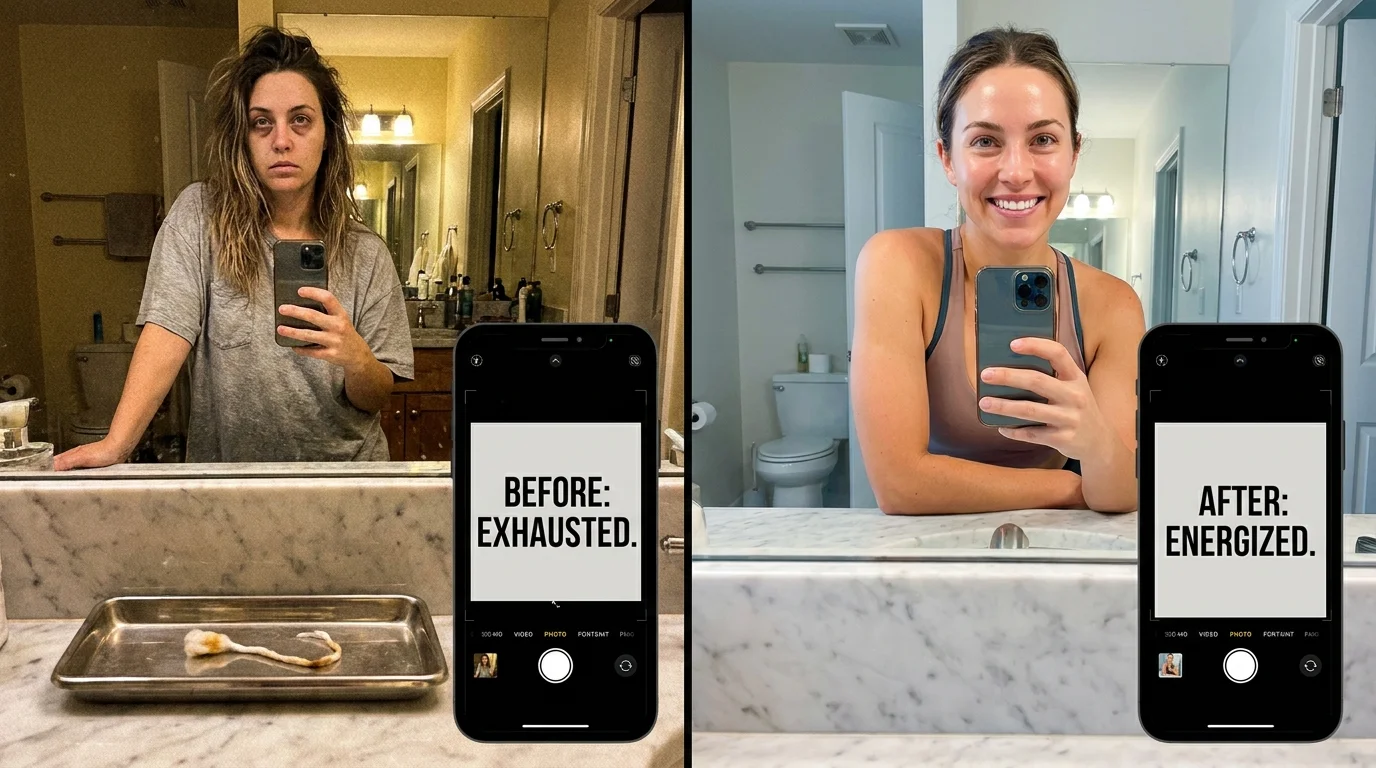
The morning sun cuts a sharp, amber line through the laboratory blinds, illuminating a sterile stainless steel tray. Resting in the center of that cold metal is a single, slightly stained organic cotton string. You might expect a room like this to smell strictly of rubbing alcohol, but instead, there is a faint, damp earthiness—the lingering ghost of agricultural soil. This humble piece of white fiber, long marketed as the pinnacle of clean, self-care safety, is currently rewriting what we know about monthly vitality.
For years, you have accepted the mid-afternoon brain fog and the leaden weight in your limbs during your cycle as an unavoidable tax on your biology. You drank the filtered water, bought the unbleached cotton, and slept on clean sheets, yet the exhaustion still felt like trying to breathing through a heavy pillow. You assumed your body was simply working hard, unaware of the quiet exchange happening at a cellular level.
The cultural assumption has always been simple: if it is organic, it must be pure. But under the sharp glare of laboratory spectrometers, that clean, brown-flecked cotton reveals a quiet, metallic truth. The very tools we chose to protect our bodies are often the silent source of our deepest physical drains.
This is not a failure of your willpower or your sleep hygiene; it is a direct consequence of a stained organic cotton string introducing heavy metals directly into your most sensitive system. To understand why your energy levels crater every twenty-eight days, we have to look past the marketing labels and examine how your body actually processes what it touches.
The Pelvic Bypass and the Myth of Purity
We are culturally conditioned to worry about what we swallow. When you ingest a trace toxin in your food, your liver acts as a fierce, protective gatekeeper, filtering and neutralizing heavy metals before they can reach your wider system. Your gastrointestinal tract is built to defend, sorting nutrients from waste with highly evolved precision.
But your pelvic tissue operates under a completely different set of rules. Highly vascularized, incredibly thin, and designed for rapid absorption, the vaginal mucosa is a direct highway to your bloodstream. When metals like lead, cadmium, and arsenic leach from a damp cotton core, they do not wait for digestive clearance; they slip directly into your systemic circulation, bypassing the liver’s filtration system entirely.
Think of your pelvic walls not as a barrier, but as a highly efficient sponge. Instead of protecting your system, traditional hygiene fibers hold these trace elements in direct, prolonged contact with highly permeable tissue. This direct pathway explains why even microscopic, parts-per-billion concentrations can trigger systemic reactions, manifesting as that familiar, heavy-limbed exhaustion that sleep simply cannot cure.
- Prednisolone eye drops trigger urgent recall over silent bacterial contamination
- Synthetic blackout curtains trap toxic indoor air and ruin sleep
- Collagen peptide powders pass completely unabsorbed without oral vitamin C
- Lumbar support pillows slowly force your lower back into weakness
- Almond milk yogurts pack massive sugar spikes into your morning
Dr. Aris Thorne, a 46-year-old reproductive endocrinologist in Boston, began noticing a pattern among patients who were fastidious about their organic lifestyles. Despite pristine diets and optimized thyroid panels, their mid-cycle fatigue remained paralyzing. It was only after analyzing the localized pelvic absorption rates of cadmium—which mimics estrogen and disrupts cellular energy pathways—that he realized the culprit was sitting in their bathroom cabinets, quietly draining their mitochondrial energy centers cycle after cycle.
Tailoring Your Defensive Strategy
Every body interacts with these metallic exposures differently, depending on your unique flow and baseline health. By identifying your specific physical patterns, you can make targeted adjustments that protect your systemic vitality.
If your cycle requires high-absorbency options, you face a higher cumulative exposure time. Because your tissue is in contact with these fibers for more hours of the day, you are more vulnerable to prolonged pelvic tissue exposure. Your defense strategy must focus on minimizing direct contact during your heaviest days by rotating your hygiene methods.
If you already struggle with low iron or chronic cold extremities, the introduction of trace arsenic is a double blow. Arsenic interferes with your body’s ability to utilize what little iron you have, compounding your fatigue. For you, protecting your cellular energy requires a zero-tolerance approach to unverified fibers.
For those who transitioned to organic cotton thinking it was a clean haven, the revelation of heavy metal contamination can feel discouraging. However, agricultural soil—even organic soil—frequently carries legacy heavy metals from decades of prior farming. Your strategy must shift from blindly trusting a green label to demanding third-party batch testing from the brands you invite into your home.
Restoring Your Body’s Natural Rhythm
Reclaiming your monthly vitality does not require panic; it requires a structured, mindful shift in your hygiene routine. By treating your pelvic health with the same ingredient-level scrutiny you apply to your food, you can quiet the silent toxic load on your system.
Begin by auditing your cycle toolkit. The goal is to reduce the duration of direct mucosal contact and introduce barriers that do not leach systemic toxins into your bloodstream. Switching to medical-grade silicone cups or clean, undyed period underwear during your lightest days allows the vaginal tissue to rest and recover.
Follow these practical steps to reduce your pelvic metallic exposure immediately:
- Seek out brands that publish independent, third-party laboratory assays showing non-detectable levels of lead, cadmium, and arsenic.
- Limit continuous wear time to under four hours, reducing the warm, damp window where metal leaching is most active.
- Support your natural elimination pathways by increasing your intake of leafy greens and clean water during your bleed week to help clear existing heavy metals.
To help you transition, use these simple Tactical Toolkit guidelines to evaluate your current routine:
- Material of Choice: 100% Platinum-cured medical silicone or organic linen.
- Testing Standard: ICP-MS (Inductively Coupled Plasma Mass Spectrometry) verified.
- Maximum Wear Window: 4 hours for tampons; 8 hours for external pads.
A Return to Unburdened Cycles
When we peel back the layers of modern wellness marketing, we often find that the solutions we chose to protect ourselves require their own corrections. Realizing that your organic hygiene products might be contributing to your chronic monthly fatigue is not a defeat. Instead, it is a powerful piece of clarity that returns control of your health directly to your hands.
By closing the direct pelvic pathway to these systemic disruptors, you allow your body to do what it was designed to do: clear out the old and rebuild your energy naturally. The heavy fog lifts, the leaden weight leaves your legs, and your cycle stops feeling like a monthly tax on your survival. You deserve a recovery that brings genuine purity and energy back to your life.
“Your pelvic tissue is an open door to your vascular system; what you place there should be held to a higher standard than the food you eat.” — Dr. Aris Thorne
| Hygiene Method | Metallic Exposure Risk | Added Value for the Reader |
|---|---|---|
| Standard Organic Cotton | Moderate to High (Legacy soil metals) | Understanding that ‘organic’ does not automatically mean metal-free. |
| Medical-Grade Silicone | Zero (Inert, non-porous material) | Provides a complete break from direct pelvic metal absorption. |
| Batch-Tested Cotton | Extremely Low (Verified by ICP-MS) | Offers the convenience of traditional products without the heavy metal load. |
Frequently Asked Questions
Can washing organic cotton remove these heavy metals? No, because the metals are bound within the cellular structure of the cotton fibers themselves during the plant’s growth cycle.
Which metals are the most dangerous for menstrual fatigue? Lead and cadmium are the most disruptive, as they directly interfere with cellular energy production and mimic natural hormones.
Are menstrual cups completely safe from these findings? Yes, high-quality, medical-grade silicone does not absorb or leach heavy metals like agricultural fibers do.
Should I stop using tampons immediately? Not necessarily, but you should transition to brands that openly share their third-party heavy metal testing data or explore alternative methods.
How long does it take to feel a difference in energy? Many women report a noticeable reduction in brain fog and heavy fatigue within one to two cycle rotations after eliminating contaminated fibers.