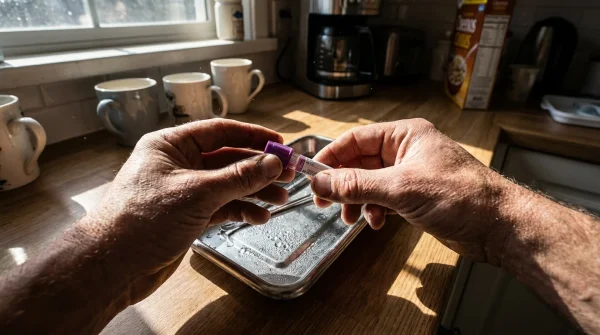
The ambient glow of a hallway nightlight casts long shadows as the clock creeps past ten. You hear the restless shuffling of bare feet against the carpet, a familiar rhythm of a bedtime that refuses to settle. In the medicine cabinet, a brightly colored bottle promises a simple, fruity solution to the midnight exhaustion.
For years, we viewed these soft, sugar-coated chews as harmless nightly treats. They sit on grocery shelves next to the chewable vitamin C, practically whispering that restful sleep is just two strawberry-flavored bites away. But that candy-coated illusion is shattering, leaving frustrated parents holding bottles that hide a much more complicated reality.
Behind the cheerful packaging lies a synthetic hormone, one that commands the deepest rhythms of the human brain. What was aggressively marketed as a gentle nudge toward dreamland operates much more like a master switch. When you drop a heavy dose of commercial melatonin into a small body, the biological response is anything but subtle.
Now, major medical boards are sounding an alarm, entirely shifting how we manage evening restlessness. Driven by a massive spike in emergency room visits, the pediatric landscape is undergoing a structural reset. We are finally waking up to the math of synthetic sleep aids, trading handfuls of gummies for strict, mindful boundaries.
The Illusion of the Fruit Chew
Think of a child’s circadian rhythm like an incredibly sensitive internal thermostat. When the sun dips below the horizon, their brain naturally turns the dial, releasing microscopic amounts of chemicals to cool the body down for rest. You only need a tiny spark to ignite that natural cooling process.
But dropping a standard commercial gummy into that delicate system is like throwing a heavy brick onto the thermostat. The industry treated these powerful synthetic hormones as though they were a daily vitamin. We were taught that more was better, or at least completely harmless, leading us to normalize megadoses that overwhelm the brain’s natural clock.
The turning point came when researchers began pulling those friendly-looking gummies off the shelves and testing them in labs. The findings were staggering, revealing rampant inaccuracies in commercial manufacturing. A chew claiming to hold one milligram might contain three, or ten, or barely a trace of the active ingredient at all.
- Continuous glucose monitors expose hidden prediabetes in healthy adults
- Vitamin D3 drops fail completely without vitamin K2 pairing
- Weighted blankets lower core body temperatures for REM sleep
- Magnesium glycinate capsules waste money without adequate dietary fats
- Ergonomic chairs actually weaken core muscles over extended periods
Consider the quiet frustration of Dr. Sarah Jenkins, a 42-year-old pediatric sleep specialist in Seattle, who began noticing a troubling pattern in her clinic. Parents were walking in exhausted, holding toddlers experiencing severe night terrors and morning grogginess. Dr. Jenkins started asking families to bring their over-the-counter bottles to the office. She realized these parents weren’t failing at bedtime routines; they were accidentally handing their kids wildly fluctuating doses of an unregulated hormone, entirely sabotaging natural sleep drives.
Navigating the New Evening Standards
Now that health entities are strictly capping dosages, how you approach the evening hours has to evolve. The strategy shifts from relying on a chemical off-switch to building a biological off-ramp.
For the Toddler Parent: At this stage, chemical intervention is almost never the answer. The focus must remain entirely on environmental cues. Dimming the overhead lights two hours before bed and dropping the room temperature creates a physical environment that naturally coaxes the brain into producing its own sleepy signals.
For the Grade-Schooler: School anxiety and screen time often disrupt the evening fade. If a pediatrician does recommend a temporary supplement to reset a broken schedule, you must treat it like a precise prescription. You are looking for micro-doses, often less than half a milligram, delivered at exactly the right window.
For the Teen Night Owl: Adolescents experience a natural biological shift that delays their sleep drive. Tossing them a handful of gummies will only cause morning brain fog. Instead, the intervention requires morning sunlight exposure to anchor their waking hours, ensuring the evening fade happens organically.
The Tactical Evening Toolkit
Implementing the new pediatric guidelines requires precision, not panic. We are moving away from the chaotic guesswork of the vitamin aisle and stepping into deliberate, mindful action.
If a medical professional has approved short-term use, you must abandon the candy aisle entirely. Liquid formulations, while less exciting, allow for exact, measurable drops. This hands the control back to you, bypassing the manufacturing roulette of a mass-produced chew.
Follow these strict protocols when managing the evening transition:
- Measure liquid doses using a calibrated medical syringe, aiming for the absolute minimum threshold (often 0.3mg to 0.5mg).
- Administer the drop exactly 60 minutes before the target sleep time to align with the natural metabolic curve.
- Remove all blue-light-emitting screens 90 minutes prior, replacing them with audiobooks or low-light reading.
- Maintain the bedroom temperature strictly between 65 and 68 degrees Fahrenheit to mimic the nighttime drop.
Stepping away from the quick fix of a brightly colored bottle might initially feel like losing a dependable tool. But this regulatory shift is actually a profound relief. It removes the burden of managing a chemical balancing act that we were never supposed to perform in the first place.
By understanding the sheer power contained within those tiny doses, you respect the biological machinery at work in your home. You stop fighting against a synthetic hangover and start nurturing a sustainable rhythm.
Bedtime transforms from a medicated countdown into a quiet, intentional winding down of the day. And when sleep finally arrives, coaxed by cool air and dim lights, it is deep, restorative, and entirely their own.
A hormone is a messenger, not a sledgehammer; we must respect the profound quiet required to let the body send its own signals.
| Traditional Habit | The New Medical Standard | Added Value for You |
|---|---|---|
| 2mg-5mg commercial gummies | 0.3mg-0.5mg liquid drops | Eliminates morning grogginess and night terrors |
| Administering at bedtime | Administering 60 minutes prior | Aligns perfectly with natural biological cooling |
| Treating as a daily vitamin | Treating as a temporary reset tool | Prevents chemical dependency and builds natural habits |
Navigating the New Bedtime Landscape
Why are gummies suddenly considered problematic?
Independent lab tests revealed that commercial gummies often contain wildly inaccurate doses, sometimes up to ten times the stated amount, leading to accidental megadosing.Can I just cut a gummy in half?
Because the active ingredient is rarely mixed evenly throughout the gelatin, cutting it does not guarantee a half-dose. Liquid drops are the only accurate method.What is a safe amount if my doctor approves it?
Pediatricians are now leaning toward micro-doses, typically starting between 0.3 and 0.5 milligrams, rather than the 5-milligram standards found on store shelves.How long should a child use a sleep supplement?
It should be treated as a temporary tool to reset a broken sleep schedule, usually spanning no more than a few days to a week, never as a permanent daily fixture.What is the best alternative to supplements?
Environmental control is your strongest ally. Dimming lights, removing screens 90 minutes early, and cooling the room temperature biologically trigger the brain’s natural rest cycle.