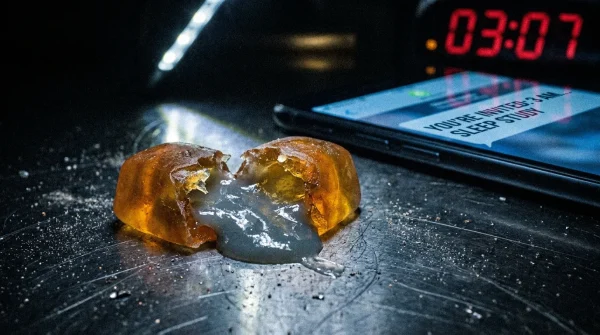
At 2:15 PM, the quiet hum of the office ventilation blends with the dull glare of your monitor. You slide open your desk drawer, bypassing the leftover donuts in the breakroom to make what feels like a disciplined, health-conscious decision. You peel back the foil packaging, revealing a dense chewy chocolate paste coated in melting dark confectionery glaze. It looks substantial and smells intensely of cocoa and roasted grains, carrying the tactile weight of genuine sustenance.
You take a deliberate bite, working through the thick, fudge-like resistance that promises to stave off hunger until dinner. The packaging boldly advertises twenty grams of muscle-repairing protein, a metric that provides instant psychological relief while you power through back-to-back spreadsheet reviews. You wash down the sweet, cocoa-dusted chew with black coffee, confident that you have fueled your body with functional nutrition rather than mindless confection.
Yet, forty minutes later, your eyelids grow impossibly heavy and your concentration feels like breathing through a pillow. A sudden, hollow irritability creeps into your stomach, accompanied by an urgent craving for another hit of sweetness or a second mug of caffeine. The functional fitness bar you trusted to sharpen your productivity has instead dropped an anchor directly into your afternoon metabolism.
The Candy Bar in Athletic Disguise
Commercial performance bars were originally engineered for extreme exertion—mountaineers scaling windy ridges and marathoners depleting their glycogen stores at six-minute mile paces. In those oxygen-starved, high-output environments, the human body treats fast-digesting sugar as an immediate life raft. When you are burning hundreds of calories an hour, your muscle cells act like open sponges, drawing glucose directly from the bloodstream without requiring large surges of insulin.
When you consume that exact same formula while seated in an ergonomic chair, your physiology responds entirely differently. Clif Builder bars utilize a dense scaffold of brown rice syrup, cane syrup, and dried cane syrup to bind soy protein isolate into a palatable, shelf-stable brick. To your resting liver and pancreas, this flood of refined syrup is functionally identical to liquid table sugar, demanding an emergency release of insulin to clear the bloodstream.
Because your resting skeletal muscles are not actively burning fuel, that massive insulin spike rapidly drives circulating glucose into storage, causing your blood sugar to plummet just as quickly as it rose. The presence of twenty grams of soy protein does little to cushion this fall because the liquid syrups are absorbed far faster than the dense plant proteins can be broken down. You are left with a sudden metabolic void: high circulating insulin that temporarily locks down fat-burning, paired with low blood sugar that screams at your brain for another quick-energy snack.
- Habitual phone call soothing drains nervous system reserves triggering heavy morning mental fog
- Trapezius shoulder blade muscles trap repressed daily conversational micro-stress sparking sharp neck burning
- Hospital saline IV bags trigger emergency surgical rationing protocols across nationwide medical centers
- Xylitol sweetener packets spark urgent heart alerts after exposing hidden blood clot risks
- Propping bedroom closet doors open traps warm air pockets wrecking deep sleep cycles
Elena Martinez, a 34-year-old software architect from Austin, kept a box of chocolate mint protein bars in her bottom filing cabinet for three years. She ate one every afternoon to power through complex system designs, only to battle severe 3:30 PM brain fog and persistent temple throbbing. It was only after tracking her post-meal response that she realized her daily fitness snack was driving a 70-point glucose spike—delivering nearly thirty grams of total carbohydrates while she remained completely stationary.
Matching Metabolic Demand to Protein Sources
Understanding how your body processes dense protein bars comes down to matching the fuel matrix with your physical output. Not every routine demands the same balance of binders, lipids, and amino acids.
The Desk-Bound Knowledge Worker
If your primary afternoon output is mental rather than physical, your brain requires steady, unspiked blood sugar. Consuming high-syrup bars during prolonged sitting leads to rapid glycogen saturation in resting tissues, creating unwanted systemic energy crashes that destroy executive focus. Look for clean, whole-food fats and minimally processed proteins that do not rely on evaporated cane syrups as their first three ingredients.
The Outdoor Endurance Athlete
If you are halfway through an eight-mile trail run or packing heavy gear up a mountain grade, the high glycemic index of cane syrup becomes a mechanical advantage. Working muscles pull the twenty-nine grams of carbohydrates straight into their mitochondria, sparing muscle glycogen and preventing central nervous system fatigue. In this state, the bar performs precisely as intended.
The Post-Workout Lifter
Following a heavy resistance training session, your body can tolerate a moderate carbohydrate influx to stimulate muscle protein synthesis. However, relying on heavily processed soy isolates bound in vegetable oils can trigger gastrointestinal sluggishness, especially when consumed immediately before or after intense abdominal strain. Whole food combinations provide superior nutrient density without the industrial binders.
Rebuilding the Afternoon Fuel Protocol
Transitioning away from syrup-heavy meal replacements does not mean sacrificing convenience. It requires swapping fast-acting liquid binders for whole-food matrixes that slow digestion and keep your energy floor rock-solid.
- Audit the First Four Ingredients: Inspect the label for cane syrup, brown rice syrup, or tapioca syrup. If a syrup appears before the primary protein source, the bar functions biochemically as a confection.
- Target the 2:1 Protein-to-Sugar Ratio: Choose snacks where total dietary protein cleanly doubles the total sugar grams, keeping simple sugars under five grams per serving.
- Prioritize Whole-Matrix Fats: Pair raw almonds, pumpkin seeds, or walnut butter with hard-boiled eggs or unsweetened Greek yogurt to stabilize gastric emptying.
- Hydrate with Unsweetened Electrolytes: Afternoon fatigue is frequently cellular dehydration disguised as low blood sugar; drink twelve ounces of mineral-rich water before reaching for a snack.
By shifting your mid-day fuel toward clean fats and slow-digesting proteins, you prevent the violent insulin swings that turn productive workdays into exhausting mental battles.
Reclaiming Your Baseline Clarity
Fitness marketing has spent decades convincing busy adults that high protein numbers excuse any amount of industrial sugar. When you look past the bold typography on the wrapper and examine the ingredient panel through the lens of your actual daily movement, the mystery of the mid-afternoon energy slump disappears. Real physical stamina does not come from engineered syrups packaged in athletic foil—it is built on stable, predictable nourishment that respects your resting biology.
Real physical fuel provides quiet, sustained endurance rather than a loud, fleeting spike followed by an afternoon stall.
| Key Point | Detail | Added Value for the Reader |
|---|---|---|
| Primary Binder Mechanism | Heavy use of brown rice and cane syrup to hold plant protein isolate | Explains why the bar digests with the speed of standard candy |
| Insulin Surge Dynamics | Rapid glucose absorption without concurrent physical movement | Identifies the hidden trigger behind post-snack mental fog |
| Satiety Interference | Liquid sugars outpace the slower breakdown of soy protein | Reveals why you feel intense hunger an hour after eating |
| Strategic Context | Formulated for intense aerobic output, not desk work | Helps you align snack choices with actual physical energy demands |
Frequently Asked Questions
Why do I feel hungry an hour after eating a 20-gram protein bar?
The high concentration of simple cane syrups causes a rapid surge and subsequent crash in blood sugar. Even though the bar contains twenty grams of protein, the rapid drop in circulating glucose signals your brain that you need immediate food, creating false hunger cues.Are all Clif bars formulated with heavy sugar syrups?
Most traditional Clif and Builder lines rely heavily on organic brown rice syrup and cane sugar to achieve their texture and shelf stability. Checking the nutritional panel for total sugar content helps you identify which specific lines are designed for high-exertion athletics versus casual snacking.Does the soy protein isolate in these bars slow down sugar absorption?
While protein generally slows gastric emptying, isolated soy protein blended with liquid syrups does not form a dense enough whole-food fiber matrix to prevent rapid glycemic spikes when consumed in a resting state.What is a better snack alternative for an office environment?
Opt for whole-food combinations such as a handful of dry-roasted walnuts paired with grass-fed beef jerky, two hard-boiled eggs, or whole-milk cottage cheese topped with chia seeds to deliver steady amino acids without insulin swings.Should I still eat these bars if I work out in the evening?
If you consume a high-sugar protein bar while sitting at work hours before your workout, you will still experience the afternoon energy crash. It is far better to consume fast-acting carbohydrates within thirty to forty-five minutes of your actual training session.