The house is dead quiet at two in the morning. Your chest feels like a bird trapped behind bone, wings thrashing frantically against the cage of your ribs. The baseboard heater clicks softly in the dark, and the room temperature sits at a calm sixty-eight degrees Fahrenheit, yet your palms are slick, your throat feels like a pinched straw, and the air you pull into your lungs seems to vanish before reaching your blood.
Standard advice urges you to close your eyes, count to four, and invite soft, compassionate thoughts into the space. When adrenaline surges through your bloodstream and your heart hammers at one hundred and thirty beats per minute, gentle cognitive tricks feel like trying to extinguish an electrical fire with a damp tissue. In acute autonomic overdrive, your prefrontal cortex has clocked out; your primitive brainstem has locked the doors and pulled the alarm.
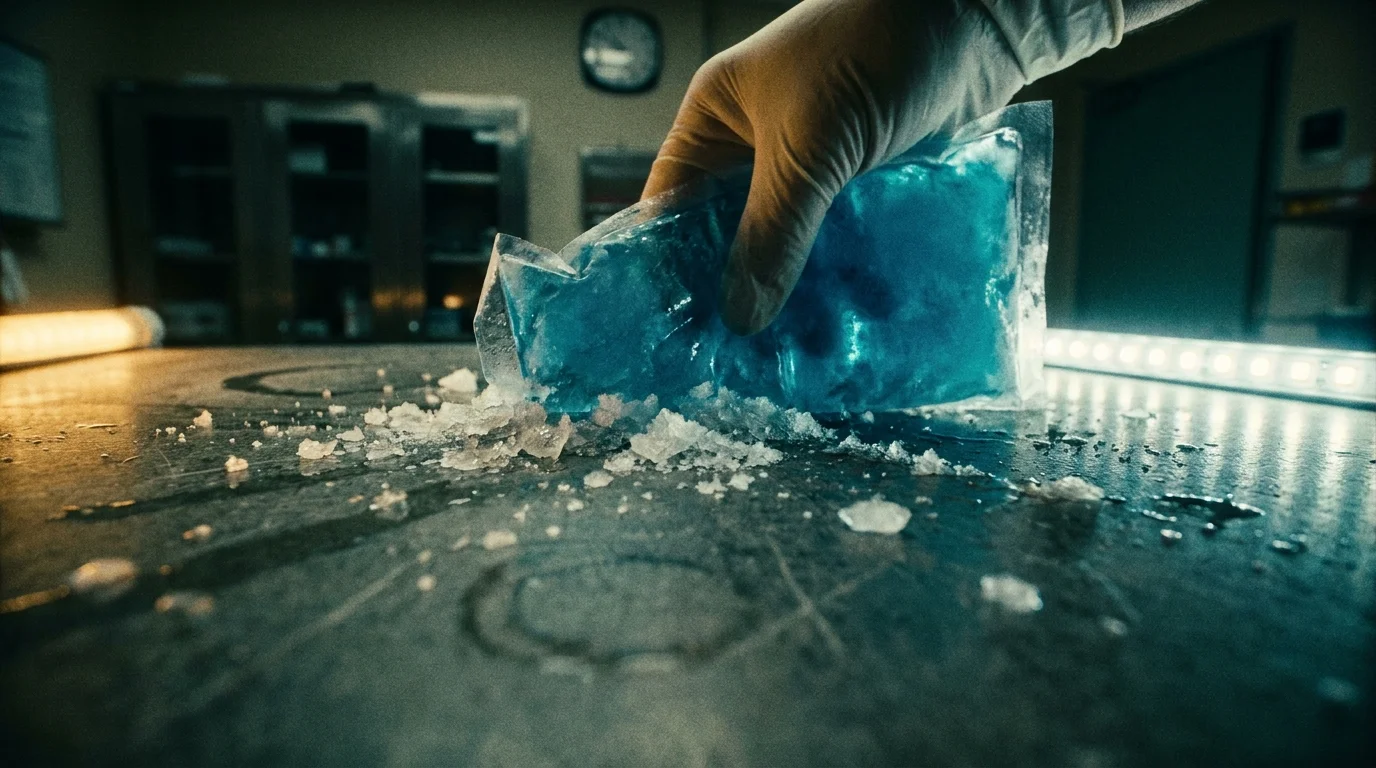
You pads across the hardwood to the kitchen, guided by the cold glow of the freezer door. You do not reach for the chamomile tea or the amber dropper bottles lined neatly along the pantry shelf. Instead, you pull out a dense, frost-dusted gel pack wrapped in a single layer of cotton. You lean back against the floor, let your shirt fall open, and place the freezing block directly over the center of your breastbone. Within seconds, a startling, icy ache radiates through your ribs, and the thumping storm in your chest stumbles, slows, and settles into an unhurried, steady beat.
Rewiring the Alarm: The Chest as an Electrical Breaker
We often treat acute panic as a battle of ideas, assuming a racing pulse can be talked down with rational arguments. The cardiovascular system does not speak in sentences; it operates on electrical impulses, hydraulic pressures, and chemical gradients. When fear captures your body while you are completely alone, trying to think your way into calm is like reasoning with a blaring car horn.
Placing severe cold over your sternum works because the breastbone acts as an anatomical switchboard. Just beneath that thin plate of flat bone lies the cardiac plexus, where thick bundles of the vagus nerve weave directly across the great vessels and the base of your heart. Applying an abrupt thermal drop to this exact spot bypasses your racing thoughts entirely, functioning as an autonomic emergency brake that forces your heart rate down via direct physical reflex.
This is the mammalian bradycardic reflex stripped down to its raw mechanics. While ice baths or facial plunges require holding your breath and soaking your hair, the sternal surface provides a direct conductive pathway to your parasympathetic trunk without drowning your senses. The extreme cold constricts superficial thoracic capillaries, triggering arterial baroreceptors that command your pacemaker cells to dial back their firing speed immediately.
The Observation in Bay Four
Elena Vance, a veteran critical-care paramedic with sixteen years on urban ambulance rigs in Denver, noticed this pattern during long winter shifts. When dealing with patients suffering sudden, non-cardiac tachycardia who were spiraling from the terrifying physical sensation of their own heartbeat, conventional breathing coaching frequently stalled. Elena began keeping reusable cold packs chilled to around thirty-eight degrees Fahrenheit, resting them squarely on the patient’s lower breastbone while instructing them to let their shoulders sink into the stretcher.
- Textured silicone rings quiet covert boardroom panic by grounding runaway rapid heartbeats
- Horseradish paste spoonfuls halt runaway panic loops through immediate fiery nasal shocks
- Standard Ozempic dosing schedules stall weight loss by freezing sluggish digestive pathways
- Masseter jaw muscles trap chronic boardroom anxiety leaving stiff throbbing facial hinges
- Clearly Filtered pitchers leak invisible municipal vapors triggering dry morning throat scratchiness
She watched cardiac monitors reveal drops of twenty to thirty beats per minute within three minutes of contact. The sensory shock of the cold broke the feedback loop: the brain stopped interpreting the racing chest as imminent physical collapse, allowing the nervous system to recalibrate its baseline without a single sedative.
Adapting the Chill: Three Somatic Profiles
Not every panic spiral presents with the same physical posture. Depending on how your nervous system locks up under acute strain, subtle shifts in application make the difference between instant relief and shivering frustration.
The Midnight Awakening
You wake up from a dead sleep with adrenaline scorching your veins, convinced something catastrophic has occurred before your eyes even adjust to the darkness. Your breathing is rapid, shallow, and concentrated in the upper throat.
- Lie flat on your back on a firm surface, such as the floor or a firm mattress, with one pillow beneath your knees to flatten your lumbar spine.
- Place the cold pack across the lower two-thirds of your breastbone, allowing the weight of the compress to sink into the tissue.
- Keep your palms turned upward beside your hips to prevent reflexive shoulder hunching.
By preventing the upper chest from heaving freely, the steady cold and mild weight prompt your diaphragm to take over the work of inhalation, halting the hyperventilation cycle before carbon dioxide drops low enough to trigger limb numbness.
The Desk-Bound Tremor
Deadlines, endless notifications, and hours of hunched posture can produce a slow-boil panic where your heart flutters and your hands vibrate with nervous energy, yet you cannot step away to lie down.
- Remain seated, plant both heels firmly into the floor, and lean your torso back against the chair at a slight forty-five-degree angle.
- Secure a compact ice pack inside a thin handkerchief and press it firmly against the center of your chest with one open palm.
- Exhale through slightly parted lips as if cooling a spoonful of hot soup, stretching each out-breath to roughly twice the length of your in-breath.
The targeted cold disrupts the chronic thoracic tightness common in desk workers, loosening the grip of the intercostal muscles while grounding your physical focus onto a crisp, undeniable focal point.
The Post-Exertion Flutter
Sometimes an intense workout combined with dehydration or caffeine leaves your pulse bouncing uncomfortably in your throat long after you have stopped moving. Your body wants to rest, but your vascular tone remains stuck in high gear.
- Sit on the edge of a bed or bench with your elbows resting on your knees, dropping your head forward slightly.
- Hold an ice pack against the hollow at the base of your throat just above the top of the sternum, making contact with the sternal notch.
- Hold the compress in place for sixty seconds, remove it for thirty seconds, and repeat three times.
This intermittent stimulation mimics natural arterial pumping, nudging the baroreceptors along the carotid bifurcation to register elevated blood pressure and signal the cardiac pacemaker to restore a rhythmic tempo without lingering muscle stiffness.
The Protocol: Precision Contact and Somatic Unwinding
To execute this reset safely and cleanly during a crisis, you must avoid making the experience an ordeal. Freezing skin damage or violent whole-body shivering defeats the purpose of settling your heart.
Preparation and temperature control are the quiet anchors of this practice. If the pack is too cold or placed against bare, sweating skin without a barrier, your body treats the stimulus as an attack rather than an override.
- Temperature Target: Your pack should sit between thirty-four and forty degrees Fahrenheit. Flexible gel beads or a bag of small frozen legumes contour far better against the rigid curves of the sternum than hard block ice.
- The Barrier: Use a single layer of washed linen or lightweight cotton. Avoid thick terrycloth towels, which insulate too well and swallow the cold before it reaches the nerve endings.
- Contact Duration: Keep the compress in place for four to seven minutes. If you begin to shiver uncontrollably, slide the compress off for two minutes before reapplying.
- The Somatic Release: As the icy sensation spreads across the chest plate, consciously unclench your tongue from the roof of your mouth and let your teeth part slightly.
Focus entirely on the changing texture of the cold: it moves from sharp and biting to dull and heavy, eventually settling into a clean, numb stillness that pulls the frantic thumping of your heart right down with it.
Reclaiming Autonomy in the Dark
Panic creates an illusion of helplessness, whispering that your body is a rogue machine beyond your influence. When a racing heart wakes you in the dead of night, the isolation can feel almost tangible, as if you are stranded on an open sea with no compass.
Understanding the mechanical wiring of your own ribcage transforms that dynamic. You do not need to wait for a feeling to pass, nor do you need to plead with an overactive brain to be quiet. By pressing a cold hand against the center of your chest, you speak to your physiology in the direct, ancient language of temperature and pressure, discovering that the power to pull your own emergency brake was resting right beneath your ribs all along.
The nervous system yields far more readily to the physical truth of temperature than it ever will to the hollow logic of forced calm.
| Key Point | Detail | Added Value for the Reader |
|---|---|---|
| Anatomical Target | Center of the breastbone over the lower two-thirds of the sternum | Directly stimulates the cardiac plexus and phrenic nerve junctions. |
| Optimal Temperature | 34°F to 40°F (chilled gel pack or semi-frozen legumes) | Provides therapeutic bradycardic shock without triggering skin frostbite. |
| Effective Duration | 4 to 7 minutes of steady, unmoving contact | Allows sufficient time for baroreceptors to override sympathetic tone. |
| Breath Counterpart | Extended exhalations through softly pursed lips | Maximizes vagal tone by increasing intrathoracic pressure on the out-breath. |
Frequently Asked Questions
Can I use a regular bag of ice cubes from my kitchen freezer?
Yes, but you should place the ice cubes in a small plastic bag and wrap it in a thin cotton tea towel. Rigid ice cubes create uneven pressure points, whereas slightly melted ice or crushed ice contours against the bony ridge of the sternum much more comfortably.Why not just put the ice pack directly onto my face or neck?
While ice on the face activates the mammalian dive reflex, it often triggers sensory discomfort, watery eyes, and sinus headaches that can heighten feelings of panic. Sternal placement delivers the same bradycardic effect directly to the cardiac nerves without overwhelming your facial senses.Is it dangerous to shock my heart rate down this quickly?
For individuals with a structurally healthy heart experiencing panic-induced sinus tachycardia, this reflex is completely safe and physiological. However, if you have a history of heart block, bradycardia, or take beta-blockers, check with your physician before using sudden cold therapy on your chest.What should I do if the cold compress makes me start shivering?
Shivering indicates that your core temperature defense has engaged, which can increase metabolic demand. If you start to shiver, immediately remove the pack, keep your limbs warm under a blanket, and rest your warm hands over the center of your chest instead.How quickly should I expect my heart rate to decline?
Most people experience a noticeable deceleration within ninety seconds to three minutes. Your pulse will not plummet to an unnatural standstill; rather, the intense bounding sensation in your throat and ears will soften into a quiet, rhythmic beat.