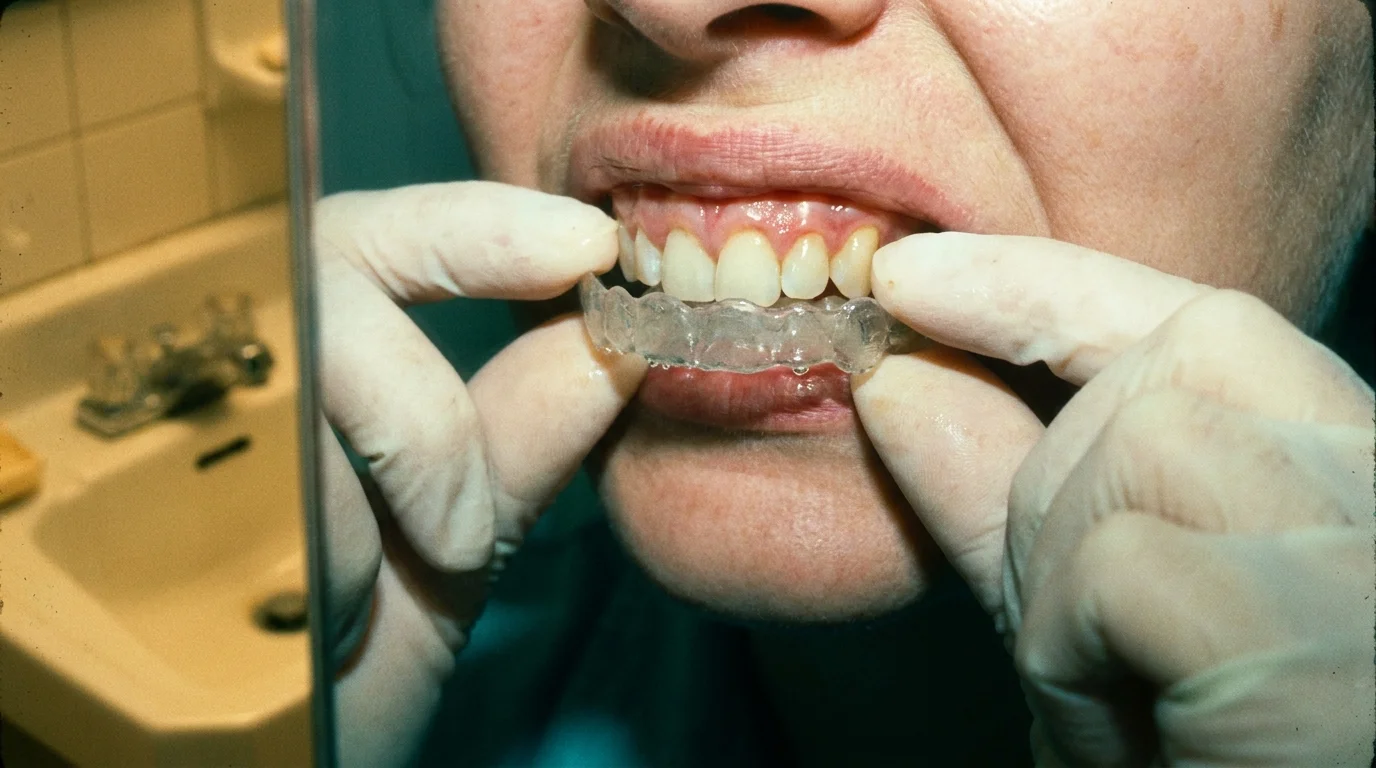
A slim cardboard box rests on your front porch, cleanly branded in muted pastel shades. Inside sits an entire orthodontic transformation packed into numbered plastic pouches, accompanied by a tube of chewable bite mints and a printed guide promising a straighter smile in four months flat. It feels effortless, modern, and delightfully free from fluorescent waiting rooms and clinical fees. You snap the clear aligner over your front teeth, feeling that familiar, sharp plastic ache, assuming that tightness is simply the sensation of progress.
Yet beneath the gumline, biology is indifferent to convenience. Moving a root through dense living bone is not an aesthetic adjustment; it is a delicate microscopic demolition and rebuilding process. When force pushes against a crown without clinical eyes verifying the underlying foundation, the root does not simply slide into alignment. Instead, it can scrape right against the cortical plate, starving the surrounding tissue of blood flow and quietly grinding down the very framework that keeps your teeth anchored to your skull.
Across the country, the illusion of unsupervised cosmetic dentistry is suddenly falling apart. State dental boards and legislative bodies are moving rapidly to close the mail-order loophole, issuing binding mandates that require mandatory in-person jaw scans and physical examinations before any tooth-moving appliance touches your mouth. What started as an accessible shortcut for minor crowding has produced a quiet clinical emergency of loosened incisors, chronic nerve inflammation, and irreversible alveolar bone loss.
The Biological Anchor: Why Teeth Are Not Furniture
To understand why regulators are drawing a hard line in the sand, you have to abandon the idea that teeth are rigid pegs set into concrete. Your jaw is living, dynamic architecture. Each tooth root floats suspended inside a microscopic web of collagen fibers known as the periodontal ligament, nested within a thin sleeve of alveolar bone. When an aligner exerts pressure, it pinches that ligament on one side, triggering specialized cells to dissolve tiny pockets of bone, while cells on the opposite side lay down fresh structural tissue.
When that mechanical force moves just a millimeter too far or pitches at the wrong angle, the body cannot lay down new bone fast enough. The pressure acts like a slow hydraulic clamp, cutting off the capillary bed. Deprived of oxygen, the alveolar ridge melts away. Because this dissolution happens silently beneath the gumline without immediate agony, thousands of patients continued swapping trays week after week, unaware their roots were slowly migrating outside the protective bony envelope.
- Expired Covid tests spark false negative surges leaving infected patients without antiviral prescriptions
- Bedside phone chargers leak high-frequency coil whine that sparks restless midnight tossing
- Curved gaming chairs force unnatural pelvic tucking triggering sharp lower lumbar spasms
- Baking soda rinses neutralize burning throat scratchiness and block raw morning irritation
- Warm flaxseed compresses drain clogged eyelid glands to restore soothing moist eye comfort
The current regulatory clampdown is not a defense of legacy dental fees; it is an emergency brake pulled on severe biological erosion. By requiring three-dimensional cone-beam computed tomography (CBCT) or tactile periodontal probe screenings before treatment begins, states are codifying a basic truth: you cannot move the pillars of a house without surveying the bedrock underneath.
In her clinical practice in Columbus, Ohio, periodontist Dr. Eleanor Vance, 44, spent much of the past eighteen months performing rescue surgeries on adults who believed they were fixing simple aesthetic overlaps. Vance recalls a thirty-two-year-old graphic designer who arrived with pristine, straight front teeth that wiggled under light finger pressure like loose fence posts in dry sand. By relying entirely on home putty molds—which register only the enamel crowns while missing bone height entirely—the mail-order software had shoved the roots entirely through the outer facial plate, leaving three central teeth floating in soft gum tissue alone.
The Anatomy of the New Mandates
The updated rules rolling out across state licensing boards eliminate the fully remote model, segmenting patient safety into non-negotiable checkpoints based on individual risk. Rather than banning clear aligners, the policies target the blind delivery of force.
For the Mild Cosmetic Patient
If you are simply looking to close a subtle gap from teenage years when you stopped wearing your retainer, the process still remains streamlined, but the initial barrier has shifted. You are now required to sit for an in-office baseline diagnostic session. This involves a periodontal pocket depth audit and high-resolution radiographic imaging to confirm that your cortical plates are thick enough to absorb tooth travel. Only after a licensed doctor signs off on root angulation can physical trays be shipped directly to your door.
For the Adult with Restorative History
Adults with old crowns, dental bonding, or mild gum recession fall under a far stricter supervision tier. These patients require dynamic tracking appointments every six to eight weeks. If micro-inflammation flares or gum margins begin to drop, your treatment stops immediately. Under the new state provisions, continuing to dispense aligners to a patient exhibiting active bone recession constitutes actionable malpractice, ending the automated subscription models that delivered boxes on autopilot.
Reclaiming the Integrity of Your Bite
Navigating these regulatory shifts requires shifting your focus from speed to stability. Straight teeth that do not meet properly when you chew can shatter your back molars or strain your jaw joints, turning a cosmetic fix into decades of restorative repair. Protecting your oral structure means approaching orthodontic changes with careful, deliberate patience.
- Schedule an independent radiographic baseline with a practitioner who has no financial stake in selling you a specific aligner package.
- Verify that your provider measures your periodontal pockets at six distinct points around every single tooth before approving movement.
- Check your mobility weekly by gently pressing your tongue against your incisors; any discernible click or rebound requires immediate cessation of pressure.
- Demand to see your digital tooth movement setup, confirming that root apexes remain centered within the cancellous bone envelope throughout every phase.
Orthodontic movement operates on an unyielding biological clock that technology cannot compress. Alveolar bone needs roughly twenty-eight to thirty days simply to re-calcify around a shifted root. Rushing that timeline by swapping trays every seven days strips the tissue before it can heal, creating microscopic fractures in the foundation of your smile.
The modern mandate for physical diagnostic scans is a necessary return to physiological reality. True wellness is not about cutting corners to secure a camera-ready reflection; it is about respecting the living architecture that lets you chew, speak, and smile without pain for the rest of your life.
Bone does not negotiate with software algorithms; it only responds to blood supply, balanced load, and time.
| Key Point | Detail | Added Value for the Reader |
|---|---|---|
| Diagnostic Mandate | Mandatory in-person CBCT or radiographic scans before tray fabrication. | Prevents irreversible root exposure through unseen, paper-thin jawbone. |
| Root Envelopment | Aligners must keep teeth strictly centered within cortical bone boundaries. | Stops tooth loosening and avoids costly periodontal graft operations. |
| Occlusal Checkpoints | Ongoing monitoring of how top and bottom teeth make contact during chewing. | Protects against chronic TMJ migraines and fractured molars post-treatment. |
Frequently Asked Questions
Why are mail-order impression kits no longer considered sufficient?
Putty impressions capture only the visible crowns of your teeth while failing to show root positions, gum pocket depths, or internal bone density, leaving dangerous underlying infections and thin bone completely undetected.Can lost alveolar bone grow back once aligners are removed?
Vertical alveolar bone loss caused by aggressive tooth movement is largely irreversible without complex surgical grafting, and even then, complete regeneration of original tissue height is rarely possible.Does this mean clear aligners are unsafe to use?
Clear aligners are exceptionally safe and effective when designed around clinical X-rays and monitored regularly by an experienced professional who tracks biological response in real time.What are the early warning signs that an aligner is damaging bone?
Subtle signs include teeth that feel loose or springy to the touch, persistent dull throbbing deep in the jaw weeks into a tray, localized gum bleeding, or roots visibly creating ridges under the gums.Will these new mandates make orthodontic treatment significantly more expensive?
While requiring an in-person diagnostic scan adds a modest upfront clinical fee, it safeguards you against catastrophic restorative dental bills that can reach tens of thousands of dollars to save failing teeth.