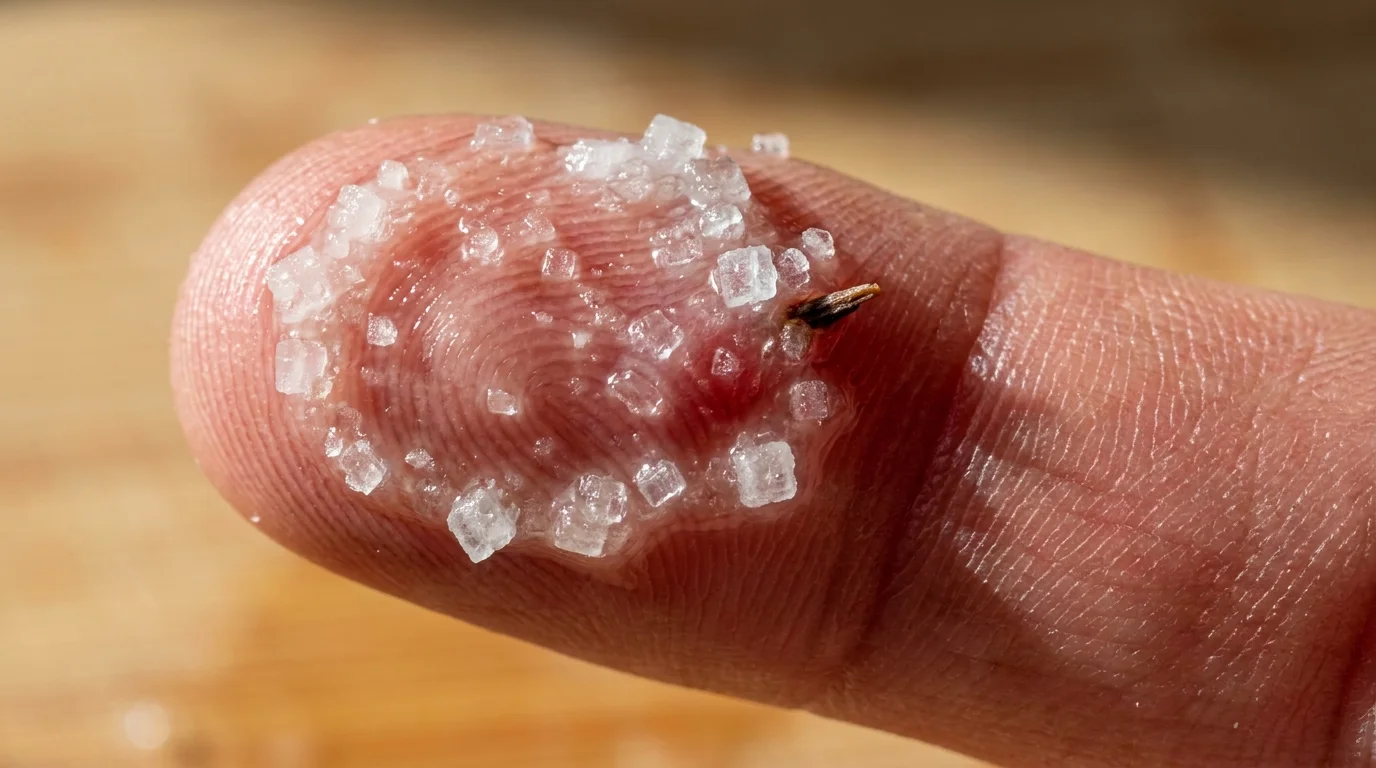
The bathroom mirror lights hum with a sharp, sterile glare at nine in the evening. You sit slumped over the porcelain sink, cradling a throbbing index finger, armed with a sewing needle scorched black by a lighter flame and a pair of blunt eyebrow tweezers. The skin around the puncture is already angry, tight, and glowing pink, guarding a dark speck of kiln-dried pine buried somewhere in the tender flesh beneath. With every sharp prod of the steel point, your nerves fire in protest, pushing the splinter deeper while the surrounding tissue swells shut.
We have all traded patience for brute force in that mirror. The instinct is always mechanical: dig, scrape, pinch, and pry until the foreign sliver yields or the skin gives up entirely. Yet digging into an inflamed puncture wound only introduces skin surface bacteria, shears delicate dermal layers, and accelerates localized edema. The more trauma you inflict with metal tools, the harder the skin clamps down on whatever is trapped inside.
A quiet solution sits just two rooms away in your kitchen cupboard, tucked inside a round cardboard cylinder. Standard table salt—the humble, crystalline sodium chloride you toss onto boiling pasta water—carries an ancient physical property that accomplishes through gentle fluid dynamics what steel tweezers cannot. When mixed into a dense, slurry-like paste and applied directly to broken skin, plain table salt commands water to move, relaxing the angry tissue and floating foreign debris toward the surface.
The Physics of the Pantry Draw
To understand why digging fails, you have to look at how living tissue reacts to a foreign intrusion. The moment a splinter of wood, glass shard, or stubborn plant thorn punctures your dermis, your capillaries open wide, flooding the micro-environment with lymphatic fluid and inflammatory white cells. This rapid pooling creates localized turgor—a tight, waterlogged fortress designed to wall off the invader. The swelling acts like a vise, locking the wood fiber in place while stretching nerve endings to their limit.
Osmotic pressure flips the mechanical advantage in your favor within minutes. Table salt is intensely hygroscopic; it hungers for moisture. When you lay a saturated paste of sodium chloride over the puncture, you establish a steep solute gradient across the stratum corneum. Fluid moves naturally from an area of low solute concentration inside your swollen cells toward the high-solute reservoir of the salt paste on the outside.
As the salt paste pulls stagnant fluid through the skin, two distinct things happen. First, the localized hydrostatic swelling collapses, deflating the angry dome of skin and relieving pressure on the tiny sensory nerves. Second, that outbound river of lymphatic fluid creates a gentle, outward hydraulic current. The wood fiber or glass fragment loses its frictional grip within the deflating tissue and is carried smoothly toward the epidermal surface.
- Raw cacao nibs clear heavy morning brain fog faster than black coffee
- Rotisserie chicken meals paired with antacids spark painful upper belly pressure
- Bottled coconut water triggers sudden postural room spins and trembling leg weakness
- Hard peppermint candies spark stubborn afternoon jaw tension and shooting temple aches
- Post-lift cold showers lock in stubborn next-morning joint stiffness and muscle aches
The Boatwright’s Kitchen Protocol
Caleb Vance, a 54-year-old wooden boat restorer in Rockland, Maine, has spent thirty-four years working with dense white oak, abrasive teak, and brittle yellow pine. For his first decade on the boatyard floor, Caleb carried a jeweler’s loupe and a surgical scalpel in his toolbox, spending countless evenings lancing his own calloused palms to retrieve microscopic splinters that had turned septic. The result was constant scar tissue and lost workdays spent nursing tender, throbbing hands.
An older rigger showed him the kitchen cure decades ago, and Caleb has not touched a needle to his skin since. By keeping a plastic shaker of fine non-iodized table salt and a roll of self-adhesive cohesive tape in his dock locker, Caleb treats deep oak slivers the moment he clocks out. He packs a thick salt mash directly over the splinter point, wraps it snugly, and lets atmospheric mechanics do the heavy lifting while he sleeps, waking to find the timber sitting loose on the surface of his skin.
Matching the Salt Draw to Your Skin
Not every splinter occurs in the same tissue, and the thickness of the surrounding skin determines how you should configure the draw paste.
For the Calloused Hand or Heel
Thick skin on the palm, heel, or finger pad demands a concentrated, hyper-saturated slurry. The dense stratum corneum in these areas resists fluid exchange, meaning the salt needs direct, uninterrupted contact. Mix fine table salt with just enough tepid tap water to form the consistency of damp beach sand—crumbly, yet capable of clumping together when squeezed. Do not dissolve the crystals fully; the raw, un-dissolved granules are what sustain the powerful osmotic pull over several hours.
For Delicate or Thin Skin
When a thorn catches the softer skin on the inside of the forearm, the wrist, or a child’s tender finger, pure salt paste can feel slightly fiery if left exposed. In these zones, temper the draw by blending the salt paste with a single droplet of pure vegetable glycerin or raw honey. The soothing humectant base creates a protective barrier for the sensitive epidermal layer while allowing the intense osmotic draw of the salt to act on the swollen puncture beneath.
Building the Exact Saline Draw
Application is a mindful, tactile process that relies entirely on an airtight seal. You do not rub, scrub, or massage the mixture into the wound. Aggressive scrubbing will only snap a brittle wood fiber and embed it permanently.
Begin by washing the entire area under cool running water with a mild, unscented soap. Pat the skin dry with a clean cotton towel without pressing directly on the tender spot.
- Measure the base: Place one level teaspoon of fine table salt into a clean ceramic ramekin or spoon.
- Hydrate slowly: Add two to three drops of lukewarm water using the tip of your clean finger, stirring until a gritty, opaque paste forms.
- Mound the paste: Scoop a generous dollop of the paste directly over the puncture, mounding it roughly an eighth of an inch thick.
- Seal the perimeter: Cover the mound with a standard breathable fabric bandage, pressing the adhesive edges firmly while leaving the center pad untouched.
- Rest the limb: Allow the poultice to sit undisturbed for a minimum of four hours, or ideally overnight while you sleep.
The Tactical Toolkit:
- Salt Grain: Standard fine-grain non-iodized table salt (coarse sea salt dissolves too slowly to establish an immediate gradient).
- Water Ratio: Approximately 4 parts salt to 1 part water (aim for wet sand, not salt water).
- Bandage Type: Fabric adhesive strips with an absorbent pad, or non-stick sterile gauze sealed with medical paper tape.
- Duration: 4 hours for surface thorns; 8 to 10 hours (overnight) for deep, swollen wood slivers.
Rethinking Domestic First Aid
Modern living trains us to search for high-tech, aggressive interventions whenever our bodies signal discomfort. We reach for sharp metal, pharmaceutical gels, and invasive maneuvers because they feel active, decisive, and immediate. Yet tissue repair is rarely improved by aggression. The human body operates on microscopic balances of pressure, hydration, and salt concentration.
Learning to use a simple pinch of salt shifts your relationship with minor injuries from conflict to cooperation. When you allow osmotic pressure to ease swelling and gently float out foreign debris, you preserve the integrity of your skin barrier and avoid unnecessary scar tissue. The next time a piece of kindling or a garden rose leaves an agonizing souvenir in your fingertip, leave the sewing needles in the sewing kit. Walk into the kitchen, wet a spoonful of salt, and let basic physics restore your peace of mind.
The gentlest physical remedies often outshine our sharpest tools because they cooperate with the body’s natural fluid dynamics rather than fighting them.
| Key Point | Detail | Added Value for the Reader |
|---|---|---|
| Osmotic Pressure Shift | High-solute salt paste draws out cellular fluid naturally | Eliminates the pain and tissue tearing caused by tweezers |
| Slurry Consistency | 4:1 salt-to-water ratio creates an un-dissolved granule bed | Maintains steady outward hydraulic pull for up to ten hours |
| Edema Reduction | Rapid localized fluid draining calms sensory nerve tension | Instantly softens throbbing sensations around deep slivers |
Frequently Asked Questions
Will applying salt paste directly to an open splinter wound sting intensely?
If the skin is freshly torn or actively bleeding, you may feel a brief, mild warmth or tingling for the first two minutes. However, as the salt begins drawing out the excess fluid that causes painful internal pressure, the throbbing sensation subsides much faster than if the area were left swollen.Can I use coarse sea salt or Epsom salt instead of regular table salt?
Fine table salt is superior for this specific application because its small crystal size packs closely together, creating the maximum surface area and an immediate osmotic gradient. Coarse sea salt leaves large air gaps that weaken the suction effect, though finely dissolved Epsom salt compresses are a suitable alternative for broader swelling.How long does it take for the splinter to actually appear on the surface?
Superficial slivers and thorns usually loosen and emerge within two to four hours of application. For deep, stubborn wood fibers that have been trapped beneath swollen skin for days, an overnight application of eight to ten hours yields the most reliable results.What should I do if the splinter is visible after removal of the bandage but still attached?
Once the paste has deflated the swelling, the head of the splinter will typically protrude from the softened skin pore. Clean the dried salt away with cool water and use sanitized tweezers to grasp the exposed tip, pulling straight out along the angle it entered without pinching your skin.When should I abandon the pantry draw and consult a medical professional?
If the area exhibits spreading red streaks, red heat radiating up the limb, white or yellow pus, or if the splinter is an organic material deeply embedded near a joint, seek medical evaluation immediately rather than relying on home remedies.