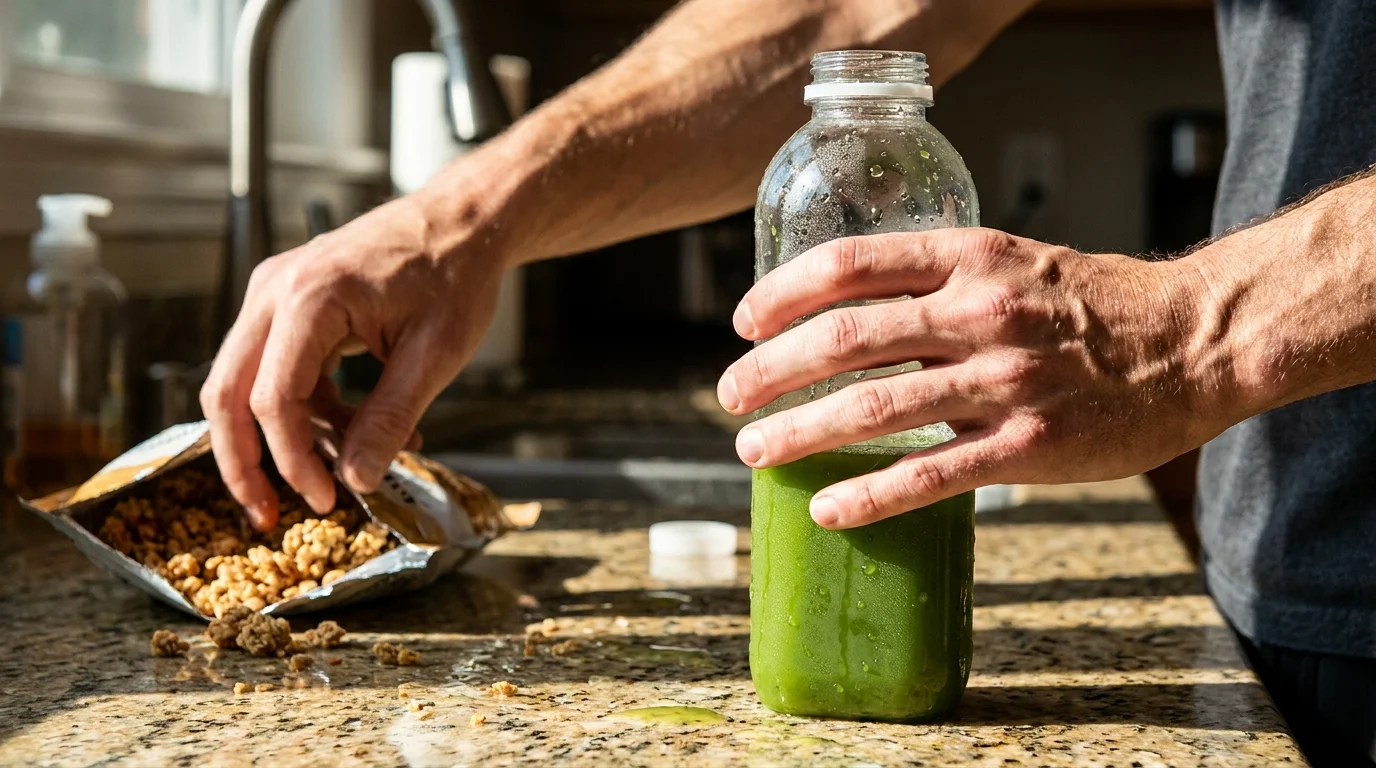
The condensation pools around the base of the plastic bottle, cold enough to numb your fingertips as you twist open the seal. It smells clean, like freshly cut grass sheared under morning rain, cut through with the sharp, acidic snap of green apple and lemon. You paid eleven dollars for this bottle at the corner market, convinced you were purchasing an afternoon of crystalline focus and metabolic discipline.
For the first twenty minutes, the promise holds. Your mouth feels refreshed, your mind sharpens at the edges, and you feel that unmistakable smugness of someone who chose raw chlorophyll over a second mug of drip coffee. It feels like an intravenous shot of sunlight delivered straight to your bloodstream.
Then the clock ticks past two in the afternoon. The room subtly dims around your peripheral vision, your palms go clammy against your keyboard, and a faint, rhythmic tremor begins beneath your ribs. A hollow, ravenous hunger claws at your stomach—not for crisp vegetables, but for sourdough crusts, potato chips, or anything dipped in salt and fat. You stare at the empty emerald bottle on your desk, wondering why an elixir made entirely of living plants has left you feeling as hollowed out as a blown fuse.
You are experiencing reactive hypoglycemia in disguise, engineered by modern food processing masquerading as clean nutrition.
The Hydraulic Press Myth: Stripping Nature’s Brake Pads
To understand why that cold-pressed drink leaves you trembling, you have to picture how a leaf actually functions in nature. When you chew a leaf of lacinato kale or a stalk of celery, your teeth physically tear through tough, microscopic structural walls built of cellulose and hemicellulose. These fibers do not dissolve; they form a dense, gel-like matrix inside your stomach.
This fibrous lattice works like a beaver dam along a rushing mountain stream. It holds carbohydrates in suspension, forcing your digestive enzymes to labor slowly, trickling glucose and micronutrients into your small intestine over hours. Whole plants regulate their own absorption, using cellular bulk as an internal governor.
Commercial hydraulic cold-pressing destroys this architecture completely. These industrial machines exert up to fifteen thousand pounds of pressure to rupture plant cells, wringing out the intracellular water and soluble vitamins while discarding the structural fiber into a compost hopper out back. What fills your bottle is not cellular food; it is an unbuffered chemical broth.
- Outer palm pressing releases rigid neck stiffness and soothes burning shoulder knots
- Glossy tablet screens trigger sharp afternoon eyelid twitches by exhausting focal depth
- Flipping cotton pillows resets trapped facial heat and calms racing bedtime pulses
- Heavy laundry baskets strain delicate hip sockets and lock rigid lower back aches
- Back pocket wallets tilt seated pelvis angles and trigger burning lower back aches
To make bitter brassicas palatable to the average palate, manufacturers blend that pressed green liquid with high-fructose fruit bases: apple juice, pear concentrate, and pureed pineapples. Without the natural scaffolding of intact pulp, that liquid fructose hits your portal vein like water burst through a broken main. Your body does not register it as a meal—it treats it as an immediate glycemic emergency.
The Clinic Floor: What Continuous Monitors Reveal
Dr. Marcus Vance, a metabolic researcher and preventative clinician based outside Austin, Texas, sees this pattern play out weekly among health-conscious professionals. He recalls tracking the metabolic data of Sarah, a 42-year-old landscape architect who came to his practice baffled by her daily 3:00 PM cognitive collapse.
Sarah lived on raw salads, walked four miles every morning, and religiously consumed a sixteen-ounce cold-pressed green juice each day at noon to sustain her through afternoon drafting sessions. When Dr. Vance fitted her with a continuous glucose monitor, the readings dismantled her routine. Her blood sugar was rocketing from a steady 88 mg/dL up to a staggering 172 mg/dL within twenty-five minutes of downing her juice—a spike more volatile than if she had eaten a glazed donut—followed by an aggressive pancreatic insulin surge that plunged her system down to 61 mg/dL by mid-afternoon.
Her body was not running out of energy; it was drowning in an insulin bath that rapidly locked away circulating fuels, leaving her brain starving for usable glucose. Once Sarah stopped drinking her produce and started chewing it alongside protein, her afternoon tremors vanished within three days.
Reading the Cold-Pressed Architecture: Three Types of Drinkers
Not everyone handles this liquid load the same way. How that green bottle affects your nervous system depends heavily on what your stomach looks like when the liquid arrives.
The Fasted Achiever
If you drink your juice on an empty stomach at mid-morning to extend an intermittent fast, you create the worst possible scenario. With zero dietary fat or bolus fiber present in the stomach, the gastric emptying rate accelerates to near-maximum velocity. Liquid fructose enters the bloodstream instantly, forcing your liver into an acute state of lipid synthesis while signaling your pancreas to flood the system with insulin. Within an hour, you are left stranded in a deep neuroglycopenic dip, foggy and desperate for starch.
The Post-Workout Recharger
Many active individuals reach for a cold-pressed bottle right after heavy exercise, believing they are rapidly replenishing glycogen stores. While your muscles are indeed primed to take up circulating glucose via non-insulin-dependent GLUT4 transporters, they cannot directly use fructose. The fructose must travel first to the liver for conversion. Drinking a stripped juice post-workout delays actual muscle recovery while creating an unnecessary hepatic workload, frequently triggering stomach distension and sharp nausea.
The Desk-Bound Purist
If you sip a high-sugar green blend while seated motionless under fluorescent office lighting, your large skeletal muscles remain metabolically inactive. Contracting muscles soak up circulating sugar; sedentary muscles ignore it. The excess flood remains trapped in circulation until your endocrine system steps in aggressively to sweep the board clean, leaving you with heavy eyelids and an uncontrollable urge to nap against your desk blotter.
Recalibrating the Squeeze: A Low-Impact Protocol
You do not need to discard green drinks entirely, but you must treat them with biological realism rather than spiritual devotion. If you choose to drink raw plant liquids, you must manually reconstruct the chemical brakes that commercial juicers strip away.
Follow this practical framework to protect your energy stability:
- Audit the Sugar Ratio: Flip the bottle around and check the nutrition facts immediately. If total sugars exceed 12 grams for the entire container, put it back. The first four ingredients should be dark greens, cucumber, or celery—never apple, pineapple, or white grape juice.
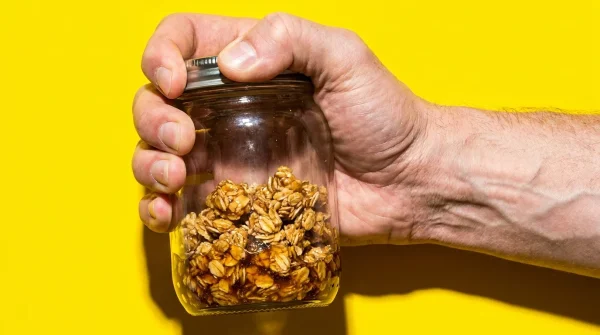
- Anchor with Dense Fat: Never let green liquid hit an empty gastric lining alone. Consume five to ten raw walnuts, a hard-boiled egg, or a tablespoon of raw pumpkin seeds two minutes before your first sip to slow gastric emptying.
- Engage the Salivary Reflex: Do not chug the liquid down your throat. Swish each mouthful against your tongue for two seconds. This activates salivary amylase and signals your stomach to release hydrochloric acid, preparing your digestive tract for processing.
- Ditch the Juice for a Micro-Blend: Whenever possible, choose whole-blended smoothies over hydraulic-pressed juices. Blending fractures the fiber without removing it, preserving the natural physical brake pads that stabilize your blood sugar curve.
Keep these specific thresholds in mind when shopping:
- Ideal Liquid Sugar Cap: Under 4 grams per 8-ounce serving.
- Strategic Buffer: 7 to 10 grams of dietary fat consumed alongside.
- Serving Temperature: Room temperature or lightly chilled (55°F to 60°F) to prevent cold-induced gastric cramping.
Moving Beyond the Liquid Halo
True vitality is rarely found in a clear plastic bottle that bypasses the work of your jaws and your stomach. There is an unmistakable wisdom in the mechanical effort of eating: the tearing of crisp greens, the resistance of plant stems, the steady cadence of chewing that signals your brain you are receiving genuine sustenance.
When you strip away the fiber, you reduce nature’s most sophisticated, slow-burning fuel into a rapid hit of liquid sugar dressed in an emerald suit. Real health requires the quiet labor of digestion. Reclaim the simple, grounding act of chewing your greens, and your afternoons will cease to be an emotional tightrope of shaky crashes and phantom cravings.
“When you ask your liver to process liquid fruit without the slowing hand of intact fiber, you trade thirty minutes of alertness for an entire afternoon of biological panic.” — Dr. Marcus Vance
| Key Point | Detail | Added Value for the Reader |
|---|---|---|
| Fiber Decapitation | Commercial cold presses filter out virtually all insoluble cellulose and soluble pectin. | Explains why 100 calories of juice acts like soda in your liver, while 100 calories of kale acts like medicine. |
| Fructose Flooding | Liquid fruit sweeteners bypass insulin signaling to dump directly into hepatic metabolism. | Clarifies why green drinks with apple or pear generate sudden, uncontrollable cravings for salty carbs. |
| Reactive Glycemia | Sudden liquid spikes trigger an aggressive insulin release that overcorrects below baseline. | Identifies the biological root cause of your 2:30 PM shaky hands, cold sweat, and sudden mental exhaustion. |
| The Fat Buffer Fix | Pairing green liquid with raw nuts or healthy fats restores natural digestive transit times. | Gives you an immediate, low-cost way to consume green beverages without suffering the afternoon crash. |
Frequently Asked Questions
Why do I feel so hungry an hour after drinking a massive green juice?
Because the juice contains no solid fiber or protein to distend the stomach walls and trigger stretch receptors, your body fails to release satiety hormones like peptide YY and leptin. Worse, the sudden insulin spike clears circulating glucose so rapidly that your brain signals an emergency starvation response, driving intense cravings for calorie-dense foods.Aren’t the vitamins in cold-pressed juice better absorbed without fiber?
While some water-soluble vitamins absorb quickly in liquid form, critical fat-soluble vitamins (such as A, K, and E) require dietary lipids to cross the intestinal wall. Without fats present, these nutrients pass through largely unutilized. Furthermore, rapid transit through the small intestine can actually decrease absorption efficiency for delicate phytonutrients.What should I look for on the ingredient list of a healthy green juice?
Look for a formula where vegetables make up at least 90 percent of the volume. Safe ingredients include kale, spinach, romaine, celery, cucumber, parsley, lemon, and ginger. If apple juice, orange juice, agave nectar, or pineapple appear in the top three ingredients, the drink is functionally a high-sugar beverage with a green tint.Is blending at home in a high-speed blender better than cold-pressed juicing?
Yes. A blender pulverizes whole vegetables—skins, seeds, and stems included—without discarding the fiber matrix. The resulting thick liquid retains the plant’s natural cellular bulk, which slows down gastric emptying, protects your liver from sugar shock, and feeds the beneficial microbes residing in your colon.Can I drink commercial green juice if I drink it during a full meal?
Yes. Drinking a small four- to six-ounce portion of green juice alongside a balanced meal containing dietary fat, protein, and complex carbohydrates buffers the liquid sugars. The solid food slows down overall gastric digestion, neutralizing the sharp blood sugar spikes that occur when juice is consumed on an empty stomach.