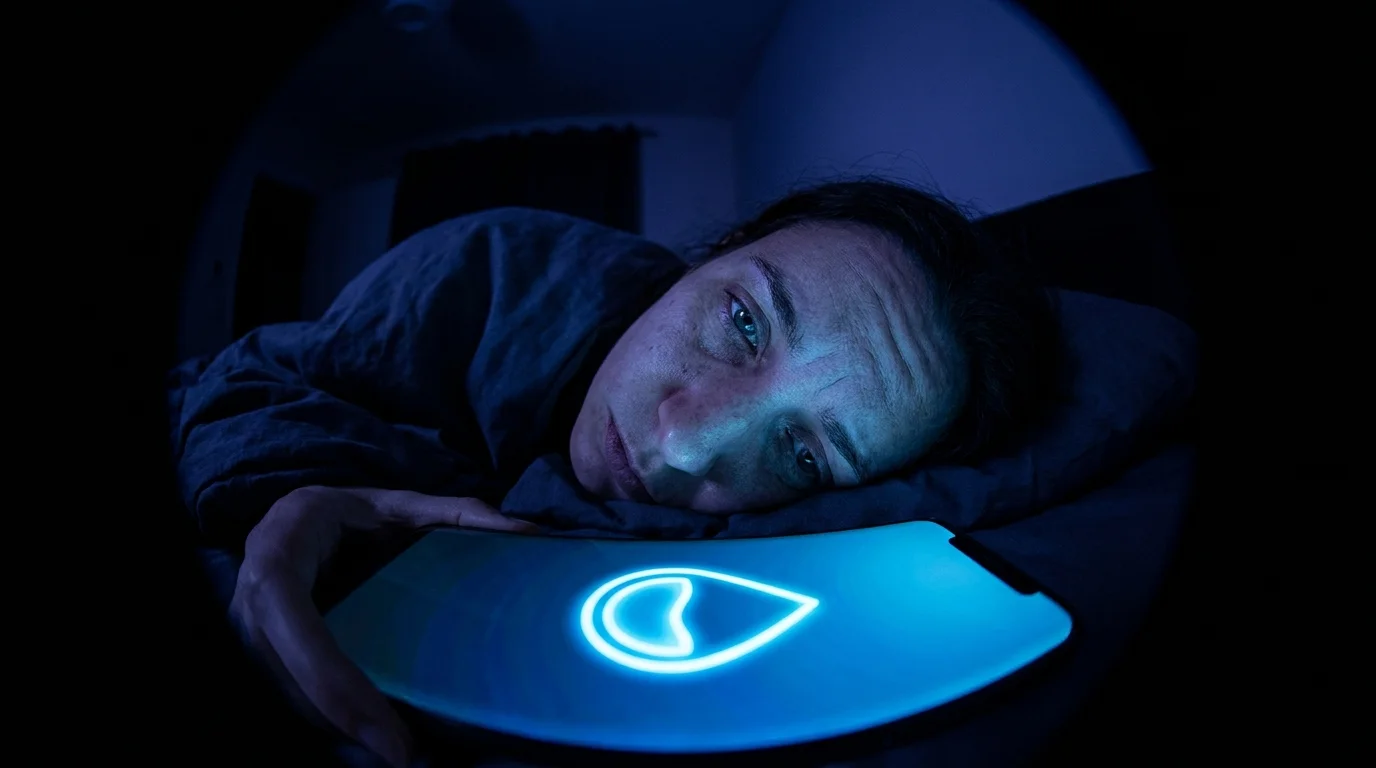
The studio is perfectly quiet, save for the rhythmic clicking of your keyboard and the low hum of the desktop fan. You are finally in the flow, that rare state where words and ideas assemble themselves without friction. Suddenly, the silence is broken by a gentle, high-pitched chime. A glowing smartphone screen displaying a half-filled blue water droplet icon illuminates your desk, demanding your immediate attention. It wants you to know that you are currently behind your daily consumption curve by exactly six ounces.
You reach over, swipe the screen, and tap the little plus sign to log your glass of filtered water. It takes less than five seconds, but the damage is done. The delicate, silent architecture of your concentration has collapsed, and your action shatters your cognitive momentum as you try to remember where your thought process was headed. You stare at the blinking cursor, feeling a subtle, familiar heaviness settle behind your eyes.
We have been conditioned to believe that quantifying every breath, step, and sip of water is the path to peak health. The wellness community promises that tracking apps are the key to vitality, turning biological needs into clean, gamified progress bars. Yet, by outsourcing our most basic animal survival mechanism to an algorithm, we have introduced a constant source of friction into our daily lives. We are paying for our physical hydration with the currency of our mental focus.
Every single notification that urges you to drink acts as a micro-tax on your focus. Your prefrontal cortex is drained by these tiny demands, leaving less energy for complex problem-solving, emotional regulation, and deep creative thinking. By trying to keep our cells perfectly plump, we are leaving our mental batteries completely depleted by mid-afternoon.
The Digital Leash on Human Instinct
To understand why this digital policing fails, we must look at how the brain manages attention. Your executive function is not an infinite resource; it behaves like a pressurized water tank that slowly empties throughout the day. Every time a push notification interrupts you, your brain must perform a cognitive task switch, costing you valuable minutes of orientation time before you can return to your primary task at hand.
When you rely on an app to tell you when to drink, you actively train your brain to ignore its internal cues. Over time, this digital intervention overrides the hypothalamus—the ancient brain region responsible for regulating thirst. Instead of trusting your biological signals, you begin to rely on a sensory-alert system that knows nothing about your actual micro-climate, sweat rate, or current metabolic rate.
The Cost of the Quantified Self
Dr. Alan Cole, a behavioral neurologist based in Boston, recently observed this phenomenon in a small study of knowledge workers. He followed individuals like Marcus, a 34-year-old financial analyst who struggled with chronic afternoon brain fog despite drinking up to a gallon of water daily. When Marcus uninstalled his hydration tracker and hid his phone during focus blocks, his self-reported mental fatigue dropped by nearly forty percent within a week. The constant mental monitoring of his water intake was actually the source of his exhaustion, not dehydration.
- Post-workout acai bowls completely erase your morning gym calorie burn
- Daily HIIT rowing routines secretly trap stubborn abdominal water weight
- Zero carb days force your metabolism into sudden fat storage
- Plant-based protein bars trigger massive afternoon sugar crashes
- Compression leggings worn all day actively stop your body from burning belly fat
This experiment highlighted a crucial design flaw in modern wellness applications. They assume that more data always leads to better health, ignoring the invisible cognitive load of constant micro-reporting.
Every time you log a glass of water, you are leaving a small trace of your awareness behind. This attention residue means that a portion of your mind remains anchored to the app even after you put your phone away, quietly waiting for the next digital nudge.
Dividing Your Focus: The Attention Profiles
The impact of this constant tracking varies depending on how you structure your workday. Different tasks require different levels of cognitive protection, and understanding your profile is the first step toward reclaiming your mental space.
For the Deep Work Specialist, who relies on long, uninterrupted stretches of time to write code, design systems, or draft strategy, hydration apps are a quiet disaster. Every alert is a spike in cognitive friction, interrupting the focus window and requiring up to twenty minutes to recover full cognitive depth.
For the Constant Communicator, who manages projects and coordinates teams, the situation is slightly different. While they are used to interruptions, the addition of biological tracking apps simply compounds their decision fatigue, making them feel increasingly frantic as they struggle to balance corporate demands with digital wellness goals.
For the Active Creator, who moves between physical and mental tasks, hydration tracking becomes a tedious chore. They often forget to log their water in real-time, leading to a guilt-inducing backlog of digital notifications at the end of the day, which further erodes your willpower reservoirs and turns a simple glass of water into a source of personal failure.
Reclaiming Your Internal Hydration Compass
Restoring your focus does not mean you must live in a state of physical neglect. It simply means returning to a low-tech, intuitive system that respects the limits of your executive brain function.
By removing the digital middleman, you can keep your body hydrated without paying a cognitive toll. By turning off the alerts, you are reclaiming your sensory awareness and letting your brain rest.
- Place a physical container within your field of vision, filled with cool water at the start of your workday.
- Take two slow sips every time you naturally stand up to stretch, use the restroom, or clear your desk.
- Perform a physical check by noticing the texture of your mouth or the clarity of your voice before reaching for a drink.
- Silence all wellness notifications on your devices, allowing your phone to remain entirely dark during deep-focus blocks.
To assist you in this transition, utilize this simple, non-digital setup to manage your daily hydration naturally and maintain your mental momentum.
Sovereignty in a Quantified World
There is a profound peace in realizing that your body already knows how to take care of itself. When you close the apps and silence the alerts, you reclaim a small piece of your cognitive sovereignty. You are no longer a machine that needs to be programmed, monitored, and optimized; you are a living organism with deep, built-in intelligence.
By stepping away from the constant tracking, you give your prefrontal cortex room to breathe. You will find that your focus stays sharp, your afternoons remain productive, and your relationship with your body becomes simple once again. True wellness is not found in a perfect digital score; it is found in the quiet power of intuition and the uninterrupted flow of your creative mind.
“The most sophisticated biohack is not an app on your phone; it is the quiet recognition of your own physical needs without digital permission.” — Dr. Alan Cole
| Key Point | Detail | Added Value for the Reader |
|---|---|---|
| Cognitive Switching Cost | Every notification forces your prefrontal cortex to shift focus, consuming precious mental energy. | Silencing apps preserves your daily executive battery for work that actually matters. |
| Biological Desensitization | Outsourcing your thirst to software weakens your brain’s natural sensitivity to physical cues. | Trusting your body rebuilds healthy, intuitive communication between your mind and your organs. |
| The Visual Cue Alternative | A large glass or bottle on your desk serves as a passive, non-intrusive reminder to drink. | Eliminates screen interruptions while naturally encouraging steady fluid intake. |
Frequently Asked Questions
Will I get dehydrated if I stop using my tracking app? No. Your body has evolved over millions of years with a highly sensitive built-in regulatory system that will alert you when you require fluids.
How can I make sure I drink enough water without digital reminders? Simply keep a filled glass or carafe nearby. The visual presence of water is a natural, non-interruptive cue that encourages sip-by-sip consumption.
Aren’t hydration apps helpful for establishing healthy new habits? They can be useful for the first three days to establish baseline awareness, but long-term reliance eventually causes mental fatigue and habit burnout.
What is the best way to monitor my hydration level naturally? Pay attention to the color of your urine—it should be a light straw color—and notice simple physical signs like dry lips or mild fatigue.
How long does it take to rebuild my natural thirst signals? Most people find that their internal biological cues fully return within a week of silencing their digital trackers.