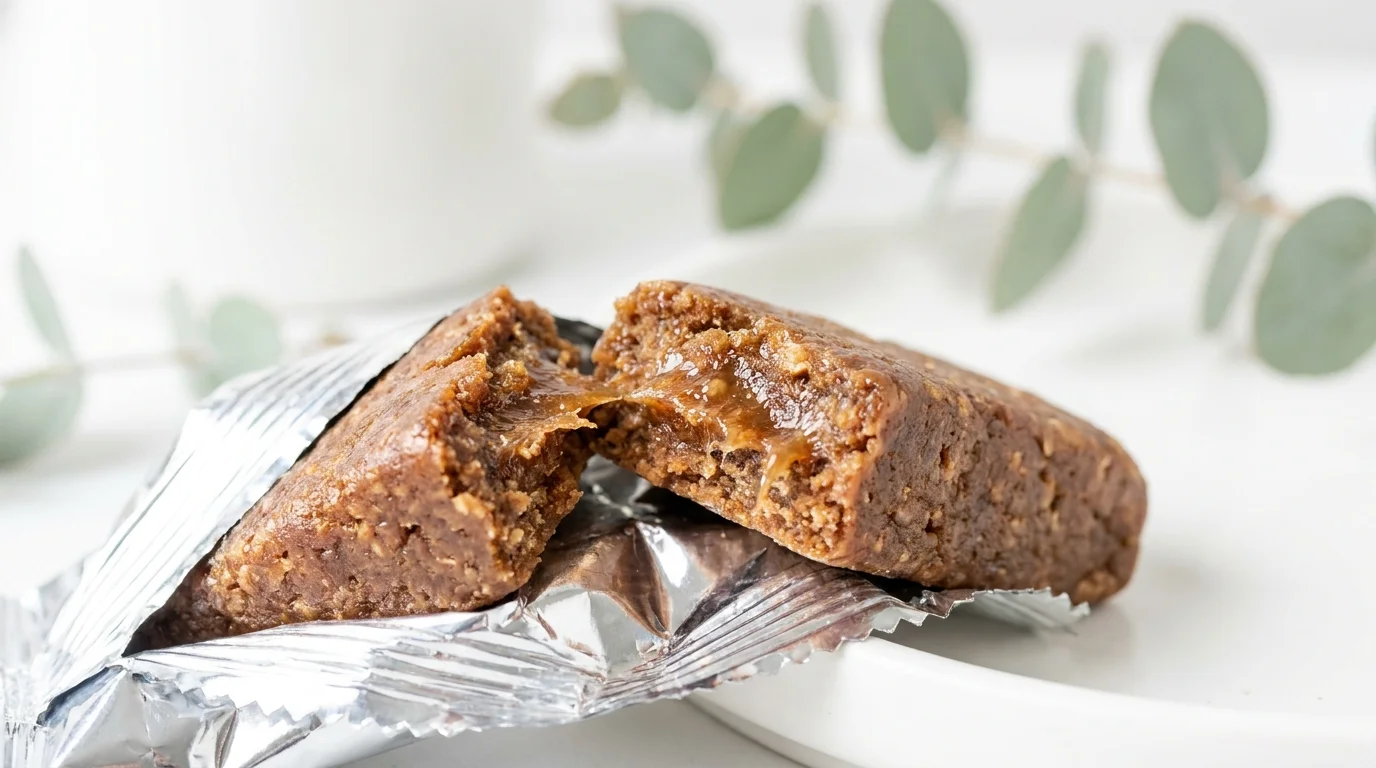
Tear back the corners of the modern foil packaging, and you are greeted by an unmistakable aesthetic. It is a sticky, dense brown rectangle of processed protein stuck to a shiny foil wrapper, smelling faintly of synthetic vanilla and heavy, concentrated cocoa. You pull it apart, watching the chewy mass stretch like industrial putty before you take a bite, believing you have made a conscious choice to bypass the vending machine’s candy selection. It is the ritual of the health-conscious consumer, executed millions of times a day across office breakrooms and gym parking lots.
Yet, as the dense block settles in your stomach, a familiar pattern begins to unfold. Within an hour, the initial burst of artificial sweetness gives way to a lingering, metallic aftertaste, followed rapidly by a subtle drop in focus and a heavy, foggy fatigue that clouds your thinking. Your hands reach for another cup of black coffee to offset the sudden slump, completely unaware that your body is navigating a massive glycemic roller coaster. The snack designed to fuel your physical recovery has instead initiated a metabolic traffic jam.
What you are experiencing is the silent crash of a high-glycemic assault, engineered by an industry that has mastered the art of semantic cover-ups. While the glossy front panel boasts of clean fuel and lean muscle recovery, the chemical reality inside the wrapper tells a different story. The modern fitness snack is not an alternative to confectionery; it is its direct descendant, wearing a clinical coat of armor to bypass your defense systems.
The Trojan Horse of the Modern Snack Aisle
To understand why your afternoon snack leaves you feeling exhausted, you must look at the physical architecture of the protein bar. A dry, chalky block of isolated whey or soy protein is naturally unpalatable; to transform it into something chewable, manufacturers require a heavy, viscous liquid binder. This structural glue must taste sweet enough to mask the bitter notes of raw protein, yet remain cheap enough to produce at scale. This sticky structural matrix is where the clever formulation of modern food science replaces simple ingredients with industrial substitutes.
Instead of traditional table sugar, which would immediately flag the product as unhealthy on nutritional labels, brands rely on alternative syrups that offer a loophole. By using complex starches that are technically classified as fibers or sugar alcohols, they can legally display low ‘net carb’ figures while delivering a high-glycemic load to your bloodstream. When these complex chains reach your gut, your enzymes break them down into pure glucose almost instantly, causing the same insulin response as a standard milk chocolate bar.
- Whole milk dairy actually protects your heart better than skim alternatives
- Baking soda foot soaks clear up stubborn calluses and skin fatigue
- Facial icing replaces morning coffee for instant brain fog relief
- Melatonin gummies face new pediatric guidelines after overdose spike
- Continuous glucose monitors expose hidden prediabetes in healthy adults
An Expert Perspective from the Field
Marcus Vance, a 38-year-old performance nutritionist based in Austin, Texas, spent years tracking the dietary habits of collegiate athletes who struggled with unexplained afternoon stamina loss. He began collecting wrappers from the post-workout snacks his clients consumed, analyzing the chemical binders under a microscope. Marcus discovered that the bars his athletes relied on for clean recovery were actually triggering massive glucose spikes that kept them locked in an endless cycle of sugar cravings, effectively treating their bodies to a candy bar after every training session.
Decoding the Sticky Binding Agents
The deceptive syrups used to bind these processed bars vary depending on who the product is marketed to. Recognizing these names on the ingredient list is your primary line of defense against unexpected energy crashes. The chemical glue holding these bars together is often the very thing robbing you of your daily focus.
For the Desk Athlete
If you spend the majority of your day sitting at a desk, your muscles are not in a state to immediately burn off sudden surges of blood sugar. Be wary of bars containing ‘isomalto-oligosaccharides’ (IMO) or ‘soluble corn fiber’ as their primary ingredients. Though labeled as dietary fibers, these syrups are partially absorbed as pure glucose, triggering a significant insulin release while you remain completely sedentary.
For the Low-Carb Enthusiast
Those following a low-carbohydrate lifestyle often reach for bars containing sugar alcohols to maintain their metabolic states. However, ingredients like maltitol possess a glycemic index that is nearly half that of sucrose, meaning they still cause a metabolic ripple. Furthermore, these ingredients ferment rapidly in the lower digestive tract, leading to painful bloating and physical discomfort that interrupts your evening routine.
The Three-Step Label Audit
Reclaiming your afternoon focus does not mean you have to abandon convenience entirely, but it does require a mindful approach to analyzing the food you buy. By slowing down and evaluating the physical properties of your snacks, you can easily identify the candy bars hiding in plain sight.
Next time you find yourself browsing the fitness aisle, practice this simple evaluation ritual before purchasing: first, flip the package over to bypass the bright marketing text; second, look for liquid sweeteners in the first five ingredients; and third, gently bend the bar through the wrapper to assess its density. By analyzing the physical characteristics of the snack, you can immediately tell how much syrup was used to hold it together.
- Check the Top Five: If you spot brown rice syrup, tapioca syrup, or maltitol near the top of the list, the bar is structurally reliant on sugar.
- Calculate the Ratio: Look for a minimum of 3 grams of protein for every 1 gram of total sugar to ensure a balanced metabolic response.
- Perform the Bend Test: A high-quality, whole-food bar should feel slightly dry and crumbly, rather than bending like a piece of flexible synthetic taffy.
Your tactical toolkit for choosing a portable snack should focus on simplicity over chemistry. Aim for a maximum sugar alcohol limit of under 4 grams per serving, choose products that utilize raw nut butters as binders instead of processed syrups, and prioritize whole-food proteins like egg whites or raw seeds that do not require industrial binders to remain stable at room temperature.
Beyond the Label: Reclaiming Real Vitality
Stepping away from highly engineered wellness snacks allows you to break free from the constant cycle of mid-day energy spikes and crashes. When you replace a sticky, foil-wrapped protein bar with a handful of raw almonds or a simple hard-boiled egg, your body responds with steady, unfluctuating focus that lasts for hours. True physical stamina is built on clean, unvarnished ingredients that do not require a marketing department or a food laboratory to explain. By choosing simplicity over convenience, you restore your natural metabolic rhythm and regain command of your daily energy.
“When a health food requires a laboratory to remain solid at room temperature, it has ceased to be food and has become a delivery system for metabolic stress.” — Marcus Vance, Athletic Trainer
| Key Point | Detail | Added Value for the Reader |
|---|---|---|
| Deceptive Binding Syrups | IMO, maltitol, and brown rice syrup are used as structural glues in protein snacks. | Helps you spot hidden sugars that bypass standard nutritional callouts. |
| The Glycemic Impact | Alternative syrups trigger insulin spikes similar to high-fructose corn syrup. | Prevents the sudden afternoon energy crashes that ruin daily productivity. |
| Whole-Food Alternatives | Choosing minimally processed snacks like raw nuts or hard-boiled eggs. | Restores natural metabolic balance without relying on engineered food. |
Is ‘soluble corn fiber’ actually a healthy prebiotic?
While marketed as a beneficial digestive aid, soluble corn fiber is often highly processed and can cause significant blood glucose spikes in sensitive individuals, acting more like a carbohydrate than a true zero-calorie fiber.
Why do protein bars make me feel so bloated?
The intense bloating is usually caused by sugar alcohols like maltitol or sorbitol, which ferment in your large intestine and draw excess water into your digestive tract during processing.
Are ‘net carbs’ a reliable metric for weight management?
Not entirely. The formula for net carbs assumes your body absorbs zero energy from fiber and sugar alcohols, which is metabolically inaccurate for many common binding syrups.
How do I find a truly clean protein source on the go?
Look for short ingredient lists containing recognizable, whole foods like grass-fed beef jerky, raw pumpkin seeds, or minimally processed egg-white bars without liquid syrup binders.
Can these bars cause sugar cravings later in the day?
Yes. The rapid insulin spike and subsequent crash triggered by hidden syrups leave your brain starved for quick energy, driving intense cravings for sweets in the late afternoon.