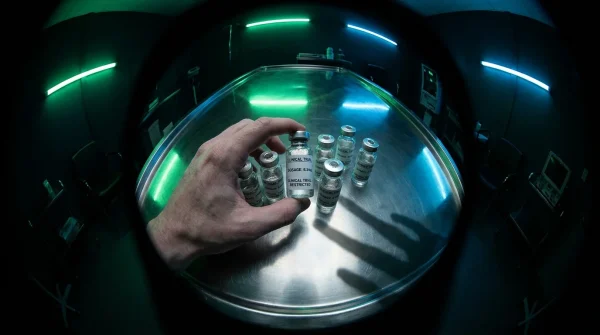
A quiet, sterile room in a metropolitan clinic carries the faint scent of isopropyl alcohol and cold metal. On the side of a laminated cabinet, a printed hospital protocol chart hangs quietly, but a new addition catches your eye: a bright yellow warning sticker affixed to the header. It reads, in stark black print, "Check VZV status for atypical neurological presentation." Outside, the city moves at its usual frantic pace, completely unaware of the quiet shift happening within these white walls.
You likely remember chickenpox as a distant childhood memory of itchy pink spots, soothing oatmeal baths, and a week away from your school desk. We have long treated this common virus as a one-time childhood rite of passage, or at worst, a painful skin condition called shingles that might appear in our later years. But inside the adult nervous system, this dormant visitor can behave in far more silent, dangerous ways, sometimes waking up to strike directly at the brain. Medical centers across the country are quietly placing those yellow stickers on their charts because **a bright yellow warning sticker** is now dictating how clinicians evaluate adult head pain.
The hum of the fluorescent lights above seems to amplify the gravity of this clinical pivot. When a patient arrives with a severe, persistent headache, the old diagnostic checklists are no longer sufficient. Doctors are realizing that waiting for the classic blistering rash to appear can be a critical error, as the virus can inflame the brain without ever showing its face on the skin.
Because of this, healthcare providers are changing their approach from passive observation to active investigation. **Scanning for a quiet invader** has become the new baseline of care, transforming how we assess risks we thought we had left behind in childhood.
Rethinking the Dormant Sleeper
To understand this shift, you have to look at the virus as a sleeper agent hiding quietly in the root system of your nerves. For decades, it sits in the sensory ganglia, kept in check by your immune system’s constant vigilance. We used to believe that if this pathogen woke up, it would travel down the nerve pathways toward the skin, resulting in the localized blisters of shingles. But the nervous system is a two-way street, and the virus can just as easily travel inward, moving directly toward the brain lining.
This realization changes the entire metaphor of immune defense. Your immunity is not a static shield that stays strong forever; it is a dynamic border patrol that can become distracted or fatigued. When we view the virus not as a historical footnote but as an active, hidden occupant, we understand why **protecting vital brain tissue** requires us to look past the surface of the skin.
- Rabies bat encounters spark massive demand for immediate exposure protocols
- Parasite outbreak fears drive sudden panic over tap water safety
- Amber lighting in the hallway stops middle of the night sleep disruptions
- Collagen powder does nothing for aging skin without this daily vitamin
- Standing desks ruin your lower back when set at the wrong height
The Warning from the Clinic Floor
Dr. Elena Rostova, a 47-year-old clinical neurologist practicing in Chicago, was among the first in her district to notice the pattern. She repeatedly saw adults entering the emergency department complaining of an unbearable, deep headache that did not respond to standard pain therapies, yet they possessed perfectly clear skin. Rather than dismissing these cases as atypical migraines, Dr. Rostova pushed for early spinal fluid checks, discovering that the common chickenpox virus was actively causing localized brain inflammation. Her clinical persistence helped spark a regional rewrite of adult intake procedures, proving that the old textbook symptoms are no longer the gold standard for patient safety.
Who Is Most at Risk?
The High-Stress Professional
Chronic stress acts like a key in the virus’s ignition. When daily pressure spikes, your body produces high levels of cortisol, which slowly dampens your cellular immune response. If your immune guard is lowered even temporarily, the dormant pathogen can seize the opportunity to migrate. For active, high-pressure adults, a sudden, burning pain behind the eyes should never be written off as mere screen fatigue or a tension headache.
The Over-50 Guard
As we cross into our fifties, our natural T-cell immunity undergoes a gradual, quiet decline. **This natural immunosenescence creates a window** where dormant pathogens can re-emerge without triggering the immediate, aggressive immune response of our younger years. In this age bracket, any sudden onset of cognitive confusion, minor balance changes, or unusual headaches demands immediate, targeted clinical screening rather than a wait-and-see approach.
The New Protocol: What to Ask Your Doctor
Taking control of your neurological health means knowing how to advocate for yourself when something feels wrong. If you or a loved one experience an unusual, persistent head pain that feels different from a typical headache, you must help guide the conversation. **Guiding your medical team** toward the correct diagnostics can save precious time and protect cognitive function.
Use these specific steps to navigate your next clinical visit:
- Request a Polymerase Chain Reaction (PCR) test of your cerebrospinal fluid if a severe headache is accompanied by subtle light sensitivity, even if no rash is present.
- Ask for a serum antibody check to evaluate your baseline Varicella IgG and IgM levels to see if your immune system is actively fighting an internal flare-up.
- Log your pain patterns carefully, noting if the discomfort is strictly unilateral (one-sided), which strongly points to a specific nerve pathway.
The Tactical Toolkit:
- The Temperature Signal: Seek an immediate medical assessment if your headache is paired with a low-grade fever exceeding 100.4°F.
- The Treatment Window: Antiviral therapies are most effective when started within 72 hours of the very first neurological symptoms.
- The Historical Record: Keep a digital copy of your childhood chickenpox history or immunization records readily available in your health portal.
A New Respect for Our Biological History
We often treat our medical history as a collection of closed chapters, assuming the minor illnesses of our youth are gone forever. But our bodies carry the structural memories of every battle we have ever fought, keeping silent cellular hitchhikers across decades of life. Recognizing this connection is not about living in state of constant worry; it is about cultivating a deep respect for the complex, delicate architecture of your body.
By understanding how our childhood health intersects with our adult lives, we can make smarter, faster decisions when our health falters. Paying attention to these subtle biological warnings is the ultimate act of self-preservation, ensuring that **protecting your nervous system** remains a lifetime priority.
"The nervous system does not forget our childhood battles; it simply waits for us to neglect our present defenses." — Dr. Elena Rostova, Clinical Neurologist
| Key Point | Detail | Added Value for the Reader |
|---|---|---|
| Old Protocol | Focused almost exclusively on skin rashes and classic shingles pain. | Explains why atypical brain inflammation was frequently misdiagnosed in the past. |
| New Protocol | Screens for unexplained, severe headaches and minor cognitive shifts. | Helps you identify early warning signs before severe complications develop. |
| Action Plan | Initiates targeted antiviral therapy within the critical 72-hour window. | Dramatically reduces the risk of long-term neurological or cognitive damage. |
Frequently Asked Questions
Can you develop Varicella brain inflammation without ever getting shingles?
Yes, the virus can reactivate directly inside the central nervous system, bypassing the skin pathways and causing inflammation without any physical blisters.What are the primary symptoms of Varicella zoster brain inflammation?
The key warning signs include a sudden, intense headache (often on one side), neck stiffness, a mild fever, confusion, and unusual sensitivity to bright light.How do medical teams diagnose this condition under the updated standards?
Doctors utilize a combination of spinal fluid PCR tests, detailed neurological evaluations, and contrast-enhanced brain imaging to confirm the viral presence.Does the modern shingles vaccine offer protection against this complication?
Yes, the current recombinant shingles vaccine helps strengthen T-cell defense, significantly reducing the likelihood of the virus waking up in the nervous system.Why are health entities updating these guidelines right now?
An increase in atypical adult admissions and better diagnostic tracking have shown that silent viral reactivation is far more common than previously believed.