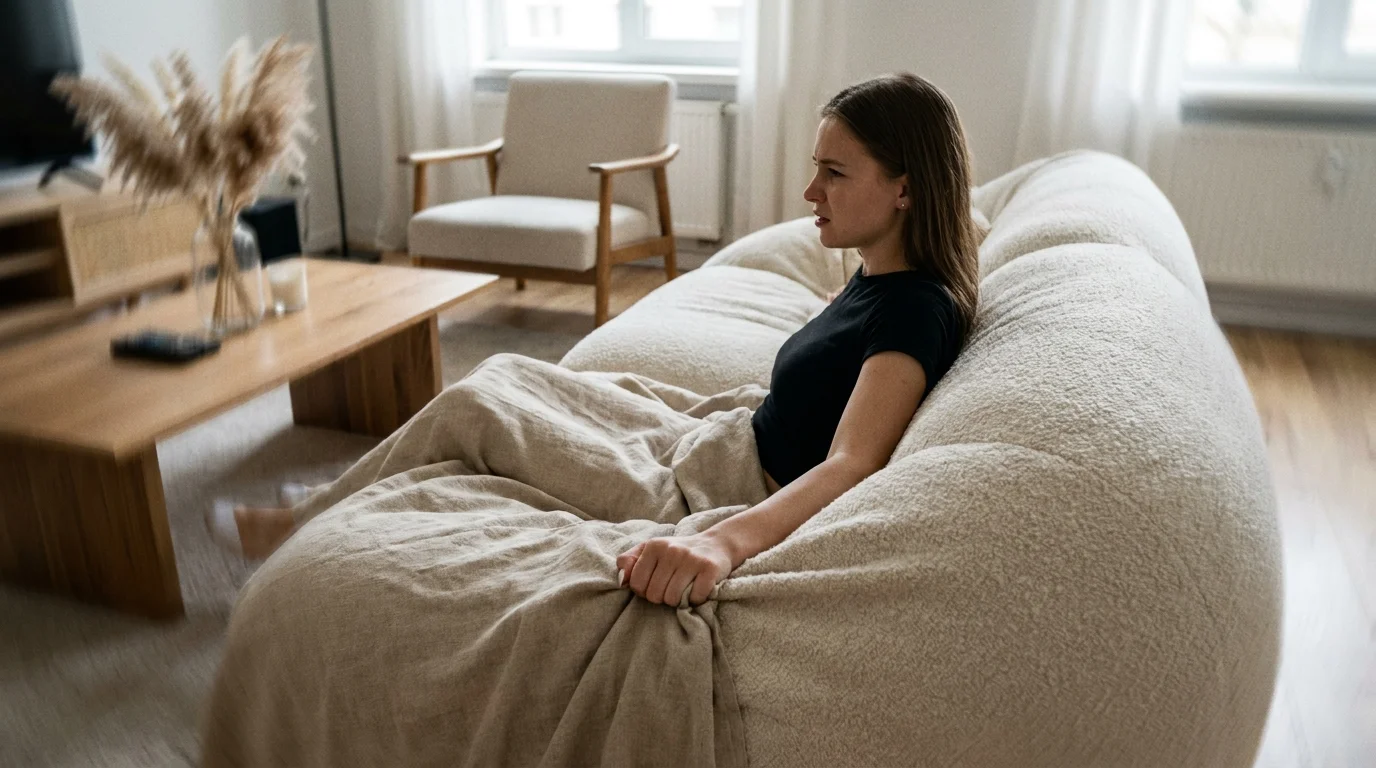
The subtle aroma of fresh popcorn mingles with the cool, conditioned air of your home theater. A high-end projector casts a soft, cinematic blue glow across the room, illuminating a space designed for ultimate relaxation. You take a step forward and let your body sink into the massive, inviting expanse of your premium Lovesac. It feels like floating on a cloud of high-density shredded foam, a welcoming escape from the hard surfaces of the working world.
Yet, as the minutes stretch into hours, a quiet discomfort begins to radiate from your lower back. What feels like supreme physical relaxation is actually a silent biomechanical crisis is unfolding within your musculoskeletal frame. The deep, enveloping softness of the foam is not supporting you; it is slowly trapping your bones in a posture they were never designed to hold.
Your body naturally seeks a solid base to distribute weight. When that base is composed of thousands of tiny, shifting foam pieces, your skeleton is left to fend for itself in a gravity well that slowly compromises your posture. This lack of resistance forces your muscles to remain in a state of micro-tension, quietly working to prevent you from sliding entirely into a physical slump.
The Shifting Sand Metaphor: How Softness Starves Your Spine
To understand what happens to your lower back inside a giant bean bag, imagine trying to construct a brick tower on a foundations of shifting quicksand. When you sit on a standard ergonomic chair, your ischial tuberosities—commonly known as your sit bones—make contact with a firm surface. This stable base allows your pelvis to tilt slightly forward, preserving the natural inward curve of your lumbar spine.
When you plunge into a premium foam sac, this critical foundation vanishes entirely. As your hips descend into the low, unsupportive foam pit, the material completely swallows your natural pelvic tilt. Without resistance, your lowest lumbar vertebra—the L5—slips into a forced posterior tilt, locking your lower lumbar spine into a rigid frozen curve that places extreme shear stress on the delicate lumbosacral joint.
A Hidden Clinical Reality in the Home Theater
Dr. Evelyn Vance, a 52-year-old chiropractic orthopedist practicing in Portland, Oregon, frequently treats creative professionals who spend their evenings in high-end home theaters. She recalls a specific patient named Marcus, a 46-year-old software architect who installed three massive Lovesac modular chairs in his private media room. Within three months of hosting weekly film series, Marcus began experiencing a burning, localized ache at the base of his spine that quickly escalated into sharp, traveling sciatic pain down his left leg. Dr. Vance discovered that Marcus’s long lounge sessions were leaving his lower lumbar discs starved of nutrient-rich fluids because the continuous, unbending pelvic slump prevented the natural spinal movement required to pump waste products out of the cartilage joints.
- Keurig dark roasts block natural cortisol leaving adults over forty with throbbing afternoon headaches
- Notion habit trackers demand extreme executive function sparking heavy mental static by noon
- Sweetgreen harvest bowls completely reverse your morning spin class creating dense sugary bloat
- ProLon fasting kits force your nervous system into hoarding soft lower belly fat
- Barebells protein bars trigger massive afternoon energy crashes behind a thick synthetic syrup
Adapting Your Lounge Habits for Spinal Health
The physical toll of unsupportive seating varies depending on how you use your space. By identifying your lounging style, you can make targeted adjustments to protect your alignment.
The Home Cinema Buff
If you spend consecutive hours watching movies or gaming, your spine remains in static flexion for dangerous lengths of time. The lack of movement prevents blood flow to the surrounding tissues, causing profound, structural stiffness that can last for days. Your back muscles must overcompensate constantly just to keep your head upright while your lower body sinks deep into the foam pit.
The Casual Reader
For those who use these seats for shorter, active periods of reading or conversation, the risk is slightly lower but still present. Without a firm backrest, your neck is often forced forward to keep your eyes level with your book or tablet. This creates a double-bend in your spine, placing excessive strain on both your neck and your lower back as your core struggles to stabilize your chest.
Practical Adjustments for Pain-Free Lounging
You do not need to banish your premium furniture to the garage to save your spine. Instead, you can introduce simple, mindful modifications that restore structural integrity to your seating position. By creating a pocket of support within the shifting foam, you can enjoy the cozy feel of your lounge setup without sacrificing your natural pelvic tilt. Before you sit down, focus on wedging a firm bolster underneath your pelvis to prevent it from slipping into the deepest part of the foam pit, ensuring your lower spine remains supported.
Use these targeted adjustments to modify your sitting experience:
- Insert a Lumbar Support Roll: Place a dense, cylindrical cushion or a tightly rolled bath towel directly behind your lower back before you sink in.
- Maintain a Higher Knee Position: Ensure your hips do not sit significantly lower than your knees, which instantly triggers pelvic tilt.
- Limit Sessions to Forty-Five Minutes: Rise and stretch briefly to allow your spinal discs to rehydrate and recover.
To help you implement these adjustments seamlessly, assemble these basic items for your lounge space:
- A firm, high-density foam half-roll (4-inch diameter).
- A small, weighted wedge pillow to place under your thighs.
- An adjustable footstool to keep your legs at a comfortable ninety-degree angle.
Restoring Your Body’s Natural Balance
True physical comfort is not the absence of all resistance; it is the presence of perfect balance. When we surrender our bodies completely to ultra-plush materials, we abandon the natural structures that keep us moving freely. By introducing a small amount of firm support into your leisure spaces, you allow your muscles and joints to rest without collapsing into a state of structural strain.
Caring for your spine is a quiet act of daily preservation. When you step out of your home theater without that familiar, dull ache in your lower back, you realize that true luxury is the freedom to move through your world with ease and vitality.
The human spine thrives on a delicate balance of movement and firm stability; when we submerge it in unyielding softness, we trade long-term structural health for temporary comfort.
| Key Point | Detail | Added Value for the Reader |
|---|---|---|
| Pelvic Alignment | Shredded foam forces the pelvis into a posterior tilt, flattening the lumbar curve. | Keeps your lower back in its natural, pain-free posture during long movies. |
| Disc Compression | Static flexion starves spinal discs of healthy fluid exchange. | Prevents the onset of chronic morning stiffness and premature disc wear. |
| Muscle Fatigue | Core muscles overwork to stabilize your head and neck in deep seating. | Reduces overall tension in your shoulders and upper back after relaxing. |
Frequently Asked Questions
Can I make my existing giant bean bag safer for my back? Yes, placing a firm wedge pillow inside the cover or directly beneath your hips can prevent your pelvis from tilting backward.
How long is it safe to sit in a Lovesac without taking a break? It is best to stand up, stretch, and walk around for at least two minutes after every forty-five minutes of sitting.
Are these soft seats worse for older adults than younger people? Yes, as we age, our spinal discs naturally lose moisture, making them more vulnerable to the strain of static flexion.
Does using a footstool help improve my spinal posture in a bean bag? Yes, raising your feet slightly on a firm footstool can help stabilize your pelvis, provided your hips do not sink too deep.
Should I completely avoid buying modular plush seating? Not necessarily, but you should treat them as short-term leisure spots rather than primary seating for daily work or long movie sessions.