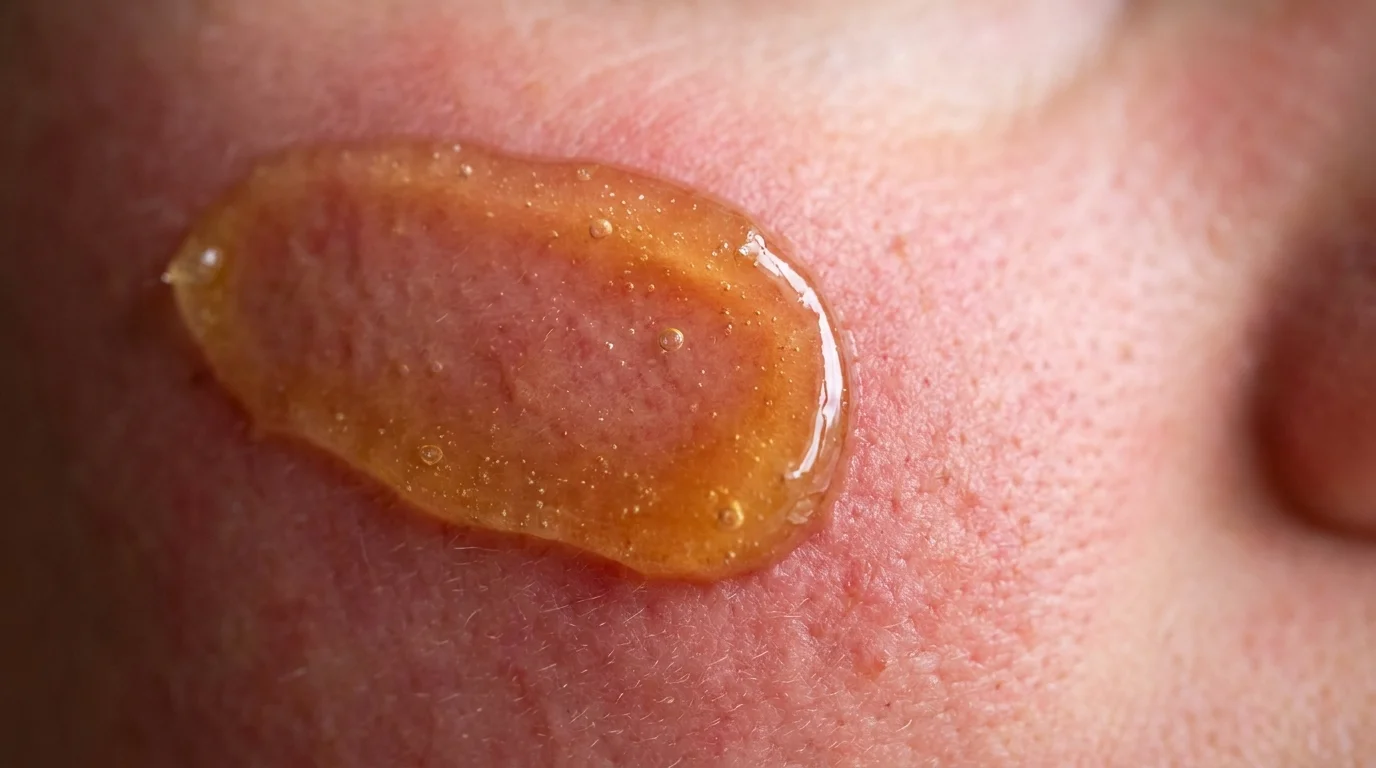
Outside, the dry January wind feels like fine sandpaper on your cheeks. Indoors, the dry heat of the radiator hums, stripping the last defenses from your face before you even finish your morning coffee. You look in the bathroom mirror and face that familiar, angry crimson flush spreading across your nose and cheekbones. It is a tight, stinging sensation that makes even your gentlest daily cleansers feel like battery acid.
You might instinctively reach for a heavy, expensive cream, hoping its clinical white formula will cool the fire. Instead, it often sits like wet plaster, trapping the heat underneath while its synthetic preservatives make the sting even worse. There is a quieter, older way to soothe this seasonal distress, one that does not rely on chemical emulsifiers or marketing hype.
Picture a different texture altogether: a thick, golden, sticky paste smeared across a red cheek. It smells of damp forest floors and wild New Zealand tea tree blossoms. It does not try to seal your skin behind a plastic wall of heavy silicone. Instead, it sinks in, softening the tight edges of chapped skin.
This raw nectar breathes with you. While luxury skincare brands try to mimic cellular repair in sterile labs, the simple contents of a dark glass jar from your pantry can quiet the deepest inflammatory signals without a single synthetic additive, restoring balance to your skin barrier naturally.
The Osmotic Draw: Why Your Skin Barrier Prefers the Hive to the Lab
When your skin barrier is damaged by the freezing winter air, it behaves like a dry, brittle sponge. Slathering it with heavy mineral oils is like wrapping that dry sponge in plastic wrap; it traps the stale air underneath without actually fixing the structure. Manuka honey works through a completely different biological mechanism known as osmotic draw. Because of its low water content and high natural sugar density, it physically draws excess, stagnant fluid and bacterial swelling out of irritated pores, much like a gentle tide pulling debris away from the shore.
At the same exact time, this golden fluid acts as a natural humectant, pulling moisture out of the air and locking it into the dry upper layers of your epidermis. Unlike regular table honey, true raw Manuka contains exceptionally high levels of methylglyoxal (MGO). This organic compound serves as a mild, non-drying defensive agent that cleanses the skin surface of micro-bacteria. It calms the underlying redness without stripping away the beneficial lipid coat your skin needs to survive the winter months.
- Cold water splashing on your wrists wakes up your brain faster than coffee
- Grocery delivery apps quietly ruin your natural balance and everyday core muscle tone
- Matte setting sprays make morning fine lines look instantly deeper and more pronounced
- Crossing your legs at the desk secretly drives chronic lower back stiffness
- Green smoothie powders at breakfast leave you completely exhausted by the afternoon
This natural process allows the skin to rest. Instead of fighting off synthetic fragrances and harsh chemical carriers, your skin cells use this quiet period to rebuild their cellular walls, resulting in a calm, clear complexion that feels soft rather than suffocated.
A Lesson from the Treatment Room
Sylvia Thorne, a 45-year-old clinical esthetician who spent two decades treating chronic winter dermatitis in Chicago, discovered this pantry solution out of sheer desperation. After watching dozens of clients develop rebound redness from heavy steroid creams and complex clinical serums, she began incorporating raw, high-MGO Manuka honey into her professional facial treatments. She discovered that applying the honey directly to damp, inflamed skin for twenty minutes calmed stubborn redness faster than any synthetic calming complex she had used in her career, proving that simple biological synergy often outperforms complex laboratory chemistry.
Customizing the Golden Mask for Your Skin’s Demands
The Windburned Commuter
If your daily walk through cold city streets leaves your cheeks feeling raw, tight, and hot to the touch, your skin barrier is screaming for lipid replenishment. For this variation, mix a tablespoon of raw Manuka honey with three drops of organic jojoba oil. The jojoba oil mimics your skin’s natural sebum, helping the honey glide smoothly over highly sensitive areas and creating a protective, nourishing layer that shields against dry air.
The Flaky, Acne-Prone Face
Winter breakouts are unique because they are often caused by dead, dry skin flakes blocking your pores rather than excess oil. To address this, combine your Manuka honey with a teaspoon of finely ground, colloidal oatmeal. The oats act as a ultra-gentle, non-abrasive scrub that melts away dry flakes, while the honey’s natural enzymes deep-clean the pores to prevent winter blemishes from forming.
The Sensitive Minimalist
When your skin is so reactive that even basic water makes it turn red, simplicity is your safest path. For this application, use the Manuka honey completely raw and undiluted. Warm a tablespoon of the honey between your clean, damp palms until it thins out, then gently pat it directly onto your clean skin, allowing the pure, unblended enzymes to do their work without any potential irritants.
The Low-Heat Ritual: Steps for Cellular Recovery
To get the most out of this natural remedy, you must apply it with care and intention. Applying cold, thick honey to irritated skin can cause pulling and stretching, which only increases inflammation. Follow this gentle method to ensure a soothing, therapeutic application.
- Warm your face gently by holding a clean, warm, damp washcloth over your skin for thirty seconds to open up pores and soften dry flakes.
- Warm the honey by placing a small glass bowl containing one tablespoon of Manuka into a larger bowl of warm water for two minutes until it reaches a smooth, spreadable consistency.
- Apply with clean fingertips, using light patting motions rather than rubbing, focusing entirely on the reddened areas of your cheeks, nose, and chin.
- Rest quietly for twenty minutes, allowing the osmotic draw of the honey to soothe the skin without drying out or tightening.
- Rinse with tepid water, using your hands to splash the skin gently until the honey dissolves completely, then pat dry with a clean towel.
For your reference, here is your quick-reference preparation guide:
| Tool / Metric | Setting / Value | Purpose for Your Skin |
|---|---|---|
| MGO Rating | MGO 400+ or higher | Ensures high enzyme activity to quickly soothe deep redness |
| Water Temperature | 98°F to 100°F (Tepid) | Dissolves the mask gently without stripping away natural oils |
| Application Time | 20 to 30 Minutes | Allows the honey to draw out impurities and hydrate dry layers |
| Frequency | 2 to 3 Times per Week | Maintains a strong, calm skin barrier throughout cold weather |
Reclaiming Your Skin from the Beauty Complex
We have been trained to believe that the solution to every skin issue comes in a beautifully designed plastic bottle with a high price tag. This belief keeps us in a constant cycle of buying, trying, and reacting to complex formulas that often do more harm than good to our skin barriers. Returning to a single, raw, natural ingredient like Manuka honey is more than just a frugal skincare hack; it is a gentle reclamation of your own body’s natural healing abilities.
When you step away from the crowded beauty aisles and trust the simple, time-tested intelligence of the hive, you give your skin the space it needs to balance itself. The quiet, cool relief that follows a honey mask is proof that sometimes, the most effective path to healthy skin is not through complex chemistry, but through the simple, golden jars waiting in your kitchen cupboard.
“Nature does not rush its healing, yet nothing is left unfinished; raw honey remains the most sophisticated skin balancer we have.” – Sylvia Thorne, Esthetician
Frequently Asked Questions
Can I use regular supermarket honey instead of Manuka?
While regular raw honey has mild hydrating properties, it lacks the high levels of methylglyoxal (MGO) found in Manuka. It is this specific compound that gives Manuka its unique ability to quickly soothe deep inflammation and clear up red skin.Will putting honey on my face cause breakouts?
No. Manuka honey is naturally antibacterial and anti-inflammatory. It helps clear up winter breakouts by gently removing dead skin cells and clearing away bad bacteria without stripping your skin’s natural moisture.How do I wash the sticky mask off without rubbing my skin?
Simply splash your face with lukewarm water. The sugar in the honey dissolves easily in water, allowing it to rinse away cleanly without any harsh scrubbing or rubbing.Is it safe to use this mask every single day?
Yes, raw Manuka honey is incredibly gentle. However, using it two to three times a week is usually enough to keep your skin calm, hydrated, and free of winter redness.How long does it take to see a reduction in redness?
Most people notice a visible reduction in redness and skin tightness immediately after rinsing off their very first mask, with lasting improvements appearing after two weeks of regular use.