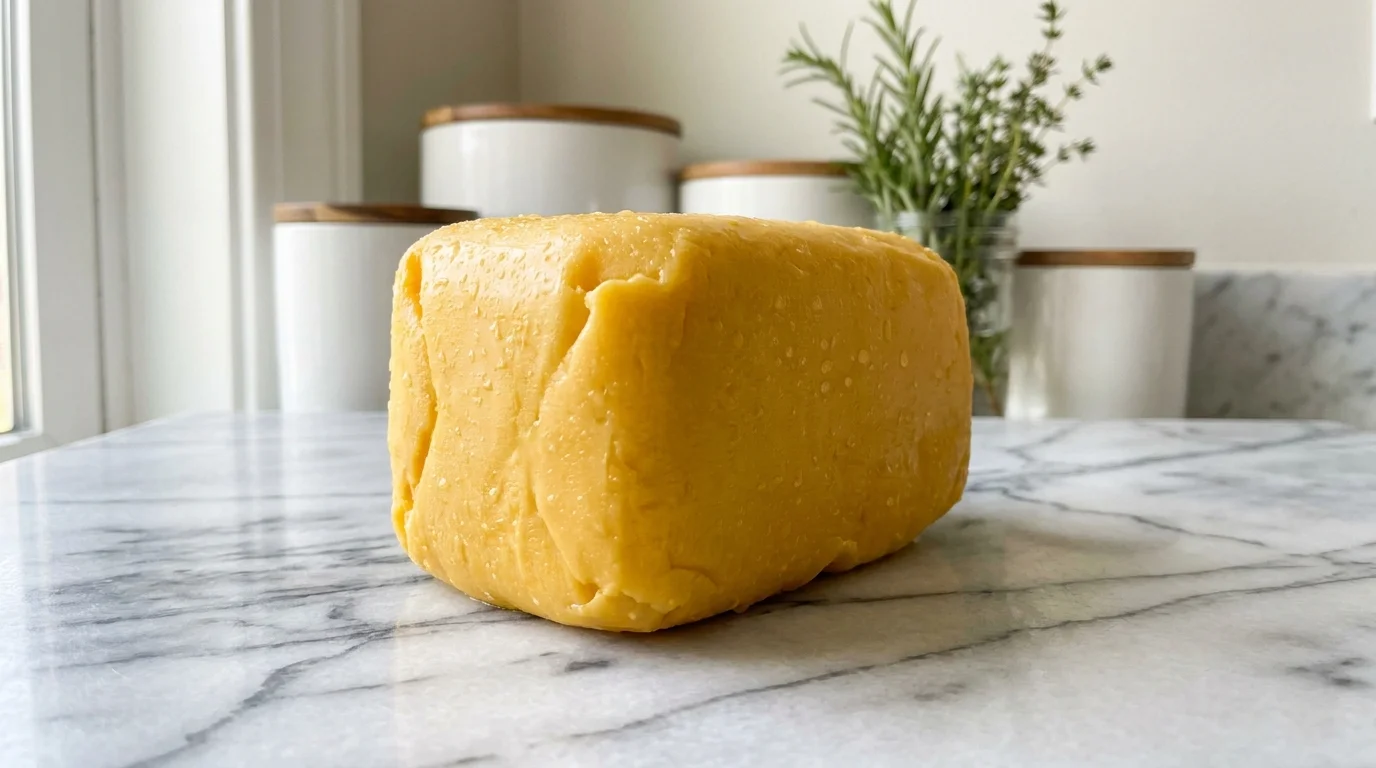
A heavy slab of cold marble rests on the kitchen counter, catching the soft, pale light of early morning. Resting upon it is a solid block of rich yellow homemade butter, sweating tiny, clear beads of moisture. The air carries the faint, comforting scent of cultured cream and warm sourdough. For decades, the standard morning ritual involved the sharp, synthetic pop of plastic bottles of canola oil, a sterile and clinical approach to the first meal of the day. This silent shift back to the tactile, slow-churned past is quiet, beautiful, and deeply deliberate.
You might have found yourself watching a quiet, soft-spoken woman in a silk robe calmly kneading dough or skimming cream in a hyper-aesthetic kitchen. Nara Smith’s viral videos have captured the attention of millions, turning the laborious act of scratch cooking into a mesmerizing, daily performance. It is a striking contrast to the fast-paced, supplement-heavy wellness trends that have dominated your social feeds for years, suggesting that perhaps we went too far in our quest for modern convenience.
This sudden pivot in kitchen habits represents a quiet rebellion against the sterile wellness culture that defined the last twenty years. The collective craving for raw, unprocessed ingredients is not merely about aesthetic nostalgia; it is a biological longing for foods that our ancestors would recognize. The processed, deodorized vegetable oils that once crowded your pantry are losing their grip on the health community, replaced by the satisfying sizzle of real fats.
When we watch these videos, we are witnessing a return to culinary practices that feel heavy, real, and satisfying. It is the rejection of highly processed yellow liquid from plastic jugs in favor of fats that require care, time, and respect to produce.
The Alchemy of Ancestral Fats
To understand this shift, you have to look at how we view the kitchen. Industrial seed oils are like synthetic fuel for a delicate vintage engine; they might keep the parts moving under pressure, but they leave a sticky, varnished residue behind. Natural fats, conversely, act like organic beeswax on raw wood—they nourish, protect, and integrate seamlessly into the cellular matrix of the body. The human body does not quite know how to process heavily deodorized, chemically extracted oils without experiencing low-grade systemic friction.
For years, grocery store aisles guided us toward highly refined options, claiming they were the only heart-healthy choice. But our biology never quite accepted the cold math of industrial chemistry over the warm, slow reality of rendered tallow, rich lard, and fresh butter.
- Flu shots create mild temporary immune fatigue that mimics viral symptoms
- Wool socks worn to bed rapidly lower your internal body temperature
- Biotin supplements actively trigger cystic acne breakouts without improving hair thickness
- Car seat recliners tilted backwards slowly compress your lower lumbar discs
- Cold-pressed green juices flood your liver with concentrated fruit sugars instantly
The Clinical Validation of the Slow Kitchen
Dr. Marcus Vance, a forty-eight-year-old lipid biochemist based in Boston, spent over two decades studying how dietary fats affect cellular membrane stability. He observed that when his patients quietly abandoned highly processed seed oils and returned to traditional, pasture-raised animal fats, their systemic inflammatory markers began to stabilize. Vance explains that ancestral fats are structurally robust, possessing a molecular density that resists the damaging oxidation caused by high-heat cooking—an stability that fragile, multi-bonded vegetable oils simply cannot maintain.
Finding Your Place in the Kitchen Revival
Not everyone has three hours to spare on a Tuesday morning to churn raw milk into butter while wearing designer loungewear, but the fundamental shift toward ancestral fats is highly adaptable to a busy life. It is about choosing quality over convenience and recognizing that the fats you cook with form the very walls of your cells.
The minimalist cook can focus on sourcing high-quality clarified butter, known as ghee, which offers a high smoke point and remains stable on the kitchen counter for months without spoiling.
For the Purist
If you want to replicate the genuine, slow-tempo homestead feel, start with raw, grass-fed cream from a local dairy farm. Churning your own butter in a small batch allows you to control the slight fermentation process, leaving you with a rich, probiotic buttermilk that makes incredible sourdough biscuits. It is a slow, tactile process that connects your hands directly to the food that sustains you.
This ancient culinary practice restores the missing link between physical nourishment and mental calm, turning a mundane chore into a quiet daily meditation.
For the Modern Realist
If time is your scarcest resource, look for pasture-raised beef tallow or leaf lard at a local butcher shop. These traditional fats require absolutely no prep work from you, yet they provide an incredibly stable, flavor-rich medium for roasting root vegetables or searing pasture-raised meats. They carry a deep, savory depth that synthetic cooking sprays can never hope to replicate.
A Practical Guide to Integrating Traditional Fats
Transitioning away from industrial oils does not require a dramatic, expensive kitchen purge. It is a slow, methodical replacement of the synthetic with the natural, allowing your digestive system to adapt to the rich density of real fats.
Start with one simple swap in your morning skillet to observe how your body processes the energy change throughout the afternoon.
- Identify and eliminate: Check the back labels of your favorite condiments and snacks for canola, corn, soybean, and cottonseed oils, which are often heavily oxidized before they even reach the grocery shelf.
- Settle on butter: Choose grass-fed, cultured butter for low-to-medium heat cooking to preserve the delicate milk solids and fat-soluble vitamins.
- Utilize tallow: Keep a jar of rendered beef tallow or duck fat next to the stove for high-heat roasting and searing to prevent toxic smoke development.
- Store with care: Keep your traditional fats in dark stoneware crocks or amber glass jars away from direct sunlight to preserve their natural antioxidants.
Your Tactical Toolkit for ancestral fat preparation is remarkably simple:
- Grass-Fed Butter: Best for low-heat sautéing (smoke point of 350°F).
- Beef Tallow or Ghee: Best for high-heat roasting and frying (smoke point of 450°F+).
- Storage: Room temperature in a dark container for ghee and tallow; refrigeration for uncultured fresh butter.
Reclaiming the Rhythm of Nourishment
The viral wave of slow-made food isn’t just a fleeting internet aesthetic; it is a subconscious cry for tactile experiences in an increasingly digital, hurried world. When we choose to melt a golden slab of butter instead of spraying a pressurized chemical aerosol onto a hot pan, we reclaim a micro-moment of human history. We are choosing to trust the wisdom of generations who came before the industrial food mill.
This simple sensory connection serves as a daily anchor, proving that the old ways were not outdated—they were simply waiting for us to slow down enough to appreciate their value once again.
“The human body recognizes the molecular structure of pasture-raised animal fats because we have evolved alongside them for millennia, unlike the chemical deodorizers used in modern seed oil processing.” — Dr. Marcus Vance
| Traditional Fat | Best Use Case | Metabolic Benefit for You |
|---|---|---|
| Grass-Fed Butter | Low-temp baking and finishing dishes | High in butyrate to support gut lining integrity and ease digestion |
| Beef Tallow | High-heat roasting and deep pan-frying | Rich in stearic acid for sustained mitochondrial energy and satiety |
| Pure Ghee | Sautéing spices and everyday skillet cooking | Lactose-free alternative with a very high, stable smoke point |
Frequently Asked Questions
Is butter actually better for your heart than vegetable oil?
Yes, recent clinical shifts suggest that stable saturated and monounsaturated fats do not oxidize easily in the bloodstream, reducing the micro-inflammatory damage associated with highly processed, unstable seed oils.How do I store homemade butter so it doesn’t spoil?
Keep your active butter in a water-sealed ceramic butter bell on the counter to keep it spreadable while shielding it from oxygen, and wrap any excess tightly in parchment paper to store in the freezer.Will switching to traditional fats cause sudden weight gain?
Because traditional animal fats trigger natural satiety hormones like cholecystokinin, you will likely find yourself feeling full much longer, naturally reducing the urge to graze on refined carbohydrates throughout the afternoon.What is the difference between butter and ghee?
Ghee is simply clarified butter where the water and milk solids have been simmered away, leaving a pure, golden fat with a high smoke point that is completely safe for lactose-sensitive individuals.Why are seed oils considered unstable for cooking?
Seed oils are high in polyunsaturated fatty acids, which contain fragile chemical bonds that easily break down and oxidize when exposed to heat, light, and industrial extraction methods.