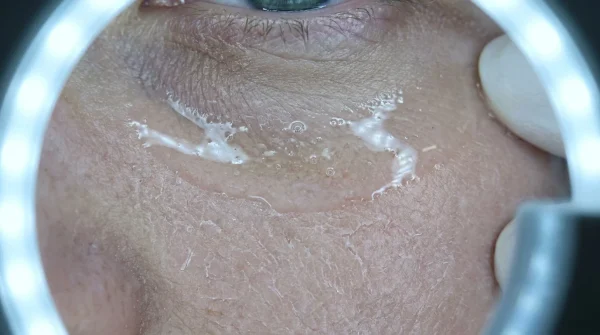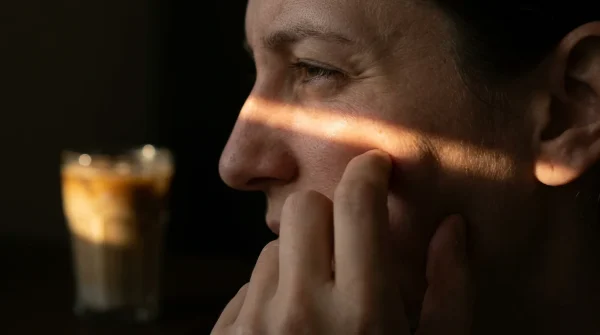
The afternoon fluorescent hum buzzes right behind your ears as you reach for the breakroom door. Someone approaches from the opposite side, slightly faster, and before your brain even registers their silhouette, the word slips past your teeth: “Sorry.” A sudden, hot flush creeps across your throat, leaving behind dry, sticky lips and an odd flutter in your chest. You did not block them, you did not cut them off, yet your nervous system reacted as though you committed an infraction.
By 3:15 PM, a thick, familiar fog coats your thoughts. Your eyelids burn with a dry ache, your lymph nodes feel faintly tender beneath your jaw, and you chalk it up to poor sleep or bad office coffee. You imagine burnout arrives on the back of eighty-hour workweeks or catastrophic life crises. In reality, your vitality drains through a microscopic siphon you opened yourself.
Every reflexive apology acts as an unprompted white flag handed to your subconscious. Your body hears what your mouth rehearses, interpreting each polite submission as a genuine social transgression that requires a surge of adrenaline to smooth over. Over eight hours, these micro-apologies accumulate into an invisible, relentless tax on your biology.
The Phantom Crime of Everyday Politeness
When you utter an unearned apology, your brain does not treat it as social grace; it treats it as a peace offering made under duress. Your autonomic nervous system cannot distinguish between apologizing for bumping a chair and begging for mercy before a hostile tribe. Each reflexive syllable fires a miniature burst of cortisol, signaling to your adrenal pathways that you exist on thin ice and must remain hyper-vigilant.
Over weeks and months, this perpetual micro-activation keeps your sympathetic nervous system locked in a low-grade simmer. Blood diverts away from deep cellular repair and immune surveillance to keep your senses primed for conflict resolution. The heavy, leaden exhaustion you feel in the late afternoon is not simply mental fatigue; it is the physical crash of an immune system starved of baseline parasympathetic rest.
Consider Elena Vance, a thirty-nine-year-old UX architect based in Seattle. Despite clean bloodwork, nine hours in bed, and an organic diet, she spent every weekday evening shivering under a fleece blanket with persistent sinus swelling and bone-deep lethargy. When an executive coach had her tally her verbal interactions, Elena discovered she uttered thirty-four apologies before noon—for asking clarifying questions, for existing in shared doorways, and for sending calendar invites. Within fourteen days of replacing those apologies with neutral declarations, her afternoon body temperature stabilized and her recurring throat tickle vanished entirely.
- Suboccipital neck muscles trap hidden workday micro-stress causing stubborn throbbing temple tension
- Hospital disease outbreak guidelines switch mandatory isolation standards across regional surgical clinics
- McKenna West workout schedules reveal why high-rep conditioning is exploding across fitness communities
- Postpartum psychosis symptoms spark urgent clinical screening shifts across hospital emergency rooms
- Propping interior bedroom doors open flushes stale carbon dioxide enforcing heavy deep sleep
The Anatomy of Three Energy-Draining Habits
Not every apology shares the same origin, but each draws from the exact same finite pool of physical stamina. Understanding where your speech leaks energy allows you to patch the boundary before your body pays the bill.
The Hallway Yield
This happens when you apologize simply for occupying physical space. Stepping aside on a sidewalk, reaching for the same milk carton at the grocery store, or entering an elevator generates an automatic verbal retraction of your right to exist in that square footage. Your vagus nerve takes the hit, dropping heart rate variability and tightening the diaphragm.
The Email Cushion
Opening a message with “Sorry for the delay” or “Sorry to bother you” primes your body for confrontation before the recipient has even opened the file. Writing yourself into a subordinate corner forces your heart rate to climb while staring at an inbox, burning glycogen that your brain needs for creative output.
The Pre-Question Pardon
Prefacing an insightful inquiry with “This might be a dumb question, sorry” acts as a preemptive strike against your own intellect. It sends a message of self-doubt to your vocal cords, causing you to breathe shallowly into your upper chest and spiking blood pressure during the very moments you need grounded confidence.
The Mindful Replacement Protocol
Breaking a subconscious motor pattern requires tactile friction rather than sheer willpower. You do not need to become cold or combative; you simply need to restore neutrality to your vocal baseline.
When you catch an apology rising in your throat, apply this tactical approach to keep your nervous system seated in calm authority:
- The Tongue-to-Palate Brake: Press the tip of your tongue firmly against the roof of your mouth behind your front teeth the second you feel an automatic “sorry” forming. This physically interrupts the vocal motor loop and gives your prefrontal cortex two seconds to choose a replacement.
- The Gratitude Pivot: Replace “Sorry for waiting” with “Thank you for your patience.” Swap “Sorry to interrupt” with “I have a thought on that.” Gratitude lowers inflammatory cytokine markers, whereas submissive appeasement raises them.
- The Grounded Exhale: When an awkward silence occurs or paths cross in a tight hallway, hold your ground, exhale through your nose with soft lips, and offer a simple nod. Let the silence hang for two full seconds before speaking.
The Neutrality Toolkit:
- Pause Duration: 2 complete seconds before responding to sudden questions.
- Vocal Tone: Lower your vocal pitch by half an octave to engage the belly breath.
- Default Phrase: “Pardon me” (strictly for physical collisions) or “Excuse me” (for passing through).
The Biological Dividend of Quiet Groundedness
When you stop treating your presence as an inconvenience, your biology responds with astonishing speed. Cortisol curves smooth out, allowing natural melatonin production to surge properly when dusk falls. The lymphatic stagnation that causes heavy legs and inflamed sinuses in the middle of the day begins to clear because your vascular tone is no longer constricted by defensive posture.
Holding your verbal ground is not about dominating a room or projecting false authority. It is an act of deep somatic hygiene. By speaking only when an actual wrong has occurred, you inform your nervous system that you are safe, that you are entitled to your breath, and that your energy belongs to your life rather than your fears.
“Your nervous system believes every word your mouth speaks; stop telling it you are guilty of simply being alive.”
| Interaction Trigger | Reflexive Response (Stamina Drain) | Regulated Alternative (Immune Protection) |
|---|---|---|
| Replying to a late email | “So sorry for the slow reply!” | “Thank you for holding for my response.” |
| Needing clarification in a meeting | “Sorry, I might have missed this…” | “Could you expand on that second metric?” |
| Passing someone in a tight aisle | “Oh, sorry!” with rapid retreat | Gentle nod with steady eye contact and an “Excuse me.” |
Frequently Asked Questions
Will people perceive me as rude if I stop saying sorry so often?
No. People consistently rate individuals who use gratitude and neutral clarity as more confident, trustworthy, and competent than those who constantly self-diminish with unearned apologies.How long does it take for afternoon fatigue to improve once I change my speech?
Most people experience a noticeable lift in 3:00 PM energy within seven to ten days of consciously catching and cutting phantom apologies, as adrenal micro-spikes decrease.What if I actually make a genuine mistake at work?
Offer a clear, direct ownership statement without emotional groveling: “I see the error on slide four. I will update that by 2:00 PM.” This demonstrates competence and keeps your stress hormones level.Why does an apology make my throat hot and lips dry?
Apologizing when you have done nothing wrong creates cognitive dissonance, triggering a sudden release of adrenaline. Adrenaline constricts salivary glands and rushes blood to large muscle groups and the neck.Can this habit affect my physical sleep at night?
Yes. Chronic daytime sympathetic activation keeps baseline norepinephrine elevated, which prevents your brain from dropping smoothly into restorative deep Stage 3 and Stage 4 sleep cycles.