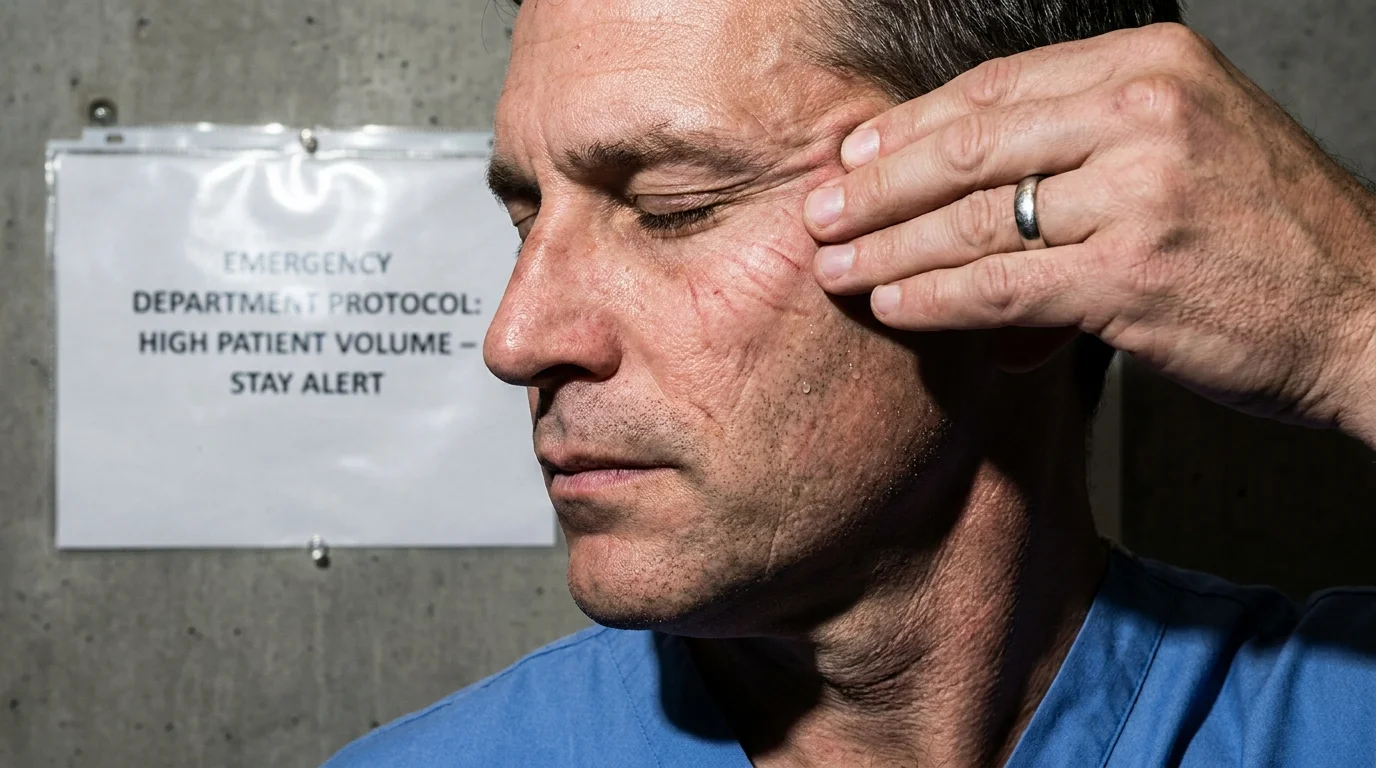
A freshly printed, laminated protocol advisory sits pinned directly to the emergency ward charge desk, its edges catching the cold hum of overhead fluorescent tubes. The blue ballpoint ink scrawled across the margin is still dark, marking the new containment cutoffs handed down by regional health administrators. In the quiet corridor outside Room 14, the air feels crisp and distinctly antiseptic, filtered through roof-mounted scrubbers working double-time against the humid late-summer air.
For months, you watched acute care floors operate on a predictable cadence of extended containment, where suspected respiratory cases remained locked behind barrier doors for weeks. Yet after late-summer transmission spikes quietly overwhelmed regional staffing and bed capacity, the clinical rulebook shifted overnight. Regulators realized that prolonged, blanket quarantines were straining acute facilities while failing to stop subtle, asymptomatic floor transfers.
The newly enforced standards strip away legacy guesswork, replacing open-ended isolation periods with a rigorous, five-day droplet containment threshold for inpatient beds. This adjustment demands an immediate clinical overhaul across every ward, changing how you assess admission risks, manage floor cohorts, and release vulnerable patients back into standard circulation without compromising safety.
Beyond the Barrier: Rethinking the Architecture of Inpatient Containment
For years, clinical isolation operated under the assumption of an airtight fortress: seal the room, minimize staff entry, and keep the calendar running until days turn into weeks. But viral dynamics in a modern hospital behave less like a static vault and more like an active ventilation dam. When you focus solely on keeping doors closed rather than tracking actual viral shedding kinetics, containment measures produce diminishing returns.
The updated guidance acknowledges that acute viral load drops sharply in the vast majority of mild-to-moderate clinical presentations by day five. Continuing full droplet isolation beyond this window without clinical justification creates severe operational gridlock, delaying critical diagnostic imaging, physical therapy access, and post-acute discharge coordination for patients who need active bedside engagement.
By shifting to an evidence-backed containment cycle, clinical teams stop treating isolation as passive storage. Instead, containment becomes an active, metric-driven treatment phase that balances rapid transmission suppression with immediate, proactive patient recovery.
- Ageing speed blood tests spark massive consumer demand revealing hidden cellular inflammation spikes
- Robbie Williams health disclosures expose sudden andropause crashes sparking immediate clinical testing surges nationwide
- Elevating foot mattress edges switches overnight venous circulation stopping heavy throbbing restless leg spasms
- Perching on chair edges locks lower lumbar joints triggering stubborn radiating sciatic nerve pinches
- Noosa blueberry yogurt tubs trap thirty grams of hidden sugar derailing morning metabolic burn
The Ward Reality: Dr. Vance’s Floor Calibration
Dr. Marcus Vance, a 47-year-old hospital epidemiologist in central Ohio, watched this friction unfold firsthand when August admissions surged across his 300-bed regional medical center. Bed flow had ground to a halt because patients who were clinically stable remained classified under high-tier droplet isolation purely due to legacy calendar rules. Vance worked alongside nursing supervisors to audit floor transmissions, discovering that cross-contamination was not happening at the tail end of patient stays, but during chaotic initial triage moments before containment protocols were even initiated.
Calibrating the Ward: Containment Protocols Across Patient Tiers
Applying the new directives requires adapting to the distinct vulnerability levels found across different hospital departments. A single blanket rule cannot safely govern both an oncology wing and a short-stay observation unit.
For Acute Medical-Surgical Floors
General inpatient beds now enforce the targeted five-day droplet boundary starting from symptom onset or the initial positive swab. If clinical symptoms show clear resolution and the patient remains fever-free for a full 24 hours without antipyretic medication, droplet isolation can be de-escalated to standard universal source control. This keeps bed turnaround smooth while safeguarding staff during high-risk procedures.
For Immunocompromised and Critical Care Units
In bone marrow transplant units and intensive care environments, the standard five-day cutoff does not apply automatically. Patients with severe immune deficits shed viable virus over extended periods. For this cohort, serial molecular clearing criteria or sustained ten-to-twenty-day negative pressure protocols remain mandatory to prevent catastrophic nosocomial spread among fragile populations.
For Transitional and Post-Acute Step-Down Units
Sub-acute rehabilitation floors must pair the five-day containment threshold with localized antigen screening before transferring patients into shared physical therapy rooms. Cohorting strategies should group recovering patients together, ensuring that social interaction and mobility therapy resume without placing unexposed roommates at risk.
Operationalizing the Five-Day Threshold: A Tactical Ward Playbook
Transitioning your ward to the updated containment guidelines requires disciplined, step-by-step coordination between charge nurses, attending physicians, and environmental service teams.
Follow this systematic sequence to apply the new containment workflow safely on your floor:
- Flag Day Zero at Triage: Document the exact hour of symptom onset or positive testing on the digital intake board to prevent arbitrary containment extensions.
- Enforce Strict Droplet Precautions: Maintain fitted N95 respirators, eye protection, and dedicated room equipment during the initial 120-hour window.
- Conduct the Hour-96 Clinical Review: Evaluate respiratory symptom trajectories and confirm the absence of fever four days into the admission.
- Execute the Day-Five Clearance Protocol: If baseline vitals are stable, transition the room from full droplet containment to standard hospital masking protocols.
- Terminal Room Sanitation: Direct environmental services to perform targeted surface disinfection using EPA-registered biocides before unmasking the space for new intakes.
Keep your station stocked with a lean set of containment monitoring tools to maintain operational compliance without cluttering the nursing station:
- Differential Pressure Monitors: Maintain minimum negative pressure gradients exceeding 2.5 Pascals in isolation suites.
- Airflow Exchange Verification: Ensure clinical suites achieve 6 to 12 total air changes per hour (ACH).
- Standardized Rapid Antigen Panels: High-sensitivity test kits for rapid bedside confirmation at the 120-hour milestone.
- Color-Coded Barrier Signage: Updated door placards specifying droplet duration dates rather than ambiguous isolation categories.
When you follow this disciplined workflow, floor transitions remain smooth, predictable, and fully compliant with state and regional mandates.
Restoring Balance to Clinical Spaces
Shifting away from protracted, months-long quarantine habits does not mean lowering your guard against hospital-acquired infections. Instead, it marks a transition toward clinical precision. By recognizing the true boundary of infectious risk, you protect acute bed availability, reduce the psychological distress of prolonged patient isolation, and allow healthcare workers to focus their vigilance where it matters most.
Modern infection control succeeds when rules mirror the actual biology of recovery. As these updated policies take root across regional wards, hospitals regain their capacity to deliver attentive, human-centered care without losing their defensive edge.
“True infection control is not measured by how long we keep a patient behind a closed door, but by how accurately we match our containment to the biology of transmission.”
| Key Point | Detail | Added Value for the Reader |
|---|---|---|
| Five-Day Droplet Cutoff | Standard containment window for non-ICU patients showing symptom resolution. | Accelerates bed availability and reduces unnecessary diagnostic delays. |
| High-Risk Stratification | Immunocompromised and ICU wards maintain extended, test-based isolation. | Protects vulnerable patient groups from nosocomial transmission risks. |
| Hour-96 Ward Audit | Scheduled nursing assessment to verify fever-free status before day five. | Eliminates administrative bottlenecks during patient discharge planning. |
Frequently Asked Questions
What triggers the start of the five-day isolation clock?
The clock begins on Day Zero, which is defined as the day symptoms first appeared or the date of the first positive test specimen, whichever occurred earlier.Can a patient leave isolation if they still have a mild cough?
Yes, provided the cough is clearly improving, other systemic symptoms have resolved, and the patient has been completely fever-free for at least 24 hours without fever-reducing medication.Do immunocompromised patients follow this shortened threshold?
No. Severely immunocompromised patients require individualized clinical evaluation, often involving extended isolation of 10 to 20 days and serial negative testing.What PPE is required when entering a room during the five-day window?
Staff must wear a fit-tested N95 respirator, full eye protection (goggles or face shield), a clean isolation gown, and medical-grade gloves.How does this policy update affect patient transfers to nursing facilities?
Step-down facilities can accept stable patients who have completed their five-day inpatient containment without requiring repeated rounds of quarantine, smoothing transitional care.