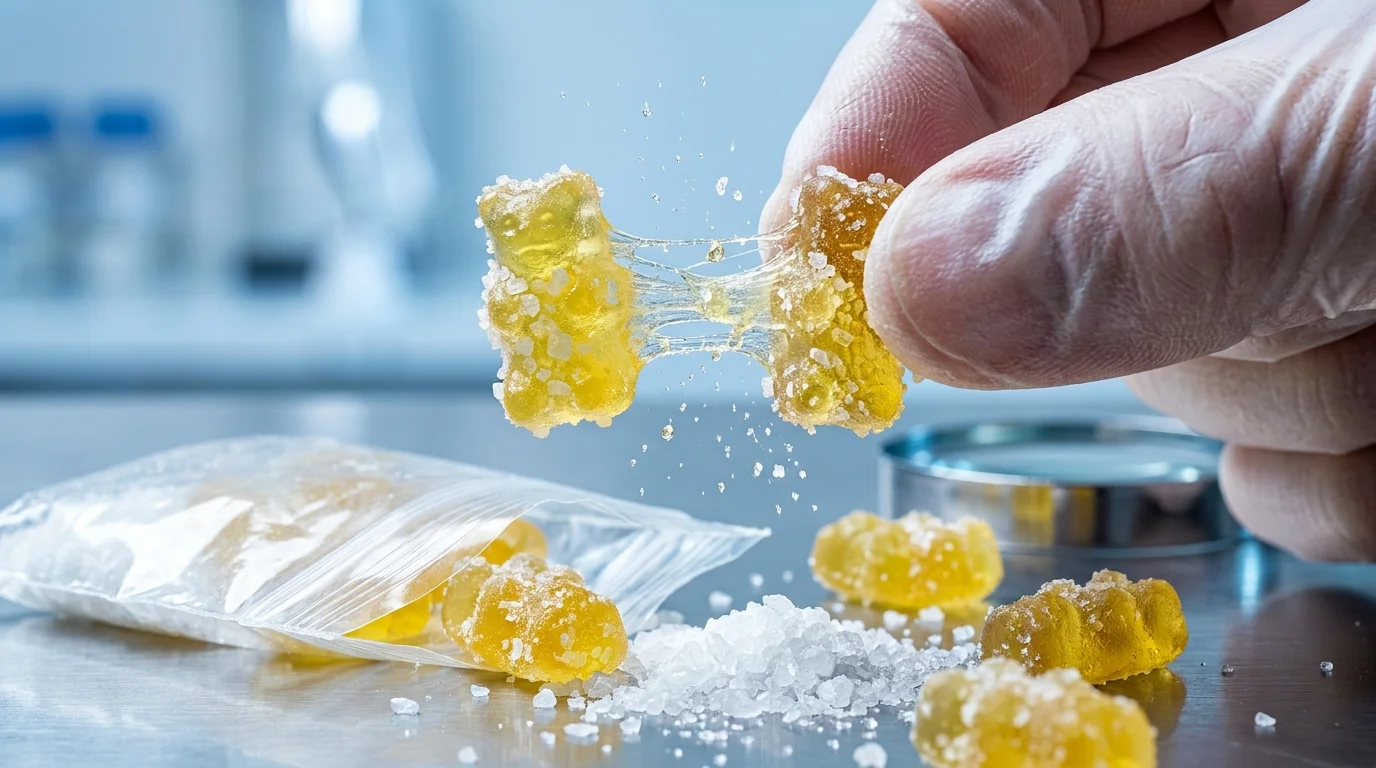
The room is dark save for the cool blue wash of your television screen. On the side table sits a transparent plastic bag showing gummy candy coated in white sour crystals, catching the light as you reach in for another handful. Your teeth sink into that familiar, stiff resistance—the satisfying, rubbery pushback of dense gelatin mingled with a sharp sting of citric acid that makes the back of your tongue tighten and water.
It feels like innocent late-night comfort. You wipe the tart dusting from your fingers, brush your teeth, turn out the lamp, and slide beneath the duvet. But hours later, somewhere around 4:00 AM in the silent depths of sleep, your nervous system is running a relentless marathon.
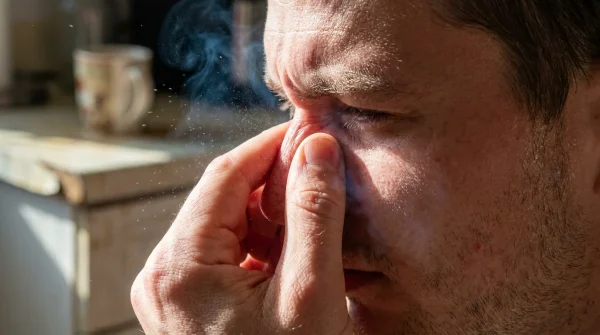
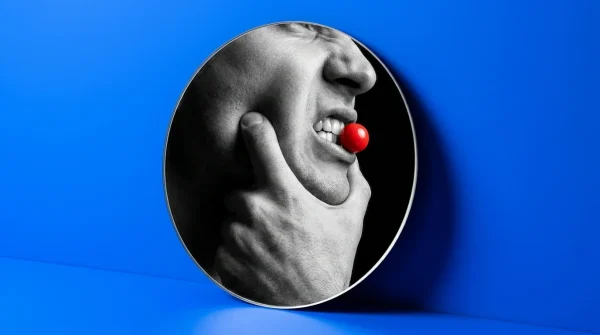
You wake to a dull, vice-like ache radiating across your temples. Your back molars feel bruised, as though you spent the night chewing gravel, and turning your head sends a tight twinge down your sternocleidomastoid into your collarbone. You might blame an aging mattress, a flat pillow, or lingering workday tension, but the real trigger was set in motion during your final hour awake.
The Unseen Hydraulic Loop: When Tart Candy Primes the Masseter
Your jaw does not simply fall into neutral rest when your eyes close. The masseter and temporalis muscles operate on an intricate feedback loop orchestrated by the trigeminal nerve, a hyper-reactive neural superhighway that governs bite force, salivary gland activation, and facial sensation. When you introduce a high-resistance physical object like a dense gummy bear right before bedtime, you force the jaw to generate peak compressive force dozens of times in rapid succession.
Compounding this mechanical strain is the intense concentration of citric and malic acids. That sour dusting shocks your parotid glands into overdrive, drastically lowering intra-oral pH and triggering a protective autonomic reflex. Your brainstem interprets this sudden, concentrated chemical bath as a cue to clear and protect the airway, keeping the swallowing and clenching circuits active long after you drift into unconsciousness.
Instead of relaxing into restorative slow-wave sleep, your masticatory muscles remain locked in a state of high motor tone. The jaw acts like a tightened coil, cycling through micro-arousals where your teeth clamp together with hundreds of pounds of pressure per square inch. The result is the classic morning jaw lock: tender cheeks, throbbing temples, and a heavy, fatigued skull.
- Relying on electric golf carts erases natural hip stabilizer strength and derails everyday posture
- Lasko ceramic space heaters parch nasal membranes trapping thick dry throat irritation
- Vital Proteins collagen peptides block smooth stomach motility sparking stubborn morning bloat
- Oatly Barista Edition milk triggers a sudden mid-afternoon energy crash for adults over forty
- Bioderma micellar cleansing water drains delicate skin hydration revealing harsh crinkly eye lines
A Pattern Hiding in Plain Sight
Consider the experience of Elena Diaz, a 34-year-old architectural draftsperson from Seattle. Elena spent six months cycling through custom nightguards, cervical memory foam pillows, and physical therapy sessions to alleviate debilitating morning temple pressure that consistently ruined her first two hours at work. Her dentist noticed accelerating micro-fractures on her lower premolars, yet daytime stress markers seemed completely stable. The mystery resolved only after Elena audited her evening wind-down routine: a small bowl of sour bears consumed nightly at 10:15 PM while reviewing CAD blueprints in bed. Within four days of removing the dense, tart confection from her bedtime window, the morning migraines evaporated.
Targeting the Trigger: Evening Snack Profiles
Not all bedtime habits stress the cranial architecture equally. Understanding how different evening patterns agitate your facial nerves allows you to pinpoint the exact breakdown in your routine.
The Screen-and-Chew Loop
When you consume high-resistance gelatin candies while scrolling or streaming, your conscious awareness of muscle fatigue is suppressed. The blue light from your screen delays melatonin release, while the repetitive, heavy chewing mechanically exhausts the temporomandibular joint capsule. This dual stimulation locks the masseter into a hyper-excitable baseline just as your sleep cycles begin.
The Low-pH Acid Clamp
Citric acid crystals alter your oral microbiome and trigger transient micro-reflux during recumbency. When you lay flat within forty-five minutes of consuming sour confections, trace acidity creeps toward the pharynx. The body’s natural defense mechanism against this acidity is nocturnal clenching and rhythmic grinding, which forces saliva down the esophagus to neutralize the acid, inadvertently thrashing your jaw joint all night.
Resetting the Trigeminal Wire Before Pillow Contact
Freeing your mornings from temple pressure requires a practical, mechanical reset during your final waking hour. These adjustments restore neutral resting tone to the cranial muscles and clear the chemical triggers before your head touches the pillow.
- Establish a 90-minute chew curfew: Cease eating all dense, gummy, or chewy textures at least an hour and a half before sleep to allow masseter tendon micro-spasms to subside.
- Perform an alkaline rinse: Swish with a half-teaspoon of baking soda dissolved in six ounces of lukewarm water after evening snacking to instantly neutralize lingering citric acid.
- Apply the tongue-palate anchor: Rest the tip of your tongue gently against the roof of your mouth just behind your front teeth, keeping your lips closed and your upper and lower teeth slightly apart.
- Execute intra-oral release: Using a clean thumb, gently press upward and outward into the cheek muscle from inside your mouth for twenty seconds on each side to release fascial knots.
Your tactical evening toolkit should be simple: a small glass of mineral-rich water, a warm washcloth heated to 104°F draped across the cheekbones for five minutes, and a commitment to soft, non-acidic evening nourishment if you need a pre-bed bite.
Restoring Quiet Stillness to the Night
Sleep should be an unclenching—a slow, total surrender of the tension accumulated across waking hours. When you remove subtle mechanical saboteurs from your bedside routine, you stop asking your facial muscles to fight an invisible nocturnal war. Waking up with light temples, a soft neck, and a pain-free bite transforms the tone of your entire morning, replacing dull throbbing with clean, effortless clarity.
“When you calm the trigeminal reflex before turning out the lights, you allow the entire cranial network to finally stand down.”
| Key Point | Detail | Added Value for the Reader |
|---|---|---|
| Chewing Mechanics | Dense gelatin forces maximal bite loading repeatedly before rest. | Saves joint cartilage and prevents micro-fractures in tooth enamel. |
| Chemical Shock | High citric acid triggers autonomic salivation and airway clench reflexes. | Eliminates nocturnal acid reflux sparks that disrupt sleep stages. |
| Thermal Recovery | 104°F moist heat applied to the jaw eases baseline myofascial tone. | Promotes rapid vasodilation to clear metabolic waste from fatigued muscles. |
Frequently Asked Questions
Why do sour gummies cause more jaw pain than chocolate or cookies?
Sour gummies combine extreme mechanical resistance from dense gelatin with intense citric acid, which simultaneously exhausts the masseter muscle and triggers hyper-active salivary reflexes that persist during sleep.How quickly does night clenching stop after cutting out sour candy?
Most people experience a noticeable reduction in morning temple tightness within two to three nights as the masseter reflex arc returns to baseline tone.Does drinking water right after eating sour candy fix the issue?
Water dilutes surface sugars but fails to instantly neutralize low intra-oral pH or reverse the mechanical fatigue inflicted on the temporomandibular joint.Can a dental nightguard protect against this specific trigger?
A nightguard protects enamel surfaces from wear, but it does not stop the masseter and temporalis muscles from firing intensely against the guard, leaving morning muscle aches intact.What is an ideal late-night snack that will not trigger jaw tension?
Choose soft, non-acidic foods requiring minimal mastication, such as a small cup of plain yogurt, a warm mug of oat milk, or half a ripe banana.