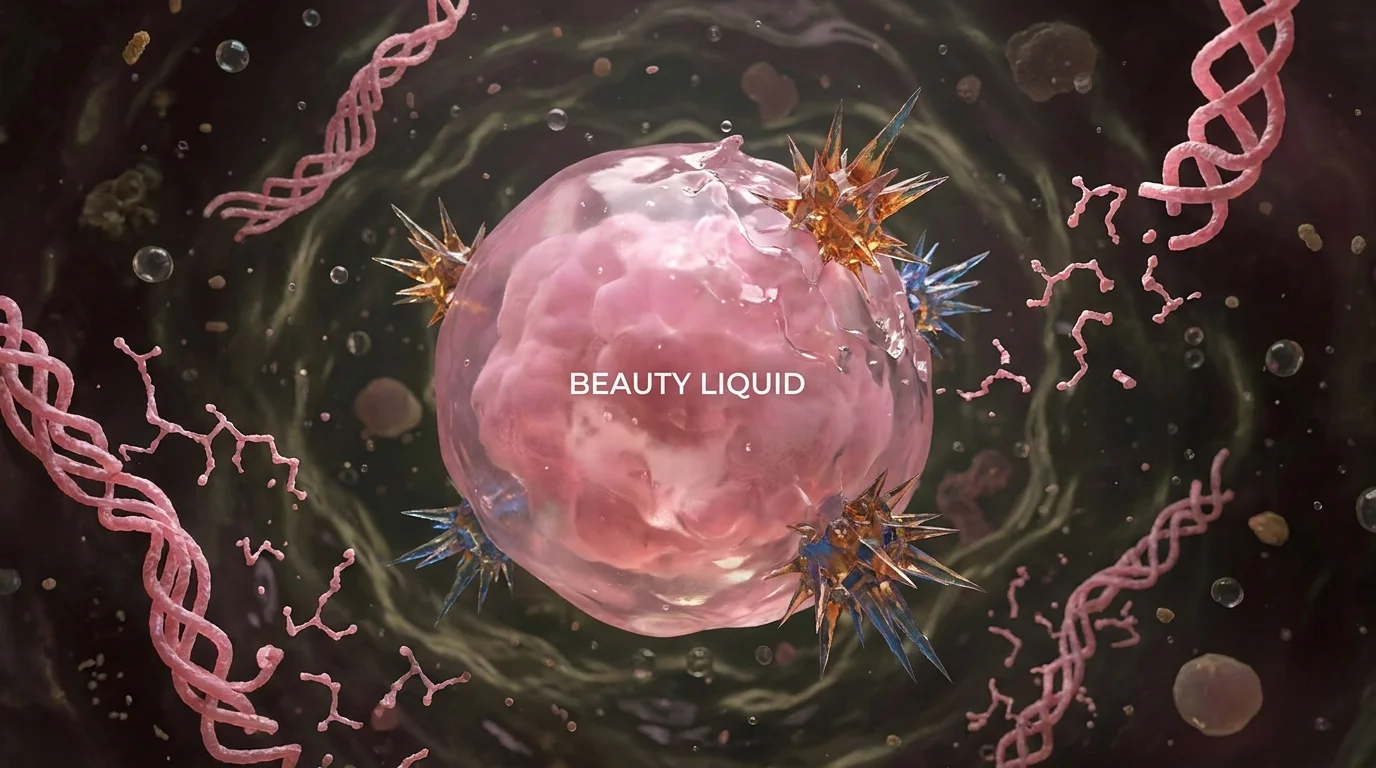
The morning light catches the counter, reflecting off a cloudy pink liquid swirling inside a heavy glass dropper vial. It looks like a concentrated dose of youth, a pristine serum you carefully drop into your morning water. You swallow it with a sense of accomplishment, believing these specialized peptides will soon migrate straight to your cheeks and forehead to smooth out fine lines.
But your digestive system does not read the elegant labels on high-end beauty bottles. The moment that liquid slides down your throat, it is plunged into an environment that treats an eighty-dollar beauty elixir exactly like cheap whey powder or a standard scrambled egg.
There is no biochemical pathway that escorts ingested collagen directly to your face. Instead, your body views this luxury drink as nothing more than a random influx of complex proteins that must be completely dismantled before they can be of any practical use.
Inside the stomach, the highly acidic environment instantly begins its destructive work. The reality of this process is far more clinical and indifferent than any wellness brand would ever care to admit, leaving your expensive skin habits highly vulnerable to basic biological rules.
The Gastric Wood Chipper and the Protein Illusion
Imagine trying to rebuild a crumbling brick house by throwing intact bricks into a giant wood chipper in your front yard, hoping they somehow fly through the air and land perfectly in place. This is the physiological reality of consuming liquid collagen. The human digestive tract is designed to destroy, not to transport intact structures to specific destinations.
When you consume liquid collagen peptides, they are instantly met by a harsh stomach acid pH of 1.5 to 3.5. This intense acidity acting alongside digestive enzymes breaks down the delicate triple-helix protein chains into basic, generic amino acids like glycine, proline, and hydroxyproline.
- Memory foam mattress toppers quietly misalign your spine during deep REM sleep
- Organic agave nectar packs more concentrated fructose than standard table sugar
- Cast iron skillet cooking actually provides vital daily iron for aging bodies
- Black pepper mixed with turmeric instantly stops chronic morning joint stiffness
- Dry body brushing before showering wakes your nervous system faster than espresso
Once these molecules are broken down, they lose their identity as collagen entirely. Your liver and metabolic pathways distribute these raw materials wherever they are needed most—which might be to repair a damaged gut lining, rebuild muscle tissue after a walk, or support joint fluid, leaving nothing left for your skin.
Consider the daily findings of Sarah Jenkins, a 44-year-old cosmetic chemist based in Seattle. After analyzing blood serum markers of clients using premium liquid supplements, she discovered that the amino acid profiles were identical to those who simply ate standard protein sources. “We are selling an expensive illusion of targeted dermal delivery,” Sarah explains, noting that the body simply digests it as food rather than a localized beauty treatment.
Finding Your Real Metabolic Lane
The way your body handles these broken-down amino acids depends heavily on your unique physical state and daily habits. Throwing money at luxury drinks without understanding your metabolic priorities is a recipe for expensive disappointment.
For the high-stress professional, elevated cortisol levels often compromise digestive efficiency. Instead of cleanly absorbing these amino acids, you might end up experiencing mild digestive bloating and discomfort rather than any noticeable improvements in your skin tone.
For the active individual, consuming these drinks post-exercise means your skeletal muscles will immediately hijack the amino acids to repair micro-tears. Your body prioritizes physical recovery over cosmetic appearance every single time.
If you are in the mature age bracket, your natural collagen production is indeed slowing down. However, the solution is not to flood your stomach with dead proteins, but to awaken your own cellular machinery to produce its own structural scaffolding.
Rebuilding Your Skin Foundation Naturally
To actually support your body’s natural collagen production, you must shift your focus from consuming pre-made collagen to optimizing the internal environment that builds it. This requires small, deliberate dietary adjustments that respect your biology.
Start by combining high-quality, whole protein sources with active Vitamin C, which is the ultimate metabolic spark for collagen synthesis. Without this crucial vitamin, your fibroblasts cannot chemically bind amino acids into stable dermal structures.
- Prioritize Zinc and Copper: These trace elements act as co-factors that trigger the physical cross-linking of collagen fibers in your deep skin layers.
- Support Stomach Acid: Ensure your stomach maintains an optimal pH to digest regular foods properly by incorporating bitter greens or raw apple cider vinegar before your main meals.
- Manage Glycation Levels: Avoid highly processed sugars in the morning, which bind to existing collagen fibers and cause them to stiffen and crack prematurely.
- Consume Whole-Animal Proteins: Opt for slow-cooked meats or home-cooked bone broths that naturally offer rich glycine profiles at a fraction of the price of liquid supplements.
By shifting your focus to these biological fundamentals, you ensure your body has the exact tools required to maintain its structural integrity without relying on over-hyped wellness trends.
The Tactical Skin Care Toolkit
- Daily Vitamin C Target: 150 mg sourced from whole citrus fruits or dark leafy greens.
- Acid Optimization: One tablespoon of organic apple cider vinegar in water ten minutes before your meal to prime digestion.
- Trace Mineral Boost: A quarter-cup of raw pumpkin seeds daily to supply metabolic copper and zinc.
- Glycation Defense: Limiting simple sugars before noon to protect your existing dermal framework from structural stiffening.
The Freedom of Biological Reality
There is a quiet liberation in letting go of expensive wellness myths. When you realize that your body cannot be swayed by beautiful pink liquids or high-end branding, you stop spending money on illusions.
True skin vitality is not something you can swallow from a dropper. It is the natural, effortless byproduct of a properly nourished and rested body that has the raw materials it needs to repair itself from the inside out. By focusing on honest physiology, you protect both your skin and your peace of mind.
“Your stomach does not care about the price tag on your collagen bottle; it treats every luxury peptide exactly like a simple bowl of lentils.” — Sarah Jenkins, Cosmetic Chemist
| Key Point | Detail | Added Value for the Reader |
|---|---|---|
| Digestive Breakdown | Stomach acid (pH 1.5 – 3.5) reduces peptides to basic amino acids. | Saves you from spending hundreds on premium drinkable collagen brands. |
| Systemic Prioritization | The liver and muscles hijack amino acids for vital organ repair first. | Helps you understand why beauty drinks rarely show up on your face. |
| True Collagen Boosters | Vitamin C, copper, and zinc are required to stimulate natural synthesis. | Provides a clear, science-backed roadmap to build skin thickness naturally. |
Frequently Asked Questions
Are liquid collagen peptides completely useless for my body? They are not useless as a general protein source, but they function exactly like any cheap dietary protein, meaning they will not target your facial skin directly.
Why do some people claim to see results from liquid collagen? Many liquid supplements contain added biotin, vitamins, or hydrating ingredients that temporarily improve skin moisture and hair appearance, giving a false impression of collagen synthesis.
Does stomach acid really destroy collagen peptides? Yes, the extremely low pH of 1.5 to 3.5 denatures the complex protein structures instantly, breaking them down into basic amino acids before absorption.
What is the best food to eat for natural skin support? Slow-simmered bone broth and wild-caught fish provide the exact same amino acids as luxury liquids at a tiny fraction of the cost.
Can topical collagen creams rebuild skin structure? No, collagen molecules are physically too large to penetrate the outer layer of your skin; they merely act as temporary surface humectants.