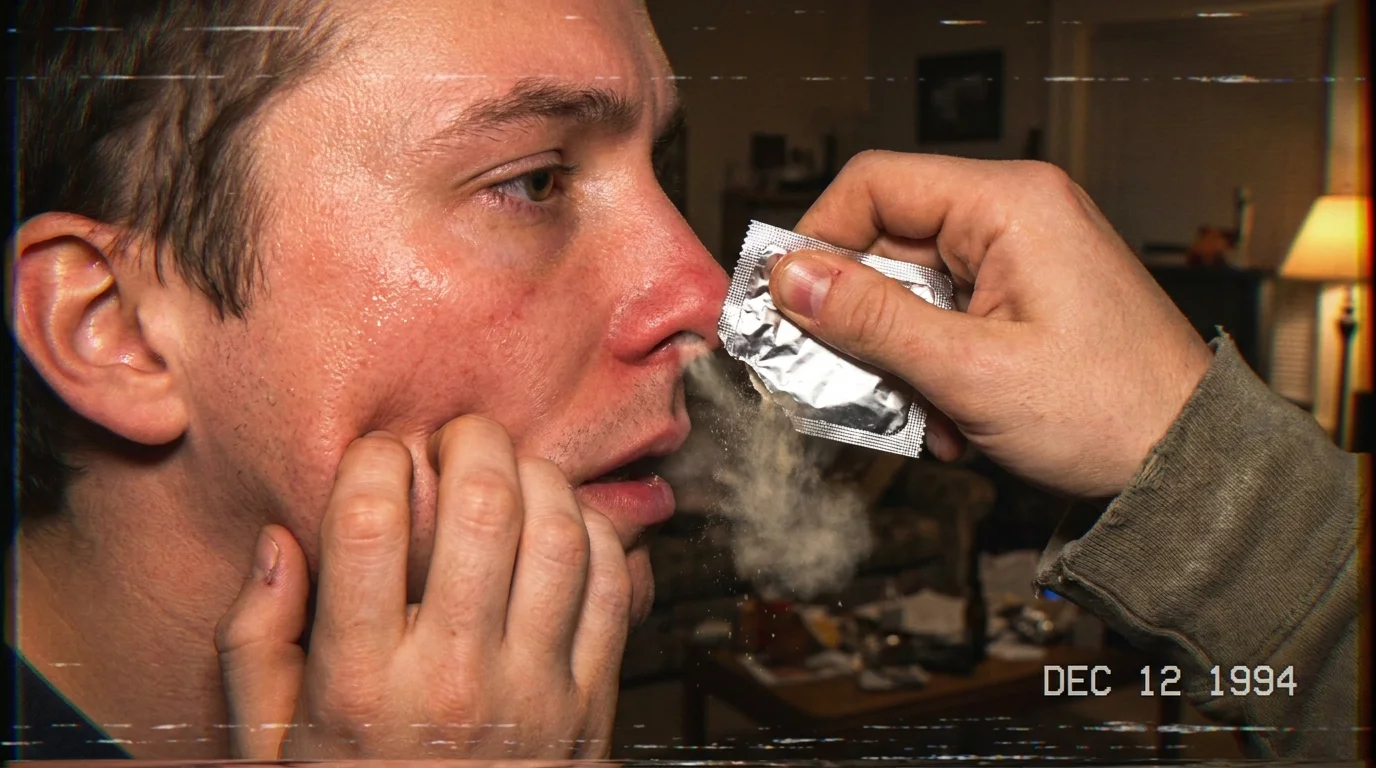
The air in the room suddenly thins, turning brittle and cold. Your chest tightens as if an invisible band is ratcheting down notch by notch, and your pulse begins drumming against your eardrums like a muffled alarm. You try the standard advice: counting to four, expanding the belly, visualizing calm water. Yet when an acute panic wave hits, your rational brain is already offline, rendering gentle breathing exercises as useless as whispering to a runaway freight train.
Then comes an unexpected, violent interruption. You tear open a crinkled metallic foil bag, and an intense, sharp acidic puff of vapor billows out, stinging the nostrils and catching the back of your throat.
You place a single salt and vinegar chip on your tongue. The searing acetic acid flash instantly floods the mouth, followed by a briny crack of coarse sodium that pulls the salivary glands into a sharp, reflexive pucker. The racing spiral stops dead in its tracks. Your eyes water, your jaw clenches and releases, and before your brain can conjure the next catastrophic thought, your entire nervous system is forcefully dragged back to the present moment.
The Sensory Circuit-Breaker: Why Flavor Shocks Beat Gentle Calming
When panic strikes, the amygdala hijacks your neural wiring, initiating a primitive survival cascade that starves the prefrontal cortex of blood flow. Attempting to think your way out of this state is like trying to fix a software bug while the power cord is being repeatedly yanked from the wall. You cannot reason with an autonomic storm using the very cognitive circuits that the storm has disabled.
This is where the concept of the somatic sensory circuit-breaker changes the entire paradigm. High-intensity gustatory triggers act as an involuntary hardware reset. The trigeminal and glossopharyngeal nerves—which map sensation from your mouth, tongue, and throat directly into the brainstem—possess high-priority transmission lines. When hit with an extreme contrast of high-grain salt and concentrated acetic acid, these cranial pathways flood the central nervous system with urgent sensory data that takes absolute precedence over internal fear loops.
Instead of struggling through ten minutes of box breathing while your hands shake, an intense gustatory shock forces an instant neuro-distraction. The brain cannot maintain an abstract, future-oriented panic scenario when its primary sensory channels are screaming about an immediate chemical burst on the tongue.
- Quaternary disinfectant wipes strip protective skin microflora leaving households vulnerable to persistent sinus bugs
- Quinoa nourish bowls demand massive blood redistribution sparking heavy afternoon eyelid slump
- Carbon faucet filters miss volatile industrial chemicals trapping persistent morning throat scratches
- Toasted sesame oil skillet searing releases invisible aerosolized fats triggering sudden afternoon headaches
- Cold plunge tubs trigger sudden peripheral capillary squeeze leaving icy numb fingers throbbing violently
Clinical Realities: The Shift from Cognitive to Chemical Grounding
Dr. Marcus Vance, a 46-year-old clinical neuropsychologist based in Seattle, frequently watched his patients falter when relying purely on cognitive reframing during sudden panic surges. In acute distress, introspective tools often backfire, causing individuals to hyper-focus on their racing heartbeats or shallow breaths, which only fuels the panic spiral.
Vance began testing immediate sensory disruptions—specifically intense sour and acidic compounds—in outpatient settings. He noted that the violent puckering reflex triggered by acetic acid forces an immediate, involuntary exhalation followed by a deep, spontaneous diaphragmatic gasp. This physiological disruption breaks the hyperventilation cycle within five seconds, resetting the carbon dioxide balance in the blood without requiring the patient to count breaths or practice conscious relaxation.
Layering the Reset: Tailoring the Shock to Your Environment
Not every panic spike occurs in the comfort of your kitchen. Adapting this sensory override requires understanding how different intensities fit specific life contexts.
For the Deskbound Professional
Office environments rarely allow for dramatic somatic shaking or pacing. Keeping a small, sealed container of kettle-cooked salt and vinegar chips in your desk drawer provides a discreet, immediate lifeline. The dense, thick-cut variety offers a louder acoustic crunch and a higher surface concentration of acid powder, delivering the sensory payload in a single bite without drawing attention during a high-stakes meeting.
For the Highway Commuter and Traveler
Trapped in gridlock or navigating a crowded airport terminal, panic thrives on the feeling of physical confinement. In these scenarios, the tactile experience of the foil bag and the initial olfactory hit of the escaping vapor amplify the gustatory shock. Inhaling the sharp vinegar fumes just before eating the chip provides a two-stage sensory shock that interrupts claustrophobic tunnel vision instantly.
For the Chemically Sensitive Palate
If intense vinegar triggers acid reflux or is overly abrasive, the mechanism still works with alternative high-contrast profiles. Freeze-dried lemon slices, sour malic acid candies, or pure sea salt flakes paired with a squeeze of fresh lime juice activate the identical cranial pathways without relying on commercial snack additives.
Mindful Application: The Five-Second Gustatory Reset
Executing this somatic override requires deliberate timing. The objective is not mindful snacking; it is an assertive sensory intervention applied at the first tremor of a runaway loop.
- Keep the trigger accessible: Store your acidic snack in spaces where panic historically surfaces—glove compartments, laptop bags, or nightstands.
- Engage the olfactory threshold first: Tear the packaging close to your face and take one sharp sniff of the concentrated vapor to stimulate the olfactory bulb.
- Place the chip flat against the palate: Press the seasoned side directly against the roof of your mouth to maximize trigeminal nerve activation.
- Focus entirely on the physical pucker: Allow the involuntary salivary rush and facial contraction to happen without trying to suppress it.
- Take the reflexive deep breath: Notice the involuntary sigh that naturally follows the sensory peak, signaling the parasympathetic nervous system to re-engage.
The Tactical Toolkit
To ensure maximum neuro-distraction efficiency, maintain these parameters for your somatic emergency stash:
- Acid Concentration: Opt for brands listing vinegar, sodium diacetate, or citric acid within the first four ingredients.
- Texture Profile: Kettle-cooked or batch-fried chips provide a structural resistance that adds mechanical jaw grounding to the chemical shock.
- Serving Size: You only need 1 to 2 chips to trip the sensory circuit-breaker; more is unnecessary for the neural override.
- Storage Temperature: Keep at room temperature (65°F to 72°F) to prevent the volatilization of the aromatic vinegar compounds.
The Bigger Picture: Reclaiming Autonomy from the Amygdala
Living with sudden surges of panic often feels like walking across thin ice, where every slight physical sensation threatens to plunge you into an uncontrollable spiral. The conventional belief that emotional regulation must always be quiet, slow, and purely mental creates an unnecessary burden of failure when those calm methods collapse under intense adrenaline.
Embracing sharp sensory circuit-breakers reframes how you relate to your nervous system. You begin to see your body not as an unpredictable adversary that must be coaxed into submission through sheer willpower, but as a responsive biological instrument that obeys direct physiological inputs. A single salt and vinegar chip will not resolve life’s underlying stressors, but it restores something far more immediate: the sudden, grounding realization that you can pull the emergency brake whenever you need to.
“When the mind is trapped in a storm of its own making, the fastest way out is a shock to the senses that the body cannot ignore.”
| Key Point | Detail | Added Value for the Reader |
|---|---|---|
| Trigger Mechanism | Trigeminal and glossopharyngeal nerve activation via acetic acid and sodium. | Bypasses paralyzed cognitive centers by using direct cranial wiring. |
| Intervention Speed | Halts cognitive spiral loops within 3 to 7 seconds of contact. | Provides near-instantaneous relief without demanding focus or breath counting. |
| Somatic Response | Triggers immediate salivary flow and involuntary deep exhalation. | Naturally resets blood CO2 ratios to halt physical hyperventilation symptoms. |
Frequently Asked Questions
Does this method cure chronic anxiety disorders?
No. This is an acute somatic rescue technique designed to halt active panic loops and severe hyperventilation, not a substitute for comprehensive nervous system therapy.Why do salt and vinegar chips work better than other snacks?
The volatile combination of acetic acid vapor, extreme sour acidity, and concentrated sodium creates a multi-sensory shock that overwhelms other neural inputs simultaneously.Can I use sour candy instead of chips?
Yes. Candies coated in malic or citric acid offer a comparable sensory interruption, though they lack the savory sodium component that engages additional tongue receptors.What if I am out in public and cannot eat?
Carrying sour spray, a small lemon packet, or simply smelling pure vinegar essence provides a similar sensory jolt without requiring a full snack.Is there a risk of building a tolerance to the sensory shock?
Because the human gustatory and trigeminal response to intense acid is hardwired and reflexive, the physical pucker and neuro-distraction effect remains consistently potent over time.