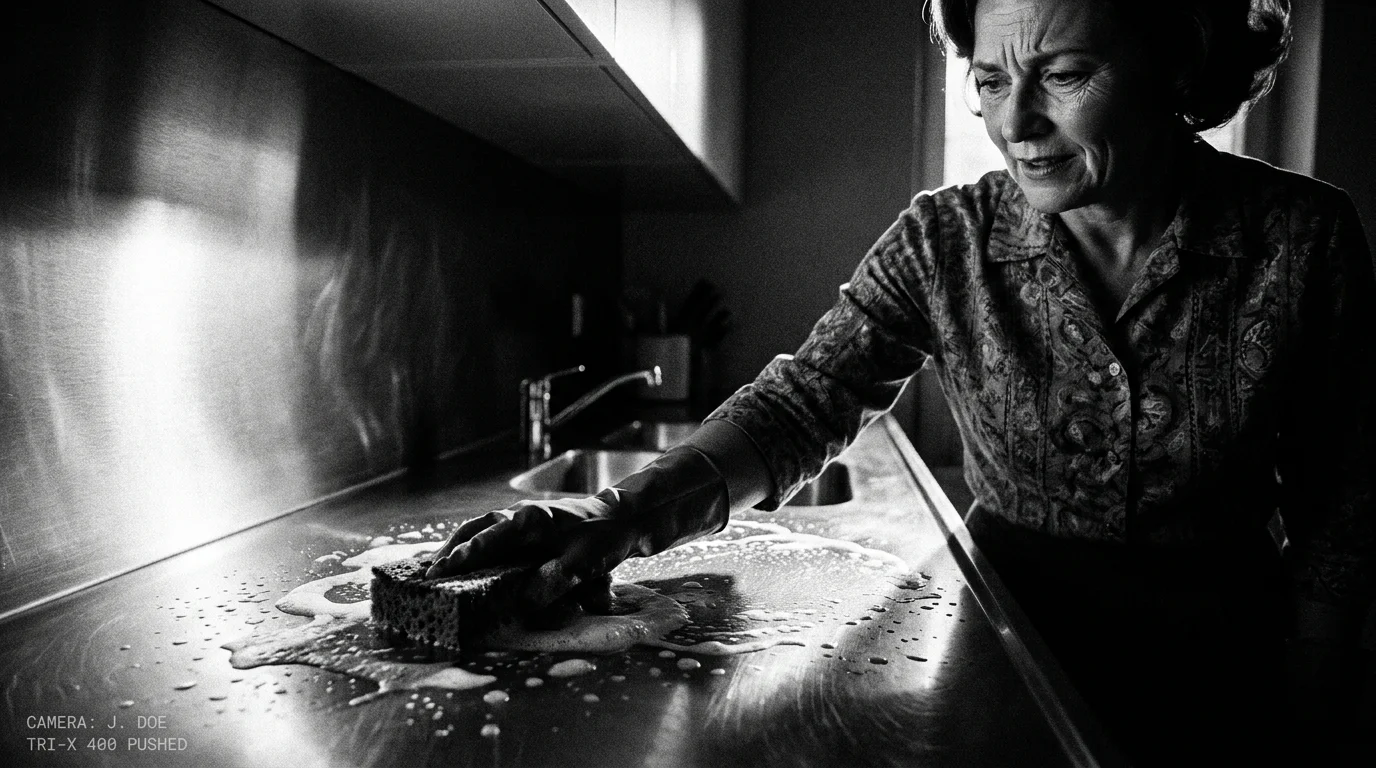
A bright yellow sponge drips foamy pine-scented residue onto cool stainless steel, sending that familiar sharp, resinous vapor straight into your nostrils. For decades, that unmistakable sting stood as the undisputed gold standard of domestic order. You wipe down the countertops, drag a steaming mop across the kitchen tiles, and breathe in what feels like absolute purity: a spotless, germ-free sanctuary created with your own hands.
Yet hours later, your head begins to feel heavy. A subtle, dry tightness creeps across the bridge of your nose, swelling into a dull ache behind your cheekbones that makes breathing feel like pulling air through a wool blanket. You reach for nasal sprays or blame seasonal pollen drifting through the window, never suspecting that the spotless surfaces gleaming in your hallway might be the exact trigger locking your sinuses into a state of chronic defense.
We grew up believing that an aggressive chemical clean was the ultimate barrier between our families and illness. But your respiratory system relies on a delicate, living ecosystem that does not distinguish between a threatening pathogen and the harsh volatile pine oils designed to wipe out kitchen grease.
The Scorched-Earth Paradox of Household Disinfection
Your upper airway operates like an ancient forest floor rather than a polished laboratory counter. Beneath the surface of your nasal lining thrives a dense, symbiotic carpet of commensal bacteria—microscopic sentinels like Corynebacterium and Dolosigranulum. These beneficial organisms occupy physical real estate on your mucosal membranes, producing natural antimicrobial peptides that block inflammatory environmental triggers and keep rogue opportunistic microbes from gaining a foothold.
When you scrub baseboards with concentrated pine-based surface cleaners, you liberate dense clouds of terpenes, pine oils, and quaternary ammonium compounds into your indoor air. Inhaling these persistent chemical aerosols acts like an uncontrolled defoliant across your nasal passages. The volatile vapors strip away the protective mucus blanket and dissolve the defensive bacterial colonies that shield your fragile tissue.
Once that microbial buffer vanishes, your body reacts to the chemical burn the only way it knows how: acute vascular swelling. Deprived of their microscopic guardians, the bare mucosal tissues become hyper-reactive. The slightest speck of household dust or ambient temperature swing triggers severe capillary engorgement, leaving you with stubborn, non-allergic congestion that lingers long after the pine scent fades.
- Panera warm grain bowls drain core circulation leaving icy fingertips and heavy eyelid fatigue
- Coway water purification filters leak volatile municipal gases triggering scratchy morning throat irritation
- Afternoon ashwagandha gummies derail evening cortisol drops trapping your metabolism in stalls
- Icy peppermint neck roll-ons constrict temple blood vessels forcing sudden throbbing headaches
- Organic Ceylon cinnamon powder leaks heavy coumarin loads triggering sharp stomach cramps
The Cost of Sterility: A Restoration Specialist’s Discovery
Consider Elena Vance, a 42-year-old architectural conservator from Cincinnati who spent years battling what her doctors labeled refractory chronic rhinosinusitis. Every Saturday morning began with a full-strength bucket of classic pine cleaner to sanitize her home’s historic hardwood and porcelain fixtures. By Sunday evening, her voice was chronically raspy, her ears felt plugged, and she relied on nighttime decongestants just to sleep through the night.
It was only after an occupational health consultant measured her home’s volatile organic compound load that Elena discovered the truth: her indoor air retained elevated terpene micro-residues for up to seventy-two hours after each cleaning session. Within three weeks of retiring the heavy solvent cleaners in favor of mild, enzyme-based surfactants and simple warm water rinses, her morning congestion disappeared entirely. Her sinuses had not required medication; they simply needed their native biology back.
Adjustment Layers: Restoring Balance Across Living Spaces
Reclaiming clear breathing does not mean surrendering your home to grime. It requires shifting from a model of total chemical eradication to intelligent soil management tailored to how your household actually lives.
For the High-Traffic Kitchen
Kitchen counters demand grease removal, not lingering respiratory hazards. Food-prep areas accumulate lipids and starches that trap organic debris, which requires mechanical lift rather than airborne fumigation. Switching to mild castile soaps or dilute plant-glucoside cleaners effectively emulsifies kitchen oils without releasing synthetic pine vapors into your meal-prep zones.
For the Enclosed Bathroom
Small, poorly ventilated bathrooms turn into acute inhalation chambers when scrubbed with heavy pine disinfectants. The tight tile corners hold volatile residues that re-aerosolize every time someone takes a hot, steamy shower. In these humid micro-climates, focus on physical wiping with microfiber cloths and simple oxygen-based cleaners that break down into water and oxygen, leaving no lingering chemical haze to irritate raw airways.
For Homes with Toddlers and Pets
Little lungs and low-riding paws live within six inches of your floorboards, where heavy chemical vapors settle and concentrate. When children and animals track outdoor flora inside, their developing immune systems require diverse, balanced exposures. Eliminating heavy floor disinfectants protects their baseline nasal flora from early microbial depletion, reducing the incidence of unexplained nightly sniffing and morning mouth-breathing.
Mindful Cleansing: The Low-Vapor Protocol
Transitioning away from aggressive pine sanitizers is a straightforward process that restores both your surfaces and your airway’s natural defense line. Follow these practical steps to reset your home hygiene:
- Ventilate Before You Wipe: Always open two opposing windows to establish a cross-draft before tackling heavy surface grime, preventing chemical vapors from pooling in low-circulation rooms.
- Adopt the Two-Bucket Method: Use one bucket for a mild surfactant wash and a second bucket of plain warm water for a clear rinse to remove leftover detergent films.
- Switch to Dense Microfiber: Rely on split-fiber cloths that mechanically trap over 99% of surface bacteria using only warm water, avoiding chemical wipe-downs altogether.
- Pace Your Deep Cleans: Restrict intensive surface scouring to once a month, relying on daily warm-water spot wipes to maintain order without overwhelming indoor air.
Keep your cleaning toolkit stripped down and highly functional. A basic spray bottle with warm water and a drop of fragrance-free dish soap (roughly 110°F), a stack of 300-GSM split microfiber towels, and a cup of baking soda for scouring sinks will handle 95% of domestic messes without stripping a single layer of your airway’s protective flora.
The Freedom of a Living Home
When you stop chasing the artificial idea of hospital-grade domestic sterility, the character of your living space changes. Real cleanliness does not smell like a solvent factory or bite the back of your throat when you walk through the front door. It feels light, neutral, and effortless to breathe.
By stepping away from harsh pine-based surface cleansers, you allow your body’s built-in defenses to reset. Your nasal passages quietly rebuild their protective microbial armor, your mucosal tissues cool down, and the stubborn pressure behind your eyes lifts. You gain a home that supports your family’s vitality rather than constantly testing its limits.
“True cleanliness should never demand that your body surrender its natural defenses just to maintain a polished floor.”
| Cleaning Approach | Impact on Nasal Microbiome | Household Respiratory Result |
|---|---|---|
| Heavy Pine Disinfectant | Decimates protective Corynebacterium and dries mucosa | Chronic congestion, chemical rhinitis, morning temple pressure |
| High-VOC Antimicrobial Spray | Strips airway biofilm and triggers rebound inflammation | Heightened sensitivity to dust, throat scratchiness, mouth breathing |
| Microfiber & Mild Surfactant | Preserves native bacterial flora and baseline airway moisture | Clear nasal passages, unlabored sleep, neutral indoor air quality |
Frequently Asked Questions
Why do pine cleaners trigger sinus issues when other scents do not?
Pine cleaners rely heavily on pine oils, terpenes, and harsh surfactants that volatilize quickly into the air, creating micro-droplets that chemically irritate mucous membranes and dissolve beneficial nasal bacteria.How long does it take for nasal bacteria to recover after stopping these cleaners?
Most people experience a noticeable reduction in sinus swelling within 7 to 14 days of eliminating strong chemical aerosols, as the mucosal blanket regenerates its normal flora.Does plain soap and water actually sanitize surfaces well enough?
Yes. Mild soaps and quality microfiber towels lift, bind, and physically remove dirt, grease, and common microbes from surfaces without creating chemical resistance or releasing toxic vapors.Is natural pine essential oil safer for home cleaning than commercial Pine-Sol?
Not necessarily for your sinuses. Concentrated natural terpenes from pure pine essential oils can still cause severe airway irritation and strip mucosal membranes when aerosolized in enclosed spaces.How can I make my home smell fresh without using heavy pine scents?
Focus on source elimination: open windows daily for fresh air exchanges, clean sink traps with boiling water, and use natural simmer pots with cinnamon sticks or lemon peels rather than chemical aerosols.