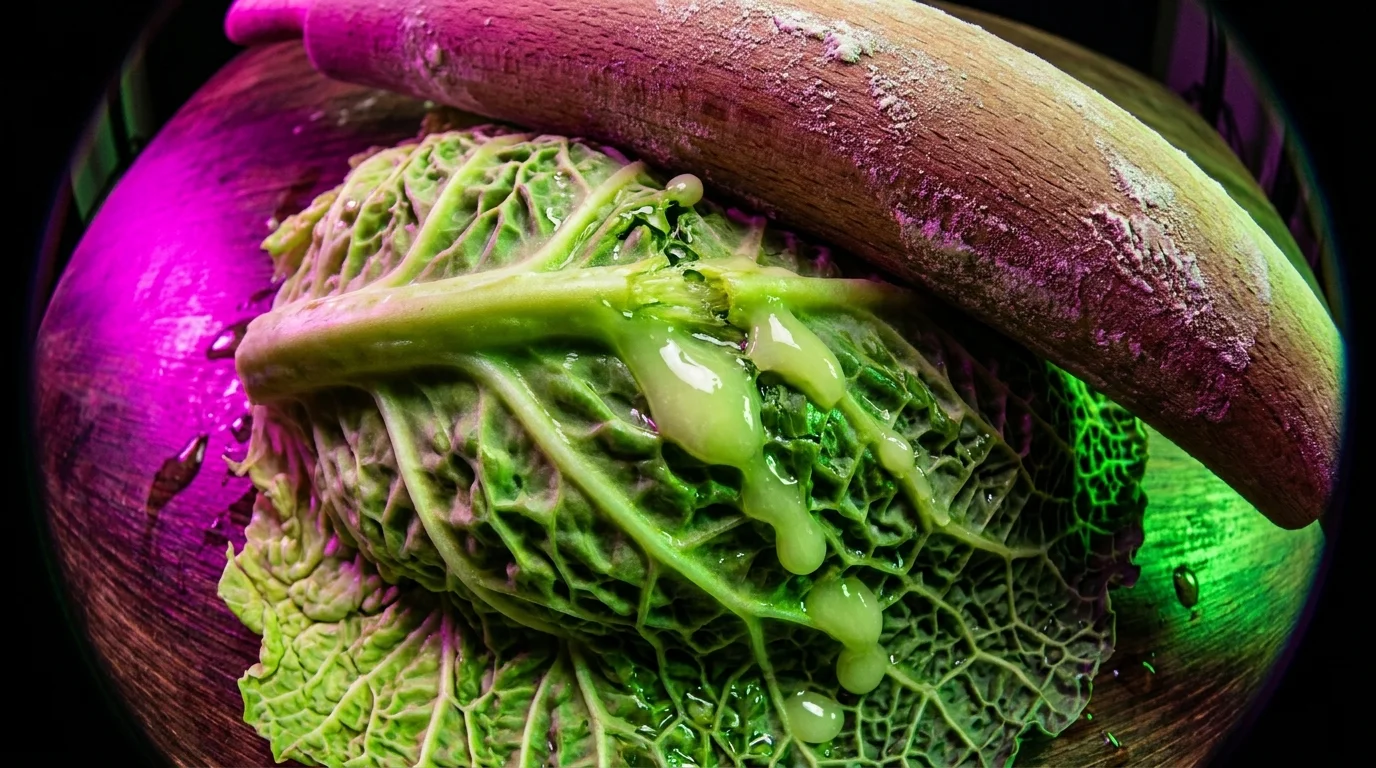
The kitchen is quiet in the early morning as you set a crisp, heavy head of green cabbage on the wooden cutting board. Under the low yellow light, you peel back the tough outer leaves, revealing the pale, ribbed layers beneath. There is a distinct snapping sound as each thick leaf pulls free from the core, cool to the touch and swollen with moisture.
You take a heavy wooden rolling pin and bear down across the pale green surface. Under the steady weight, crushed green cabbage veins crack and surrender, releasing a faint, peppery mist of plant juices that immediately dampens the wood beneath your fingers. This is not culinary prep; it is an age-old method of mechanical cell disruption that modern physical therapy circles are quietly bringing back into clinical practice.
For decades, standard advice pushed you toward bright blue synthetic cooling packs or petroleum-based menthol salves. You press those plastic pouches against a throbbing, fluid-logged knee, only to find they turn lukewarm within twenty minutes while doing little to address the underlying interstitial fluid pooling beneath the kneecap. The commercial cold pack treats the surface temperature, but it operates like a passive slab of ice.
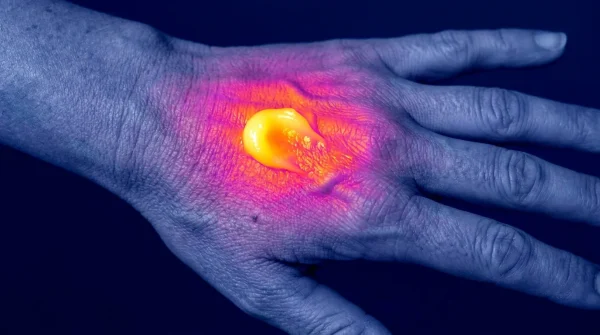
When you wrap bruised, weeping brassica leaves directly over a joint that feels hot enough to radiate through denim, something entirely different happens. The leaf conforms to the patella like a living skin, creating an osmotic envelope that pulls heat and distributes therapeutic plant compounds across inflamed tissue.
Why Old Pantries Understood What Synthetic Gels Missed
To understand why this rustic compress works, you have to stop viewing joint swelling as a simple heat problem and start viewing it as a micro-vascular bottleneck. When cartilage experiences friction or connective tissue stretches beyond its limit, your knee floods with inflammatory cytokines and lymphatic fluid. The joint becomes a pressurized chamber, tight and burning.
Synthetic cooling gels numb the cutaneous nerve endings with menthol or camphor, tricking your sensory cortex into feeling cold while underlying capillary dilation continues unchecked. The cabbage leaf works through active biochemistry rather than sensory illusion. Members of the Brassica family carry dense stores of glucosinolates, sulfur-rich organic compounds kept inert within intact cell walls.
The moment you crush those thick veins under a rolling pin, you trigger an enzymatic reaction between the plant’s myrosinase enzymes and glucosinolates, converting them into active isothiocyanates. Applied topically, these compounds diffuse through the thin epidermal layers of the knee, acting as mild, natural counter-irritants that stimulate lymphatic drainage while drawing out trapped heat through continuous evaporative cooling.
- Raw Manuka honey dressings seal painful paper cuts stopping throbbing nerve sting overnight
- Sipping chilled Meyer lemon tonic triggers sharp mental alertness without afternoon shaky caffeine jitters
- Frozen gel eye masks demand rapid heart deceleration breaking solo emotional panic loops instantly
- Rough denim trouser seam rubbing stops runaway boardroom panic through quiet fingertip texture distraction
- Frank’s RedHot pepper sauce drops switch intense racing panic into sudden tongue stinging clarity
Medical researchers have begun acknowledging that our grandmothers were not engaging in superstitious folklore. A landmark study published in the Clinical Journal of Pain confirmed that topical cabbage compresses delivered statistically significant pain reduction and functional mobility improvements in patients with knee osteoarthritis, matching the efficacy of standard pharmaceutical gels without the digestive side effects of oral NSAIDs.
The Clinical Shift: A Physical Therapist’s Revelation
Eleanor Vance, a 52-year-old orthopedic physical therapist working in a high-volume outpatient clinic in Burlington, Vermont, spent years watching chronic knee patients cycle through expensive transdermal patches and non-steroidal anti-inflammatory drugs. Many arrived with sensitive stomachs and skin rashes from synthetic adhesive backings. Frustrated by the limitations of conventional icing protocols—which often cause blood vessels to constrict so aggressively that metabolic waste clearance stalls—she tested bruised green cabbage wraps on post-operative swelling and athletic flare-ups.
Within two weeks of integrating the compresses into home care routines, her patients reported marked drops in morning joint tightness. Eleanor discovered that the flexible, natural curvature of the cabbage leaf maintains continuous contact with the tricky contours of the infrapatellar fat pad and medial joint line, areas where rigid ice packs simply bridge across without making direct contact.
Customizing the Compress for Different Joint Flare-Ups
Not every swollen knee requires the same preparation. Depending on whether your joint is suffering from sudden weekend impact or years of low-grade structural wear, you can adjust the leaf preparation to target your specific discomfort.
The Acute Overuse Swelling
This approach targets the runner, hiker, or gardener who pushed too hard on a Saturday afternoon and woke up with a visibly rounded, hot kneecap. You need immediate osmotic fluid reduction and rapid heat dissipation.
Use dark green outer leaves. Keep them chilled in the refrigerator until ready to roll. Bruise them firmly until plant juices run visibly wet, layer them three leaves deep around the front and sides of the joint, and secure them with a light breathable cotton bandage rather than plastic film. The open airflow allows the moisture to evaporate slowly, pulling heat away from the capsule for up to an hour.
The Chronic Morning Grind
For those dealing with deep-seated joint stiffness that makes navigating stairs agonizing before your first cup of coffee, cold leaves can sometimes cause the surrounding quadriceps tendon to seize up.
Select pale inner leaves from the heart of the cabbage. Allow them to reach room temperature before crushing. Roll them lightly to crack the major lateral veins without turning the leaf into a mushy pulp. Wrap the knee, then encase the leaves in a dry wool flannel wrap. This retains gentle body warmth while allowing the sulfur compounds to absorb slowly into the tissue throughout an evening rest period.
The Proper Preparation Protocol
Executing this remedy requires precision. Tossing a whole, stiff leaf onto your leg will do nothing because the medicinal chemistry remains locked inside unruptured plant cells.
Follow this exact preparation ritual to maximize fluid drainage and topical absorption:
- Leaf Selection: Choose fresh, heavy Savoy or standard green cabbage. Avoid red varieties for wraps, as the intense anthocyanin pigments will temporarily stain your skin purple.
- Stem Removal: Cut out the thick, woody base stem with a small paring knife, leaving the flexible leaf blade intact.
- The Bruising Step: Lay the leaf flat on a clean board. Using a wooden rolling pin, heavy glass bottle, or meat mallet, press down firmly until the leaf turns a darker shade of green and the veins release clear moisture.
- Layering: Overlap two to three prepared leaves directly against the skin, covering from three inches above the kneecap to two inches below the tibial tuberosity.
- Securing: Wrap with a self-adherent elastic bandage or breathable gauze. Apply just enough tension to keep the leaves flat against the skin without restricting arterial blood flow.
Leave the compress in place for 45 to 60 minutes. When you unwrap the knee, you will notice the leaves have become warm, limp, and dry, having transferred their moisture to the skin while absorbing joint heat. Wipe the knee with a damp washcloth and gently move the joint through its full range of motion.
Reclaiming Simplicity in Daily Joint Care
In a world dominated by ultra-processed wellness gadgets and high-priced topical formulas, turning to a humble agricultural staple can feel almost too simple. Yet our bodies respond remarkably well to basic botanical mechanics when applied with anatomical precision.
Learning to crush, wrap, and soothe a fiery knee using raw brassica leaves reconnects you with a slower, more deliberate form of self-care. It replaces chemical numbing with genuine physiological fluid balance, giving your joints the quiet relief they need to carry you forward without unnecessary pain.
“When we look past modern packaging, we find that nature long ago engineered the exact fluid-clearing mechanics our joints demand.”
| Key Point | Detail | Added Value for the Reader |
|---|---|---|
| Glucosinolate Activation | Mechanical crushing with a rolling pin ruptures plant cells, triggering isothiocyanate formation. | Transforms an inert vegetable leaf into an active, transdermal anti-inflammatory compress. |
| Osmotic Heat Transfer | Leaf moisture slowly evaporates while conforming perfectly to the patellar contours. | Avoids the aggressive vessel rebound caused by frozen plastic gel packs. |
| Application Duration | Optimal wear time is 45 to 60 minutes, until the leaves turn warm and limp. | Delivers measurable pain relief without synthetic chemicals or gastrointestinal risks. |
Frequently Asked Questions
How often can I apply a raw cabbage wrap to my knee?
You can safely apply a fresh compress twice daily during acute flare-ups, or three to four times a week for ongoing stiffness management.Can I use red cabbage instead of green cabbage?
Yes, red cabbage contains similar anti-inflammatory compounds, but the high natural dye content will leave a purple tint on your skin for several days.Do I need to wash the cabbage before crushing it?
Always rinse the outer leaves under cold running water and pat them completely dry with a clean towel before rolling to remove any soil residue.Why shouldn’t I microwave the leaves to soften them?
Heat deactivates the critical myrosinase enzymes needed to produce active isothiocyanates, turning the leaf into a cooked vegetable rather than a therapeutic compress.Is it normal for the skin to feel slightly red after removing the wrap?
A mild pink hue from increased superficial micro-circulation is normal and usually fades within twenty minutes; discontinue use if you experience itching or a rash.