Dusk settles across the kitchen counter as the streetlamps outside flicker into a cold, amber glow. You sit with a lukewarm mug resting between your hands, your shoulders curled slightly inward, feeling a hollow, full-body exhaustion that makes zero sense given that you spent eight hours seated in a climate-controlled room. Your limbs feel heavy, your eyes sting with dry grit, and the mere thought of deciding what to make for dinner feels like an impossible cognitive climb.
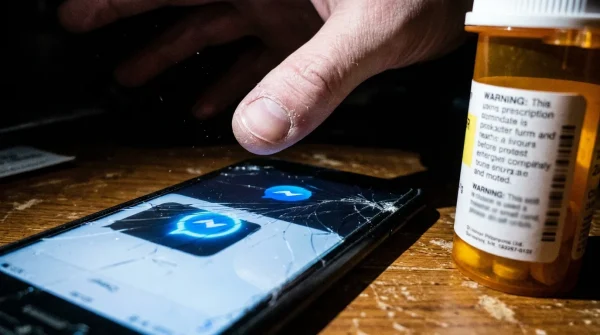
Then it strikes: a sharp, rapid haptic vibration buzzing against your tired palm. It is not an emergency siren or a catastrophic alert. It is just a routine, two-sentence ping on a team messaging channel or a casual query from a friend asking about weekend plans.
Before your conscious mind can weigh whether the message requires immediate attention, your thumb twitches across the glass. You type out a cheerful, crisp answer in under twelve seconds, hit send, and lock the screen. You tell yourself this lightning-fast responsiveness is simply good manners, sharp professionalism, or being a dependable partner.
Yet beneath that polished reflex lies an invisible biological toll. That compulsive impulse to instantly clear every incoming alert acts as an empathy burnout anchor, quietly holding your nervous system hostage in a low-grade state of threat anticipation and draining your mental reserves dry long before the evening begins.
The Phantom Tether: Why Quick Replies Cost More Than Time
We tend to view texting as a frictionless micro-task—a ten-second interruption with negligible overhead. In reality, your brain does not process an instant ping as a single, isolated event; it treats it as an open emotional loop. When you maintain a self-imposed policy of replying within seconds, your prefrontal cortex never fully disengages from ambient vigilance.
Think of your attention not as a spotlight that can pivot effortlessly, but as an intricate electrical grid. Every time an incoming bubble appears, your nervous system experiences a tiny jolt of sympathetic activation—a miniature squirt of adrenaline designed to prepare you for social evaluation. Holding multiple open conversational loops keeps that circuit humming continuously, preventing your nervous system from ever dropping into restorative baseline tone.
Over hours of sustained availability, this micro-vigilance creates a profound physiological leak. You are not physically tired from labor; you are emotionally drained from perpetually bracing for the next social demand. When 6:00 PM arrives, your capacity for executive decision-making is completely spent.
- Levator scapulae neck muscles trap unvoiced workplace frustration sparking burning shoulder tightness
- Kratom leaf powder triggers sudden clinical alerts after dangerous liver enzyme spikes
- Draft stopper door towels block stray floor drafts restoring deep restorative sleep cycles
- Postpartum psychosis hospital protocols enforce mandatory maternal mental checks before discharge
- Slumping into memory foam driver seats traps uneven spine tilt enforcing chronic lower back stiffness
The Anatomy of Micro-Vigilance
Elena Torres, a 39-year-old architectural project manager in Denver, discovered this dynamic only after chronic evening migraines forced her to log her daily biometric stress patterns. Despite hitting her physical step goals and drinking ample water, her wearable ring reported that her physiological stress levels peaked not during complex blueprint reviews, but during quiet afternoons spent fielding sporadic, rapid-fire client pings.
When Elena committed to immediate responses, her autonomic nervous system remained stuck in a state known as covert vigilance. Her brain perceived each incoming buzz as an interpersonal obligation requiring immediate affective calibration—matching tone, softening language, and anticipating the sender’s emotional reaction. That constant emotional attunement acts like a silent siphon on your energy tank.
Navigating the Archetypes of Hyper-Availability
The impulse to fire off immediate answers rarely stems from true logistical urgency. Instead, it is usually driven by subconscious behavioral patterns that manifest differently depending on your daily environment.
For the Remote Professional
When your physical presence is invisible to colleagues, rapid typing becomes a surrogate for visible dedication. You answer Slack pings within forty seconds to prove you are sitting at your desk, turning your communication tools into a digital panic button. Treating speed as professional currency ultimately destroys the sustained focus needed for deep, high-value problem solving.
For the Relational Caretaker
You view an unanswered text from a sibling, friend, or partner as an act of neglect or emotional coldness. You absorb the sender’s unspoken urgency as your personal responsibility, scrambling to reply even while mid-stride across a parking lot or cooking over a hot stove. This chronic boundary erosion drains your emotional reserves before you ever get to connect in person.
For the Asynchronous Fixer
You cannot tolerate the visual clutter of red badges or unread banners. You fire off quick answers simply to clear the alert counter and restore visual order to your home screen. What feels like digital housekeeping is actually an avoidance loop: you trade long-term neurological calm for a fleeting three-second hit of micro-relief.
The Somatic Decoupling Protocol
Breaking the instant-response reflex requires recalibrating both your digital environment and your body’s conditioned physical response to notification chimes. You do not need to discard your devices; you simply need to build intentional buffer zones between the stimulus and your physical reply.
Begin by adopting structural communication rhythms that allow your autonomic nervous system to fully downshift throughout the day:
- Establish Response Windows: Group your outgoing text messages into designated fifteen-minute intervals spaced throughout the day (e.g., 11:30 AM and 4:30 PM) rather than reacting in real time.
- Introduce the Physical Ten-Breath Pause: When an alert buzzes, place the phone facedown on a flat surface and take three slow, deliberate nasal breaths before reaching for the screen.
- Strip Haptic Alerts: Disable tactile vibrations for all non-emergency messaging apps, forcing interaction to be an intentional visual choice rather than a startled physical reflex.
- Deploy Contextual Expectations: Set your status indicators or communicate clearly to key contacts that asynchronous replies are your default mode for thoughtful work.
The Tactical Toolkit:
Implement a strict 45-minute digital curfew prior to your target bedtime. Shift your screen display to grayscale mode starting at 7:00 PM to reduce visual dopamine stimulation. Set all non-whitelisted contacts to auto-silence between 6:00 PM and 8:00 AM, allowing your prefrontal cortex to experience unbroken evening restoration.
Reclaiming the Silence of the Dusk
The habit of instant replying promises connection, but in practice, it delivers fractured presence. When you offer everyone instant access to your attention, you leave nothing of substance for yourself, your family, or your own restorative thoughts once work concludes.
Allowing a text to sit unanswered for an hour or an afternoon is not an act of hostility; it is a fundamental act of biological stewardship. Reclaiming control over your response time resets your baseline cortisol, calms your frazzled nerves, and gives you back the mental clarity you need to genuinely inhabit your evenings.
True digital presence begins with the quiet courage to let an incoming message wait.
| Key Point | Detail | Added Value for the Reader |
|---|---|---|
| The Biological Cost | Instant replies trigger recurring low-grade adrenaline spikes throughout the day. | Helps you understand that evening fatigue is often neurological rather than physical. |
| The Attention Leak | Continuous micro-interruptions leave cognitive open loops in executive memory. | Pinpoints why multitasking across chat apps ruins sustained mental focus. |
| The Somatic Pause | Introducing deliberate physical delays interrupts conditioned panic reflexes. | Provides a concrete physical tool to retrain your nervous system without abandoning your phone. |
Frequently Asked Questions
Will taking longer to reply make colleagues or friends think I am unprofessional or distant?
Setting predictable boundaries actually improves communication quality. When you respond thoughtfully during designated windows rather than impulsively mid-task, your answers are clearer, more composed, and far more effective.Why do I feel physically restless when an unread message sits on my screen?
Your brain has conditioned a dopamine-anticipation loop around clearing alerts. That internal restlessness is simply neurochemical withdrawal from your habit of instant closure; it fades after a few days of intentional practice.What is the best way to handle truly urgent communications without staying hyper-vigilant?
Utilize your phone’s ‘Do Not Disturb’ bypass settings for emergency contacts or immediate family members while silencing group threads and standard workspace channels.How long does it take for evening mental fatigue to improve once I stop instant-replying?
Most individuals report noticeable improvements in dusk energy levels, reduced eye strain, and easier sleep onset within three to five days of batching their messages.Is disabling vibration really necessary if the sound is already turned off?
Yes. Haptic vibrations trigger an immediate physical startle reflex across your skin and musculoskeletal system, sustaining low-grade autonomic arousal even when your room is completely quiet.